




Blog
Insights & updates from our experts


Resolve plant floor and IT issues before they disrupt production.

Stay audit-ready while resolving issues and reducing operational risk.
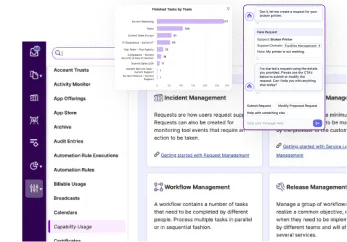
Resolve issues quickly with an AI-powered system that automates ticketing.
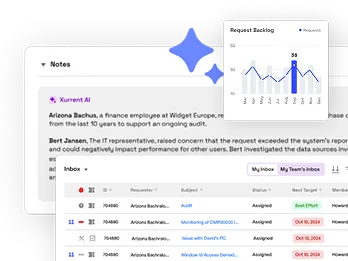
Unifiy IT, HR, Facilities, Finance, and more on a single, AI-powered service platform.
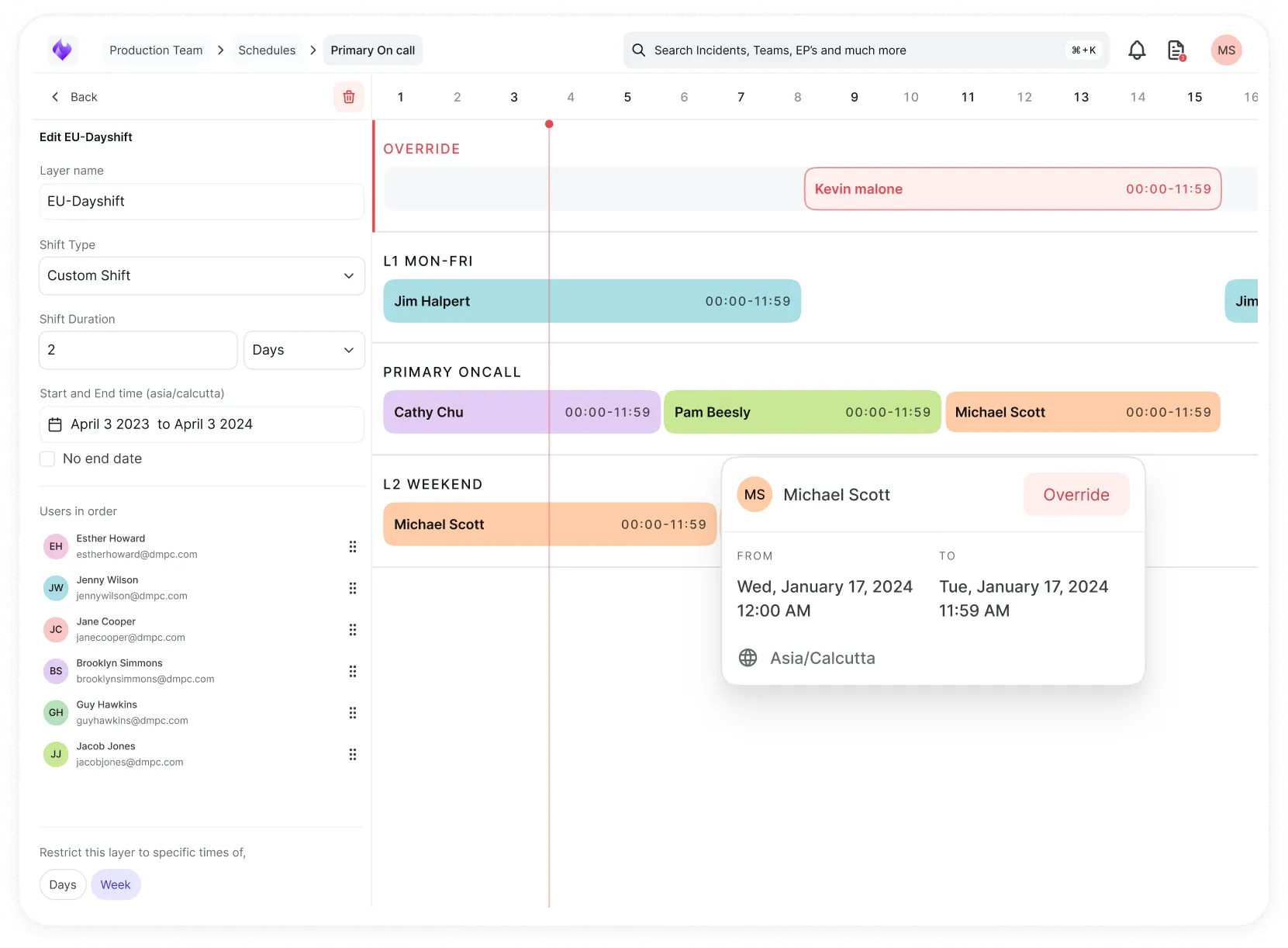
Simplify on-call scheduling, automate escalations, and reduce burnout.
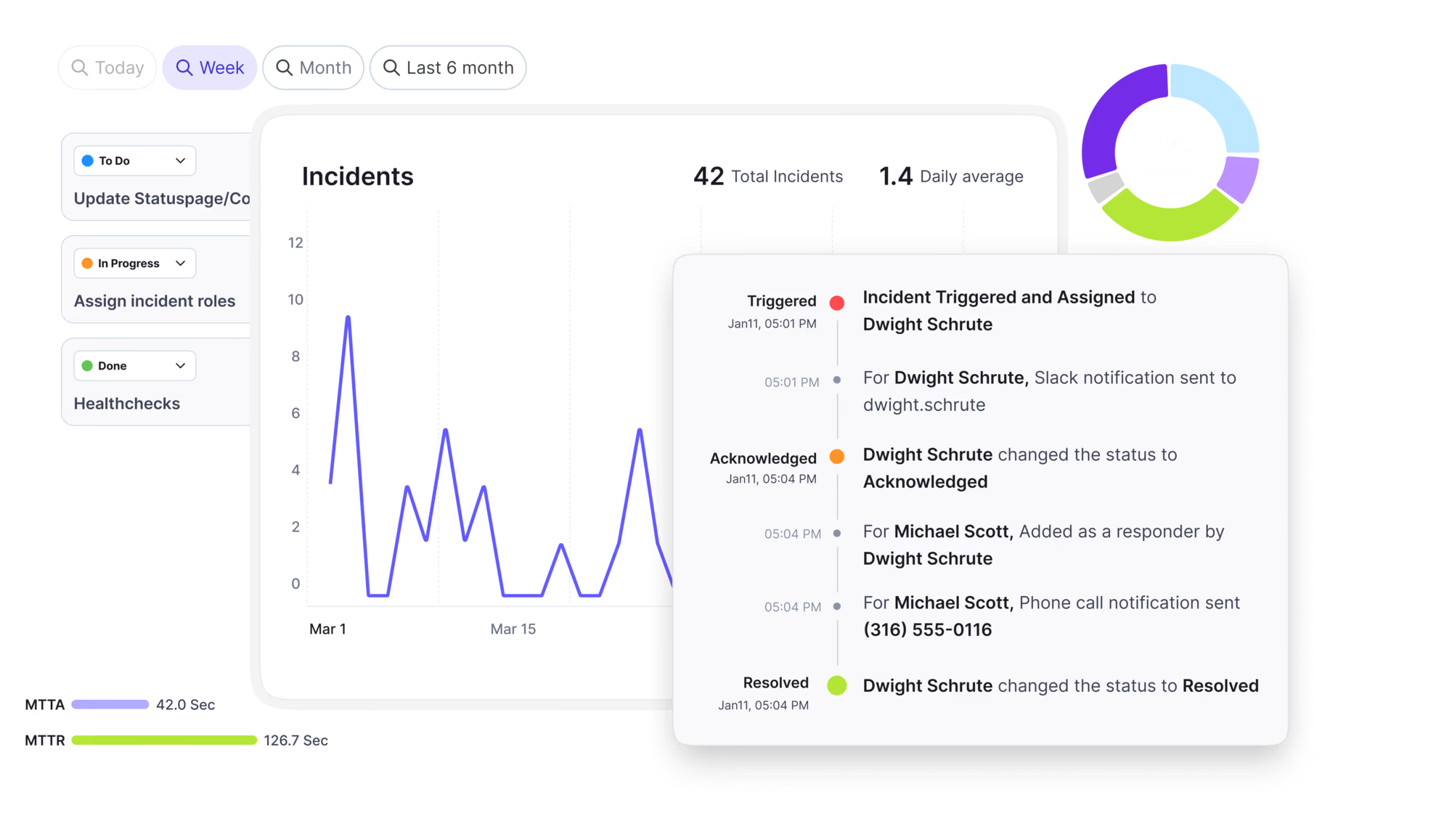
Automate postmortems, AI summaries, and post-incident workflows
Create, organize, and continuously improve your knowledge base to find the right answers with Sera AI.
We're here to help

The integration with Atlassian Jira using the Xurrent Integration Service is

The integration with Atlassian Jira using the Xurrent Integration Service is

The integration with Atlassian Jira using the Xurrent Integration Service is

The integration with Atlassian Jira using the Xurrent Integration Service is

The integration with Atlassian Jira using the Xurrent Integration Service is

The integration with Atlassian Jira using the Xurrent Integration Service is

The integration with Atlassian Jira using the Xurrent Integration Service is

The integration with Atlassian Jira using the Xurrent Integration Service is
Resolve issues quickly with an AI-powered system that automates ticketing.
Unifiy IT, HR, Facilities, Finance, and more on a single, AI-powered service platform.
Simplify on-call scheduling, automate escalations, and reduce burnout.
Automate postmortems, AI summaries, and post-incident workflows
Create, organize, and continuously improve your knowledge base to find the right answers with Sera AI.
Resolve plant floor and IT issues before they disrupt production.
Stay audit-ready while resolving issues and reducing operational risk.

Detect, respond, and resolve incidents fast to cut downtime and MTTR.

Keep your store online, even during your biggest sales moments.

Protect patient data and resolve issues fast, so care teams stay focused on care.

Standardize service delivery across every store and channel.

We are here to help 24/7

Connect with other Xurrent Users

Get insights and tips on how to get the most out of Xurrent

Apps, APIs, and updates

Xurrent service functionality

Eliminate manual tasks, optimize workflows, and deliver faster resolutions.
Learn how organizations have reduced downtime, improved 50% MTTA & MTTR, and cut costs with Xurrent IMR.
Discover Xurrent IMR's quick support, bidirectional integrations with Jira and Slack, and more cohesive incident response capabilities compared to Opsgenie.
Understand why users value Xurrent IMR for its intuitive interface, efficient incident alerting, customizable On-call schedules, and escalations.

IBM's 2025 CEO Study*, which surveyed 2,000 executives across 33 countries, found that only 25% of AI initiatives have delivered expected ROI. Global AI spending is on track to reach $2.59 trillion this year, according to Gartner**. And still, the majority of the investment isn't paying off.
The problem isn't the model. It isn't the budget. It's the layer underneath: integration.
Here's a scenario that plays out constantly in IT organizations right now.
A team identifies a business need that requires a new integration. The justification is solid. The priority is approved. Then the scheduling process begins and the only available integration specialists are booked out weeks, sometimes months.
The ROI clock has already started ticking. The business need isn't going anywhere. But nothing moves until an expert frees up.
That wait isn't a scheduling problem. It's a structural one. It's baked into how most ITSM vendors have built their integration layers: architected for consultants, not for the people who actually run the platform.
Three patterns have defined how most ITSM vendors approach integration. None of them were built with AI in mind.
White-labeled external platforms. A familiar brand name in the UI, a different vendor's product underneath, and a support model that points fingers in two directions when something breaks. The customer owns the confusion. This is better than "one-size-fits-all" as described below, but still not ideal.
Integration sold as a separate product. Its own license. Its own learning curve. Its own contract. Extra cost that nobody wants to pay for. What should be a platform capability becomes a procurement conversation.
One-size-fits-all integrations. Pre-built, which sounds like a feature until you realize your business logic has to live inside someone else's code. Tuning them to fit your actual workflows isn't on the roadmap. Customization is costly and time consuming if you're paying a third party for implementation.
A recent Harvard Business Review Analytic Services study found that 94% of business leaders say well-connected data, processes, and applications are critical to AI success, yet fewer than a third say those elements are actually well connected in their organizations. That gap is precisely what these three integration patterns create.
AI doesn't use integration occasionally. It depends on it constantly. AI that can't reach the systems it needs to act on doesn't deliver ROI. The models aren't the limiting factor. The infrastructure underneath them is.
The difference between integration alongside your workflows and integration inside them is the difference between AI that assists and AI that acts.
Consider a P1 alert fired from Datadog. With native integration, the event enriches itself with context, pages the on-call engineer, and kicks off a Sera AI investigation before the first responder has even joined the call. No manual triage. No lag.
Or a new hire submitting a single onboarding ticket. From that one record, provisioning flows automatically across Okta, the asset register, calendar, and Slack. The ticket triggers the integrations. The integrations trigger the outcomes.
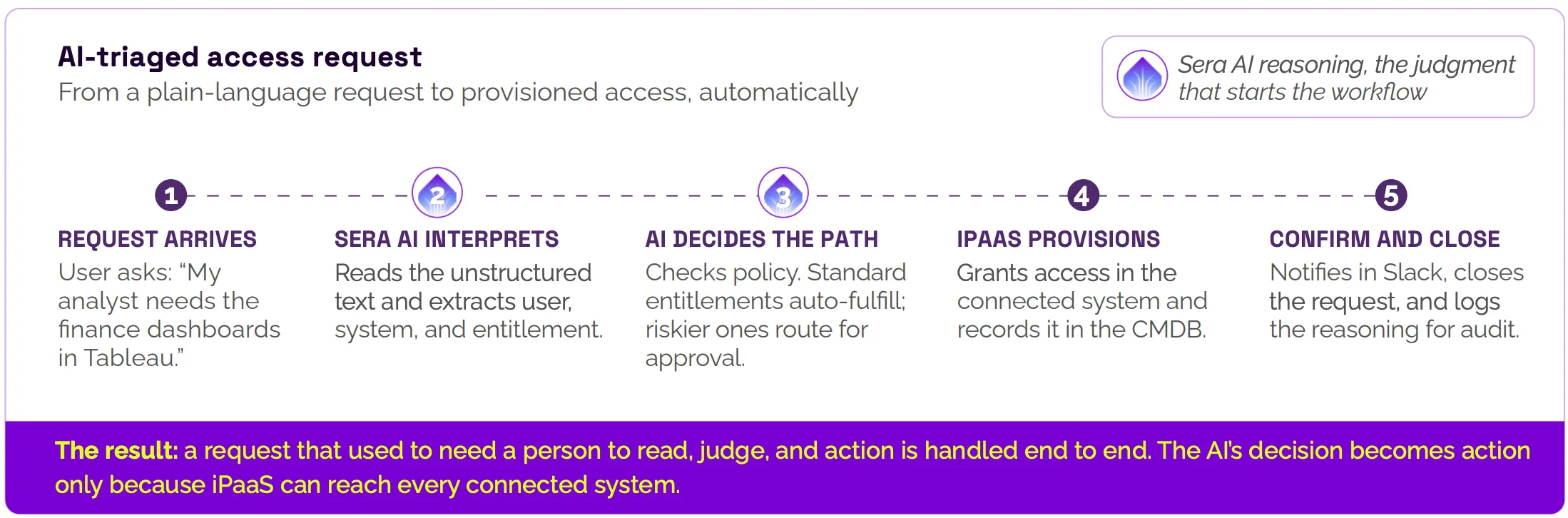
These aren't future-state scenarios. They're what happens when integration is first-class inside the platform. When the structural barrier goes away, the velocity unlocked is striking. Addiko Bank automated more workflows in three to four months on Xurrent than in the previous ten years on their prior platform. Not because the tools got smarter. Because the friction went away.
We built Xurrent iPaaS in-house, not licensed, because integration that understands ITSM and ITxM objects natively is a different product than a general-purpose automation tool wrapped in a new UI. Every object your team works with (requests, changes, tasks, assets, workflows, etc) is first-class to the integration layer. Not an afterthought. Not a workaround.
Xurrent iPaaS is included in every Xurrent subscription and it's available to every customer starting July 1, 2026. Customers start from pre-built Solutions and tune them to fit their actual workflows. Not by filing a ticket for a specialist. Not by opening a second contract. By themselves, in the platform they already run every day.
This matters now because the integration layer is no longer a back-office concern. It's the deciding factor for whether AI delivers. AI that runs alongside your workflows will keep performing alongside them. AI that runs inside them is a different story.
The enterprises getting real AI ROI aren't running better models. They're running AI that can reach every system it needs to act on. That's an integration problem, and we built the solution.
Learn more about Xurrent iPaaS and see it in action. Or, if you're ready to see the integration layer that connects your AI to the work: Schedule a demo.
* https://www.ibm.com/think/insights/ai-roi
** https://www.gartner.com/en/newsroom/press-releases/2026-05-19-gartner-forecasts-worldwide-ai-spending-to-grow-47-percent-in-2026
Most AI SREs are pattern matchers trained on public data. They know what a memory leak looks like in the abstract. They don't know that your payments-api has a flaky liveness probe everyone ignores, that the checkout team owns the retry policy, or that the last three "database incidents" were actually cache misconfigurations. That knowledge lives in your postmortems, your Slack channels, and the heads of two senior engineers.
Most vendors will tell you ITSM implementation takes six months to a year — but modern, configuration-first platforms have rewritten the math entirely. See what real implementations look like in 2026, and why a long rollout is now a choice, not a given.
.webp)
.webp)
.webp)