





Blog
Insights & updates from our experts


Resolve plant floor and IT issues before they disrupt production.

Stay audit-ready while resolving issues and reducing operational risk.
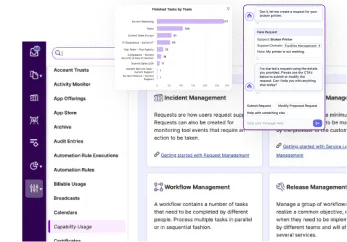
Resolve issues quickly with an AI-powered system that automates ticketing.
Unifiy IT, HR, Facilities, Finance, and more on a single, AI-powered service platform.
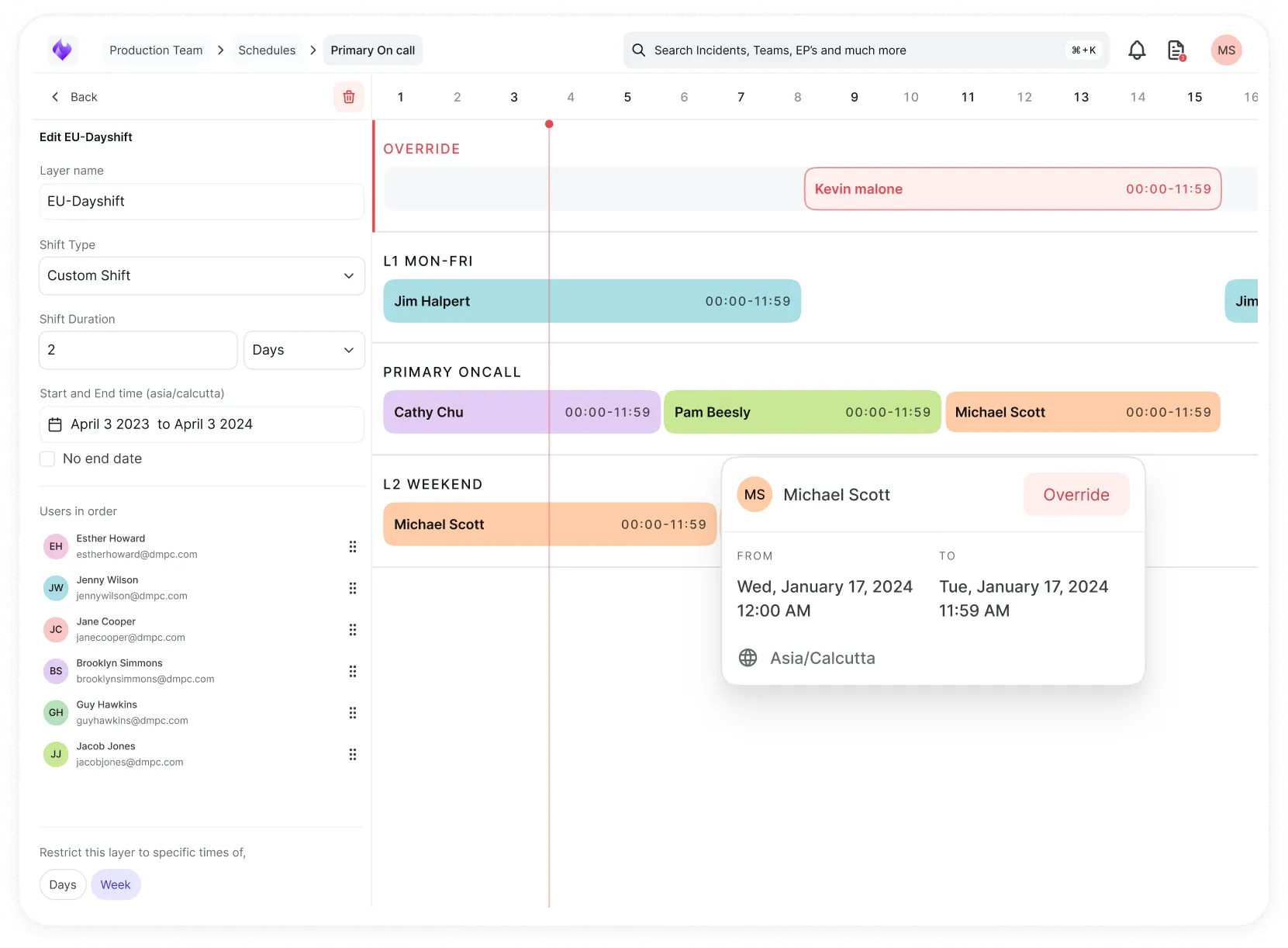
Simplify on-call scheduling, automate escalations, and reduce burnout.
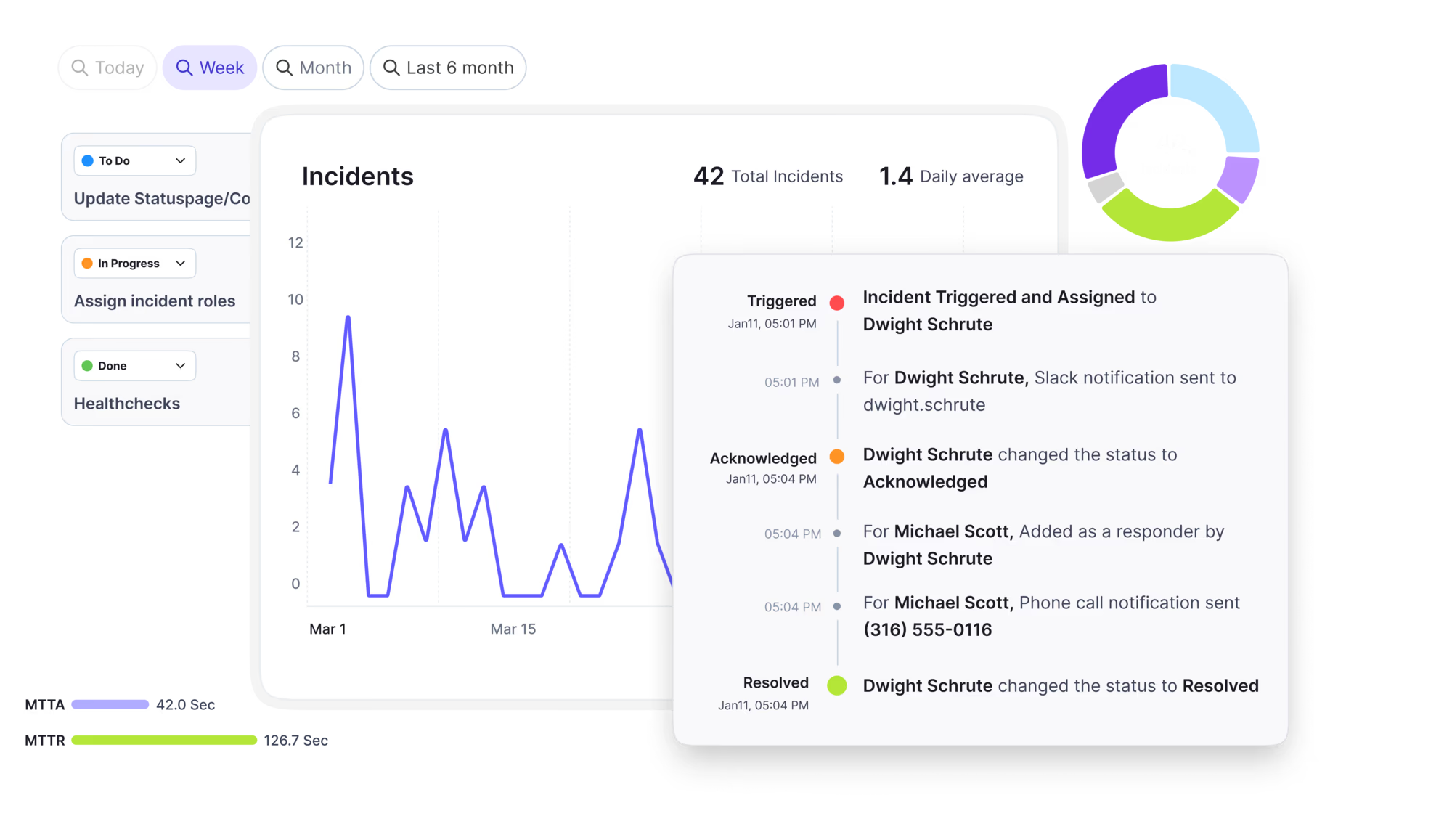
Automate postmortems, AI summaries, and post-incident workflows
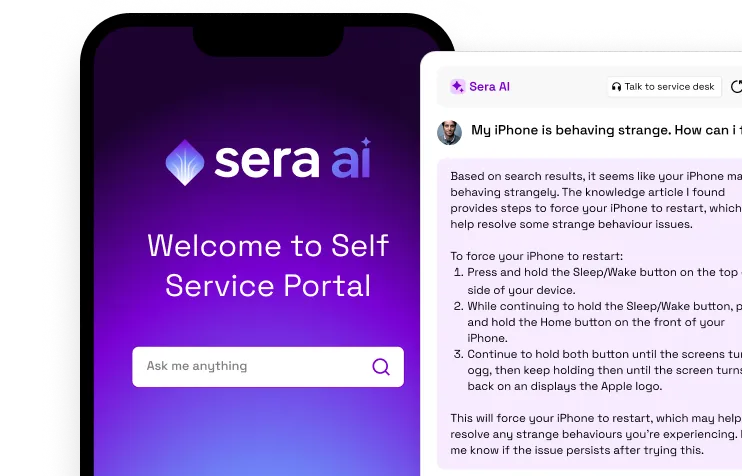
Create, organize, and continuously improve your knowledge base to find the right answers with Sera AI.
We're here to help

The integration with Atlassian Jira using the Xurrent Integration Service is

The integration with Atlassian Jira using the Xurrent Integration Service is

The integration with Atlassian Jira using the Xurrent Integration Service is

The integration with Atlassian Jira using the Xurrent Integration Service is

The integration with Atlassian Jira using the Xurrent Integration Service is

The integration with Atlassian Jira using the Xurrent Integration Service is

The integration with Atlassian Jira using the Xurrent Integration Service is

The integration with Atlassian Jira using the Xurrent Integration Service is
Resolve issues quickly with an AI-powered system that automates ticketing.
Unifiy IT, HR, Facilities, Finance, and more on a single, AI-powered service platform.
Simplify on-call scheduling, automate escalations, and reduce burnout.
Automate postmortems, AI summaries, and post-incident workflows
Create, organize, and continuously improve your knowledge base to find the right answers with Sera AI.
Resolve plant floor and IT issues before they disrupt production.
Stay audit-ready while resolving issues and reducing operational risk.

Detect, respond, and resolve incidents fast to cut downtime and MTTR.

Keep your store online, even during your biggest sales moments.

Protect patient data and resolve issues fast, so care teams stay focused on care.

Standardize service delivery across every store and channel.

We are here to help 24/7

Connect with other Xurrent Users

Get insights and tips on how to get the most out of Xurrent

Apps, APIs, and updates

Xurrent service functionality

Eliminate manual tasks, optimize workflows, and deliver faster resolutions.
Learn how organizations have reduced downtime, improved 50% MTTA & MTTR, and cut costs with Xurrent IMR.
Discover Xurrent IMR's quick support, bidirectional integrations with Jira and Slack, and more cohesive incident response capabilities compared to Opsgenie.
Understand why users value Xurrent IMR for its intuitive interface, efficient incident alerting, customizable On-call schedules, and escalations.
Supervised Machine Learning is a machine learning approach that uses labeled training data—datasets where each input is paired with a known correct output—to train algorithms to predict outcomes or classify new data. In ITSM and incident management contexts, supervised learning models learn from historical tickets, alerts, and resolution patterns to automate classification, routing, priority assignment, and root cause identification. The "supervised" aspect means the algorithm receives feedback during training by comparing its predictions against the labeled examples, adjusting its internal parameters until it accurately maps inputs to outputs. This differs from unsupervised learning, which finds patterns in unlabeled data, or reinforcement learning, which learns through trial and reward.
Supervised Machine Learning directly impacts service desk efficiency, incident response speed, and operational cost. When a model trained on thousands of past tickets can instantly classify an incoming request and route it to the correct team, first-contact resolution rates improve and MTTR drops. For incident management platforms, supervised models reduce alert fatigue by learning which combinations of metrics, logs, and events historically preceded real outages versus false positives, allowing teams to focus on actionable signals. In ITSM analytics, these models predict SLA breaches before they occur, enabling proactive intervention.
The business value is measurable: organizations using supervised learning for ticket classification report 30–50% reductions in manual triage time, and incident prioritization models help prevent low-severity noise from delaying critical P1 responses. For compliance and audit, supervised models provide consistent, repeatable decision logic—every ticket categorized by the same learned rules rather than varying human judgment. Getting it wrong—deploying a poorly trained model or using insufficient training data—leads to misrouted tickets, incorrect priority assignments, and eroded trust in automation, often requiring expensive rollback and retraining cycles.
Supervised Machine Learning follows a structured training and deployment process. First, a labeled dataset is assembled—for example, 10,000 historical incident tickets, each tagged with category, priority, assigned team, and resolution outcome. The dataset is split into training data (typically 70–80%) and test data (20–30%). During training, the algorithm—commonly a decision tree, random forest, support vector machine, or neural network—processes the training examples, learning patterns that connect input features (ticket description text, user department, time of day, affected service) to output labels (category, priority).
The model iteratively adjusts its internal weights or decision rules to minimize prediction error, measured by comparing its output against the known labels. Once trained, the model is validated against the test set to assess accuracy, precision, and recall. If performance is acceptable, the model is deployed into production, where it receives new, unlabeled inputs—incoming tickets or alerts—and generates predictions in real time. Continuous monitoring tracks model performance, and periodic retraining with fresh labeled data prevents model drift as operational patterns evolve.
In ITSM platforms, supervised models often integrate with natural language processing (NLP) to extract features from ticket text, and with CMDB data to incorporate configuration item relationships. In incident response, models consume alert metadata, time-series metrics, and historical incident outcomes to classify severity and recommend runbooks.
- Automated Ticket Categorization in Enterprise Service Desk : A global manufacturing company trains a supervised model on 50,000 labeled service requests spanning HR, IT, Facilities, and Finance. The model learns to classify incoming tickets by department and request type (password reset, hardware request, expense approval) based on subject line and description text, achieving 92% accuracy and reducing manual categorization time by 45%.
- Incident Priority Prediction for SRE Teams : A SaaS provider's incident management platform uses supervised learning trained on two years of alert data, including CPU/memory metrics, error rates, and past incident severity labels. When a new alert fires, the model predicts whether it's a P1 (customer-impacting outage), P2 (degraded service), or P3 (internal monitoring noise), allowing on-call engineers to respond to genuine emergencies first and cutting mean time to acknowledge (MTTA) by 35%.
- Root Cause Classification in ITOM : A financial services IT operations team trains a supervised model on historical problem records, each labeled with root cause category (network failure, application bug, capacity issue, configuration error). When a new incident is logged, the model analyzes symptoms, affected CIs, and recent changes to suggest the most likely root cause, guiding problem managers to the right investigation path and reducing problem resolution time by 28%.
- Machine Learning
- Unsupervised Machine Learning
- AIOps (Artificial Intelligence for IT Operations)
- NLP (Natural Language Processing)
- Knowledge Management
---

.webp)
.webp)