





Blog
Insights & updates from our experts


Resolve plant floor and IT issues before they disrupt production.

Stay audit-ready while resolving issues and reducing operational risk.
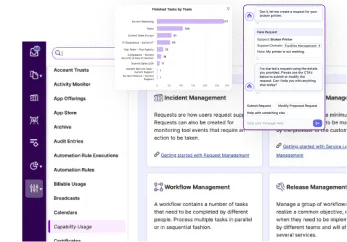
Resolve issues quickly with an AI-powered system that automates ticketing.
Unifiy IT, HR, Facilities, Finance, and more on a single, AI-powered service platform.
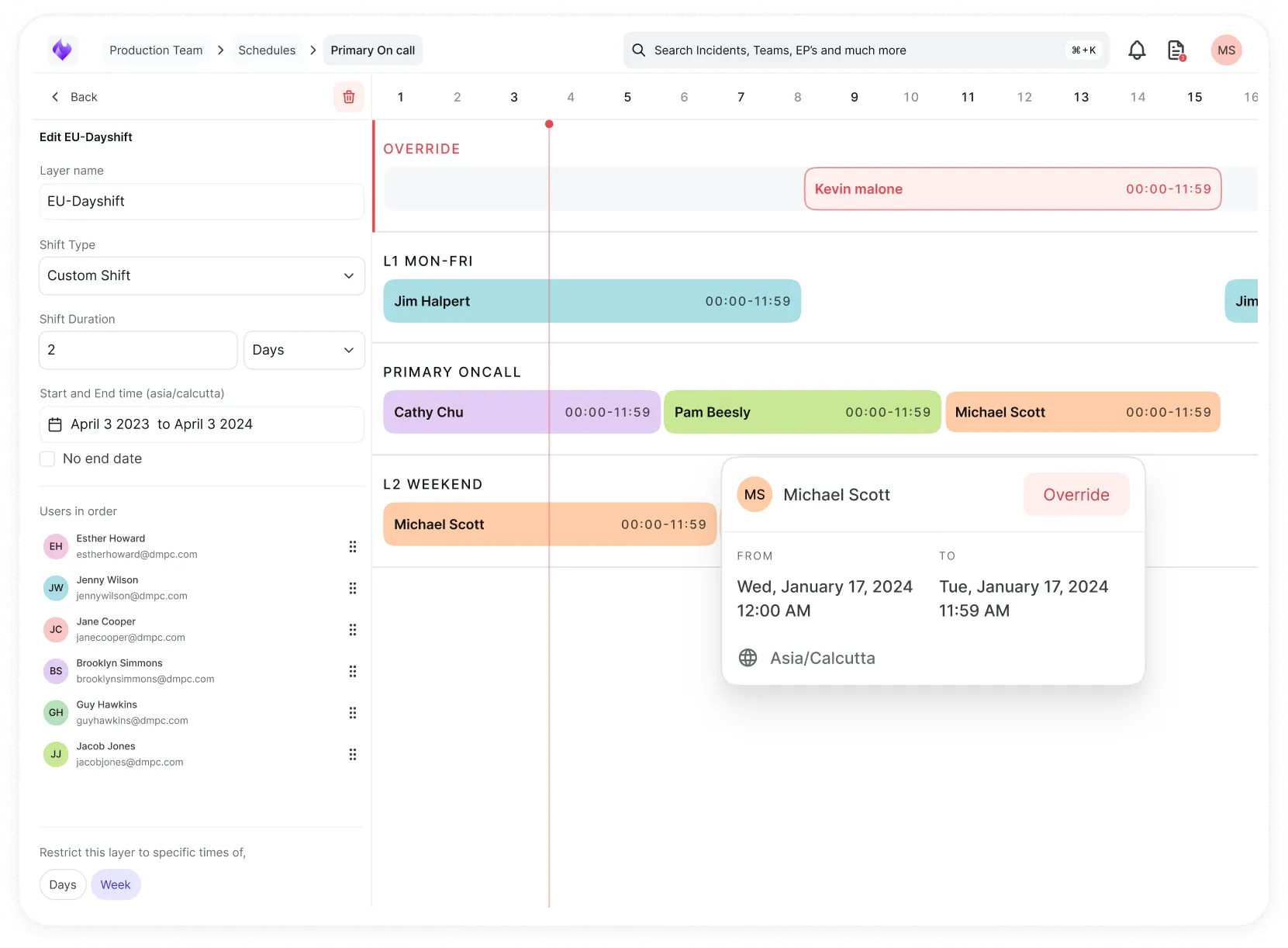
Simplify on-call scheduling, automate escalations, and reduce burnout.
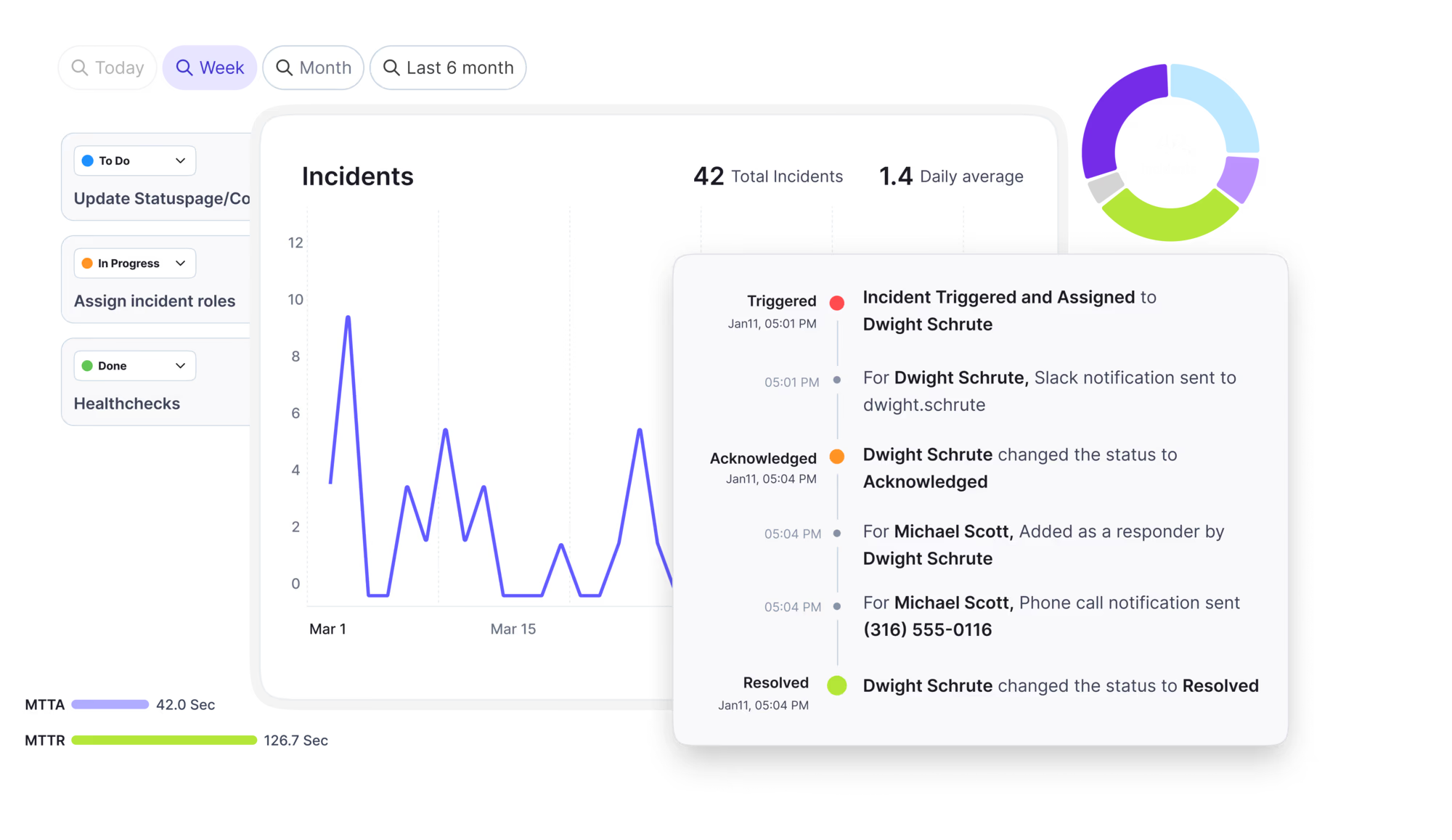
Automate postmortems, AI summaries, and post-incident workflows
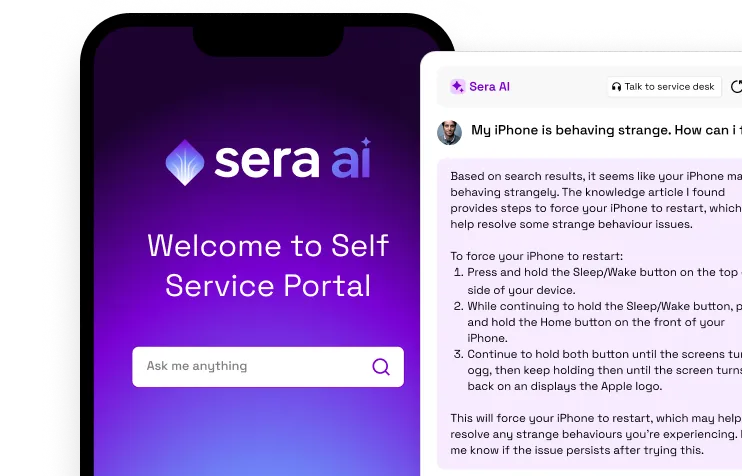
Create, organize, and continuously improve your knowledge base to find the right answers with Sera AI.
We're here to help

The integration with Atlassian Jira using the Xurrent Integration Service is

The integration with Atlassian Jira using the Xurrent Integration Service is

The integration with Atlassian Jira using the Xurrent Integration Service is

The integration with Atlassian Jira using the Xurrent Integration Service is

The integration with Atlassian Jira using the Xurrent Integration Service is

The integration with Atlassian Jira using the Xurrent Integration Service is

The integration with Atlassian Jira using the Xurrent Integration Service is

The integration with Atlassian Jira using the Xurrent Integration Service is
Resolve issues quickly with an AI-powered system that automates ticketing.
Unifiy IT, HR, Facilities, Finance, and more on a single, AI-powered service platform.
Simplify on-call scheduling, automate escalations, and reduce burnout.
Automate postmortems, AI summaries, and post-incident workflows
Create, organize, and continuously improve your knowledge base to find the right answers with Sera AI.
Resolve plant floor and IT issues before they disrupt production.
Stay audit-ready while resolving issues and reducing operational risk.

Detect, respond, and resolve incidents fast to cut downtime and MTTR.

Keep your store online, even during your biggest sales moments.

Protect patient data and resolve issues fast, so care teams stay focused on care.

Standardize service delivery across every store and channel.

We are here to help 24/7

Connect with other Xurrent Users

Get insights and tips on how to get the most out of Xurrent

Apps, APIs, and updates

Xurrent service functionality

Eliminate manual tasks, optimize workflows, and deliver faster resolutions.
Learn how organizations have reduced downtime, improved 50% MTTA & MTTR, and cut costs with Xurrent IMR.
Discover Xurrent IMR's quick support, bidirectional integrations with Jira and Slack, and more cohesive incident response capabilities compared to Opsgenie.
Understand why users value Xurrent IMR for its intuitive interface, efficient incident alerting, customizable On-call schedules, and escalations.
A Service Owner is the individual accountable for the end-to-end delivery, performance, and continuous improvement of a specific IT service throughout its entire lifecycle. This role ensures that the service meets agreed-upon business requirements, service level agreements (SLAs), and user expectations while balancing cost, quality, and risk. The Service Owner acts as the single point of accountability for a service—distinct from a Process Owner who manages a specific ITSM process—and coordinates across technical teams, vendors, and business stakeholders to maintain service health, authorize changes, and drive strategic improvements. In ITIL-aligned organizations, the Service Owner bridges the gap between technical operations and business outcomes, making decisions about service scope, capacity planning, incident prioritization, and service retirement.
Service Owners prevent the common failure mode where no single person is accountable when a service degrades or fails to meet business needs. Without clear ownership, incidents escalate slowly, root causes go unaddressed, and service improvements stall in cross-team coordination gaps. The Service Owner role ensures someone has the authority and responsibility to make trade-off decisions—whether to prioritize a performance upgrade over new features, when to invoke disaster recovery, or how to allocate budget between infrastructure and support staff.
This accountability directly impacts mean time to resolution (MTTR), service availability, and customer satisfaction. When incidents occur, the Service Owner coordinates response across development, operations, and vendor teams, ensuring the right resources engage at the right time. For SLA management, the Service Owner monitors performance against targets, investigates breaches, and implements corrective actions. In enterprise service management (ESM) contexts, Service Owners for non-IT services—such as HR onboarding or facilities management—apply the same accountability model to ensure consistent service delivery across departments. Organizations without effective Service Owners experience duplicated effort, unclear escalation paths, and services that drift away from business requirements over time.
The Service Owner operates at the intersection of service strategy, design, and operations. During service design, they define service requirements, approve the service catalog entry, and establish SLAs in collaboration with business stakeholders and IT leadership. They document dependencies on underlying configuration items (CIs) in the CMDB, identify supporting operational level agreements (OLAs) with internal teams, and negotiate underpinning contracts (UCs) with external vendors.
In day-to-day operations, the Service Owner monitors service performance through dashboards and analytics, reviewing metrics such as availability, response times, and user satisfaction scores. When incidents are logged, the Service Owner does not typically resolve technical issues directly but ensures the incident management process engages the correct resolver groups and escalates appropriately. For major incidents, they may join war rooms to provide business context, authorize emergency changes, and communicate with executive stakeholders.
The Service Owner participates in change advisory board (CAB) meetings to evaluate proposed changes affecting their service, assessing risk and approving or rejecting changes based on potential business impact. They also drive problem management by reviewing recurring incidents, prioritizing root cause analysis, and ensuring that permanent fixes are implemented through the change management process.
For continuous improvement, the Service Owner analyzes service performance trends, identifies improvement opportunities, and builds business cases for service enhancements or retirements. They coordinate with service level management to review and update SLAs, ensuring targets remain aligned with evolving business needs. In multi-tenant or managed service provider (MSP) environments, Service Owners manage service delivery across multiple client organizations while maintaining clear accountability boundaries through trust relationships and segregated reporting.
- Email Service Owner in a financial services firm : Accountable for enterprise email availability, performance, and security across 5,000 users. Monitors SLA compliance (99.9% uptime target), coordinates with infrastructure teams during outages, approves changes to mail server configurations, and works with security teams to implement phishing protection improvements. When a mail server failure caused a 2-hour outage, this Service Owner led the incident response, authorized emergency vendor engagement, and later drove a post-incident review that resulted in redundancy improvements.
- HR Onboarding Service Owner in a global manufacturing company : Owns the end-to-end employee onboarding service spanning IT provisioning, facilities access, and training enrollment. Coordinates across HR, IT, and facilities teams to ensure new hires receive laptops, building access, and required training within their first week. Tracks onboarding completion rates and time-to-productivity metrics, identifies bottlenecks in the workflow, and implements automation to reduce manual handoffs. Recently reduced average onboarding time from 10 days to 4 days by integrating service request workflows across departments.
- E-commerce Platform Service Owner at a retail organization : Responsible for the customer-facing online shopping service, including web application performance, payment processing, and order fulfillment integration. Balances feature development requests from marketing against platform stability needs, approves deployment windows for code releases, and maintains relationships with payment gateway vendors. During peak shopping periods, coordinates capacity planning with infrastructure teams and establishes incident response protocols with on-call SRE teams to ensure 99.95% availability targets are met.
- Service Desk
- Service Level Agreement
- Incident Management
- Change Management
- Problem Management
---

.webp)
.webp)