





Blog
Insights & updates from our experts


Resolve plant floor and IT issues before they disrupt production.

Stay audit-ready while resolving issues and reducing operational risk.
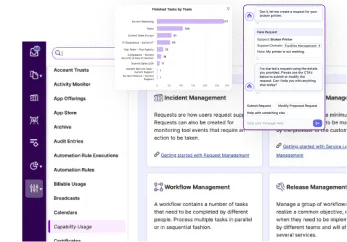
Resolve issues quickly with an AI-powered system that automates ticketing.
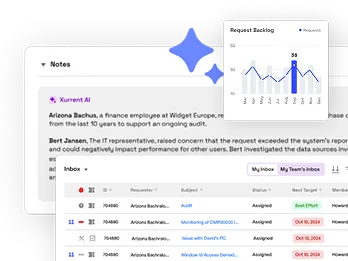
Unifiy IT, HR, Facilities, Finance, and more on a single, AI-powered service platform.
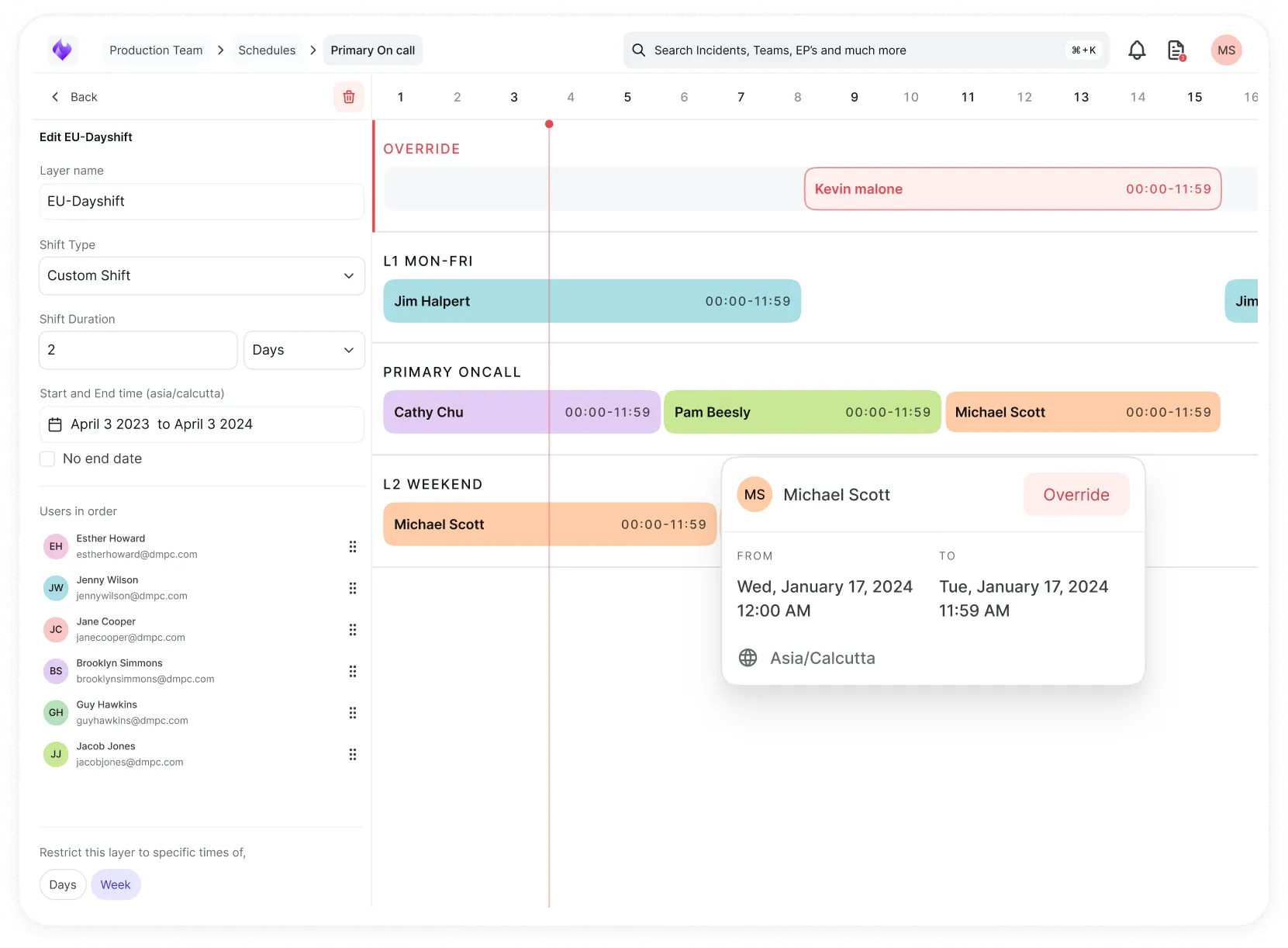
Simplify on-call scheduling, automate escalations, and reduce burnout.
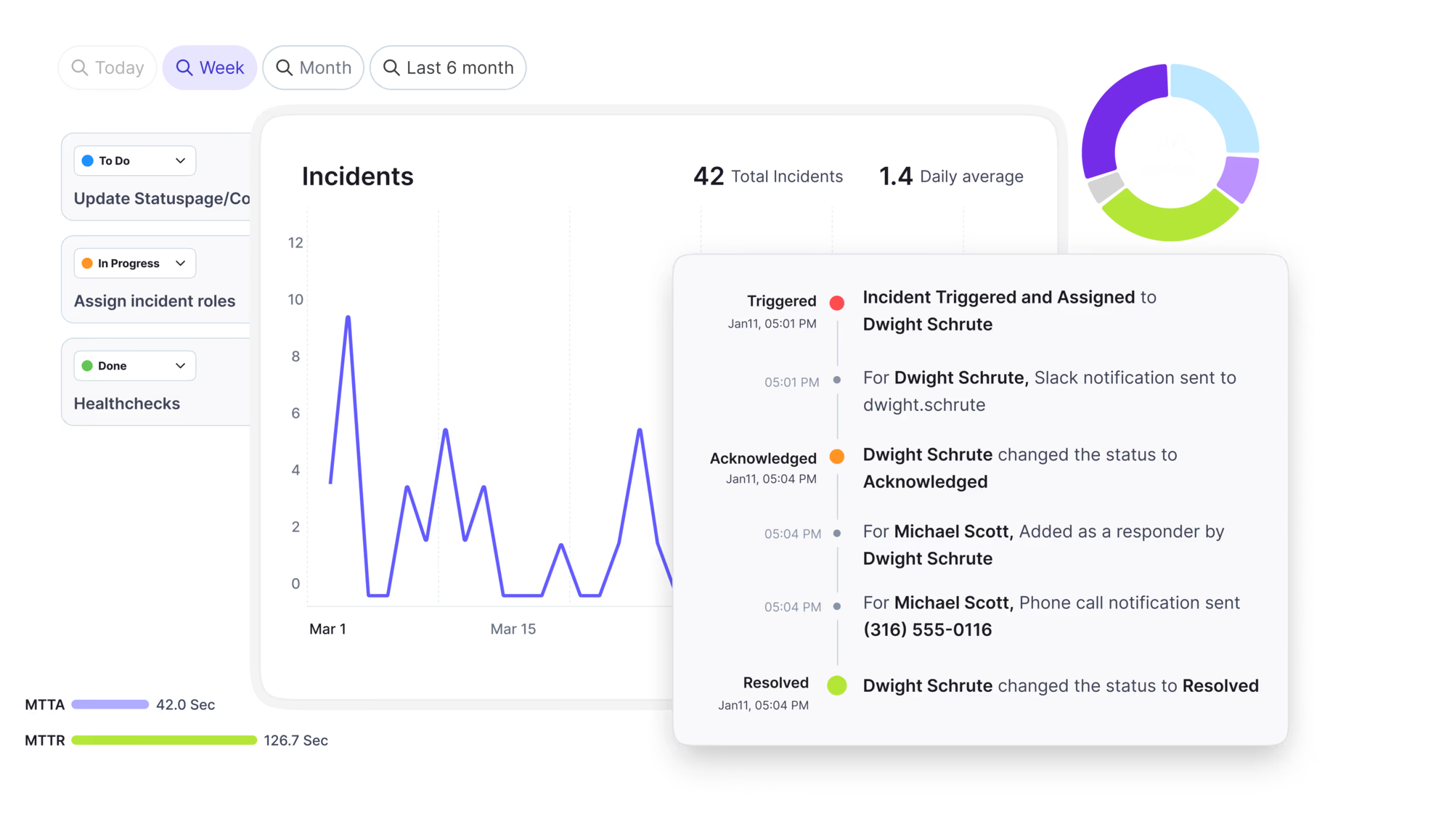
Automate postmortems, AI summaries, and post-incident workflows
Create, organize, and continuously improve your knowledge base to find the right answers with Sera AI.

We're here to help

The integration with Atlassian Jira using the Xurrent Integration Service is

The integration with Atlassian Jira using the Xurrent Integration Service is

The integration with Atlassian Jira using the Xurrent Integration Service is

The integration with Atlassian Jira using the Xurrent Integration Service is

The integration with Atlassian Jira using the Xurrent Integration Service is

The integration with Atlassian Jira using the Xurrent Integration Service is

The integration with Atlassian Jira using the Xurrent Integration Service is

The integration with Atlassian Jira using the Xurrent Integration Service is
Resolve issues quickly with an AI-powered system that automates ticketing.
Unifiy IT, HR, Facilities, Finance, and more on a single, AI-powered service platform.
Simplify on-call scheduling, automate escalations, and reduce burnout.
Automate postmortems, AI summaries, and post-incident workflows
Create, organize, and continuously improve your knowledge base to find the right answers with Sera AI.
Resolve plant floor and IT issues before they disrupt production.
Stay audit-ready while resolving issues and reducing operational risk.

Detect, respond, and resolve incidents fast to cut downtime and MTTR.

Keep your store online, even during your biggest sales moments.

Protect patient data and resolve issues fast, so care teams stay focused on care.

Standardize service delivery across every store and channel.

We are here to help 24/7

Connect with other Xurrent Users

Get insights and tips on how to get the most out of Xurrent

Apps, APIs, and updates

Xurrent service functionality

Eliminate manual tasks, optimize workflows, and deliver faster resolutions.
Learn how organizations have reduced downtime, improved 50% MTTA & MTTR, and cut costs with Xurrent IMR.
Discover Xurrent IMR's quick support, bidirectional integrations with Jira and Slack, and more cohesive incident response capabilities compared to Opsgenie.
Understand why users value Xurrent IMR for its intuitive interface, efficient incident alerting, customizable On-call schedules, and escalations.
A Process Owner is an individual or role with end-to-end accountability for the design, execution, performance, and continuous improvement of a specific ITSM or operational process. This person defines how the process operates, ensures it delivers expected outcomes, tracks metrics like cycle time and compliance, and drives changes when performance degrades or business needs shift. Unlike a Process Manager who handles day-to-day execution and task coordination, the Process Owner holds strategic responsibility—they answer for whether the process meets its objectives, aligns with organizational goals, and adapts to evolving requirements. In ITIL-aligned organizations, Process Owners typically oversee practices such as Incident Management, Change Enablement, Problem Management, or Service Request Fulfillment, maintaining process documentation, setting policies, and coordinating with other process and service owners to eliminate handoff friction and ensure consistent service delivery.
Process Owners create accountability where it would otherwise be diffuse. Without a designated owner, processes drift—documentation becomes outdated, metrics go untracked, exceptions multiply, and no one has authority to enforce standards or drive improvement. This leads to longer resolution times, inconsistent service quality, compliance gaps, and wasted effort as teams work around broken workflows instead of fixing them.
A strong Process Owner reduces MTTR by identifying bottlenecks in incident or problem workflows and implementing targeted fixes. They improve first-contact resolution rates by refining request fulfillment procedures and ensuring knowledge articles stay current. They also protect the organization from audit risk by maintaining process compliance with ITIL, ISO 20000, or regulatory frameworks, documenting controls, and providing evidence during reviews.
In cross-functional environments—especially where ITSM and DevOps teams must coordinate—the Process Owner bridges silos. They ensure that incident data flows correctly between service desk systems and incident response platforms, that postmortem tasks feed into change management workflows, and that SLA definitions reflect both user expectations and operational reality. Without this coordination, incidents repeat, root causes go unaddressed, and teams operate with conflicting priorities.
The Process Owner operates across the full process lifecycle. During design, they define the process scope, inputs, outputs, roles, activities, and success criteria, often working with stakeholders from IT, business units, and external providers to ensure the process supports real needs. They document workflows, approval gates, escalation paths, and integration points with other processes, then validate the design through pilots or reviews before rollout.
Once the process is live, the Process Owner monitors performance using KPIs such as cycle time, error rates, SLA compliance, and user satisfaction. They review dashboards, incident trends, and audit findings to identify deviations—tickets routed incorrectly, changes bypassing approval, or problems closed without root cause analysis. When issues surface, the Process Owner investigates, determines whether the problem is a process flaw or an execution gap, and implements corrective actions: updating procedures, retraining staff, or reconfiguring automation rules.
Continuous improvement is a core responsibility. The Process Owner conducts regular process reviews, gathers feedback from Process Managers and frontline staff, analyzes metrics for trends, and proposes enhancements. They coordinate with Configuration Managers to ensure the CMDB accurately reflects dependencies, with Service Owners to align process performance with service targets, and with Change Managers to implement process updates through controlled change workflows. In mature organizations, the Process Owner also participates in governance forums, reports to leadership on process health, and advocates for resources needed to sustain or improve performance.
- Incident Management Process Owner at a financial services firm : Tracks mean time to resolution across all incident categories, identifies that payment system incidents take 40% longer than average due to unclear escalation paths, redesigns the escalation matrix to route payment issues directly to the transaction processing team, and reduces MTTR by 35% within two months while maintaining audit compliance for SOC 2.
- Change Enablement Process Owner for a global retailer : Notices that emergency changes bypass the Change Advisory Board 60% of the time, creating compliance risk and repeat incidents; works with DevOps and IT operations leads to define a lightweight emergency change approval workflow, integrates it into the incident response platform, and ensures all emergency changes are logged, reviewed, and tracked in postmortems, cutting repeat incidents by 20%.
- Problem Management Process Owner at a SaaS company : Reviews problem records and discovers that 80% of problems are closed without documented root cause or follow-up tasks; implements a mandatory root cause analysis template, trains Problem Managers on the Five Whys and fishbone diagrams, and integrates problem tasks into the change management system so fixes are tracked and prioritized, reducing recurring incidents from 80% to under 40% in six months.
- Problem Manager
- Change Manager
- Service Owner
- Incident Manager
- Configuration Manager
---



.webp)
.webp)