





Blog
Insights & updates from our experts


Resolve plant floor and IT issues before they disrupt production.

Stay audit-ready while resolving issues and reducing operational risk.
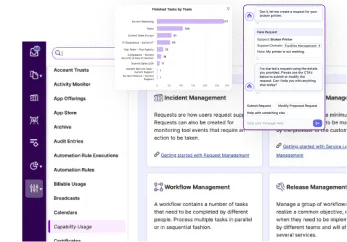
Resolve issues quickly with an AI-powered system that automates ticketing.
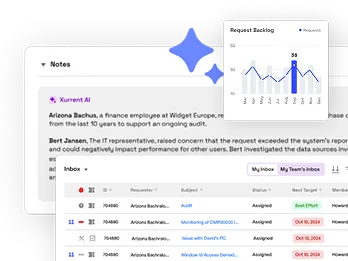
Unifiy IT, HR, Facilities, Finance, and more on a single, AI-powered service platform.
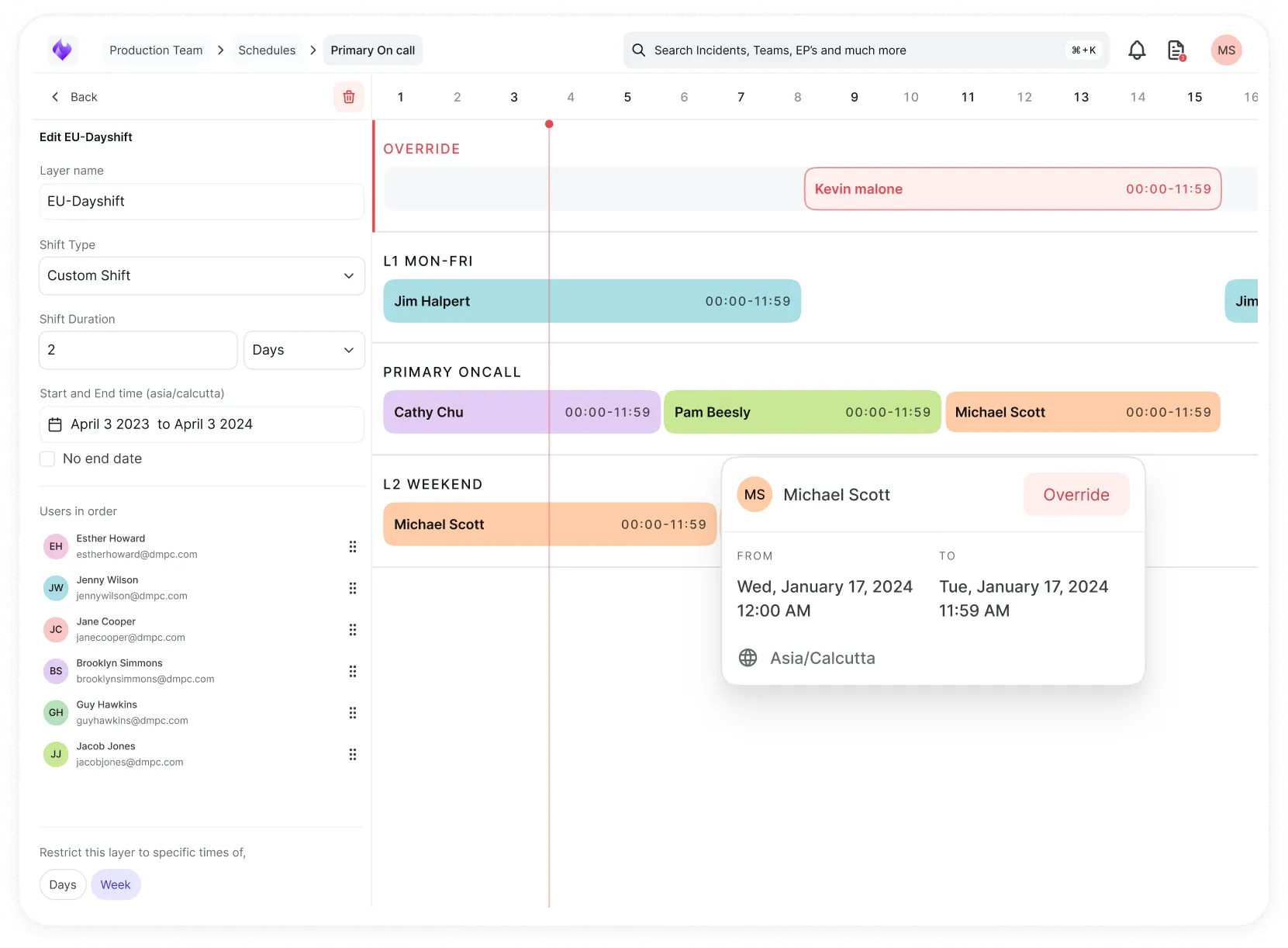
Simplify on-call scheduling, automate escalations, and reduce burnout.
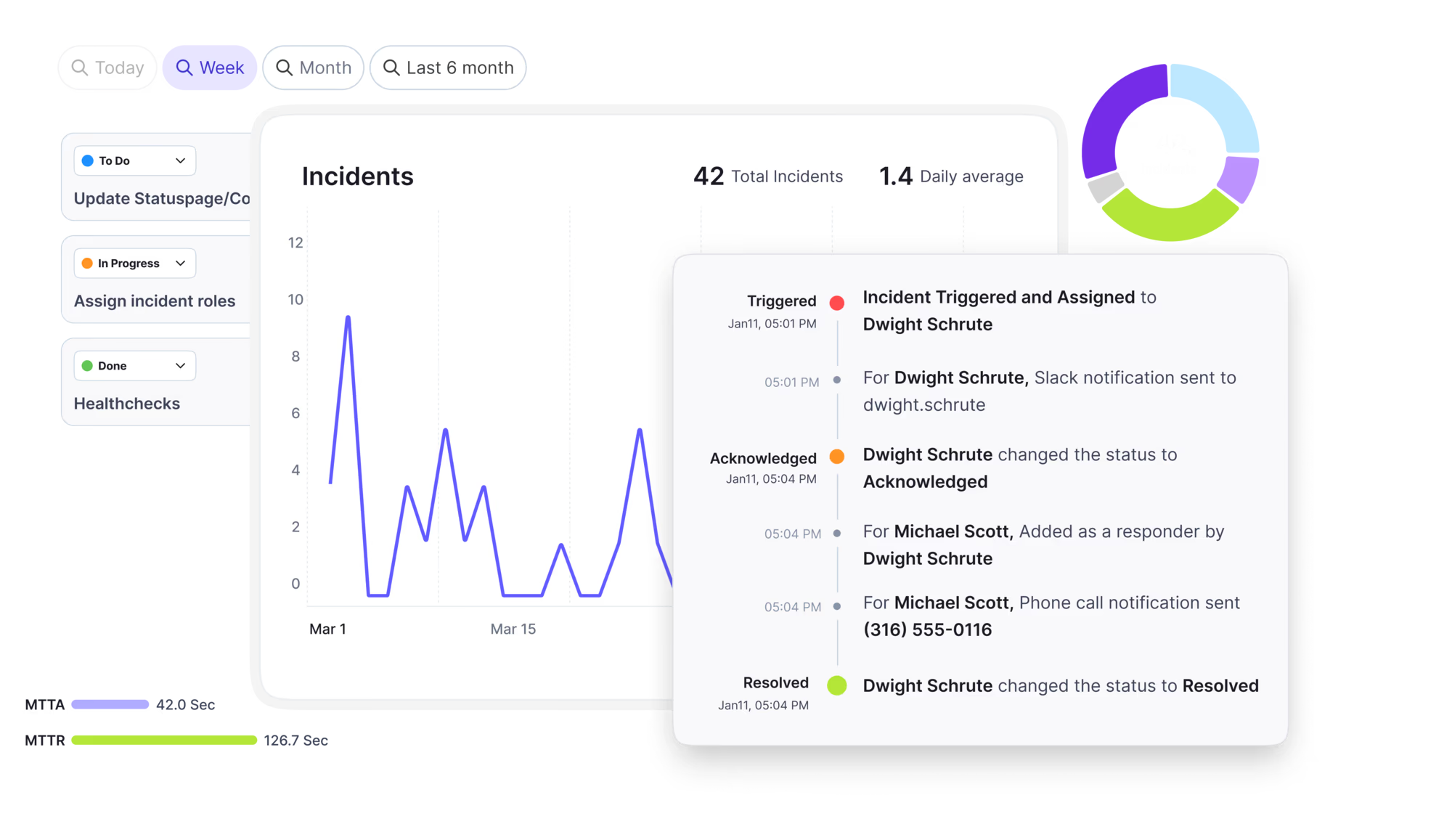
Automate postmortems, AI summaries, and post-incident workflows
Create, organize, and continuously improve your knowledge base to find the right answers with Sera AI.
We're here to help

The integration with Atlassian Jira using the Xurrent Integration Service is

The integration with Atlassian Jira using the Xurrent Integration Service is

The integration with Atlassian Jira using the Xurrent Integration Service is

The integration with Atlassian Jira using the Xurrent Integration Service is

The integration with Atlassian Jira using the Xurrent Integration Service is

The integration with Atlassian Jira using the Xurrent Integration Service is

The integration with Atlassian Jira using the Xurrent Integration Service is

The integration with Atlassian Jira using the Xurrent Integration Service is
Resolve issues quickly with an AI-powered system that automates ticketing.
Unifiy IT, HR, Facilities, Finance, and more on a single, AI-powered service platform.
Simplify on-call scheduling, automate escalations, and reduce burnout.
Automate postmortems, AI summaries, and post-incident workflows
Create, organize, and continuously improve your knowledge base to find the right answers with Sera AI.
Resolve plant floor and IT issues before they disrupt production.
Stay audit-ready while resolving issues and reducing operational risk.

Detect, respond, and resolve incidents fast to cut downtime and MTTR.

Keep your store online, even during your biggest sales moments.

Protect patient data and resolve issues fast, so care teams stay focused on care.

Standardize service delivery across every store and channel.

We are here to help 24/7

Connect with other Xurrent Users

Get insights and tips on how to get the most out of Xurrent

Apps, APIs, and updates

Xurrent service functionality

Eliminate manual tasks, optimize workflows, and deliver faster resolutions.
Learn how organizations have reduced downtime, improved 50% MTTA & MTTR, and cut costs with Xurrent IMR.
Discover Xurrent IMR's quick support, bidirectional integrations with Jira and Slack, and more cohesive incident response capabilities compared to Opsgenie.
Understand why users value Xurrent IMR for its intuitive interface, efficient incident alerting, customizable On-call schedules, and escalations.
Hyperautomation is the coordinated use of AI, robotic process automation (RPA), machine learning, and other intelligent technologies to automate complex, end-to-end business and IT processes at scale. Unlike traditional automation, which handles individual repetitive tasks, hyperautomation orchestrates multiple automation tools and techniques to identify, evaluate, and automate entire workflows—including processes that require decision-making, exception handling, and cross-system coordination. In ITSM and ITOM environments, hyperautomation extends beyond simple ticket routing or script execution to encompass intelligent triage, dynamic resource allocation, predictive maintenance, and automated remediation across interconnected service, incident, and operational workflows.
Hyperautomation combines process mining to discover automation opportunities, AI-powered decision engines to handle variability, and integration platforms to connect disparate systems. The goal is not just speed, but resilience: automating processes in a way that adapts to changing conditions, learns from outcomes, and reduces the manual overhead that slows incident response, service delivery, and operational visibility.
Hyperautomation matters because IT and service teams face escalating operational complexity—more alerts, more services, more integrations—while being asked to deliver faster resolution, higher availability, and lower cost. Manual processes cannot scale at the pace modern enterprises require. When incidents occur, hyperautomation reduces MTTR by automatically correlating alerts, enriching context, routing to the right responder, and executing remediation steps without human intervention. When service requests arrive, it accelerates fulfillment by orchestrating approvals, provisioning, and notifications across HR, IT, and facilities without manual handoffs.
The consequences of not adopting hyperautomation are measurable: longer incident resolution times, higher operational costs, increased risk of human error, and reduced team capacity for strategic work. Organizations that rely on static automation or manual coordination struggle with alert fatigue, inconsistent processes, and siloed visibility. Hyperautomation addresses these gaps by creating a unified, intelligent automation fabric that spans service management, incident response, and operations—ensuring that routine work is handled automatically, exceptions are escalated intelligently, and teams focus on outcomes rather than overhead.
For compliance and audit readiness, hyperautomation provides consistent, traceable execution of ITIL processes, SLA enforcement, and change workflows, reducing the risk of policy drift and manual documentation gaps.
Hyperautomation works by layering intelligent automation capabilities across the service and operations lifecycle. The process begins with discovery: process mining and analytics tools identify repetitive, high-volume workflows—such as password resets, server provisioning, or incident triage—that are candidates for automation. These workflows are then mapped and prioritized based on business impact, complexity, and automation feasibility.
Once identified, hyperautomation platforms use RPA to execute structured tasks (form filling, data entry, system updates), AI and machine learning to handle unstructured inputs (natural language ticket classification, anomaly detection, root cause analysis), and workflow orchestration to coordinate multi-step processes across ITSM, monitoring, CMDB, and collaboration tools. For example, when a monitoring alert fires, hyperautomation can correlate it with CMDB data, check for known issues in the knowledge base, create an incident ticket, notify the on-call engineer via ChatOps, and execute a predefined runbook—all without manual intervention.
Decision logic is embedded at each stage: if the automated remediation succeeds, the incident is closed and stakeholders are notified; if it fails, the incident is escalated with full context to a human responder. Machine learning continuously refines these decision trees by analyzing past incidents, resolution patterns, and feedback loops, improving accuracy and reducing false positives over time.
Integration is critical: hyperautomation platforms connect to ITSM systems, incident management tools, observability platforms, cloud infrastructure APIs, and communication channels through pre-built connectors, APIs, and webhooks. This ensures that automation spans the entire operational stack, not just isolated tools.
- Automated Incident Response in Financial Services : A bank's hyperautomation platform detects a spike in failed payment transactions through observability data, correlates it with a recent deployment in the CMDB, automatically rolls back the change, creates an incident ticket in the ITSM system, updates the status page, and notifies stakeholders—all within minutes, reducing MTTR from hours to minutes and preventing customer-facing downtime.
- Self-Service Provisioning in Healthcare IT : A hospital's hyperautomation workflow handles new employee onboarding by automatically provisioning Active Directory accounts, assigning role-based access to EHR systems, ordering hardware through procurement, scheduling orientation, and creating service desk tickets for exceptions—orchestrating approvals across HR, IT, and compliance without manual coordination, reducing onboarding time from days to hours.
- Proactive Capacity Management in SaaS Operations : A SaaS provider uses hyperautomation to monitor resource utilization across cloud infrastructure, predict capacity constraints using machine learning, automatically scale compute and storage resources, update the CMDB, log changes in the ITSM platform, and notify finance of cost implications—preventing performance degradation and ensuring SLA compliance without manual intervention.
- AIOps (Artificial Intelligence for IT Operations)
- Workflow Automation
- Incident Management
- Machine Learning
- Generative AI
---

.webp)
.webp)