




Blog
Insights & updates from our experts


Resolve plant floor and IT issues before they disrupt production.

Stay audit-ready while resolving issues and reducing operational risk.
Resolve issues quickly with an AI-powered system that automates ticketing.
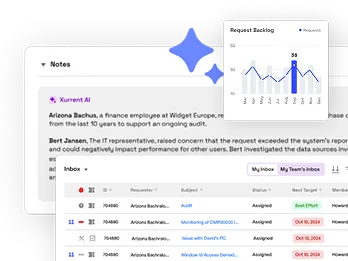
Unifiy IT, HR, Facilities, Finance, and more on a single, AI-powered service platform.
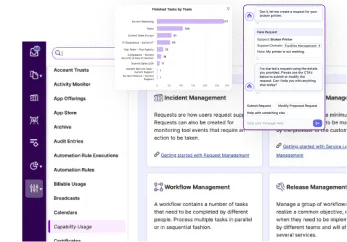
Simplify on-call scheduling, automate escalations, and reduce burnout.
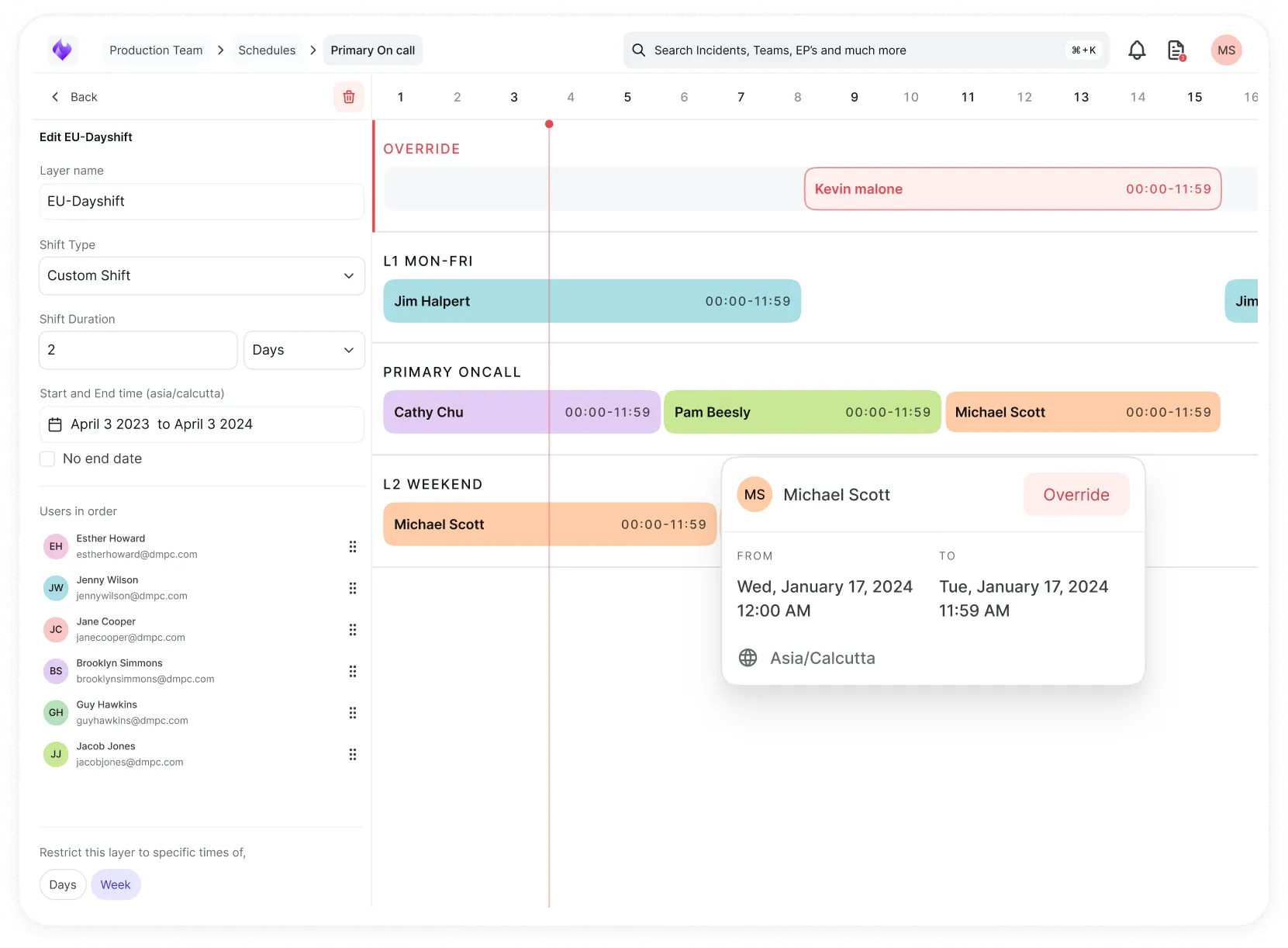
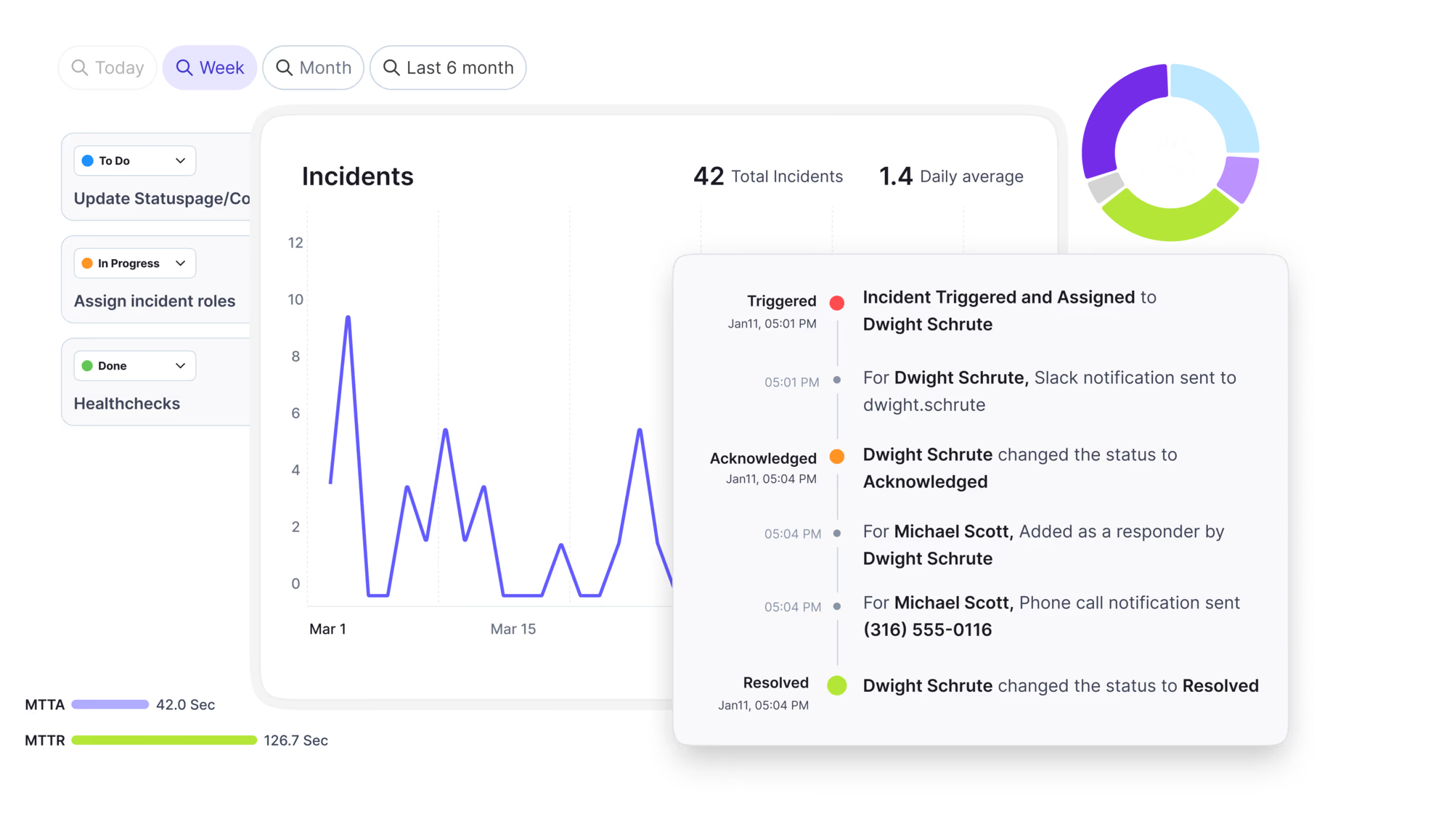
Automate postmortems, AI summaries, and post-incident workflows
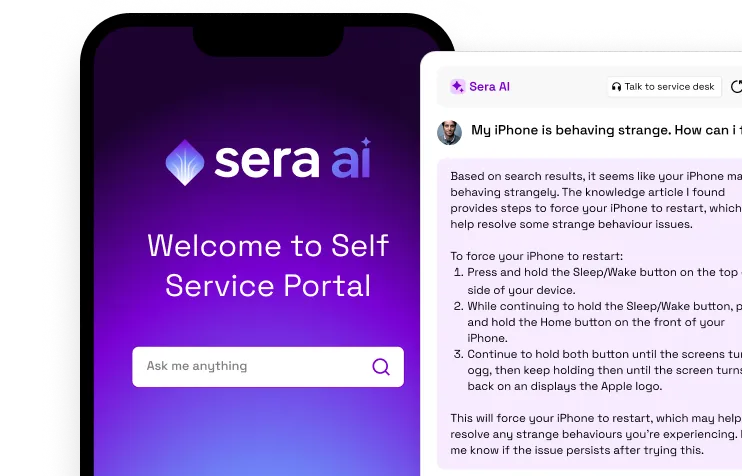
Create, organize, and continuously improve your knowledge base to find the right answers with Sera AI.
We're here to help

The integration with Atlassian Jira using the Xurrent Integration Service is

The integration with Atlassian Jira using the Xurrent Integration Service is

The integration with Atlassian Jira using the Xurrent Integration Service is

The integration with Atlassian Jira using the Xurrent Integration Service is

The integration with Atlassian Jira using the Xurrent Integration Service is

The integration with Atlassian Jira using the Xurrent Integration Service is

The integration with Atlassian Jira using the Xurrent Integration Service is

The integration with Atlassian Jira using the Xurrent Integration Service is
Resolve issues quickly with an AI-powered system that automates ticketing.
Unifiy IT, HR, Facilities, Finance, and more on a single, AI-powered service platform.
Simplify on-call scheduling, automate escalations, and reduce burnout.
Automate postmortems, AI summaries, and post-incident workflows
Create, organize, and continuously improve your knowledge base to find the right answers with Sera AI.
Resolve plant floor and IT issues before they disrupt production.
Stay audit-ready while resolving issues and reducing operational risk.

Detect, respond, and resolve incidents fast to cut downtime and MTTR.

Keep your store online, even during your biggest sales moments.

Protect patient data and resolve issues fast, so care teams stay focused on care.

Standardize service delivery across every store and channel.

We are here to help 24/7

Connect with other Xurrent Users

Get insights and tips on how to get the most out of Xurrent

Apps, APIs, and updates

Xurrent service functionality

Eliminate manual tasks, optimize workflows, and deliver faster resolutions.
Learn how organizations have reduced downtime, improved 50% MTTA & MTTR, and cut costs with Xurrent IMR.
Discover Xurrent IMR's quick support, bidirectional integrations with Jira and Slack, and more cohesive incident response capabilities compared to Opsgenie.
Understand why users value Xurrent IMR for its intuitive interface, efficient incident alerting, customizable On-call schedules, and escalations.
A Configuration Item (CI) is any component of an IT environment that must be tracked, managed, and controlled to deliver services reliably. CIs include physical hardware (servers, routers, laptops), software (applications, operating systems, licenses), documentation (runbooks, network diagrams, change records), and even non-technical elements like contracts or service agreements. In ITSM frameworks like ITIL, a CI is the fundamental unit stored in a Configuration Management Database (CMDB), where each item is assigned attributes—such as owner, location, status, version, and dependencies—that define its role in the broader service architecture. For DevOps and SRE teams, CIs often map to infrastructure-as-code resources, cloud instances, container images, or microservices that must be versioned and monitored to maintain system stability and enable rapid incident response.
Accurate CI tracking is the foundation of effective incident management, change control, and root cause analysis. When an incident occurs, responders need to know which CIs are affected, how they relate to one another, and who owns them—without this context, MTTR increases and teams waste time chasing dependencies across siloed tools. During change management, understanding CI relationships prevents unintended outages by revealing which services depend on a database upgrade or network reconfiguration. For compliance and audit purposes, CIs provide the evidence trail required to demonstrate control over IT assets, software licenses, and security configurations. Organizations that fail to maintain accurate CI data experience repeated incidents from the same root causes, longer resolution times due to missing context, and higher operational costs from redundant or untracked assets. In modern hybrid and multi-cloud environments, where infrastructure is dynamic and distributed, CI management becomes even more critical—teams must track ephemeral resources, auto-scaling groups, and third-party SaaS integrations alongside traditional hardware.
CI management begins with discovery and inventory, where automated tools scan the environment to identify assets and populate the CMDB with baseline data. Each CI is assigned a unique identifier and classified by type (hardware, software, service, document), then enriched with attributes like version, owner, location, and operational status. The next step is relationship mapping, where dependencies and connections between CIs are documented—for example, linking a web application CI to its database server, load balancer, and SSL certificate CIs. This relationship data powers impact analysis during incidents and change planning. Throughout the CI lifecycle, configuration management processes ensure that changes to CIs are recorded, approved, and tracked, maintaining an audit trail that connects every modification to a change request or incident ticket. Automated discovery tools continuously update the CMDB to reflect real-time changes, such as new cloud instances or decommissioned servers, preventing configuration drift. In platforms like Xurrent, CIs are integrated across ITSM and IMR workflows, so when an incident is triggered by a monitoring alert, the system automatically surfaces the affected CIs, their dependencies, and recent changes, giving responders the context they need to restore service quickly.
- E-commerce platform incident response : When a payment gateway fails during peak traffic, the incident management system identifies the gateway API as the affected CI, then surfaces its dependencies—the load balancer, database cluster, and third-party payment processor integration—allowing the SRE team to isolate the failure to a recent certificate expiration on the load balancer CI and restore service within minutes instead of hours.
- Healthcare system change management : A hospital IT team plans to upgrade its electronic health records (EHR) software, which is tracked as a CI with relationships to 15 downstream CIs including patient portal, lab integration, and billing system; the CMDB's impact analysis reveals that the upgrade will affect the lab interface, prompting the team to schedule the change during a maintenance window and notify the lab operations team in advance.
- Financial services compliance audit : A bank's compliance team uses the CMDB to generate a report of all server CIs running end-of-life operating systems, cross-referencing each CI's owner, location, and associated services; this CI-level visibility enables the team to prioritize patching based on risk, demonstrate control to auditors, and avoid penalties for non-compliance with regulatory standards.
- CMDB (Configuration Management Database)
- Change Management
- Incident Management
- Service Catalog
- IT Asset Management (ITAM)
---

.webp)
.webp)