




Blog
Insights & updates from our experts


Resolve plant floor and IT issues before they disrupt production.

Stay audit-ready while resolving issues and reducing operational risk.
Resolve issues quickly with an AI-powered system that automates ticketing.
Unifiy IT, HR, Facilities, Finance, and more on a single, AI-powered service platform.
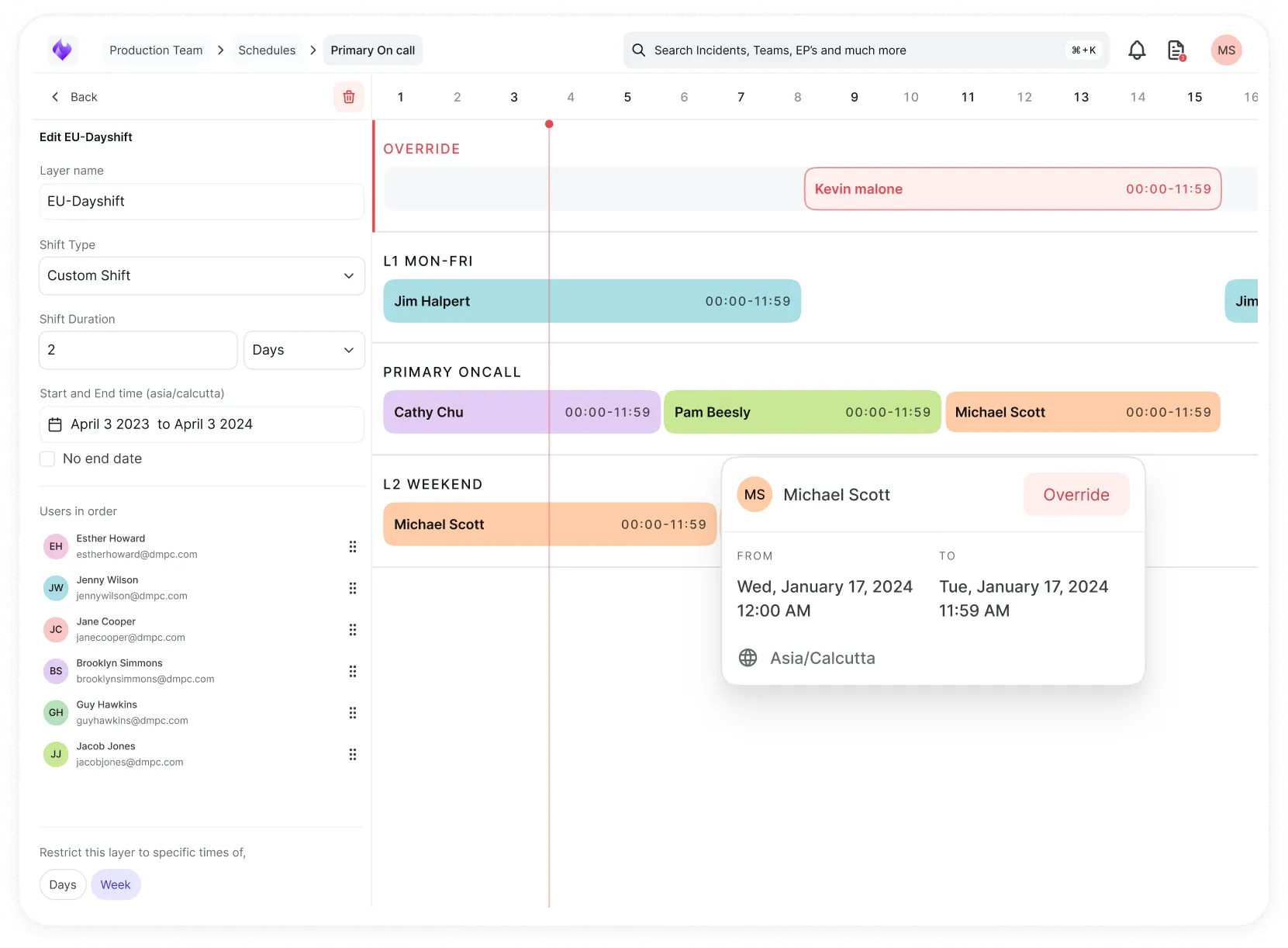
Simplify on-call scheduling, automate escalations, and reduce burnout.
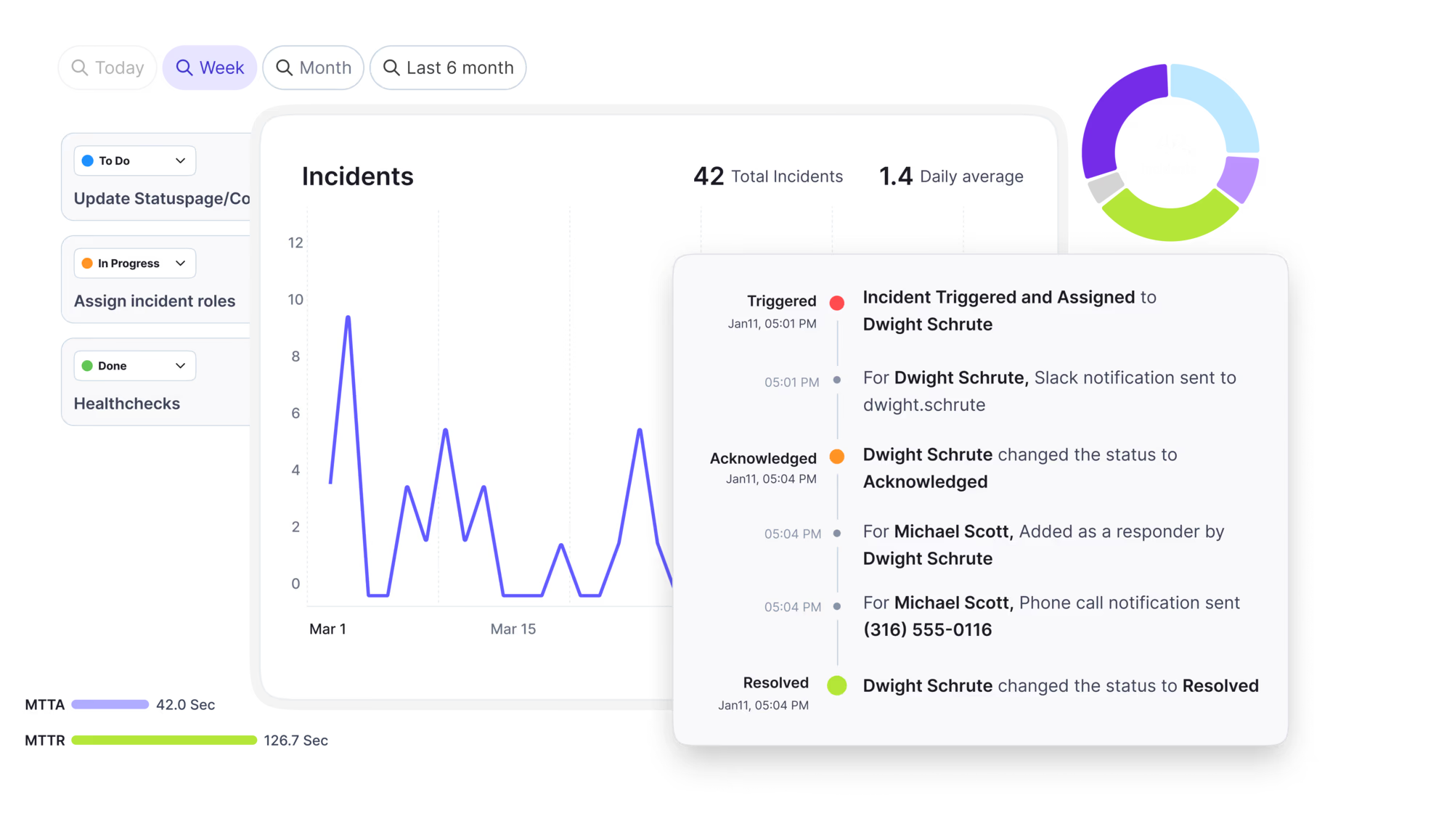
Automate postmortems, AI summaries, and post-incident workflows
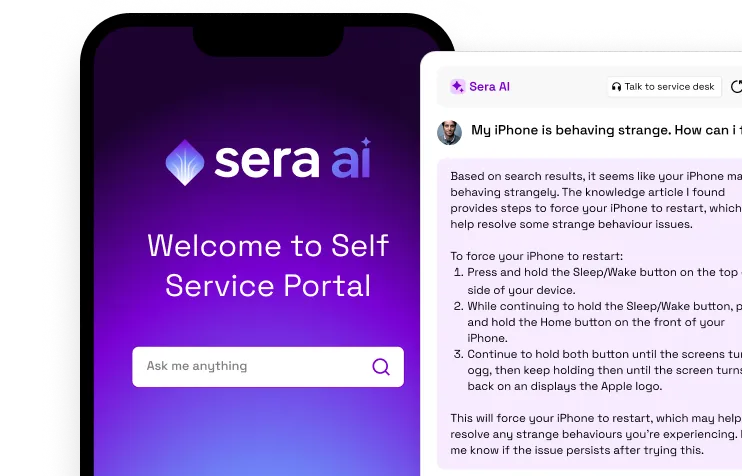
Create, organize, and continuously improve your knowledge base to find the right answers with Sera AI.
We're here to help

The integration with Atlassian Jira using the Xurrent Integration Service is

The integration with Atlassian Jira using the Xurrent Integration Service is

The integration with Atlassian Jira using the Xurrent Integration Service is

The integration with Atlassian Jira using the Xurrent Integration Service is

The integration with Atlassian Jira using the Xurrent Integration Service is

The integration with Atlassian Jira using the Xurrent Integration Service is

The integration with Atlassian Jira using the Xurrent Integration Service is

The integration with Atlassian Jira using the Xurrent Integration Service is
Resolve issues quickly with an AI-powered system that automates ticketing.
Unifiy IT, HR, Facilities, Finance, and more on a single, AI-powered service platform.
Simplify on-call scheduling, automate escalations, and reduce burnout.
Automate postmortems, AI summaries, and post-incident workflows
Create, organize, and continuously improve your knowledge base to find the right answers with Sera AI.
Resolve plant floor and IT issues before they disrupt production.
Stay audit-ready while resolving issues and reducing operational risk.

Detect, respond, and resolve incidents fast to cut downtime and MTTR.

Keep your store online, even during your biggest sales moments.

Protect patient data and resolve issues fast, so care teams stay focused on care.
Standardize service delivery across every store and channel.

We are here to help 24/7

Connect with other Xurrent Users

Get insights and tips on how to get the most out of Xurrent

Apps, APIs, and updates

Xurrent service functionality

Eliminate manual tasks, optimize workflows, and deliver faster resolutions.
Learn how organizations have reduced downtime, improved 50% MTTA & MTTR, and cut costs with Xurrent IMR.
Discover Xurrent IMR's quick support, bidirectional integrations with Jira and Slack, and more cohesive incident response capabilities compared to Opsgenie.
Understand why users value Xurrent IMR for its intuitive interface, efficient incident alerting, customizable On-call schedules, and escalations.

A Saturday night SAP update that was supposed to take two hours turns into a week-long production crisis. Finance is blind to what happened, operations is furious, and IT gets blamed for how a "simple" change became a fire drill.
Manufacturing IT teams running ERP environments have done the hard work. The CMDB is populated. Change records exist. Ownership is documented. The process looks controlled on paper.
The data doesn't move on its own. That's the problem.
In plant after plant, the same pattern repeats: silos between IT, operations, and finance; manual coordination via email, spreadsheets, and ad hoc approvals; and no real-time visibility into how a change in one system will ripple into another. Traditional ITSM platforms technically have the pieces (CMDB, change calendar, CI dependencies, monitoring feeds), but those pieces are isolated from each other and from the people who need to see them.
The result is predictable. A change that looks low-risk in the service desk turns into an urgent incident on the shop floor. Finance discovers closing delays after the fact. Operations discovers broken integrations when Sunday planning starts. IT service delivery directors need to know whether their current platform can support responsibility-driven workflow automation without months of consulting work every time the change path shifts.
A populated CMDB is a map. It shows what exists, what depends on what, and who owns it. It doesn't move. When an ERP change request hits the queue, someone still has to read the map, infer who needs to know, and start making calls.
The core problem in manufacturing ERP change management is missing action. Three culprits drive that gap.
In a typical plant network, IT owns the SAP landscape and core infrastructure. Operations owns production planning, MES, and line scheduling. Finance owns period close and reporting. Each group understands its own constraints (maintenance windows, takt time, close calendars), but those constraints rarely live inside the same workflow.
So when IT scopes an SAP transport that touches production planning, the default behavior is to ask, "Is this technically safe?" rather than, "Who in operations and finance needs to see this before we lock in the window?" The CMDB might list the planning system as a dependent CI. That doesn't mean anyone in operations ever sees the ticket.
Because cross-functional routing isn't baked into the ITSM workflows, site IT teams patch the gap manually:
Each workaround seems harmless in isolation. At scale, they become a coordination tax that adds up. People change roles. Plants add new lines. Close calendars shift. The manual lists and mental models fall out of date long before anyone updates the workflow logic.
ERP changes rarely stay contained within one application boundary. A tweak to production planning configuration touches procurement lead times. A finance module update lands during a regional close. A scheduling parameter change ripples into warehouse picking and shipping.
Traditional ITSM platforms can document every dependency accurately. But if that dependency mapping isn't wired into the approval paths, notifications, and change calendar conflicts, the insight sits idle. A change can look "low risk" in isolation while it overlaps with a peak production run or a critical close window.
Put together, these three forces create the same outcome: the CMDB provides clarity, but workflows don't coordinate the people tied to those relationships. Most platforms running manufacturing ERP changes today were built to support the first, not the second.
To see how those forces play out, return to a familiar pattern.
A finance team requests what should be a routine SAP module update: a patch that improves cost allocation reporting. It's a Friday afternoon request. IT creates the change, reviews it, and schedules it for Saturday night, the traditional low-impact window.
On paper, everything looks clean:
But the workflow never uses that CI mapping to coordinate people: nobody tells operations, nobody tells production planning, and nobody checks whether the integration between SAP and the demand forecasting system (which operations uses for Sunday planning) has been tested against the new module version.
Saturday night, the change goes live on schedule. Two hours later, production planning tries to pull demand forecasts on Sunday morning. The integration fails silently. SAP is up, but the data isn't flowing into the planning system.
On the plant floor and in regional planning offices, the impact is immediate:
By Monday morning, everything feels like a surprise outage, even though there was a change record in the system the entire time: finance is blind to why their "simple" update caused a production crisis, operations blames IT for "not testing properly," and IT gets blamed for "not understanding the business."
The change gets rolled back under pressure. A week of rework follows: recreating lost planning runs, reconciling orders that were staged on bad data, explaining variances to regional leadership. Stakeholders lose confidence in change management. Next time a change comes in, it gets delayed even longer because everyone wants extra review cycles. Simple changes become fire drills by default.
Now rewind to the same request in an environment where the ITSM platform connects the CMDB, change workflows, and cross-functional responsibilities.
The CMDB still maps the CIs the module touches, including the production planning system and its integrations. But it does more than record technical relationships. It also defines responsibilities: when changes touch demand forecasting infrastructure, operations planning and production scheduling need visibility and sign-off. When changes overlap with period close windows, finance controllers need to approve timing.
Finance submits the same change on Friday afternoon. This time, the workflow automation acts immediately:
Operations flags immediately: "We haven't validated this module version against our demand forecasting integration. We need to test before Saturday." IT and operations collaborate, schedule a Thursday test window, validate the integration, and capture that validation in the change record.
Saturday's change now includes operations' testing sign-off. The update goes smoothly. Production planning works Sunday morning as expected. Finance gets better reporting on Monday. No fire drill, no rollbacks, no perception that IT "got lucky." The process made the safe outcome the default.
The platform's ability to turn dependency data into governed, responsibility-driven action made the difference, not the SAP patch itself. Someone built the workflow once, CI-aware, role-aware, and time-aware, and now every similar change surfaces the right people automatically. Because building that workflow didn't require a three-month consultant engagement, it happened and continues to get tuned as business requirements change.
The shift that matters is from passive data to governed action: a unified platform where the CMDB, change records, workflows, approvals, notifications, and reporting operate as a single flow rather than a collection of connected systems.
In manufacturing environments, that shift shows up in three specific ways.
In a unified model, CIs carry both technical attributes (system, environment, integration points) and responsibility attributes (plant, functional owner, business criticality, planning windows, close cycles). Instead of a generic "application owner" field, the CMDB knows:
That responsibility mapping turns the Saturday night SAP update from a purely technical change into a cross-functional event with predefined stakeholders.
Rather than relying on manual forwarding and tribal knowledge, change workflows route automatically based on CI tags and responsibility rules. In practical terms, service delivery teams can encode patterns like:
Those rules ensure that the people who live with the impact of ERP changes see and shape them before go-live, not after.
The final differentiator is how those workflows get created and maintained. In most traditional ITSM platforms, responsibility-aware logic lives in code: scripts, business rules, and custom integrations that require specialized developers or outside consultants.
With unified, no-code ITSM, service teams can use natural language prompts or drag-and-drop builders to express the same logic themselves. A change manager can say, "When this CI is involved, add an operations approval step and send a heads-up to finance," and the platform generates the routing rule, test cases, and monitoring hooks.
That shift matters in the day-to-day realities of manufacturing IT:
The governance requirement is real: no-code tools without process ownership controls create sprawl. But that governance stays internal. Process owners inside IT and operations define who can create, modify, and approve workflows so automation stays aligned with enterprise standards without waiting for external development resources.
The result is a platform that closes the gap between insight and action. AI can assist with impact analysis inside the workflow itself, not as a separate report that someone has to copy, paste, and forward. Embedded iPaaS connects ERP, MES, scheduling platforms, and monitoring tools through governed integrations instead of one-off scripts that break silently when a field name changes or an engineer leaves.
Most manufacturing IT teams run disciplined operations on platforms that make cross-functional automation expensive enough that manual coordination becomes the default. The disruption comes from a platform constraint, not a process failure.
When you look across a quarter's worth of SAP transports, MES updates, warehouse management tweaks, and scheduling adjustments, the pattern is consistent. The cost rarely comes from a lack of visibility. It comes from handoffs that never should have been manual in the first place.
When your ITSM platform connects IT to operations and finance, the experience changes:
In that environment, simple changes stay simple because the right people have visibility upfront. Fire drills become the exception, not the pattern, and IT service delivery operates as a true control point for ERP change, not a coordination bottleneck.
The practical question for manufacturing IT leaders is straightforward: Does your current ITSM platform let your service teams build and adjust the responsibility-driven workflows your ERP environment requires, or does it require a consulting engagement every time the change path shifts?