





Blog
Insights & updates from our experts


Resolve plant floor and IT issues before they disrupt production.

Stay audit-ready while resolving issues and reducing operational risk.
Resolve issues quickly with an AI-powered system that automates ticketing.
Unifiy IT, HR, Facilities, Finance, and more on a single, AI-powered service platform.
Simplify on-call scheduling, automate escalations, and reduce burnout.
Automate postmortems, AI summaries, and post-incident workflows
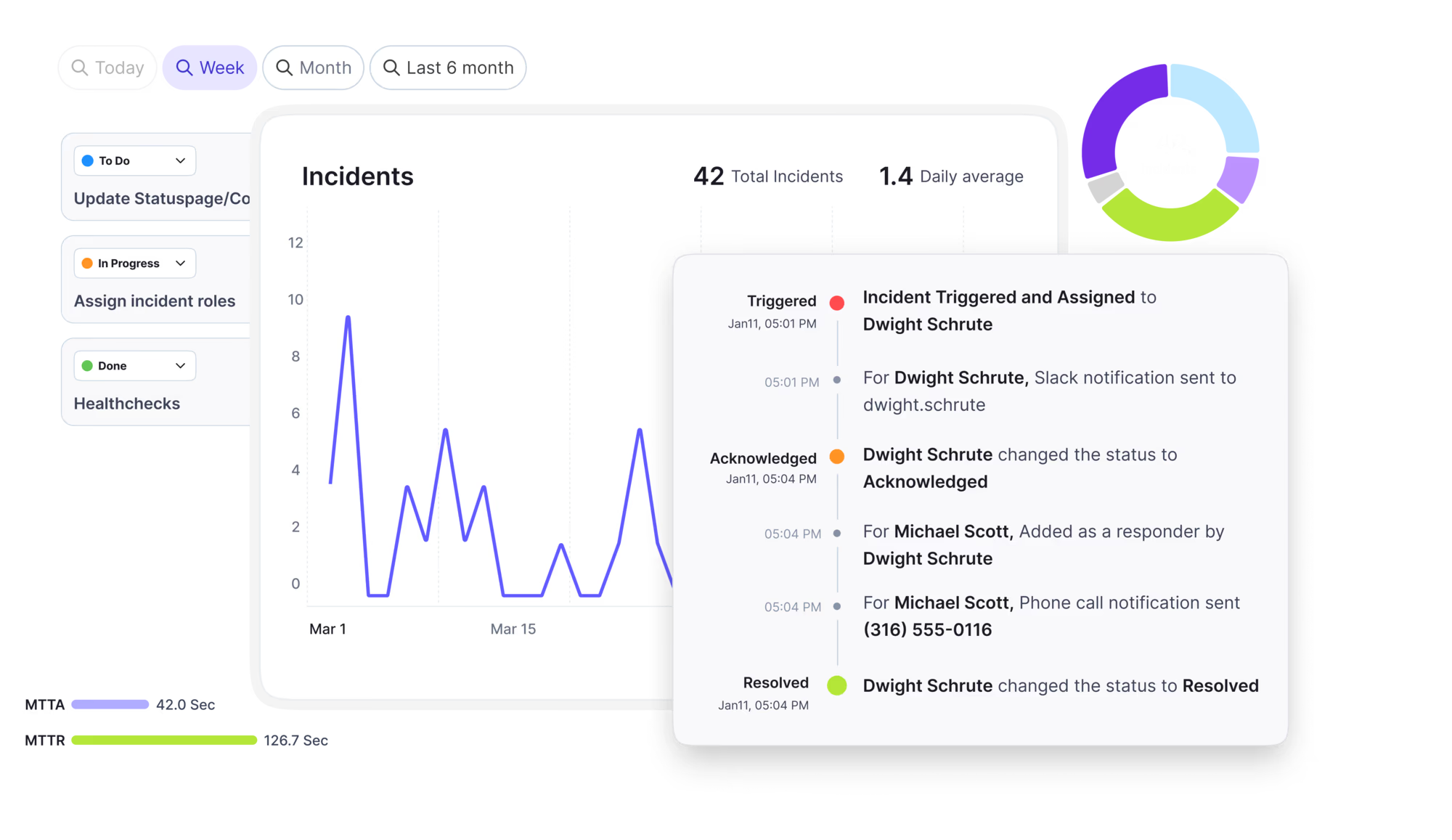
Create, organize, and continuously improve your knowledge base to find the right answers with Sera AI.
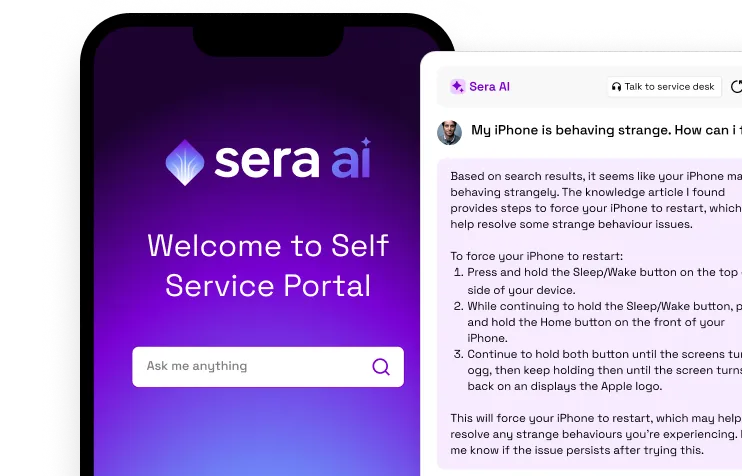
We're here to help

The integration with Atlassian Jira using the Xurrent Integration Service is

The integration with Atlassian Jira using the Xurrent Integration Service is

The integration with Atlassian Jira using the Xurrent Integration Service is

The integration with Atlassian Jira using the Xurrent Integration Service is

The integration with Atlassian Jira using the Xurrent Integration Service is

The integration with Atlassian Jira using the Xurrent Integration Service is

The integration with Atlassian Jira using the Xurrent Integration Service is

The integration with Atlassian Jira using the Xurrent Integration Service is
Resolve issues quickly with an AI-powered system that automates ticketing.
Unifiy IT, HR, Facilities, Finance, and more on a single, AI-powered service platform.
Simplify on-call scheduling, automate escalations, and reduce burnout.
Automate postmortems, AI summaries, and post-incident workflows
Create, organize, and continuously improve your knowledge base to find the right answers with Sera AI.
Resolve plant floor and IT issues before they disrupt production.
Stay audit-ready while resolving issues and reducing operational risk.

Detect, respond, and resolve incidents fast to cut downtime and MTTR.

Keep your store online, even during your biggest sales moments.

Protect patient data and resolve issues fast, so care teams stay focused on care.

Standardize service delivery across every store and channel.

We are here to help 24/7

Connect with other Xurrent Users

Get insights and tips on how to get the most out of Xurrent

Apps, APIs, and updates

Xurrent service functionality

Eliminate manual tasks, optimize workflows, and deliver faster resolutions.
Learn how organizations have reduced downtime, improved 50% MTTA & MTTR, and cut costs with Xurrent IMR.
Discover Xurrent IMR's quick support, bidirectional integrations with Jira and Slack, and more cohesive incident response capabilities compared to Opsgenie.
Understand why users value Xurrent IMR for its intuitive interface, efficient incident alerting, customizable On-call schedules, and escalations.
A Request (or Service Request ) is a formal user-initiated submission for information, access to a service, or a standard change that does not result from a service failure or degradation. Unlike incidents—which address unplanned interruptions—service requests represent routine, pre-approved asks such as password resets, software installations, access provisioning, hardware orders, or information queries. In ITIL terminology, service requests are fulfilled through the Request Fulfillment process, which emphasizes speed, self-service, and standardization. In enterprise service management (ESM) contexts, the concept extends beyond IT to HR onboarding, facilities desk bookings, finance expense approvals, and legal document requests, all managed through a unified service catalog and workflow engine.
Service requests are typically low-risk, repeatable, and governed by predefined approval and fulfillment workflows. They are cataloged in a service catalog—a structured menu of available services—where users can browse, select, and submit requests through self-service portals or chatbots. Each request type is associated with a fulfillment model that defines required approvals, assignment groups, SLA targets, and automation steps. Modern ITSM platforms use AI-driven routing, auto-approvals for low-risk items, and workflow orchestration to accelerate fulfillment and reduce manual effort.
Service requests account for the majority of service desk volume in most organizations—often 60–80% of all tickets—making efficient request management critical to user satisfaction, operational cost, and IT productivity. When request fulfillment is slow, manual, or inconsistent, users experience frustration, shadow IT proliferates, and service desk teams are overwhelmed by repetitive work. Conversely, well-designed request workflows with self-service options, automated approvals, and clear SLA visibility drive first-contact resolution rates above 70%, reduce average fulfillment time from days to hours, and free specialists to focus on incidents, problems, and strategic projects.
Service request management also directly impacts compliance and security. Access requests, for example, require audit trails, role-based approvals, and automated provisioning/deprovisioning to meet SOC 2, ISO 27001, and GDPR requirements. Without structured request workflows, organizations face audit findings, unauthorized access, and orphaned accounts. In ESM scenarios, request management extends governance and transparency to non-IT functions, ensuring that HR, facilities, and finance services are delivered with the same rigor, visibility, and accountability as IT services.
Service request fulfillment follows a structured lifecycle that begins with submission and ends with closure and feedback. Users access a service catalog through a self-service portal, mobile app, or virtual agent, where they browse available services organized by category (e.g., IT, HR, Facilities). Upon selecting a service, users complete a request form that captures required details—such as software version, access level, or delivery location—and submit the request, which is logged as a ticket in the ITSM platform.
The platform evaluates the request against predefined fulfillment models. Low-risk, pre-approved requests (e.g., password resets, standard software installs) may be auto-approved and routed directly to fulfillment teams or automated scripts. Higher-risk requests (e.g., elevated access, budget approvals) trigger multi-stage approval workflows, where designated approvers review the request, check policy compliance, and approve or reject based on business rules. Notifications are sent at each stage to keep users informed.
Once approved, the request is assigned to the appropriate fulfillment team—IT support, HR operations, facilities management—or executed automatically via integrations with provisioning systems, identity management platforms, or configuration management databases (CMDBs). Fulfillment teams complete the work, update the ticket with notes and attachments, and mark the request as resolved. Users receive a closure notification and are prompted to provide feedback via CSAT surveys. The platform tracks SLA compliance, fulfillment time, and user satisfaction, feeding analytics dashboards that identify bottlenecks, high-volume request types, and opportunities for further automation.
* IT access provisioning in financial services : A new analyst joins a trading desk and submits a service request for access to Bloomberg Terminal, internal risk systems, and shared drives. The request triggers a three-tier approval workflow—manager, compliance, and IT security—each reviewing role appropriateness and regulatory requirements. Upon final approval, the ITSM platform automatically provisions Active Directory groups, licenses, and VPN access via API integrations, completing fulfillment in under two hours and generating a full audit trail for SOC 2 compliance.
* HR onboarding request in manufacturing : An HR coordinator submits an onboarding request for a new plant engineer, specifying start date, department, and equipment needs. The ESM platform orchestrates a multi-department workflow: IT provisions laptop and email, facilities assigns a desk and safety gear, HR schedules orientation sessions, and payroll configures direct deposit. Each task is tracked in a unified dashboard, and the new hire receives a welcome email with credentials and schedule on day one, reducing onboarding time from five days to one.
* Facilities desk booking in a hybrid workplace : An employee submits a request to reserve a hot desk and meeting room for an upcoming client visit. The request is auto-approved based on availability, and the facilities management system updates the desk reservation calendar, sends a QR code for building access, and notifies the on-site team to prepare the space. The entire process completes in under 60 seconds, with zero manual intervention, improving space utilization and user experience.
* Incident
* Change Management
* Service Catalog
* Service Desk
* Service Level Agreement (SLA)
---

.webp)
.webp)