




Blog
Insights & updates from our experts


Resolve plant floor and IT issues before they disrupt production.

Stay audit-ready while resolving issues and reducing operational risk.
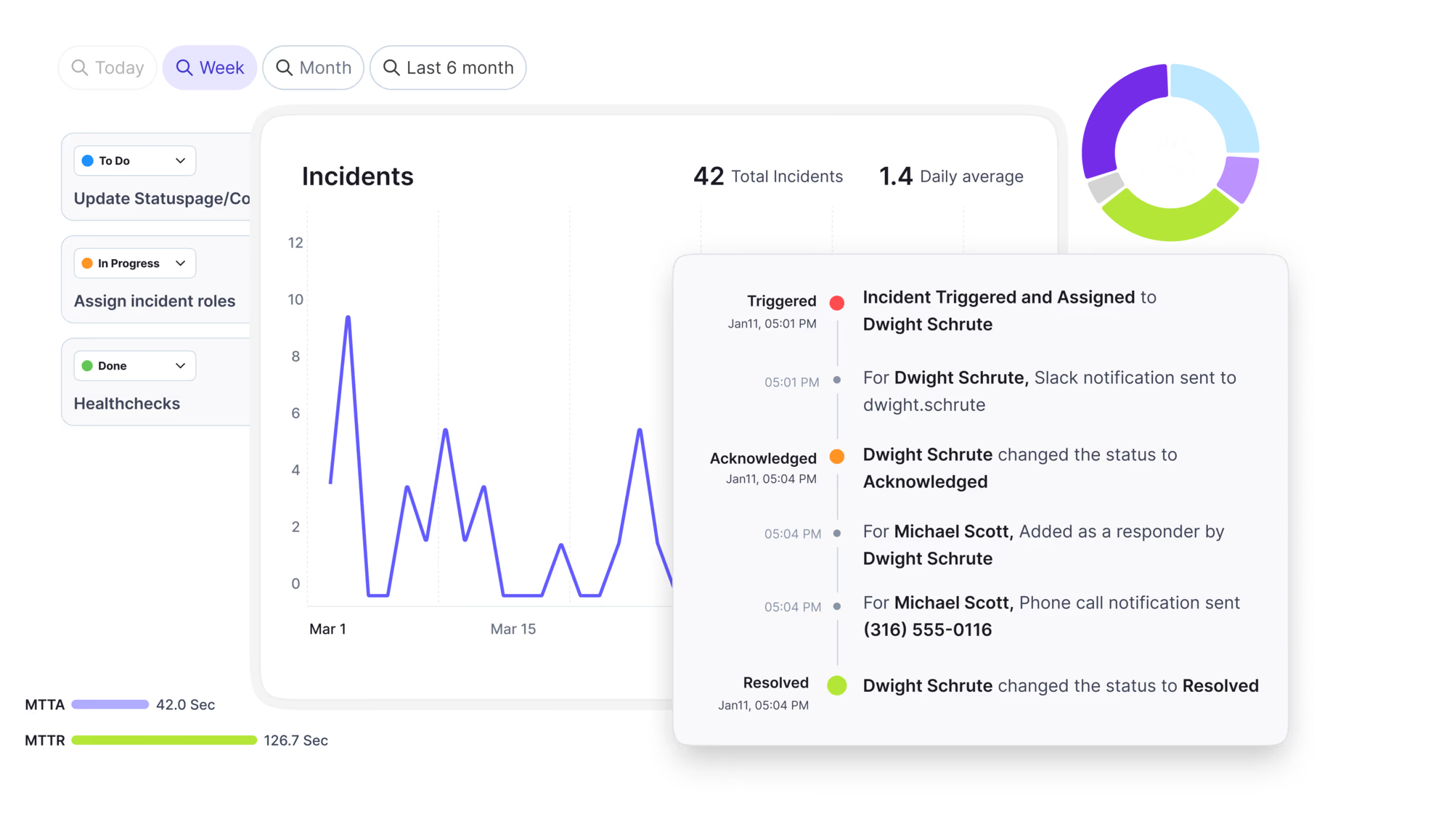
Resolve issues quickly with an AI-powered system that automates ticketing.
Unifiy IT, HR, Facilities, Finance, and more on a single, AI-powered service platform.
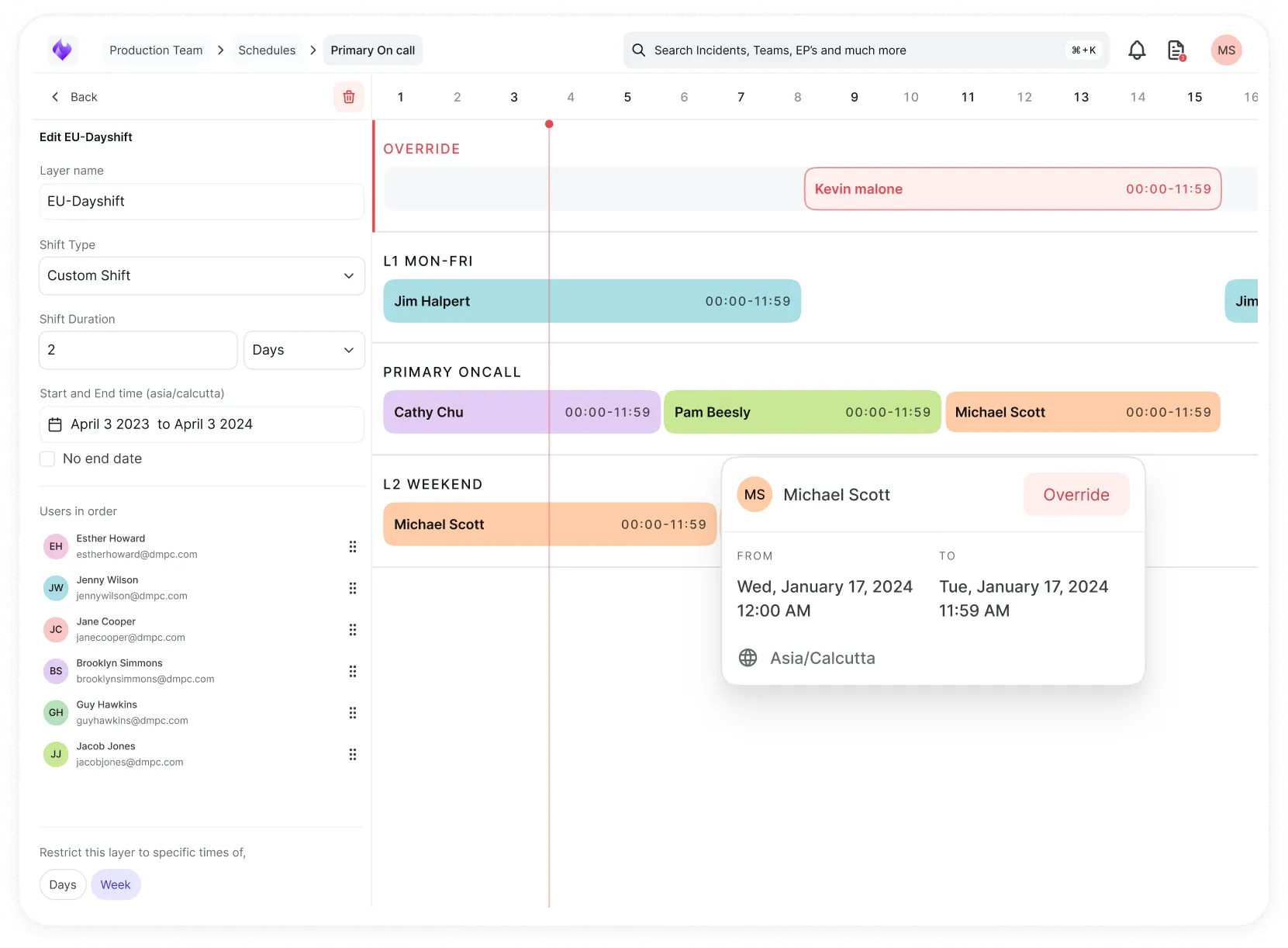
Simplify on-call scheduling, automate escalations, and reduce burnout.
Automate postmortems, AI summaries, and post-incident workflows
Create, organize, and continuously improve your knowledge base to find the right answers with Sera AI.
We're here to help

The integration with Atlassian Jira using the Xurrent Integration Service is

The integration with Atlassian Jira using the Xurrent Integration Service is

The integration with Atlassian Jira using the Xurrent Integration Service is

The integration with Atlassian Jira using the Xurrent Integration Service is

The integration with Atlassian Jira using the Xurrent Integration Service is

The integration with Atlassian Jira using the Xurrent Integration Service is

The integration with Atlassian Jira using the Xurrent Integration Service is

The integration with Atlassian Jira using the Xurrent Integration Service is
Resolve issues quickly with an AI-powered system that automates ticketing.
Unifiy IT, HR, Facilities, Finance, and more on a single, AI-powered service platform.
Simplify on-call scheduling, automate escalations, and reduce burnout.
Automate postmortems, AI summaries, and post-incident workflows
Create, organize, and continuously improve your knowledge base to find the right answers with Sera AI.
Resolve plant floor and IT issues before they disrupt production.
Stay audit-ready while resolving issues and reducing operational risk.

Detect, respond, and resolve incidents fast to cut downtime and MTTR.

Keep your store online, even during your biggest sales moments.

Protect patient data and resolve issues fast, so care teams stay focused on care.

Standardize service delivery across every store and channel.

We are here to help 24/7

Connect with other Xurrent Users

Get insights and tips on how to get the most out of Xurrent

Apps, APIs, and updates

Xurrent service functionality

Eliminate manual tasks, optimize workflows, and deliver faster resolutions.
Learn how organizations have reduced downtime, improved 50% MTTA & MTTR, and cut costs with Xurrent IMR.
Discover Xurrent IMR's quick support, bidirectional integrations with Jira and Slack, and more cohesive incident response capabilities compared to Opsgenie.
Understand why users value Xurrent IMR for its intuitive interface, efficient incident alerting, customizable On-call schedules, and escalations.
Recovery Time Objective (RTO) is the maximum acceptable duration that a service, application, or system can remain unavailable following an unplanned disruption before business impact becomes unacceptable. RTO defines the target timeframe—measured in minutes, hours, or days—within which normal operations must be restored to meet business continuity requirements. Unlike recovery point objective (RPO), which measures acceptable data loss in time, RTO measures acceptable downtime. Organizations set RTOs based on service criticality, regulatory requirements, revenue impact, and customer expectations, then design backup systems, failover procedures, incident response workflows, and infrastructure redundancy to meet those targets.
RTO is typically documented in service level agreements (SLAs), business continuity plans, and disaster recovery runbooks. A payment processing system might have an RTO of 15 minutes, while an internal HR portal might tolerate a 4-hour RTO. The tighter the RTO, the more investment required in high-availability architecture, automated failover, real-time replication, and on-call staffing.
RTO directly determines how much downtime an organization can absorb before financial, operational, or reputational damage escalates. Every minute of unplanned outage carries measurable cost—lost transactions, missed SLA penalties, customer churn, regulatory fines, and eroded trust. For revenue-critical services like e-commerce platforms or SaaS applications, even a 5-minute outage can result in six-figure losses and immediate customer complaints.
Setting realistic RTOs forces alignment between business stakeholders and technical teams. Business leaders define what level of downtime is tolerable based on revenue impact and customer expectations; IT and engineering teams then architect systems, automate recovery procedures, and staff incident response to meet those targets. Without clear RTOs, teams operate reactively, recovery efforts lack prioritization, and stakeholders have no shared understanding of acceptable risk.
RTO also drives technology and staffing decisions. A 15-minute RTO for a database service requires active-active replication, automated failover, 24/7 on-call coverage, and tested runbooks. A 24-hour RTO might allow manual restoration from backups during business hours. Misaligned RTOs—where business expectations exceed technical capability—create friction during incidents, finger-pointing during postmortems, and unmet SLAs.
Organizations establish RTOs through business impact analysis, evaluating each service's criticality, dependencies, and downtime costs. Finance, operations, and IT leadership collaborate to assign RTO values that balance business risk against recovery investment. Once set, RTOs inform architecture decisions: services with sub-hour RTOs typically require redundant infrastructure, automated health checks, and instant failover capabilities, while services with multi-hour RTOs may rely on manual recovery from backups.
During incident response, RTO acts as the countdown clock. When a service fails, the incident timeline starts immediately, and responders work against the RTO deadline to restore functionality. Incident management platforms track elapsed time, escalate to additional responders as the RTO approaches, and trigger predefined escalation paths if the target is at risk. Status pages communicate expected restoration times to stakeholders based on RTO commitments.
After restoration, teams compare actual recovery time against the RTO target. If actual time exceeded the RTO, the incident triggers a postmortem to identify root causes, process gaps, or architectural weaknesses. If the RTO was met, teams validate that procedures worked as designed. Over time, RTO performance data informs capacity planning, tooling investments, and SLA negotiations with customers or internal business units.
- E-commerce platform during peak season : An online retailer sets a 10-minute RTO for its checkout service during Black Friday, knowing that every minute of downtime costs $50,000 in lost sales. The platform runs active-active database replication across three availability zones with automated failover, ensuring that if one zone fails, traffic instantly reroutes to healthy zones without manual intervention.
- Healthcare patient records system : A hospital defines a 2-hour RTO for its electronic health records (EHR) system, balancing clinical workflow continuity against recovery complexity. The system uses daily backups and documented manual recovery procedures, with on-call IT staff trained to restore database snapshots and validate data integrity within the 2-hour window during off-peak hours.
- SaaS collaboration tool for enterprise customers : A team messaging platform commits to a 30-minute RTO in its enterprise SLA, with financial penalties if breached. The platform maintains hot standby infrastructure, automated incident detection via synthetic monitoring, and a dedicated SRE team with runbooks for common failure scenarios, ensuring rapid detection, diagnosis, and restoration.
- Incident Management
- Mean Time to Repair
- Service Level Agreement
- Recovery Point Objective
- Business Continuity Planning
---



.webp)
.webp)