




Blog
Insights & updates from our experts


Resolve plant floor and IT issues before they disrupt production.

Stay audit-ready while resolving issues and reducing operational risk.
Resolve issues quickly with an AI-powered system that automates ticketing.
Unifiy IT, HR, Facilities, Finance, and more on a single, AI-powered service platform.
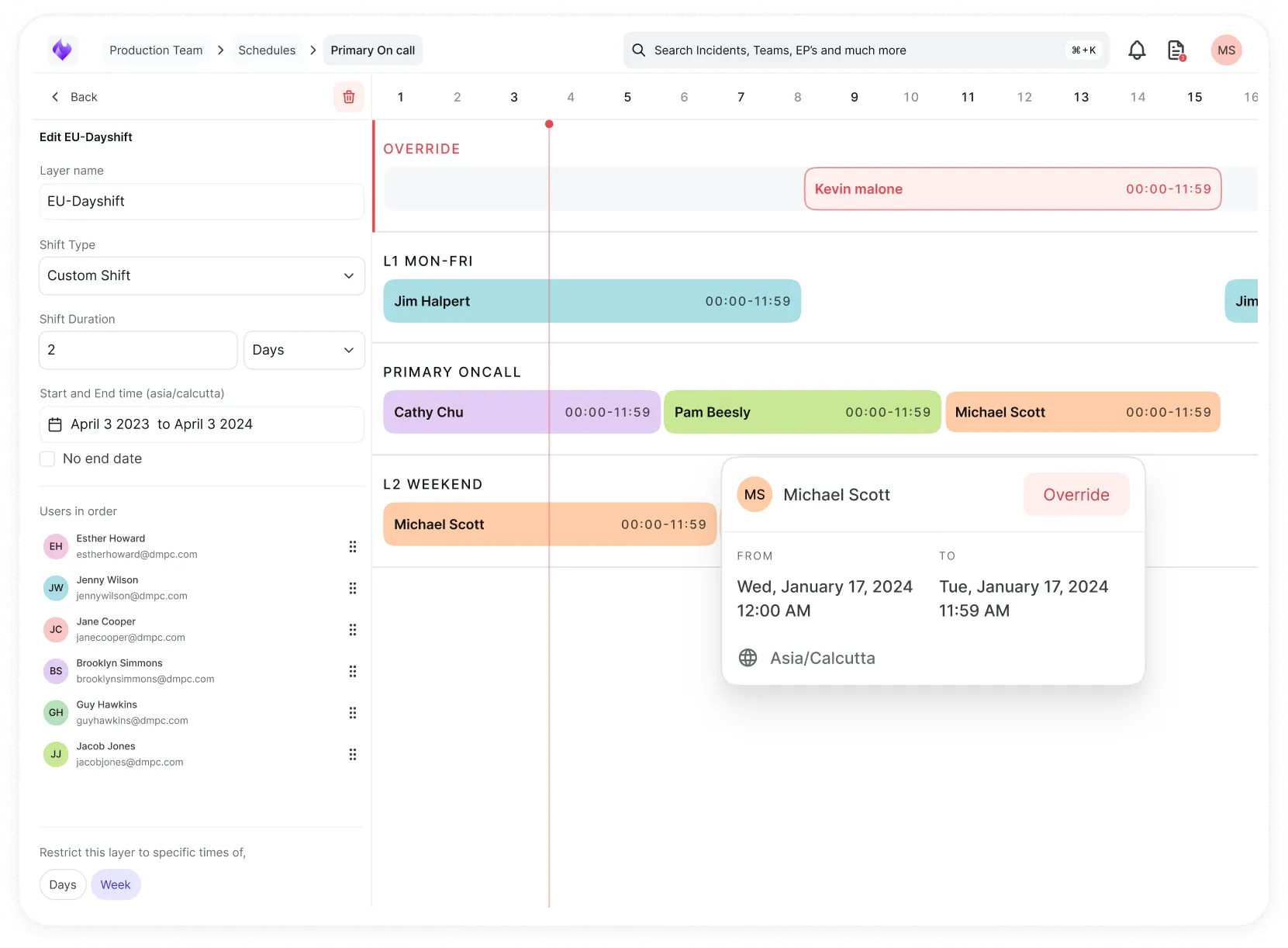
Simplify on-call scheduling, automate escalations, and reduce burnout.
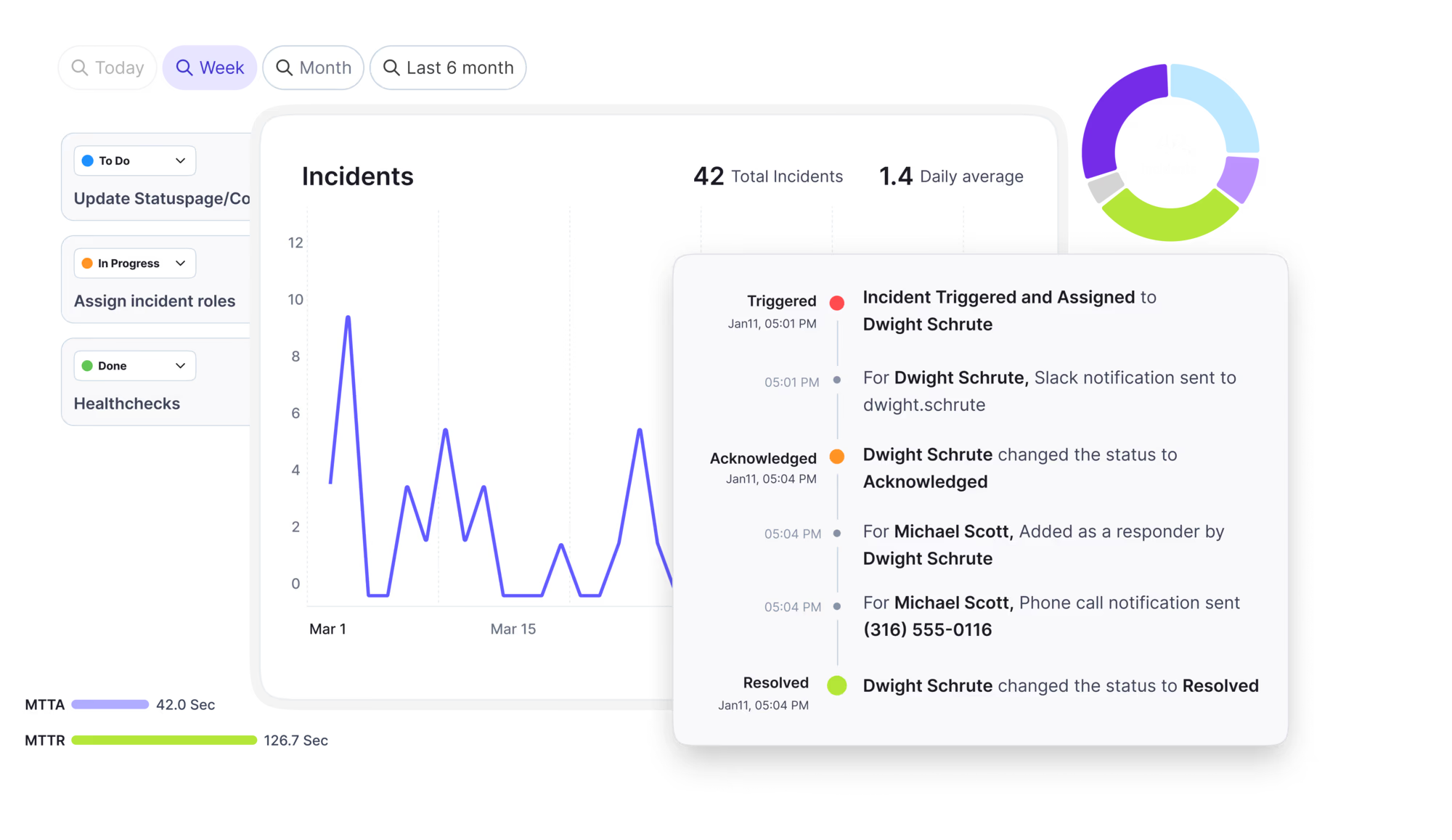
Automate postmortems, AI summaries, and post-incident workflows
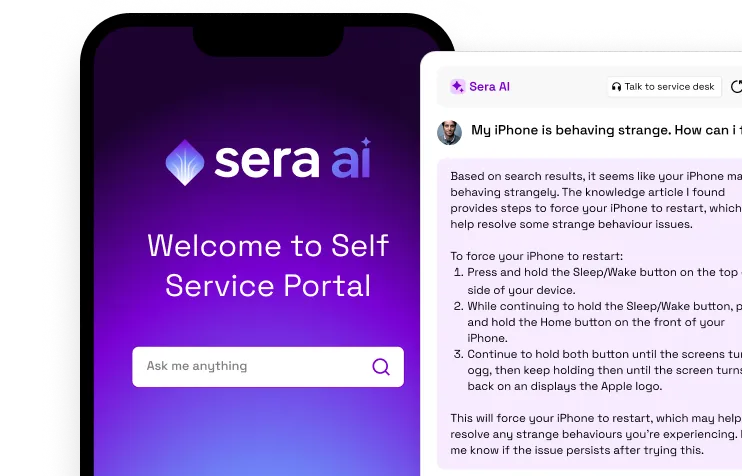
Create, organize, and continuously improve your knowledge base to find the right answers with Sera AI.
We're here to help

The integration with Atlassian Jira using the Xurrent Integration Service is

The integration with Atlassian Jira using the Xurrent Integration Service is

The integration with Atlassian Jira using the Xurrent Integration Service is

The integration with Atlassian Jira using the Xurrent Integration Service is

The integration with Atlassian Jira using the Xurrent Integration Service is

The integration with Atlassian Jira using the Xurrent Integration Service is

The integration with Atlassian Jira using the Xurrent Integration Service is

The integration with Atlassian Jira using the Xurrent Integration Service is
Resolve issues quickly with an AI-powered system that automates ticketing.
Unifiy IT, HR, Facilities, Finance, and more on a single, AI-powered service platform.
Simplify on-call scheduling, automate escalations, and reduce burnout.
Automate postmortems, AI summaries, and post-incident workflows
Create, organize, and continuously improve your knowledge base to find the right answers with Sera AI.
Resolve plant floor and IT issues before they disrupt production.
Stay audit-ready while resolving issues and reducing operational risk.

Detect, respond, and resolve incidents fast to cut downtime and MTTR.

Keep your store online, even during your biggest sales moments.

Protect patient data and resolve issues fast, so care teams stay focused on care.

Standardize service delivery across every store and channel.

We are here to help 24/7

Connect with other Xurrent Users

Get insights and tips on how to get the most out of Xurrent

Apps, APIs, and updates

Xurrent service functionality

Eliminate manual tasks, optimize workflows, and deliver faster resolutions.
Learn how organizations have reduced downtime, improved 50% MTTA & MTTR, and cut costs with Xurrent IMR.
Discover Xurrent IMR's quick support, bidirectional integrations with Jira and Slack, and more cohesive incident response capabilities compared to Opsgenie.
Understand why users value Xurrent IMR for its intuitive interface, efficient incident alerting, customizable On-call schedules, and escalations.
Recovery Point Objective (RPO) is the maximum acceptable amount of data loss an organization can tolerate after a service disruption, measured as a span of time. RPO defines how far back in time you can afford to restore data from backups or replicas—essentially answering the question: "If we lose everything right now, how much work are we willing to redo?" An RPO of 4 hours means the organization accepts losing up to 4 hours of transactions, updates, or changes; an RPO of zero (or near-zero) means no data loss is acceptable, requiring continuous replication or synchronous backup strategies.
RPO is set per service or system based on business impact, not technical convenience. Mission-critical financial transaction systems typically demand RPO measured in seconds or minutes, while internal reporting databases may tolerate hours or even a day. The metric directly shapes backup frequency, replication architecture, storage costs, and recovery workflows—tighter RPOs require more frequent snapshots, real-time sync, or active-active configurations, all of which increase infrastructure and operational expense.
Unlike Recovery Time Objective (RTO), which measures how quickly a service must be restored, RPO focuses exclusively on data currency. A service can meet its RTO by coming back online in 30 minutes but still violate its RPO if the restored data is 6 hours old when the business required a 1-hour RPO. Both metrics work together to define disaster recovery and business continuity requirements, but they measure fundamentally different risks.
RPO directly determines how much business value is at risk during an outage. For e-commerce platforms, losing an hour of order data can mean thousands of lost transactions, customer complaints, and manual reconciliation work. For healthcare systems, losing patient records or medication updates can create compliance violations and patient safety risks. Setting an RPO forces leadership to quantify acceptable data loss in business terms—revenue, customer trust, regulatory exposure, operational rework—rather than leaving it to IT assumptions.
Misaligned RPO expectations create expensive surprises during recovery. If stakeholders expect near-zero data loss but backups run every 12 hours, the gap becomes visible only after an incident, when teams discover they must manually reconstruct half a day's work or explain missing transactions to customers. Defining RPO during service design ensures backup strategy, replication topology, and monitoring align with actual business tolerance, not default configurations.
RPO also governs incident response priorities. When multiple services fail simultaneously, teams restore services with the tightest RPO requirements first to minimize data loss windows. Services with looser RPOs can wait while critical databases and transaction systems are recovered. Without documented RPOs, incident commanders lack the information needed to sequence recovery work effectively, leading to suboptimal decisions under pressure.
RPO is established through business impact analysis that maps data loss to tangible consequences. Service owners, finance, legal, and operations teams collaborate to determine how much lost data each service can tolerate before causing unacceptable harm—whether measured in revenue, compliance risk, customer experience, or operational disruption. This tolerance becomes the RPO target, typically expressed in minutes, hours, or days.
Once RPO is defined, backup and replication strategies are designed to meet it. An RPO of 24 hours can be satisfied with nightly full backups. An RPO of 1 hour requires incremental backups every hour or continuous data replication to a standby system. An RPO of zero demands synchronous replication where every write is confirmed on both primary and secondary storage before the transaction completes, eliminating any data loss window but introducing latency and cost.
RPO is monitored continuously through backup success metrics, replication lag dashboards, and recovery testing. If incremental backups start failing or replication falls behind schedule, the actual RPO drifts beyond the target, creating unacknowledged risk. Regular disaster recovery drills validate that restore processes can actually meet the defined RPO—testing both the technical capability and the time required to locate, verify, and apply the correct backup snapshot.
RPO evolves as services mature and business requirements shift. A startup may accept a 12-hour RPO for its CRM system during early growth, then tighten it to 1 hour as the sales pipeline becomes revenue-critical. Conversely, legacy systems nearing retirement may see RPO relaxed as the business shifts workloads to newer platforms. RPO should be reviewed during service changes, major incidents, and annual business continuity planning cycles.
- Financial trading platform : Sets RPO at 30 seconds for transaction databases using active-active replication across two data centers, ensuring that even during a regional outage, no more than 30 seconds of trades are lost. The firm accepts the cost of dual writes and cross-region latency because regulatory requirements and customer expectations demand near-zero data loss for executed orders.
- SaaS HR platform : Defines RPO at 4 hours for employee records and benefits data, using incremental backups every 4 hours to cloud object storage. The business determined that recreating up to 4 hours of employee updates (address changes, benefit elections, time-off requests) is acceptable given the low transaction volume and the ability to manually recover critical changes from email trails or support tickets.
- E-commerce order management system : Maintains RPO at 15 minutes through continuous database replication to a hot standby in a secondary availability zone. During a primary database failure, the system fails over to the replica with at most 15 minutes of order data at risk, which the business tolerates because order confirmation emails provide an audit trail for manual recovery of any lost transactions.
- Recovery Time Objective
- Incident Management
- Disaster Recovery
- Business Continuity Planning
- Service Level Agreement
---



.webp)
.webp)