




Blog
Insights & updates from our experts


Resolve plant floor and IT issues before they disrupt production.

Stay audit-ready while resolving issues and reducing operational risk.
Resolve issues quickly with an AI-powered system that automates ticketing.
Unifiy IT, HR, Facilities, Finance, and more on a single, AI-powered service platform.
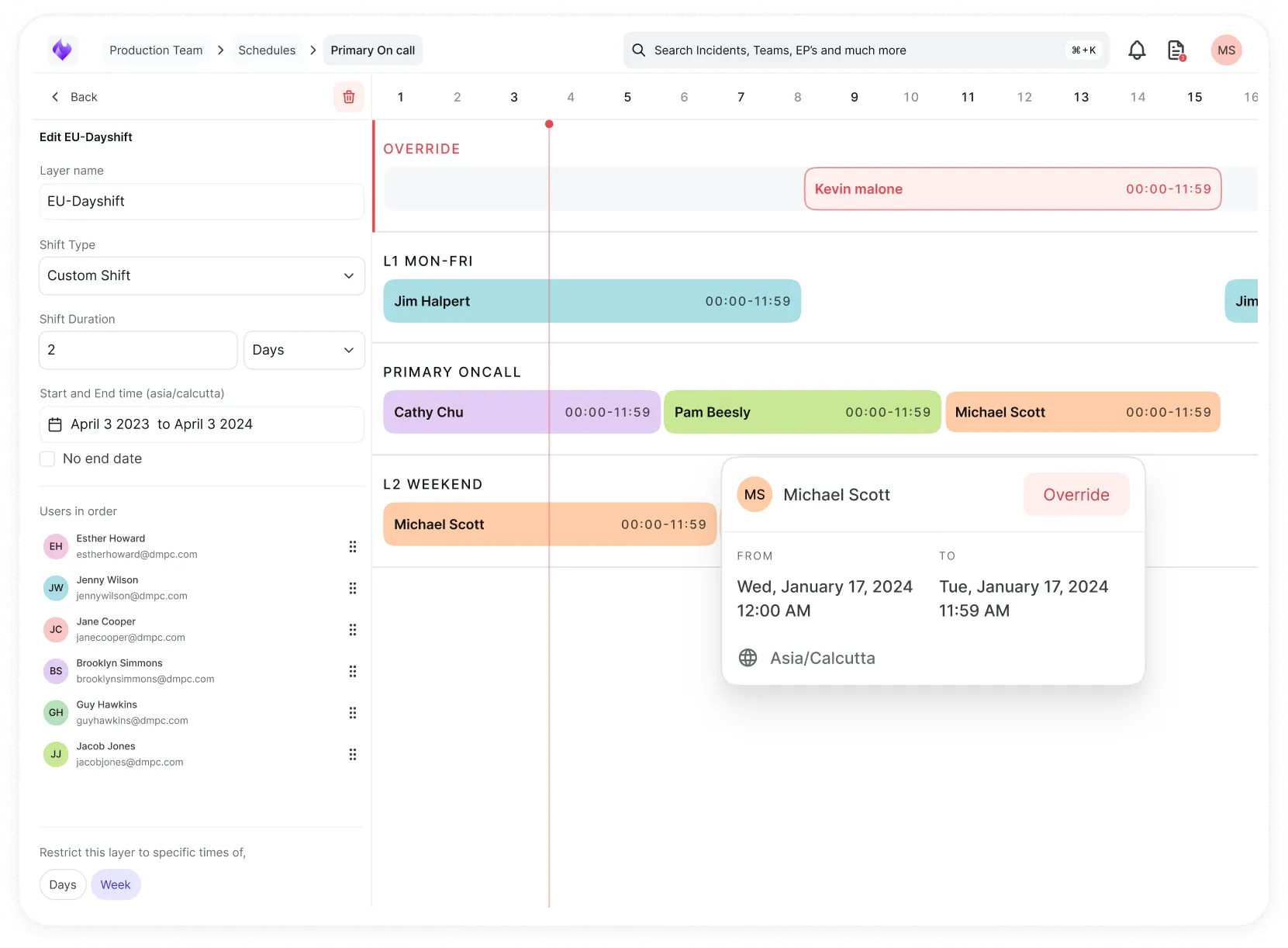
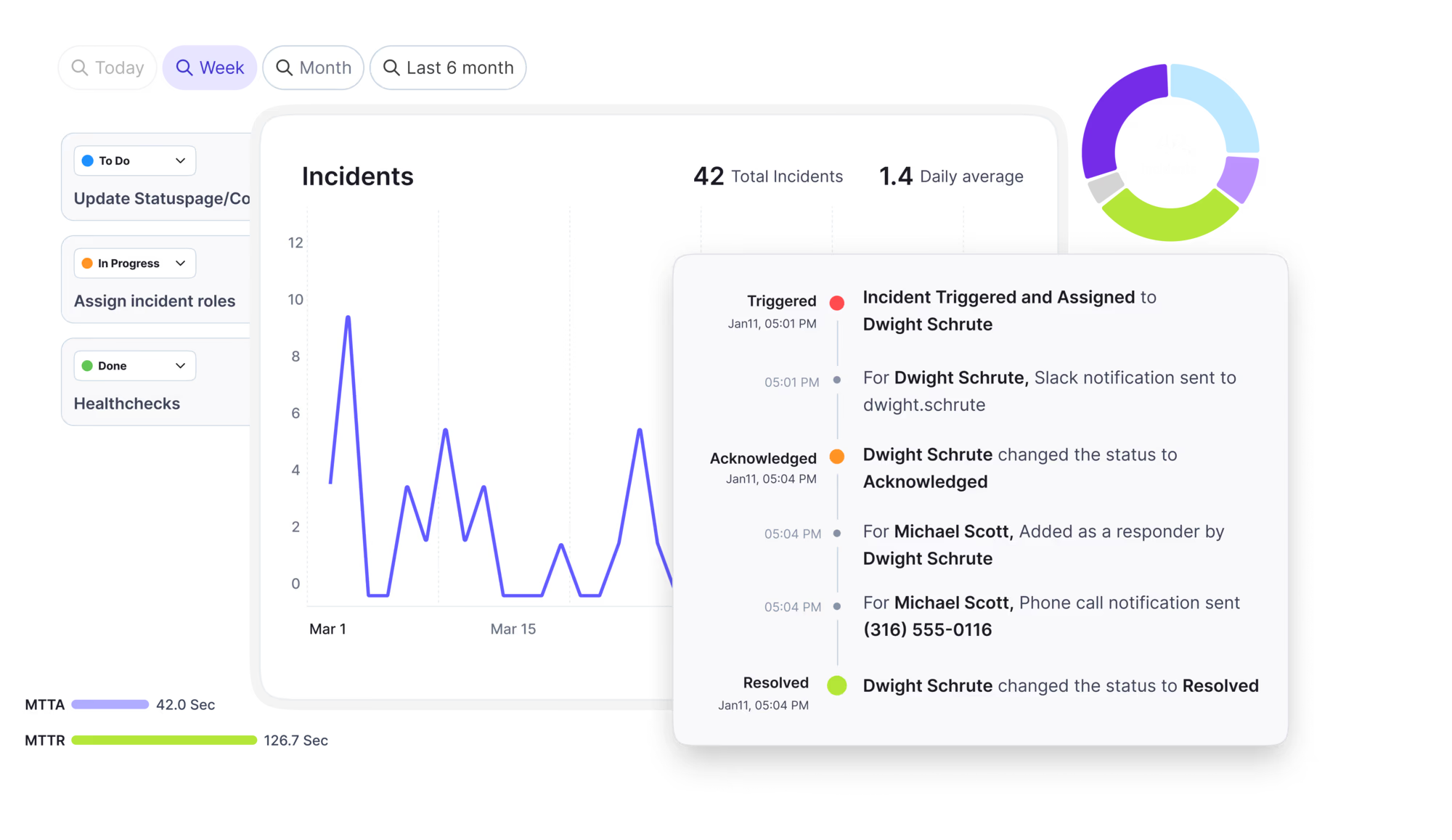
Simplify on-call scheduling, automate escalations, and reduce burnout.
Automate postmortems, AI summaries, and post-incident workflows
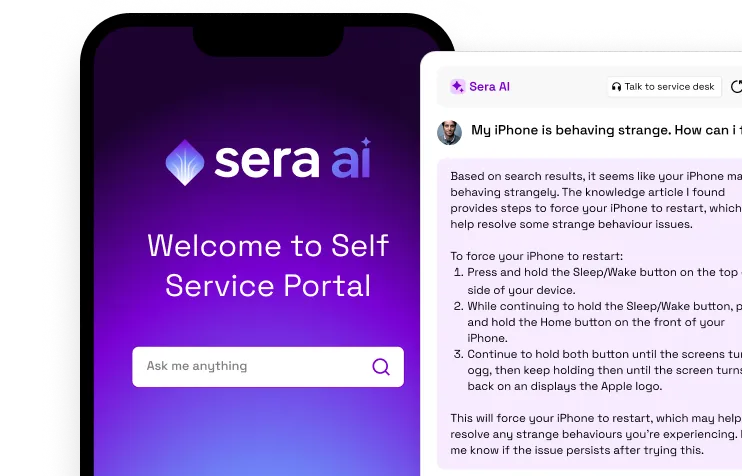
Create, organize, and continuously improve your knowledge base to find the right answers with Sera AI.
We're here to help

The integration with Atlassian Jira using the Xurrent Integration Service is

The integration with Atlassian Jira using the Xurrent Integration Service is

The integration with Atlassian Jira using the Xurrent Integration Service is

The integration with Atlassian Jira using the Xurrent Integration Service is

The integration with Atlassian Jira using the Xurrent Integration Service is

The integration with Atlassian Jira using the Xurrent Integration Service is

The integration with Atlassian Jira using the Xurrent Integration Service is

The integration with Atlassian Jira using the Xurrent Integration Service is
Resolve issues quickly with an AI-powered system that automates ticketing.
Unifiy IT, HR, Facilities, Finance, and more on a single, AI-powered service platform.
Simplify on-call scheduling, automate escalations, and reduce burnout.
Automate postmortems, AI summaries, and post-incident workflows
Create, organize, and continuously improve your knowledge base to find the right answers with Sera AI.
Resolve plant floor and IT issues before they disrupt production.
Stay audit-ready while resolving issues and reducing operational risk.

Detect, respond, and resolve incidents fast to cut downtime and MTTR.

Keep your store online, even during your biggest sales moments.

Protect patient data and resolve issues fast, so care teams stay focused on care.

Standardize service delivery across every store and channel.

We are here to help 24/7

Connect with other Xurrent Users

Get insights and tips on how to get the most out of Xurrent

Apps, APIs, and updates

Xurrent service functionality

Eliminate manual tasks, optimize workflows, and deliver faster resolutions.
Learn how organizations have reduced downtime, improved 50% MTTA & MTTR, and cut costs with Xurrent IMR.
Discover Xurrent IMR's quick support, bidirectional integrations with Jira and Slack, and more cohesive incident response capabilities compared to Opsgenie.
Understand why users value Xurrent IMR for its intuitive interface, efficient incident alerting, customizable On-call schedules, and escalations.
First Contact Resolution (FCR) is the percentage of service desk tickets, incidents, or user requests resolved during the initial interaction with support, without requiring follow-up, escalation, or callback. In ITSM and ESM environments, FCR measures how effectively the service desk handles issues on first contact—whether by phone, chat, email, or self-service portal—eliminating the need for the user to reach out again or for the ticket to be reassigned to another team. A high FCR rate indicates that agents have the knowledge, tools, and authority to close issues immediately, reducing ticket volume, improving user satisfaction, and lowering operational costs.
FCR is distinct from First Level Resolution (FLR), which measures resolution by the first support tier regardless of how many interactions occur. FCR focuses strictly on single-touch resolution from the user's perspective, making it a direct indicator of service desk efficiency and user experience quality.
FCR directly impacts both operational performance and user trust. Organizations with high FCR rates reduce ticket backlogs, lower Mean Time to Resolution (MTTR), and free up service desk capacity for more complex work. Users who receive immediate resolution report higher satisfaction scores and are less likely to submit duplicate tickets or escalate issues to management, reducing noise and interruption across IT and business teams.
From a cost perspective, every additional contact on the same issue increases handling time, agent workload, and total cost per ticket. Low FCR often signals gaps in knowledge management, inadequate agent training, or insufficient access to backend systems and automation. In enterprise environments, poor FCR can also delay critical workflows—such as onboarding, access provisioning, or incident response—creating downstream business impact.
For service desks operating under SLA commitments, FCR is a leading indicator of SLA compliance. When issues are resolved on first contact, SLA clocks stop immediately, reducing breach risk and improving overall service level performance. In ESM scenarios extending to HR, facilities, or finance, FCR ensures that employees receive timely support without repeated handoffs, directly supporting productivity and employee experience.
FCR begins with accurate ticket classification and routing. When a user submits a request, the service desk agent or virtual agent must quickly identify the issue type, determine whether it falls within their scope, and access the right knowledge or tools to resolve it. AI-powered ticket classification and intelligent routing improve FCR by directing requests to agents with the appropriate skills and access on the first attempt.
Knowledge management plays a central role. Agents rely on up-to-date knowledge articles, runbooks, and FAQs to diagnose and resolve common issues without escalation. Platforms that surface contextual knowledge automatically—based on ticket content or user history—accelerate resolution and reduce the need for agents to search manually or escalate to specialists.
Automation further enhances FCR. Workflow automation can trigger backend actions—such as password resets, access grants, or software installations—directly from the service desk interface, allowing agents to complete requests in real time. Self-service portals with guided workflows enable users to resolve issues independently, counting as first-contact resolutions when no agent interaction is required.
Measurement requires clear criteria. Organizations typically define FCR as any ticket closed within a single interaction, with no reopens or follow-up contacts within a defined period (commonly 24–72 hours). Tracking FCR by category—such as password resets, access requests, or hardware issues—helps identify which issue types are resolved efficiently and which require process or knowledge improvements.
- Password reset automation : A financial services company implements a self-service password reset portal integrated with Active Directory. Employees authenticate via multi-factor authentication and reset their passwords without contacting the service desk, achieving 95% FCR for password-related requests and reducing service desk call volume by 30%.
- Access provisioning with workflow automation : A healthcare organization uses automated workflows to provision application access requests. When an employee submits a request through the service catalog, the system validates manager approval, checks compliance rules, and grants access automatically. The ticket closes on first contact, with no manual handoffs, reducing provisioning time from 48 hours to under 10 minutes.
- AI-assisted troubleshooting for hardware issues : A global manufacturer deploys an AI-powered virtual agent that guides employees through hardware diagnostics via chat. For common issues like printer connectivity or monitor setup, the virtual agent provides step-by-step instructions and closes the ticket upon confirmation. Complex issues are escalated to a technician with full diagnostic context, but 70% of hardware requests resolve on first contact.
- Incident Management
- Knowledge Management
- Service Desk
- Mean Time to Resolution (MTTR)
- Service Level Agreement (SLA)
---


.webp)
.webp)