





Blog
Insights & updates from our experts


Resolve plant floor and IT issues before they disrupt production.

Stay audit-ready while resolving issues and reducing operational risk.
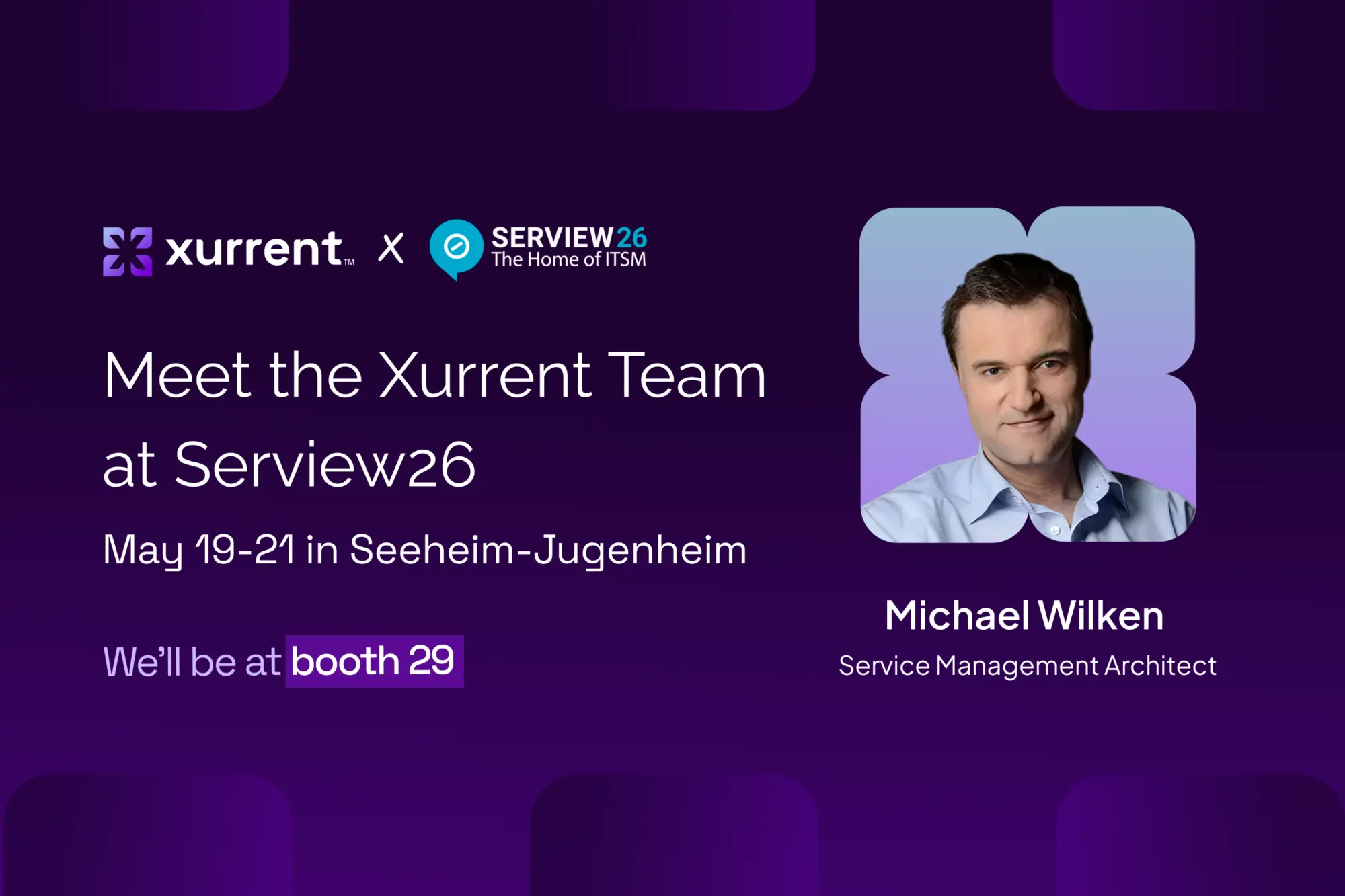
Resolve issues quickly with an AI-powered system that automates ticketing.
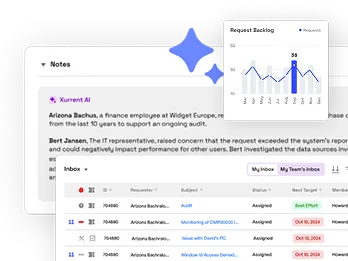
Unifiy IT, HR, Facilities, Finance, and more on a single, AI-powered service platform.
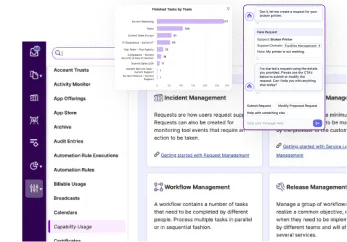
Simplify on-call scheduling, automate escalations, and reduce burnout.
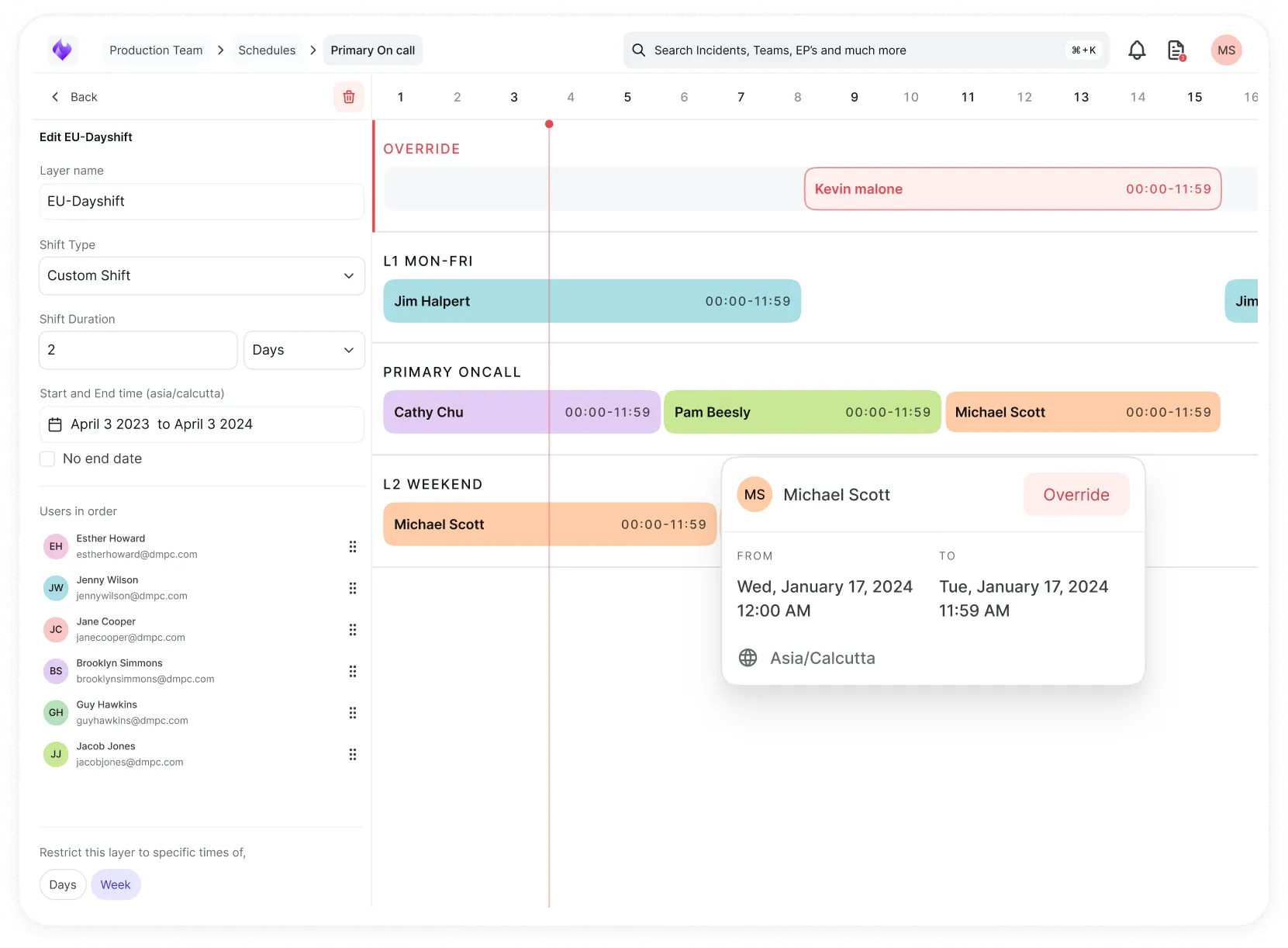
Automate postmortems, AI summaries, and post-incident workflows
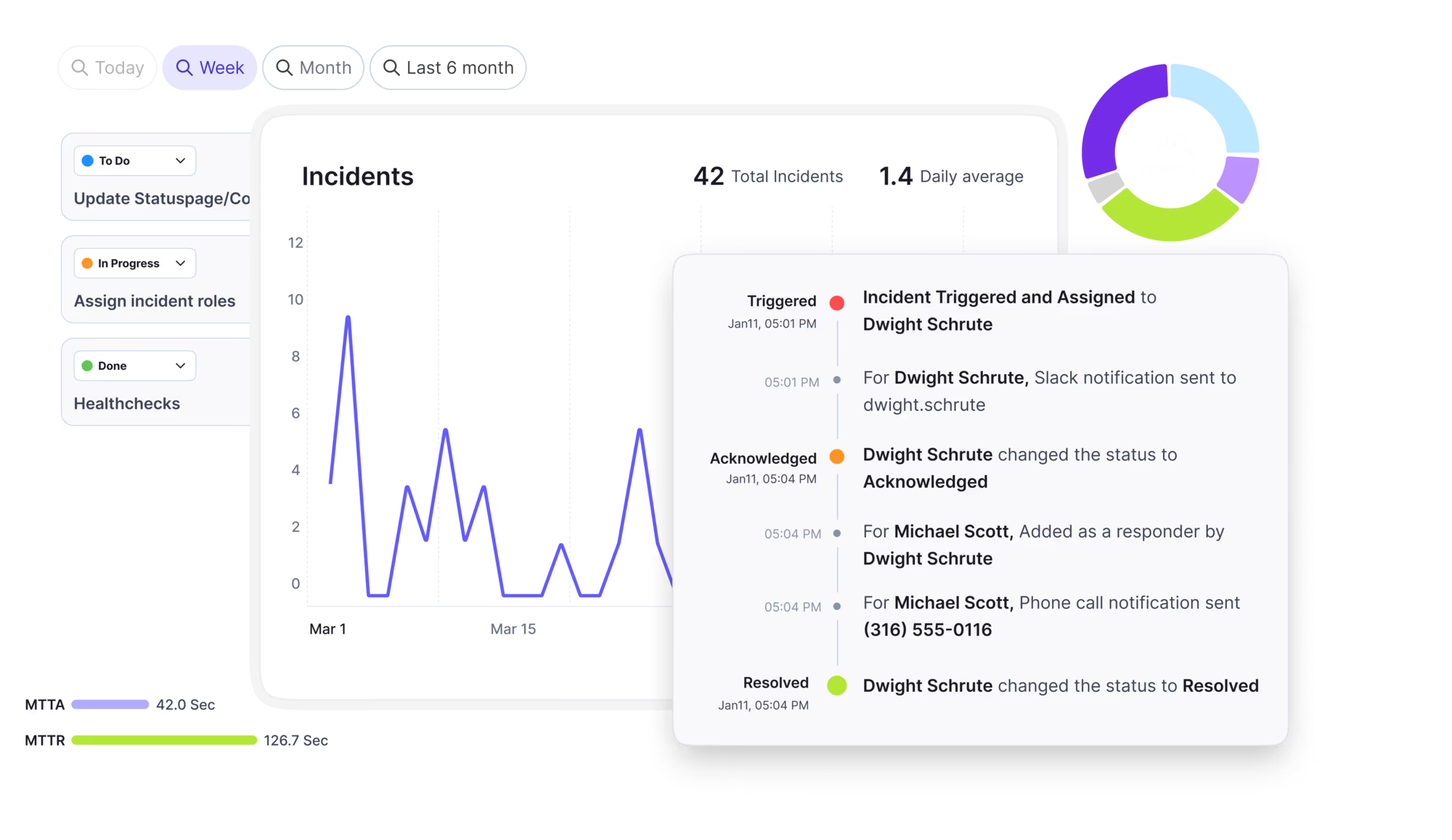
Create, organize, and continuously improve your knowledge base to find the right answers with Sera AI.

We're here to help

The integration with Atlassian Jira using the Xurrent Integration Service is

The integration with Atlassian Jira using the Xurrent Integration Service is

The integration with Atlassian Jira using the Xurrent Integration Service is

The integration with Atlassian Jira using the Xurrent Integration Service is

The integration with Atlassian Jira using the Xurrent Integration Service is

The integration with Atlassian Jira using the Xurrent Integration Service is

The integration with Atlassian Jira using the Xurrent Integration Service is

The integration with Atlassian Jira using the Xurrent Integration Service is
Resolve issues quickly with an AI-powered system that automates ticketing.
Unifiy IT, HR, Facilities, Finance, and more on a single, AI-powered service platform.
Simplify on-call scheduling, automate escalations, and reduce burnout.
Automate postmortems, AI summaries, and post-incident workflows
Create, organize, and continuously improve your knowledge base to find the right answers with Sera AI.
Resolve plant floor and IT issues before they disrupt production.
Stay audit-ready while resolving issues and reducing operational risk.

Detect, respond, and resolve incidents fast to cut downtime and MTTR.

Keep your store online, even during your biggest sales moments.

Protect patient data and resolve issues fast, so care teams stay focused on care.
Standardize service delivery across every store and channel.

We are here to help 24/7

Connect with other Xurrent Users

Get insights and tips on how to get the most out of Xurrent

Apps, APIs, and updates

Xurrent service functionality

Eliminate manual tasks, optimize workflows, and deliver faster resolutions.
Learn how organizations have reduced downtime, improved 50% MTTA & MTTR, and cut costs with Xurrent IMR.
Discover Xurrent IMR's quick support, bidirectional integrations with Jira and Slack, and more cohesive incident response capabilities compared to Opsgenie.
Understand why users value Xurrent IMR for its intuitive interface, efficient incident alerting, customizable On-call schedules, and escalations.

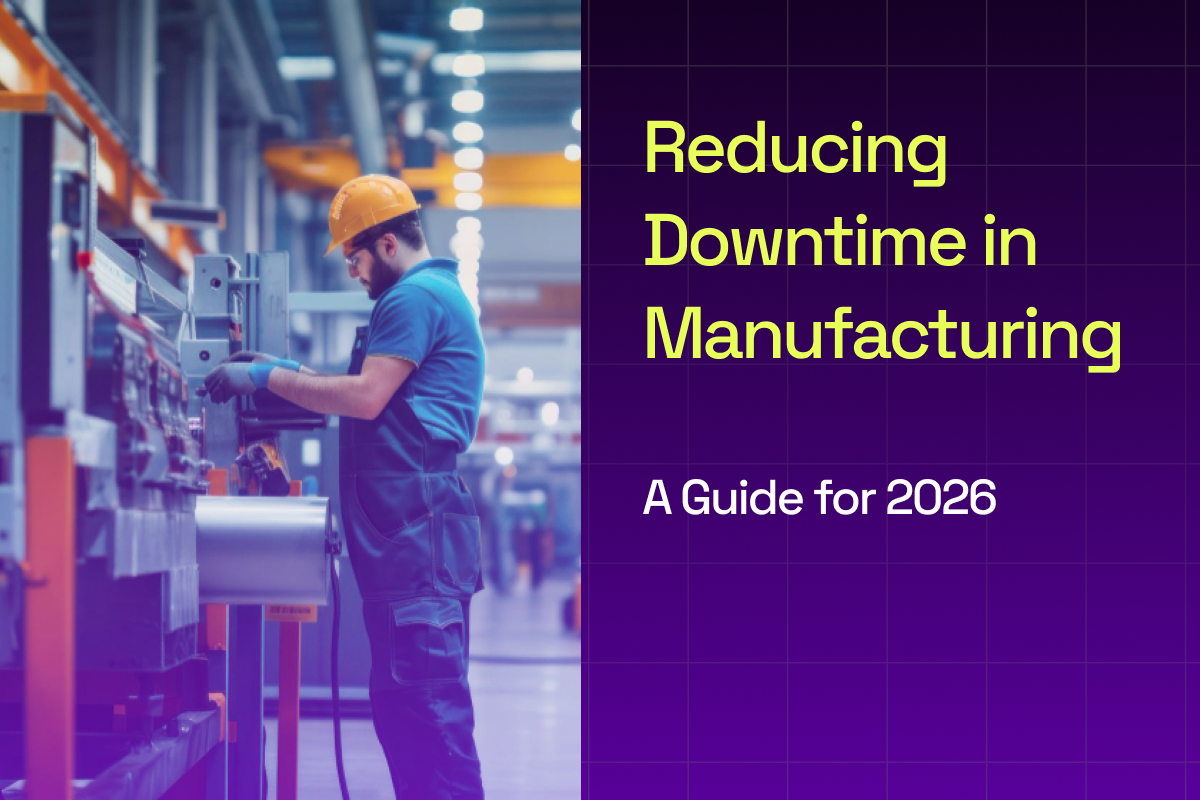
A single hour of unplanned downtime can cost a manufacturing plant anywhere from $2,000 to $50,000, sometimes more. The difference between planned and unplanned downtime determines whether that cost is budgeted or catastrophic.
This guide covers the causes and costs of each type, then the strategies to reduce both.
Planned downtime is an intentional, scheduled stop for maintenance, tool changes, or setups. Unplanned downtime is an unexpected stoppage caused by equipment failures, material shortages, or human error. Both halt production, but they differ in preparation, cost, and control.
Planned downtime is like scheduling a car service appointment. You pick the time, prepare for it, and know roughly how long it will take. Unplanned downtime is your car breaking down on the highway: expensive, stressful, and out of your control.
Track both types separately. When you categorize every production stop, you can see where to focus your maintenance budget and process improvements.
Planned downtime covers any period when production is halted on a schedule. Because teams know it's coming, they can prepare resources, notify stakeholders, and minimize disruption.
You can't eliminate planned downtime, so the goal is making planned stops short and efficient.
Routine tasks like cleaning, lubrication, filter changes, and part replacements fall here. Scheduling maintenance before components fail extends equipment life and prevents costlier unplanned breakdowns.
Changeovers happen when teams reconfigure equipment between product runs. Standardized changeover procedures, sometimes called SMED (Single-Minute Exchange of Die), help teams complete transitions faster.
Installing new components, firmware patches, or software updates requires taking equipment offline. Coordinating with IT and operations teams keeps updates from conflicting with production peaks.
Mandatory safety inspections, regulatory compliance checks, and seasonal shutdowns are predictable and often required by law. Planning ahead keeps them from disrupting production.
Unplanned downtime is any production stop that happens outside the schedule. The line is supposed to be running, but something prevents work from continuing.
Unplanned events are reactive. They cost far more than planned stops because nothing is prepared: no parts staged, no staff scheduled, no customers notified.
Mechanical failures, worn parts, and sudden breakdowns are the most common causes of unplanned downtime. A single critical component failure can halt an entire production line within seconds.
When raw materials don't arrive on time or inventory runs out, production stops regardless of equipment health. Supply chain visibility helps, but disruptions still happen.
Human factors matter. Mistakes from insufficient training, fatigue, or unexpected absences can halt production as fast as any equipment failure.
Modern manufacturing depends on both information technology (IT) and operational technology (OT). OT refers to the systems that control physical equipment: PLCs, SCADA systems, and industrial controllers.
Network failures, software crashes, or integration issues between IT and OT systems can bring production to a standstill even when machines are mechanically sound.
The triggers differ, but several root causes feed both types:
Overall Equipment Effectiveness (OEE) is the standard metric for measuring manufacturing productivity. It combines three factors: availability, performance, and quality. Both planned and unplanned downtime reduce the availability component.
Beyond OEE, downtime affects throughput, on-time delivery rates, and capacity utilization. Tracking which type of downtime is responsible for availability losses helps teams prioritize improvements.
If most losses come from unplanned events, focus on predictive maintenance and faster incident response. If planned downtime eats into production time, focus on maintenance schedules and changeover procedures.
Downtime costs extend well beyond lost production output. Several categories get overlooked:
Unplanned downtime costs far more than planned. Emergency repairs, rush shipping, and overtime premiums add up when there's no time to prepare.
Knowing your downtime cost helps justify investment in prevention and faster response. A three-step framework:
Calculate the number of units not produced during downtime and multiply by revenue per unit. Accurate production rate data makes this calculation reliable.
Include wages for idle workers plus fixed overhead: facility costs, utilities, and equipment leases that continue during stoppage.
Add expedited shipping to catch up on orders, overtime to make up lost production, contractual penalties for late delivery, and any rework required after restart.
Accurate categorization is the foundation of improvement. Without it, you're guessing at root causes. A three-layer model works well for most operations:
Downtime tracking software or incident management platforms automate this categorization and create audit trails. Manual tracking leads to miscategorized or forgotten events.
Healthy operations have more planned downtime than unplanned downtime. The goal is to shift reactive stops into scheduled maintenance windows where they're less disruptive and less expensive.
Rather than targeting a specific percentage, track the ratio over time. A declining share of unplanned downtime shows that maintenance and operational processes are working. If the ratio moves the wrong way, investigate root causes.
Unplanned downtime is costlier and more disruptive, so reducing it delivers the highest return. These approaches target prevention and faster response.
Predictive maintenance uses sensor data and analytics to detect equipment degradation before failure. Condition-based maintenance responds to equipment state rather than fixed schedules, replacing parts when the data shows wear, not when the calendar says so.
AI can monitor signals across systems to identify anomalies early. Platforms like Xurrent IMR provide AI-assisted detection that surfaces issues before they escalate into full production stops.
When failures occur, automated routing engages the right responder. Smart incident routing reduces handoff delays and accelerates MTTR (Mean Time to Resolution), the average time from detection to restored operations.
Every unplanned event teaches you something. Automated postmortems make root cause analysis routine and feed the findings back into prevention.
Tip: Teams that connect downtime tracking to incident management workflows get a single system of record for operational disruptions, which makes trend analysis and continuous improvement easier.
You can't avoid planned downtime, but you can shrink it and schedule it well.
Plan maintenance during low-demand periods whenever possible. Coordinating with production planning minimizes the impact on output and delivery commitments.
Documented, repeatable changeover processes reduce duration and variability. Teams that standardize their changeovers cut the time each one takes.
Physical maintenance and software updates often happen together. Unified platforms that connect ITSM and operations workflows prevent scheduling conflicts and give every team visibility into planned stops.
Modern manufacturing depends on IT systems. When IT fails, production stops even if every machine runs perfectly. So downtime response now overlaps with IT incident management, highlighting the need for dedicated ITSM For manufacturing solutions.
Three capabilities make this connection work:
Platforms designed for incident management and response, such as Xurrent, connect workflows so downtime events flow through consistent processes regardless of whether the root cause is equipment, IT, or operational.
Downtime tracking is only valuable if it drives action. When service, incidents, and operations flow through a unified platform, teams move from reactive firefighting to proactive prevention.
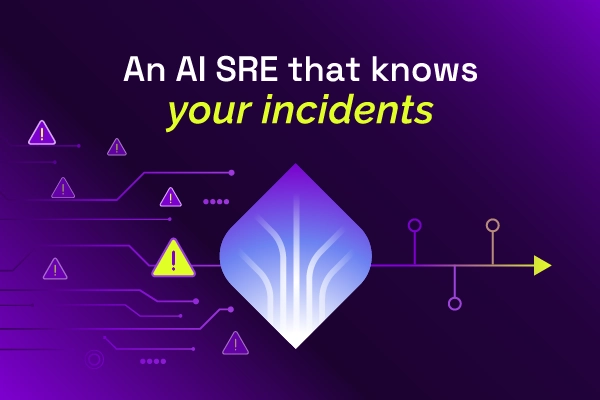
Most AI SREs are pattern matchers trained on public data. They know what a memory leak looks like in the abstract. They don't know that your payments-api has a flaky liveness probe everyone ignores, that the checkout team owns the retry policy, or that the last three "database incidents" were actually cache misconfigurations. That knowledge lives in your postmortems, your Slack channels, and the heads of two senior engineers.

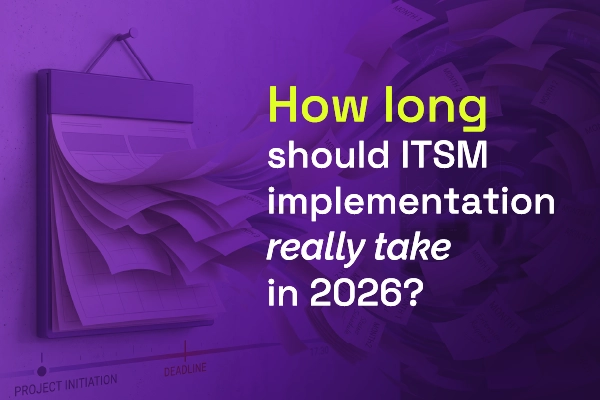
Most vendors will tell you ITSM implementation takes six months to a year — but modern, configuration-first platforms have rewritten the math entirely. See what real implementations look like in 2026, and why a long rollout is now a choice, not a given.

.webp)
.webp)