



Blog
Insights & updates from our experts


Resolve plant floor and IT issues before they disrupt production.

Stay audit-ready while resolving issues and reducing operational risk.
Resolve issues quickly with an AI-powered system that automates ticketing.
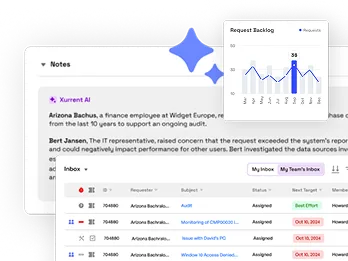
Unifiy IT, HR, Facilities, Finance, and more on a single, AI-powered service platform.
Simplify on-call scheduling, automate escalations, and reduce burnout.
Automate postmortems, AI summaries, and post-incident workflows
Create, organize, and continuously improve your knowledge base to find the right answers with Sera AI.
We're here to help

The integration with Atlassian Jira using the Xurrent Integration Service is

The integration with Atlassian Jira using the Xurrent Integration Service is

The integration with Atlassian Jira using the Xurrent Integration Service is

The integration with Atlassian Jira using the Xurrent Integration Service is

The integration with Atlassian Jira using the Xurrent Integration Service is

The integration with Atlassian Jira using the Xurrent Integration Service is

The integration with Atlassian Jira using the Xurrent Integration Service is

The integration with Atlassian Jira using the Xurrent Integration Service is
Resolve issues quickly with an AI-powered system that automates ticketing.
Unifiy IT, HR, Facilities, Finance, and more on a single, AI-powered service platform.
Simplify on-call scheduling, automate escalations, and reduce burnout.
Automate postmortems, AI summaries, and post-incident workflows
Create, organize, and continuously improve your knowledge base to find the right answers with Sera AI.
Resolve plant floor and IT issues before they disrupt production.
Stay audit-ready while resolving issues and reducing operational risk.

Detect, respond, and resolve incidents fast to cut downtime and MTTR.

Keep your store online, even during your biggest sales moments.

Protect patient data and resolve issues fast, so care teams stay focused on care.
Standardize service delivery across every store and channel.

We are here to help 24/7

Connect with other Xurrent Users

Get insights and tips on how to get the most out of Xurrent

Apps, APIs, and updates

Xurrent service functionality

Eliminate manual tasks, optimize workflows, and deliver faster resolutions.
Learn how organizations have reduced downtime, improved 50% MTTA & MTTR, and cut costs with Xurrent IMR.
Discover Xurrent IMR's quick support, bidirectional integrations with Jira and Slack, and more cohesive incident response capabilities compared to Opsgenie.
Understand why users value Xurrent IMR for its intuitive interface, efficient incident alerting, customizable On-call schedules, and escalations.

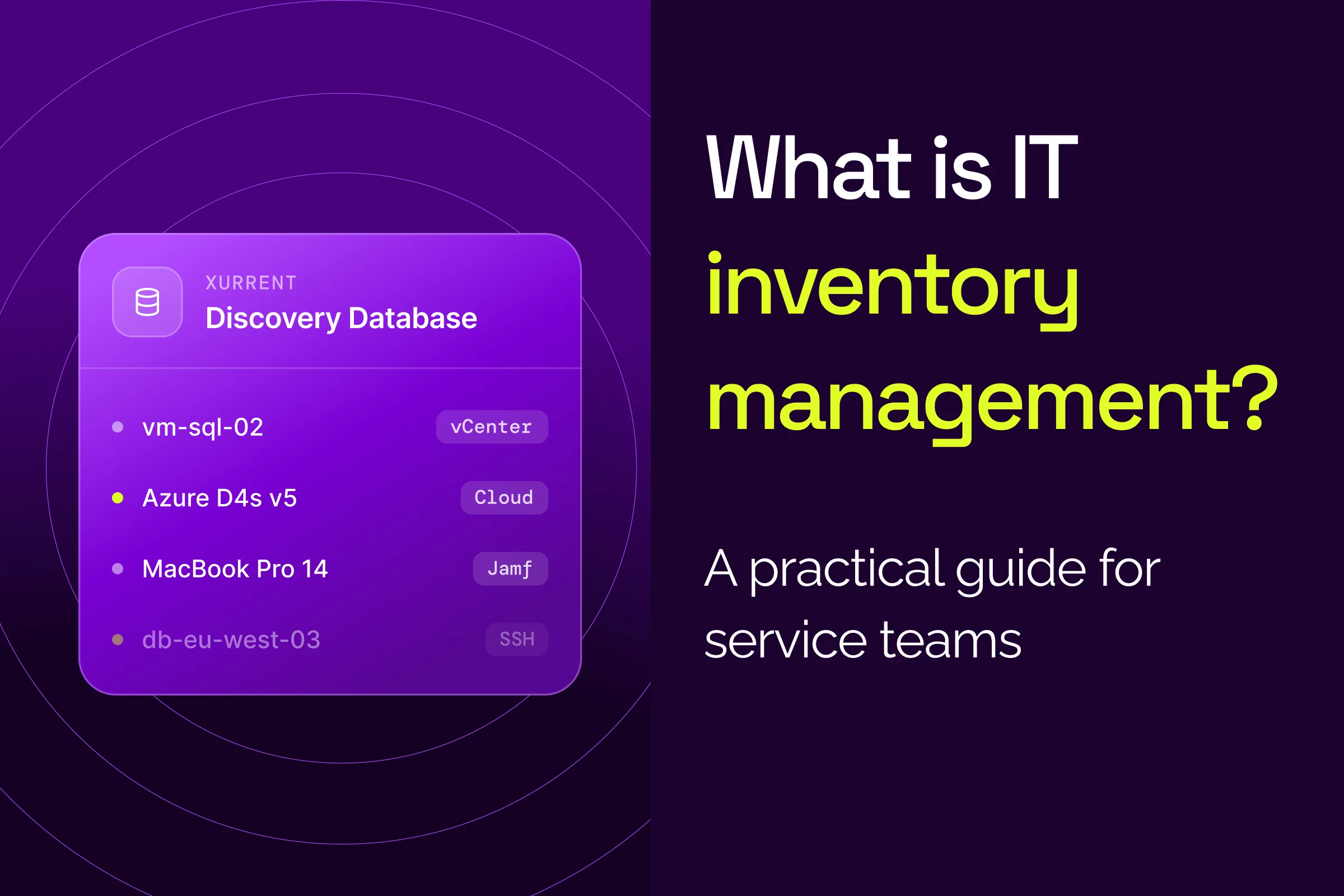
IT asset management (ITAM) tracks what an organization owns and what it costs, while a configuration management database (CMDB) tracks how IT components connect to deliver services. Finance, procurement, and security teams rely on ITAM. Service desk agents and change approvers rely on the CMDB. Most service teams need both, connected by reconciliation rules that keep shared data accurate.
Key facts: CMDB vs ITAM
TL;DR
On this page: At a glance · What is ITAM · What is a CMDB · CI vs IT asset · Four differences · CMDB use cases · ITAM use cases · Can one replace the other? · Which you need · Working together · ITSM · FAQ
Free analyst report: EMA's findings on faster, smarter incident response.
The difference between a CMDB and ITAM comes down to purpose. ITAM manages IT assets as things the business owns, covering cost, contracts, and lifecycle. A CMDB records configuration items and their relationships so teams can run and change services. ITAM tells you what you own; a CMDB tells you what breaks if something changes.
The overlap between assets and CIs has limits. A spare monitor in a storage closet is an asset, but it isn't a CI, because no service depends on it. A business service or an SLA document is a CI, but it isn't an asset anyone bought.
Assets and CIs work best as a pipeline. Raw asset records come in from many sources, get checked and cleaned, and then become CIs in the CMDB. Xurrent ITAM for service management uses this model: reconciliation rules decide which asset records reach the Xurrent CMDB.
ITAM and a CMDB differ in four ways: purpose, data model, ownership, and update cadence. ITAM governs spend and risk with flat asset records owned by finance and procurement. A CMDB supports operations with a graph of CIs owned by IT operations that changes constantly. Use the four differences to decide which team maintains which records.
ITAM answers the question, “What do we own, and is it worth it?” ITAM helps an organization govern spend, contracts, and risk. A CMDB answers a different question: “What breaks if this changes?” The ITAM vs CMDB split is a split between business control and day-to-day operations.
ITAM stores flat records, with one row per asset and fields like cost and owner, much like a detailed spreadsheet. A CMDB stores a graph: a map of CIs linked by relationships. A server “hosts” an app, and that app “supports” a service. CMDB relationships are what make impact analysis possible.
Asset fields like price and contract dates usually belong to finance and procurement. CI fields like operating system and service links belong to IT operations.
Shared asset and CI fields drift when nobody decides who owns them. Two tools may overwrite each other, and the record moves away from reality. Write down one owner for every shared field.
ITAM records change at planned moments, such as purchase, renewal, and disposal. CMDB data changes with every deployment, patch, and approved change.
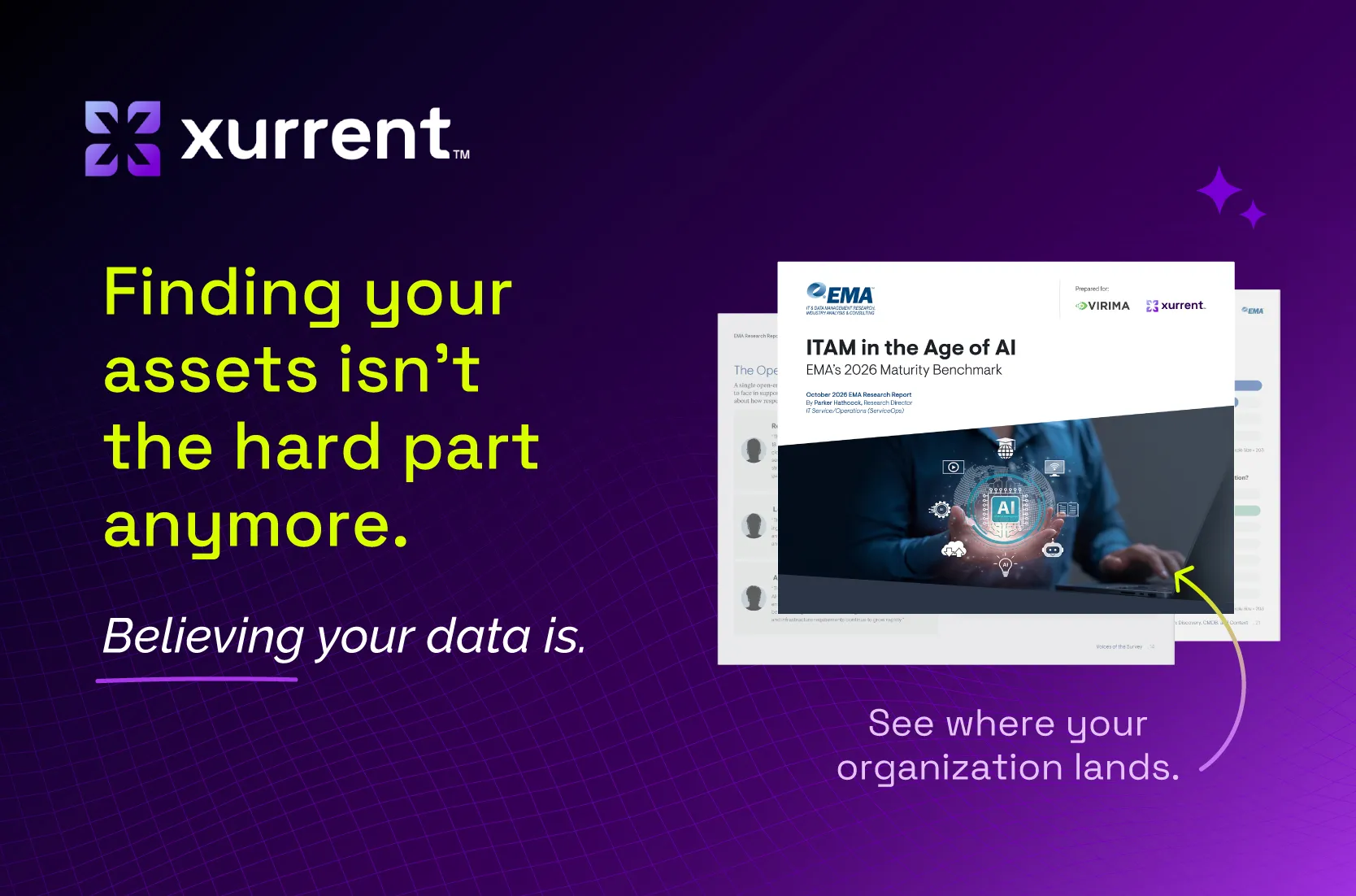
The CMDB's pace of change is hard to keep up with. In EMA's ITAM in the Age of AI (2026), 32.0% of respondents named changes outpacing updates as a top CMDB accuracy challenge.
A CMDB does the heavy lifting during incidents, changes, and problem investigations. When something breaks or is about to change, CMDB relationships show which services are affected, who owns the fix, and what a change could touch. That context lets service teams act fast and avoid side effects.
CMDB value depends on accurate data. If the CMDB is stale, an agent might reboot the wrong server, or a ticket might route to a group that no longer owns the service.
Stale CMDB data has a real cost when it slows incident response. Splunk's 2026 downtime research reports: “The study found that the average cost of downtime has reached $15,000 per minute.” The Splunk study surveyed 2,000 executives at Global 2000 companies.
ITAM does the heavy lifting in budgets, audits, refresh planning, and security reviews. When the business needs to know what it owns, what it pays, and what it risks, ITAM records answer with cost, contract, warranty, and inventory data. Security and compliance frameworks from NIST and CISA treat that inventory as a baseline.
Software asset management (SAM) is the part of ITAM that focuses on software licenses and usage.
The NIST Cybersecurity Framework 2.0 lists hardware inventory as a baseline outcome: “ID.AM-01: Inventories of hardware managed by the organization are maintained.”
Many organizations still can't see everything they own. Flexera's 2026 ITAM report, a vendor survey of 512 ITAM professionals worldwide, found: “Complete IT visibility declined to just 36% this year, a 7-percentage-point decrease.”
The US government also treats asset visibility as basic. CISA's asset visibility directive focuses on “establishing baseline requirements for all Federal Civilian Executive Branch (FCEB) agencies to identify assets and vulnerabilities on their networks.” The CISA directive binds federal civilian agencies, not private companies, but it sets a useful bar.
No. A CMDB can't replace ITAM, and ITAM can't replace a CMDB, because each leaves gaps the other fills. A CMDB doesn't manage contracts or depreciation, and ITAM can't map service dependencies. Swapping one for the other creates blind spots, so keep two clear records and connect them.
With two connected records, each team owns its data, and both teams share the overlap.
Whether you need ITAM, a CMDB, or both depends on how large your IT environment is and how often it changes. A small, stable estate can start with an asset inventory. A service desk running incident and change management needs a CMDB. Hybrid cloud, frequent change, or AI at the service desk calls for both, connected.
AI at the service desk raises the stakes for asset accuracy. A person can chase down a missing answer, but an AI agent can't. In EMA's ITAM in the Age of AI (2026), 71.9% reported broad operational AI adoption or beyond, yet just 22.2% called their ITAM AI-ready.
EMA's 2026 research also links AI readiness to CMDB accuracy. AI-ready organizations were more likely to report 95% or higher CMDB accuracy than optimized organizations (55.6% versus 7.5%). All EMA respondents came from organizations with 1,000+ employees, and maturity tiers were self-reported.
ITAM and a CMDB work together through a three-step flow: capture asset data from every source, clean it with reconciliation before it reaches the CMDB, and keep it accurate by measuring CMDB health. Running ITAM and the CMDB on one service management platform keeps the whole flow in one place.
Accuracy is the shared problem for ITAM and the CMDB. In EMA's ITAM in the Age of AI (2026), 65.5% still populate the CMDB at least partly by hand, and just 18.5% rate their ITSM and CMDB asset data at 95% accuracy or higher.
Capturing asset data starts with a shared identifier, like a serial number or hostname, so the same device can be matched across tools. Next, import data from discovery tools and mobile device management (MDM) tools, which track phones and laptops.
Consolidating data from multiple discovery tools was the most-cited CMDB accuracy challenge, named by 33.0% of respondents (EMA, 2026).
The Xurrent iPaaS integration platform connects tools through API connectors, which let software systems share data. Xurrent's Datadog, Virima, and Lansweeper integrations import and sync asset data into the Xurrent CMDB.
Reconciliation means comparing incoming asset records against existing CMDB records and settling conflicts. Without reconciliation, a bad import can quietly overwrite good data. According to EMA (2026), 44.8% reconcile conflicting asset data manually, while 46.3% use automated, rules-based reconciliation.
In Xurrent ITAM, reconciliation rules (also called CI automation rules) check incoming changes. When a rule flags a change, the change lands in the reconciliation queue for review instead of being silently blocked or applied. Xurrent's May 2026 update covers the renamed reconciliation queue, where you decide what gets into the CMDB.
A CMDB drifts unless someone watches it. Track four CMDB health signals to catch problems early.
Xurrent CMDB Health reporting views bring these signals into Xurrent ITSM, along with warranty management thresholds. CMDB Health reporting helps lean teams keep a CMDB healthy without a full-time admin.
“We're very excited about Xurrent Discovery and the potential it brings,” said Chris Parsons, global IT service desk director at GKN Aerospace Services Limited. “Great service delivery runs on great data. Bringing richer discovery data directly into Xurrent will give us the insight to move faster, make smarter decisions and continuously improve how we deliver services across GKN.”
IT service management (ITSM) is the practice layer, and ITAM and the CMDB are the data it runs on. ITSM covers incident, change, and problem management, often based on ITIL, a widely used set of best practices. Whether a person or an AI agent does the work, ITSM depends on accurate asset and configuration data.
Service desk agents need to know what's affected, and change approvers need to know what a change touches. ITIL-aligned IT service management works best when asset and configuration data live on the same platform.
Xurrent unified service management keeps service desk work and CMDB data on one platform. A service desk is only as effective as its CMDB is accurate.
The CMDB vs ITAM question has a clear answer: most service teams need both. ITAM shows what you own and what it costs, and a CMDB shows how it connects and what a change will touch. The real work is keeping both accurate: capture data from every source, clean it through reconciliation, and watch CMDB health over time.
Give your service desk something accurate to work with. For more research, read the free EMA analyst report on faster, smarter incident response.