




Blog
Insights & updates from our experts


Resolve plant floor and IT issues before they disrupt production.

Stay audit-ready while resolving issues and reducing operational risk.
Resolve issues quickly with an AI-powered system that automates ticketing.
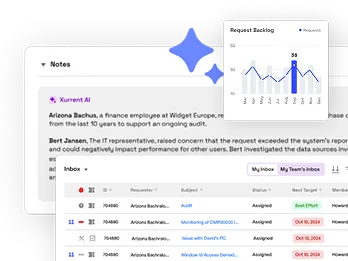
Unifiy IT, HR, Facilities, Finance, and more on a single, AI-powered service platform.
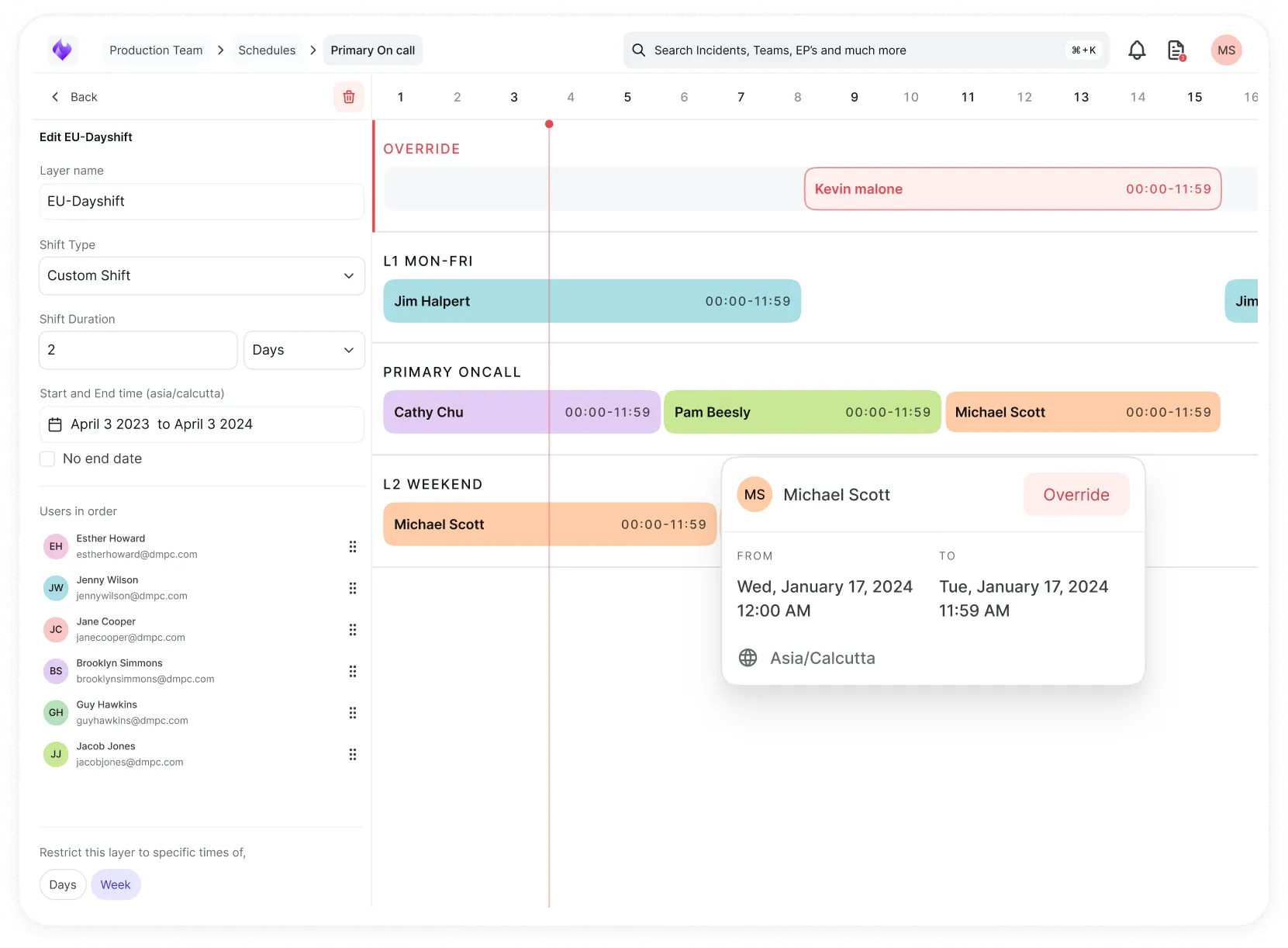
Simplify on-call scheduling, automate escalations, and reduce burnout.
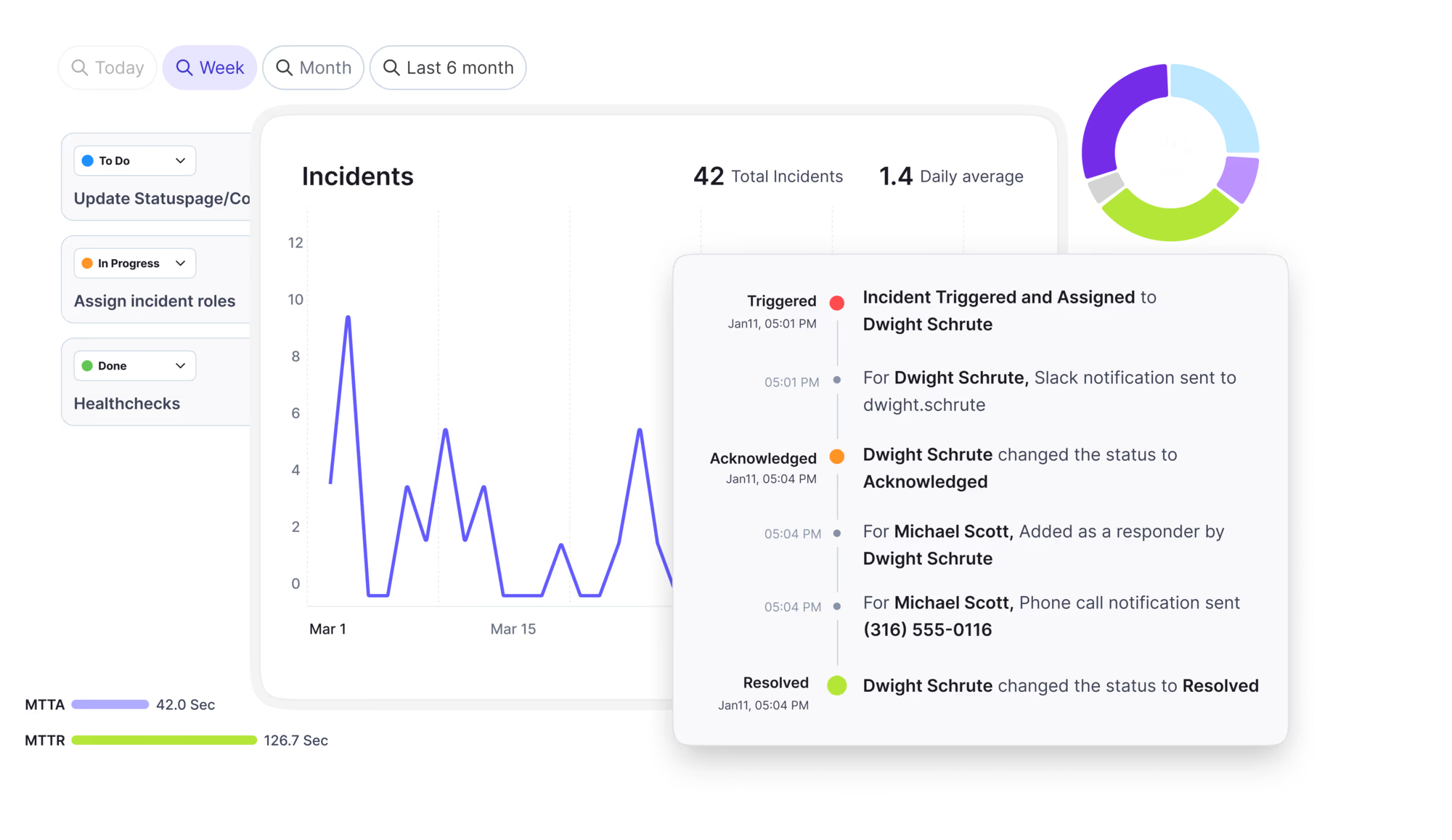
Automate postmortems, AI summaries, and post-incident workflows
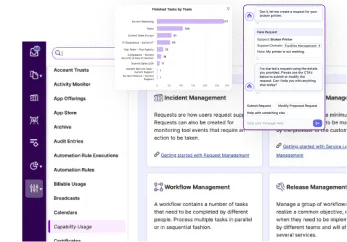
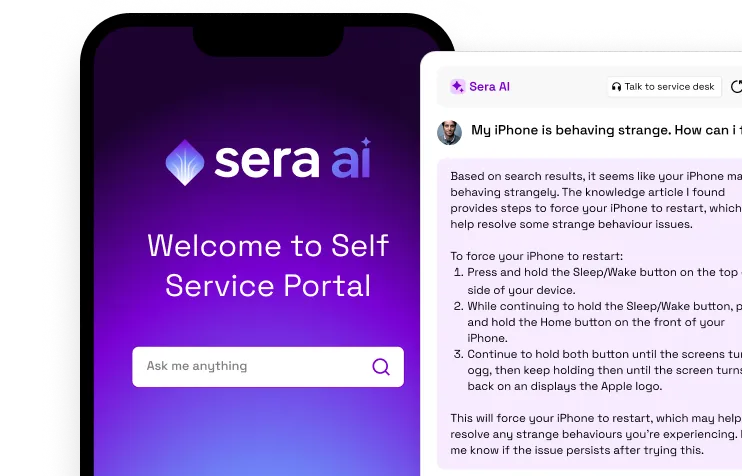
Create, organize, and continuously improve your knowledge base to find the right answers with Sera AI.
We're here to help

The integration with Atlassian Jira using the Xurrent Integration Service is

The integration with Atlassian Jira using the Xurrent Integration Service is

The integration with Atlassian Jira using the Xurrent Integration Service is

The integration with Atlassian Jira using the Xurrent Integration Service is

The integration with Atlassian Jira using the Xurrent Integration Service is

The integration with Atlassian Jira using the Xurrent Integration Service is

The integration with Atlassian Jira using the Xurrent Integration Service is

The integration with Atlassian Jira using the Xurrent Integration Service is
Resolve issues quickly with an AI-powered system that automates ticketing.
Unifiy IT, HR, Facilities, Finance, and more on a single, AI-powered service platform.
Simplify on-call scheduling, automate escalations, and reduce burnout.
Automate postmortems, AI summaries, and post-incident workflows
Create, organize, and continuously improve your knowledge base to find the right answers with Sera AI.
Resolve plant floor and IT issues before they disrupt production.
Stay audit-ready while resolving issues and reducing operational risk.

Detect, respond, and resolve incidents fast to cut downtime and MTTR.

Keep your store online, even during your biggest sales moments.

Protect patient data and resolve issues fast, so care teams stay focused on care.
Standardize service delivery across every store and channel.

We are here to help 24/7

Connect with other Xurrent Users

Get insights and tips on how to get the most out of Xurrent

Apps, APIs, and updates

Xurrent service functionality

Eliminate manual tasks, optimize workflows, and deliver faster resolutions.
Learn how organizations have reduced downtime, improved 50% MTTA & MTTR, and cut costs with Xurrent IMR.
Discover Xurrent IMR's quick support, bidirectional integrations with Jira and Slack, and more cohesive incident response capabilities compared to Opsgenie.
Understand why users value Xurrent IMR for its intuitive interface, efficient incident alerting, customizable On-call schedules, and escalations.
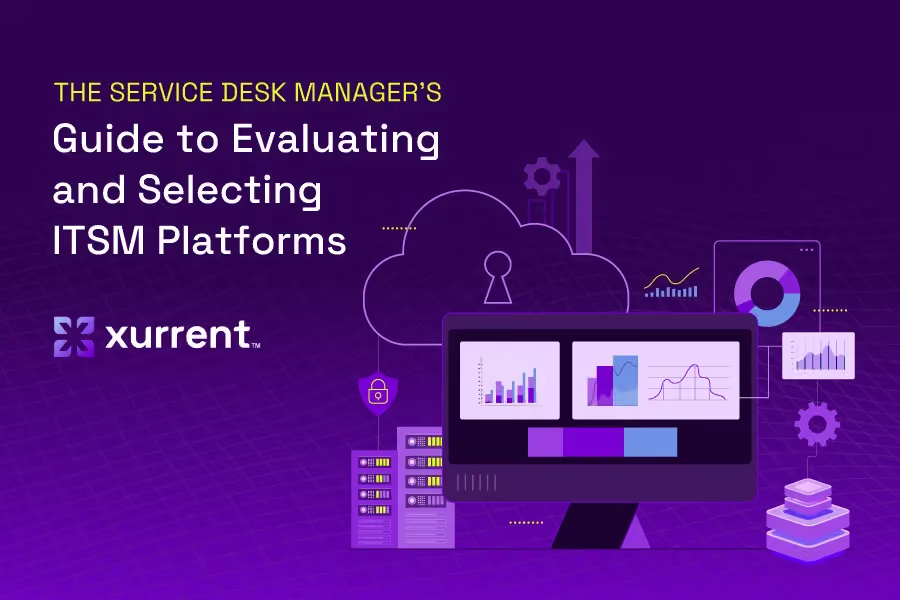
Xurrent is a best-in-class ITSM platform that helps service desk teams resolve issues faster, meet ITIL standards, and scale with confidence. As part of the Xurrent ITxM platform, it connects ITSM with incident response and service visibility so teams collaborate around the same reality, not disconnected tickets.















Service desks are expected to support more users, more systems, and more change, without proportional increases in headcount. The result is predictable.
Without intelligent classification and automation, teams end up managing queues instead of delivering service.
When requests are misrouted or lack context, escalation feels inevitable. Over time, it becomes cultural.
For leaders, this creates a perception problem. The service desk looks reactive, even when teams are working flat out.
Most organizations adopt ITIL practices to bring consistency, accountability, and continual improvement. In reality, legacy ITSM tools often turn ITIL into overhead.
When ITIL feels like paperwork instead of enablement, teams disengage and leadership loses confidence in the data.
For service desk managers, the pressure is constant: resolve faster, escalate less, improve satisfaction, and prove value. For directors and VPs, the questions are bigger.
Traditional ITSM software wasn’t built to answer these questions in real time. Modern enterprises need an ITSM platform that does more than log tickets. It needs to connect people, processes, and data so service management becomes a driver of reliability and trust across the business.
Xurrent ITSM delivers full ITIL-aligned service management in a single platform, without costly add-on modules or heavy customization. Every core process is standardized, automated, and designed to help service desk teams resolve more work at Tier 1 while giving leaders the visibility they need to manage at scale.
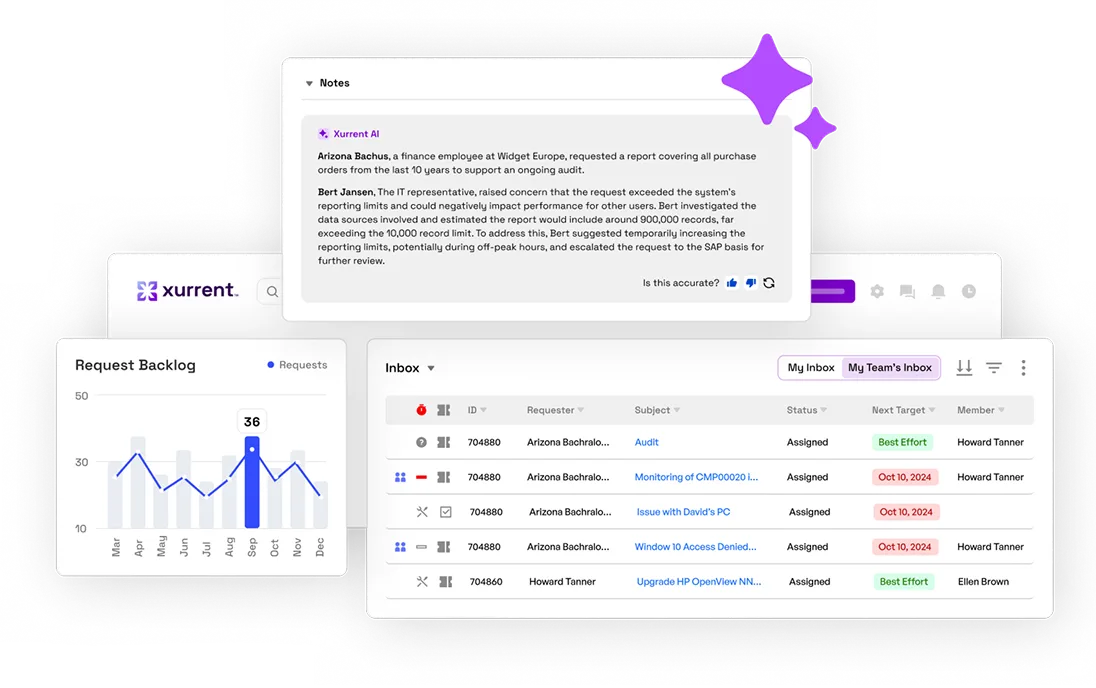
Incoming requests are automatically classified, prioritized, and routed using AI that understands intent and context. Instead of sorting queues, service desk teams can focus on resolution from the first touch.
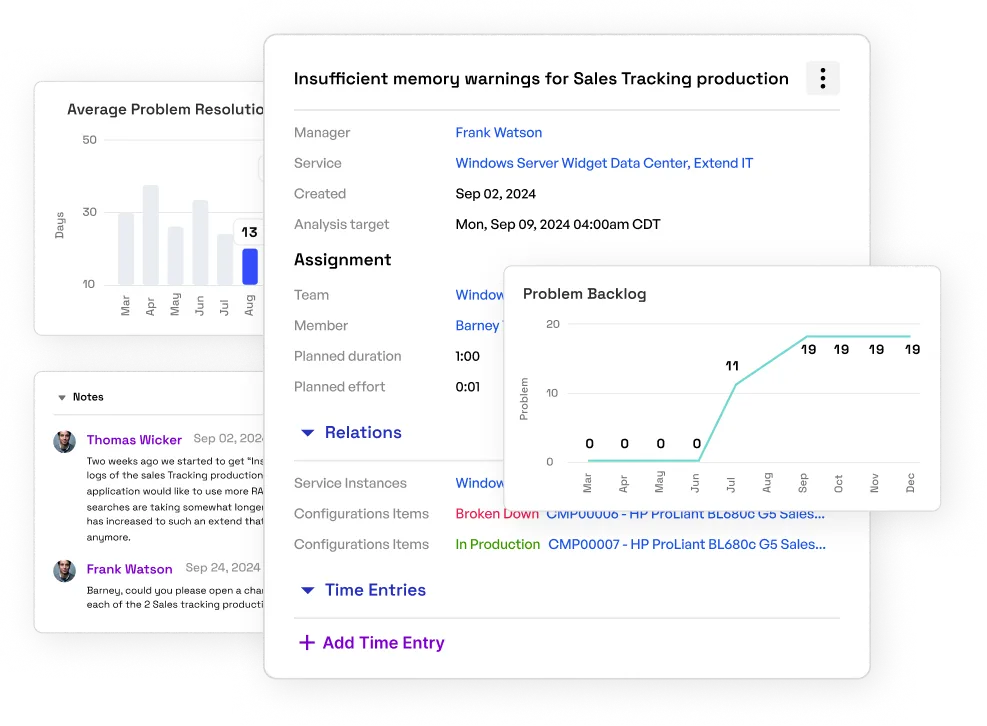
Xurrent helps service desk teams lead the incident experience from first report through resolution and follow-up. During an incident, the service desk has real-time visibility, clear ownership, and consistent communication. After service is restored, problems are automatically tracked and analyzed so root causes are addressed and future incidents are prevented.
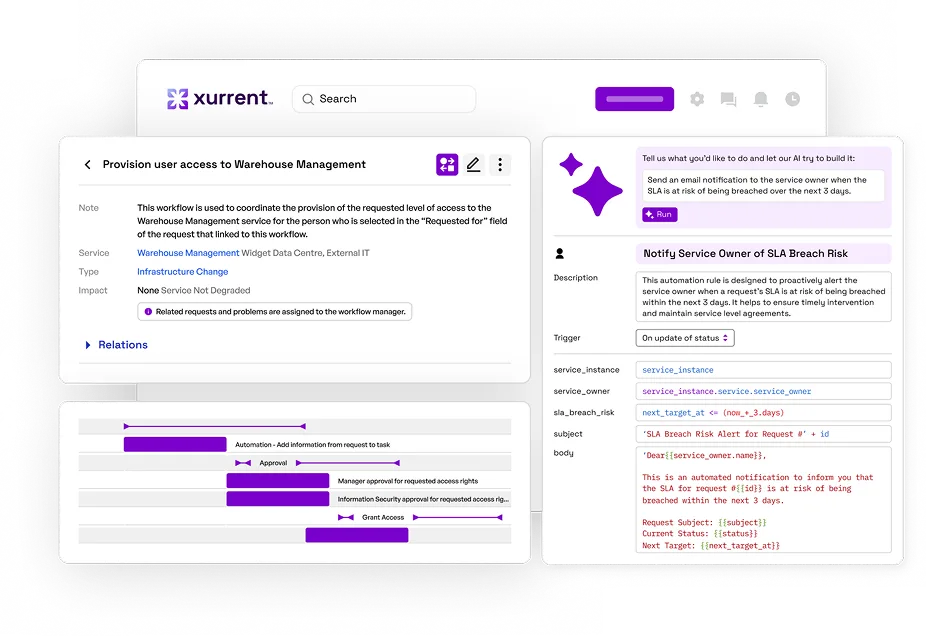
Automated workflows handle approvals, escalations, notifications, and handoffs across incident, request, change, and problem management. Teams standardize execution without locking themselves into rigid processes.
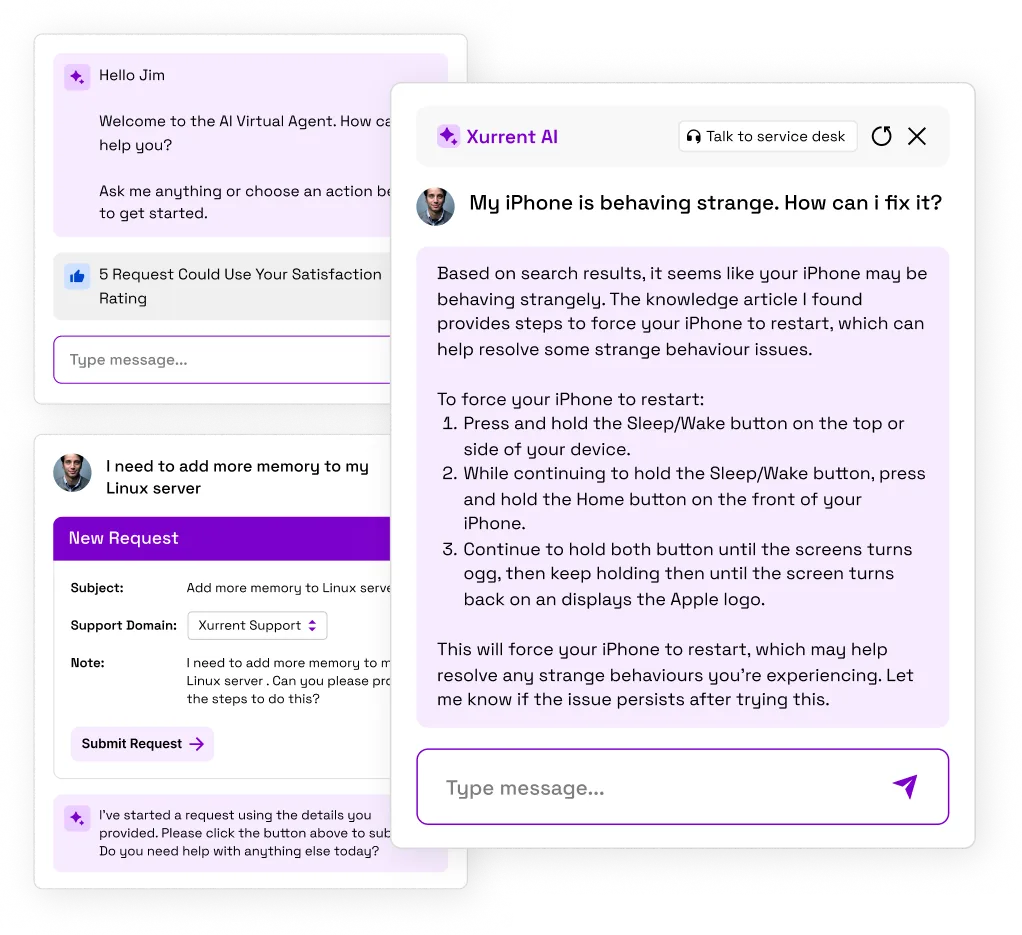
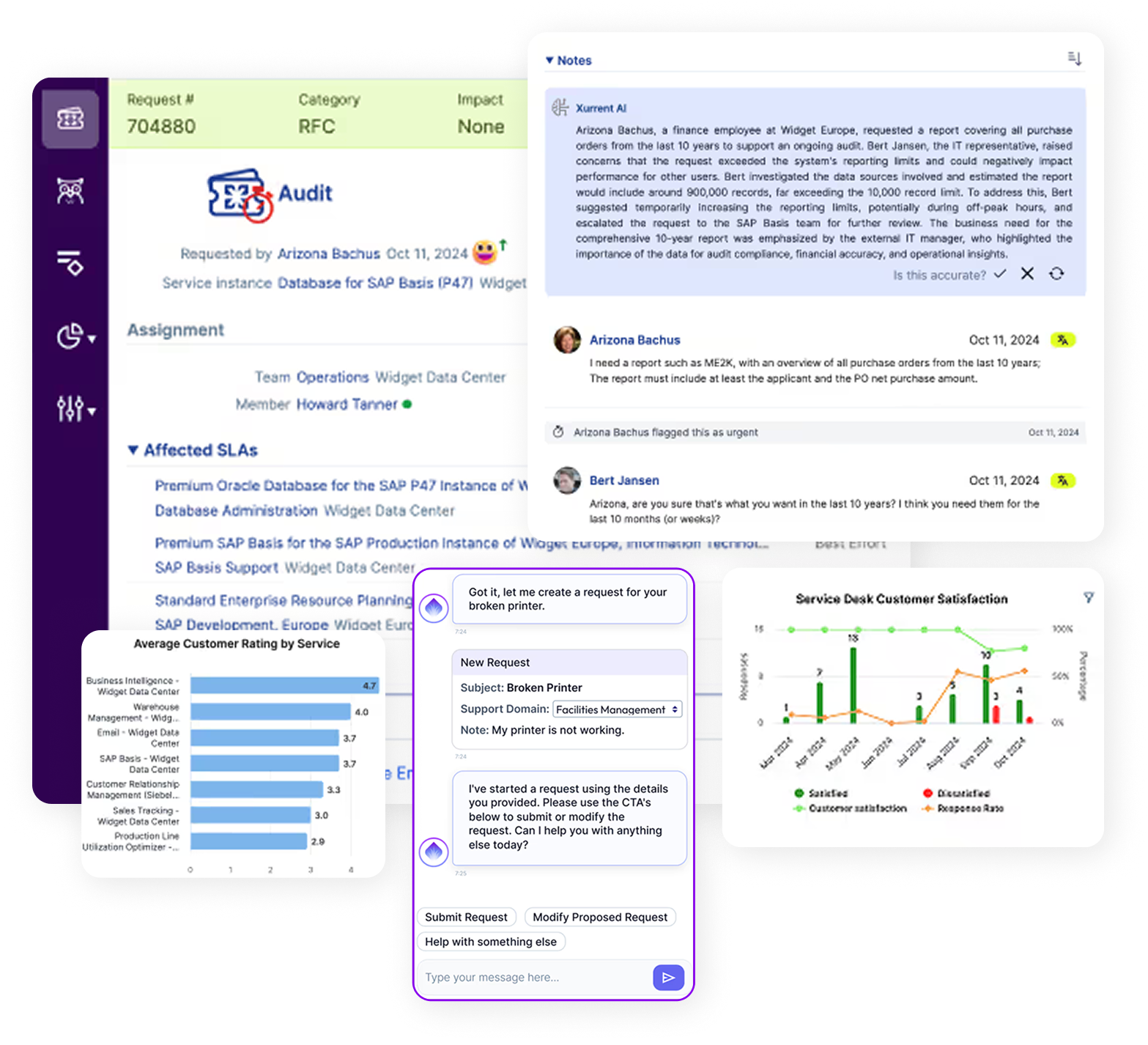
An intuitive self-service portal and continuously learning knowledge base help end users resolve common issues on their own. Knowledge is created and maintained as part of everyday work, not as a separate project.
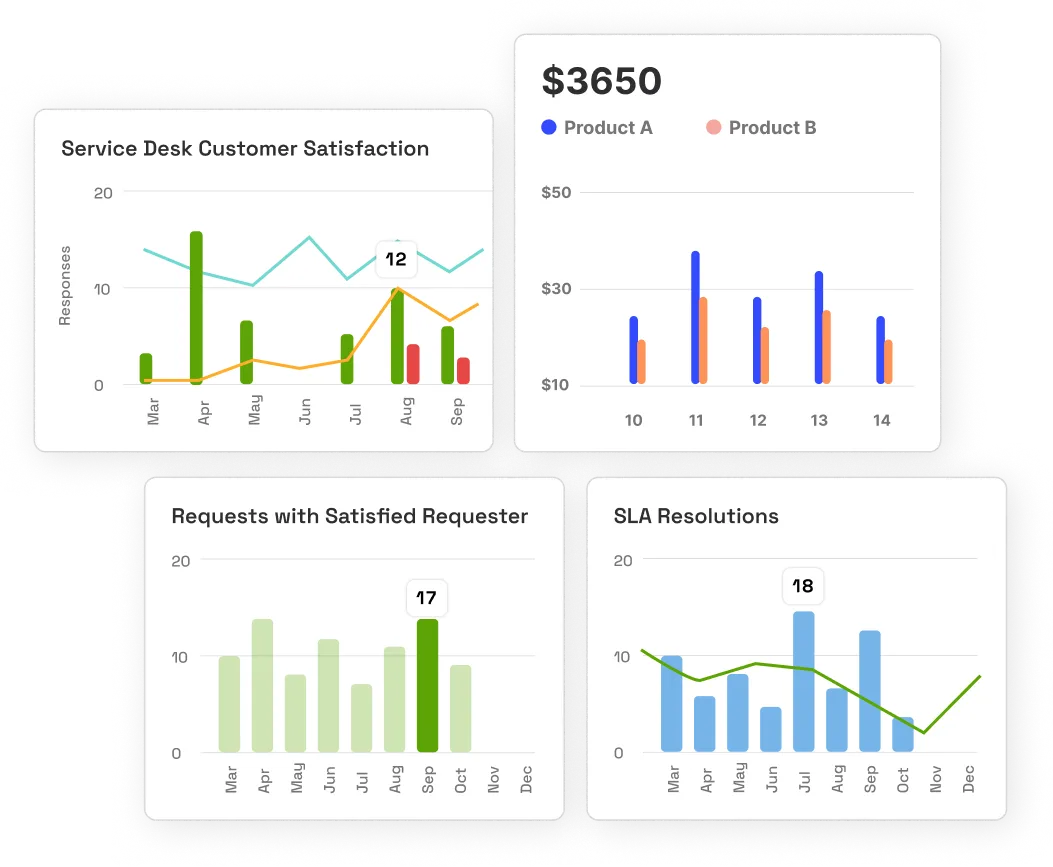
Real-time dashboards and ITIL-aligned reporting give service desk managers and leadership immediate insight into performance. Track SLAs, backlog health, resolution trends, and service quality without relying on after-the-fact reports.
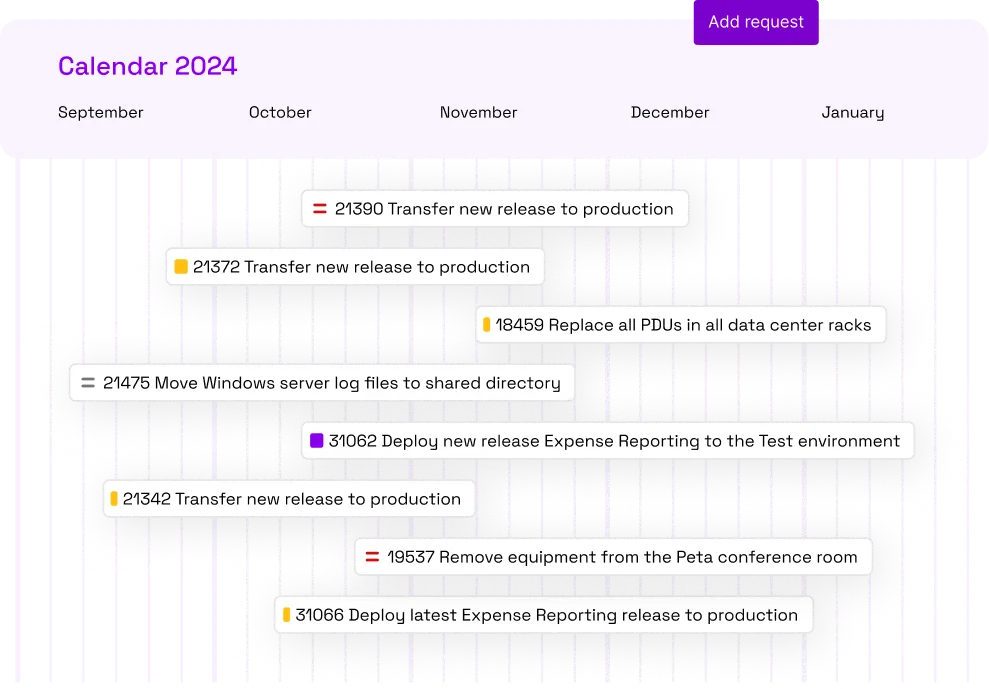
Change and release workflows balance speed with control. Risk is assessed up front, approvals are automated, and post-change outcomes are visible, helping teams reduce failed changes without slowing delivery.
Modern ITSM success isn’t measured by features. It’s measured by resolution speed, self-service adoption, customer satisfaction, and the ability to scale without adding headcount. Across industries and organization sizes, Xurrent ITSM consistently delivers results that service desk leaders and executives can stand behind.
Built directly into Xurrent ITSM, Sera AI enhances every ITIL process by working continuously in the background, not as a separate tool teams have to manage.
Explore Sera AI

Modern ITSM isn’t theoretical. It shows up in faster resolution, better self-service adoption, higher satisfaction, and the ability to scale without burning out teams. Organizations across industries rely on Xurrent ITSM to deliver consistent, high-quality service at scale.
Xurrent ITSM delivers everything service desk teams need to run reliable, ITIL-aligned service management. When combined with Xurrent’s incident response, status pages, and AI capabilities, it becomes a unified service and operations platform that eliminates silos, reduces handoffs, and improves accountability across the business.
A single service foundation for IT and the business that handles requests, changes, problems, and enterprise services in a consistent way across departments, without duplicating the same tools, data, or workflows.
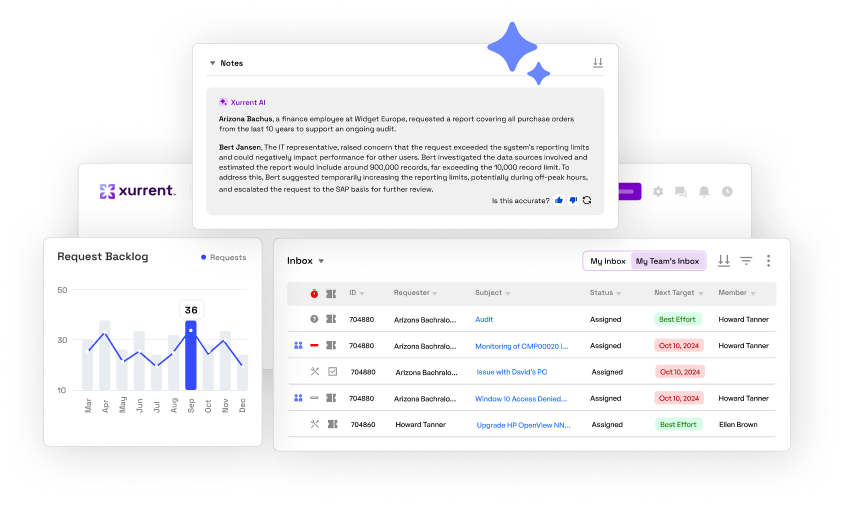
Reduce MTTR with AI-assisted triage that cuts alert noise, correlates signals across systems, and accelerates root cause analysis within a single incident workflow.
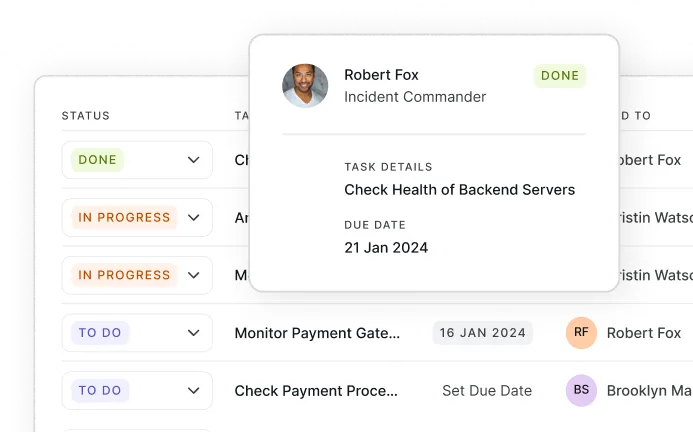
A built-in communication layer with public and private status pages that stay automatically synchronized with incident and service workflows—keeping every stakeholder informed in real time.
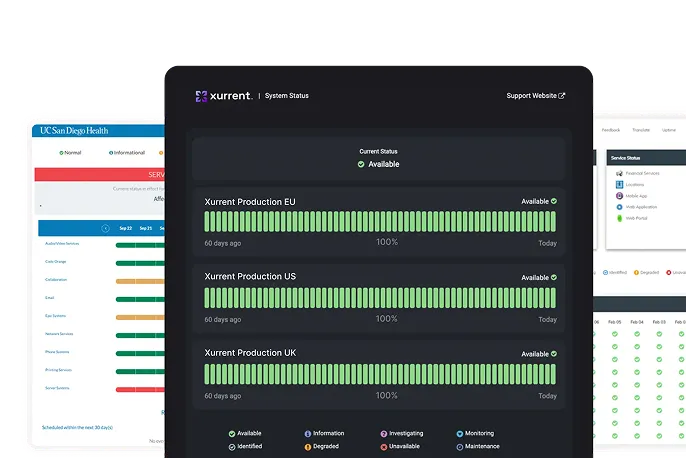
A connected AI fabric, woven across the Xurrent platform, Sera AI brings together signals, service data, and workflows to reduce noise, focus teams on what matters, and accelerate action across IT and the enterprise.
Xurrent ITSM sits at the center of your service management workflow, connecting the tools your teams already rely on for communication, automation, monitoring, and delivery. With an API-first architecture and a library of pre-built integrations, service desks can extend ITSM across the organization without custom development or long setup cycles.

ITSM is the practice of designing, delivering, operating, and improving IT services via standardized processes (incident, request, change, problem, knowledge) aligned to business outcomes. It treats IT “as a service,” with clear SLAs, ownership, and continual improvement that drives real business value.
Xurrent ITSM offers comprehensive ITIL-aligned capabilities, prioritizing configuration over customization, and integrates Sera AI into each step to accelerate classification, routing, and always-on knowledge creation.
ITSM governs user-facing services and processes while ITOM focuses on the health and performance of infrastructure and applications. Together, ITOM telemetry and automation feed ITSM to get deeper analytics, prevent incidents, and speed recovery. Xurrent integrates ITOM into our unified platform to link ITOM signals to ITSM workflows, enabling more effective IT operations.
Xurrent ITSM is an ITIL Accredited tool vendor with 19 certified practices, including: Incident, Problem, Change/Release, Request Fulfillment, Knowledge, SLAs/SLIs/SLOs, and Service Catalog.
Incident/request, change/release, problem, knowledge, and service catalog. Establish these with clear roles, SLAs, and a self-service portal to capture demand consistently.Xurrent has a library of pre-built ITSM templates and policies to get core practices up and running quickly. With Sera AI, creating a unified ITSM process is easier than ever.
AI dramatically improves service delivery by reducing ticket misroutes by up to 80% and accelerating triage. It drafts consistent communications and maintains up-to-date knowledge articles, leading to a 2x reduction in Mean Time to Resolution (MTTR) and improved First Contact Resolution (FCR), all without burdening service delivery teams.
Sera AI is native to Xurrent ITSM, so intent detection, summaries, and actions are integrated into ticketing (i.e., not a bolt-on chatbot), driving fast, measurable gains. Teams using Xurrent experience a 40% increase in productivity and 15% higher customer satisfaction ratings.
Track MTTR/MTTA, SLA attainment, backlog age, change failure rate, problem elimination, deflection/self-service usage, and requester CSAT. Our ITSM analytics provide live dashboards and over 400 pre-built reports, enabling you to measure everything from service desk health to strategic business insights.
Traditional ITSM systems can take anywhere from three to six months to go live. While highly customizable, this approach requires a team of engineers and service managers to complete many sprints to bring it to fruition. Modern, low-code ITSM emphasizes configuration over heavy customization to cut rollout from months to weeks. With Xurrent, typical deployments are complete in weeks using “just right” configuration and no-code workflows, helping companies to experience value faster.
When selecting vendors, prioritize those with independent attestations, robust access controls, encryption, auditability, and data residency options. A network of rich, API-first integrations is only as good as the security behind it. With Xurrent, you benefit from ISO/SOC certifications, BYOK encryption, detailed audit trails, and role-based controls across ITSM. Plus, with AWS Bedrock, you can be assured that your AI data remains within your tenant.