





Blog
Insights & updates from our experts


Resolve plant floor and IT issues before they disrupt production.

Stay audit-ready while resolving issues and reducing operational risk.
Resolve issues quickly with an AI-powered system that automates ticketing.
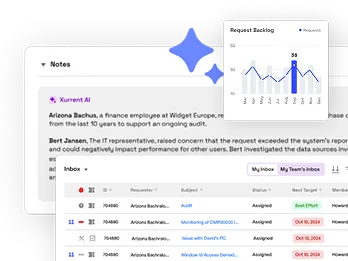
Unifiy IT, HR, Facilities, Finance, and more on a single, AI-powered service platform.
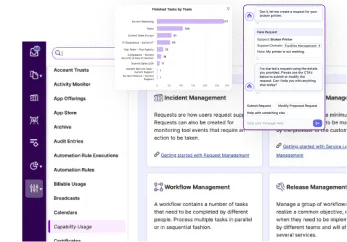
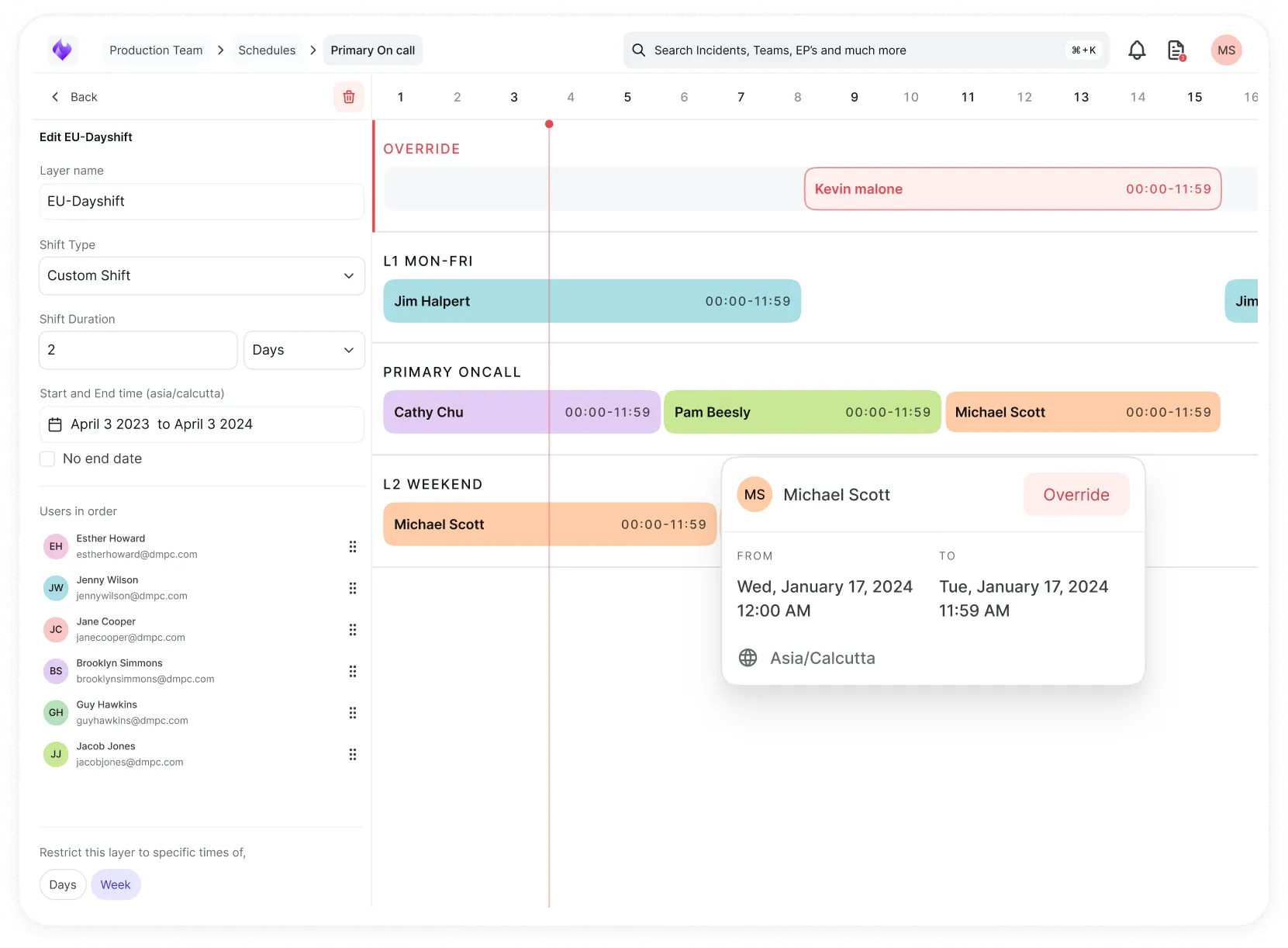
Simplify on-call scheduling, automate escalations, and reduce burnout.
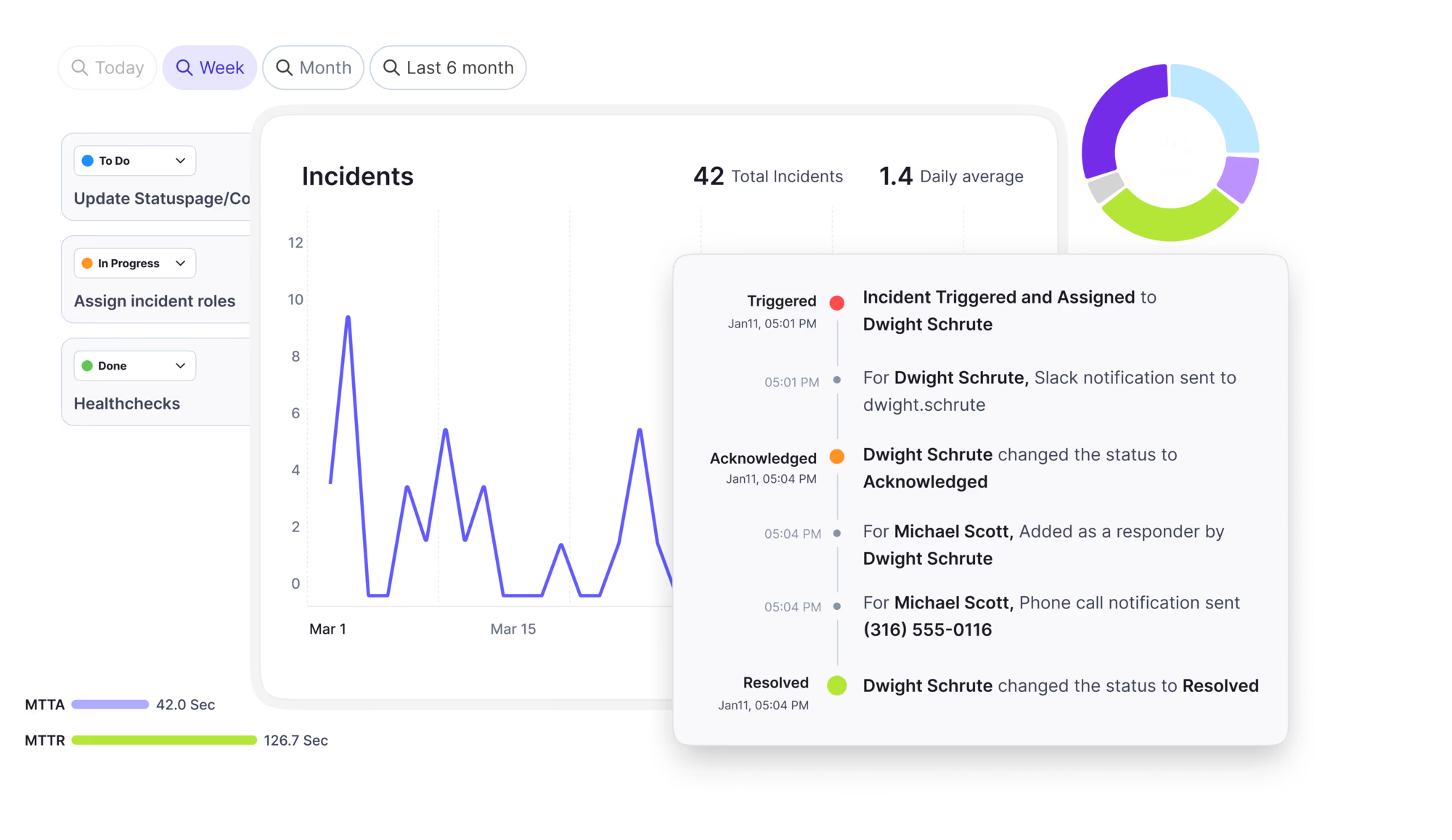
Automate postmortems, AI summaries, and post-incident workflows
Create, organize, and continuously improve your knowledge base to find the right answers with Sera AI.
We're here to help

The integration with Atlassian Jira using the Xurrent Integration Service is

The integration with Atlassian Jira using the Xurrent Integration Service is

The integration with Atlassian Jira using the Xurrent Integration Service is

The integration with Atlassian Jira using the Xurrent Integration Service is

The integration with Atlassian Jira using the Xurrent Integration Service is

The integration with Atlassian Jira using the Xurrent Integration Service is

The integration with Atlassian Jira using the Xurrent Integration Service is

The integration with Atlassian Jira using the Xurrent Integration Service is
Resolve issues quickly with an AI-powered system that automates ticketing.
Unifiy IT, HR, Facilities, Finance, and more on a single, AI-powered service platform.
Simplify on-call scheduling, automate escalations, and reduce burnout.
Automate postmortems, AI summaries, and post-incident workflows
Create, organize, and continuously improve your knowledge base to find the right answers with Sera AI.
Resolve plant floor and IT issues before they disrupt production.
Stay audit-ready while resolving issues and reducing operational risk.

Detect, respond, and resolve incidents fast to cut downtime and MTTR.

Keep your store online, even during your biggest sales moments.

Protect patient data and resolve issues fast, so care teams stay focused on care.

Standardize service delivery across every store and channel.

We are here to help 24/7

Connect with other Xurrent Users

Get insights and tips on how to get the most out of Xurrent

Apps, APIs, and updates

Xurrent service functionality

Eliminate manual tasks, optimize workflows, and deliver faster resolutions.
Learn how organizations have reduced downtime, improved 50% MTTA & MTTR, and cut costs with Xurrent IMR.
Discover Xurrent IMR's quick support, bidirectional integrations with Jira and Slack, and more cohesive incident response capabilities compared to Opsgenie.
Understand why users value Xurrent IMR for its intuitive interface, efficient incident alerting, customizable On-call schedules, and escalations.
A webhook is an event-driven HTTP callback that automatically sends data from one application to another the moment a specific event occurs, eliminating the need for the receiving application to continuously poll for updates. In ITSM and incident management environments, webhooks enable real-time integration between monitoring tools, ticketing systems, status pages, and collaboration platforms by pushing structured payloads—typically JSON or XML—to predefined URLs when incidents are created, updated, or resolved. Unlike traditional API polling, which queries an endpoint at fixed intervals regardless of whether new data exists, webhooks operate on a push model: the source application initiates the HTTP POST request immediately when the triggering event happens, delivering only relevant data to the destination endpoint.
Webhooks reduce incident response latency by seconds or minutes compared to polling-based integrations, directly impacting MTTR in production environments where every moment of downtime carries revenue and reputation cost. When a monitoring system detects a threshold breach, a webhook can instantly create a ticket in your ITSM platform, page the on-call engineer via an incident management tool, and update a public status page—all within the same second, without manual intervention or scheduled sync delays. This real-time data flow prevents the alert fatigue and information silos that occur when teams rely on separate tools that don't communicate automatically; instead of engineers checking multiple dashboards or waiting for batch updates, critical context arrives exactly when and where it's needed.
Organizations that fail to implement webhooks between their service management and operations tools face duplicate manual work, stale incident data, and coordination failures during high-severity events. A service desk agent may tell a customer "we're investigating" while the engineering team has already identified and deployed a fix—simply because the ITSM ticket wasn't updated in real time. Webhooks eliminate these gaps by ensuring that every state change in one system immediately propagates to all connected systems, maintaining a single source of truth across the incident lifecycle from detection through postmortem.
The webhook workflow begins when an administrator configures a webhook in the source application by specifying a destination URL (the webhook endpoint), selecting which events should trigger the webhook (such as "incident.created" or "status.changed"), and optionally defining authentication credentials or payload filters. When the triggering event occurs—for example, when a monitoring tool detects a service degradation—the source application constructs an HTTP POST request containing a JSON payload with event metadata: timestamp, event type, affected service, severity, and any relevant context like error messages or metric values.
The source application then sends this POST request to the configured endpoint URL, where the receiving application's webhook handler parses the payload, validates the request (often using signature verification to confirm authenticity), and executes the appropriate action: creating an incident ticket, updating a status page, sending a Slack notification, or triggering an automated runbook. The receiving system typically responds with an HTTP status code—200 for success, 4xx for client errors, 5xx for server errors—and the source application may implement retry logic with exponential backoff if the initial delivery fails due to network issues or endpoint unavailability.
Advanced webhook implementations include payload transformation (mapping source data fields to destination schema), conditional routing (sending different events to different endpoints based on severity or service), and delivery guarantees (at-least-once delivery with idempotency keys to prevent duplicate processing). Many platforms also provide webhook logs and delivery history for troubleshooting failed integrations, showing request/response pairs, retry attempts, and error messages that help administrators diagnose configuration issues or endpoint problems.
- Automated incident creation : A SaaS company's Datadog monitoring detects API response times exceeding 2 seconds and fires a webhook to their Xurrent IMR instance, which automatically creates a P1 incident, assigns it to the on-call SRE based on the affected service, and simultaneously posts an alert to the H1incidents Slack channel—all within 500 milliseconds of threshold breach, ensuring the team begins troubleshooting before customers start reporting issues.
- Status page synchronization : A financial services firm uses webhooks to keep their public status page in sync with internal incident management; when an engineer updates an incident in Xurrent IMR with a new status or estimated resolution time, a webhook immediately pushes that update to their Xurrent Status Pages instance, which publishes the change to customers via the web page, RSS feed, and email notifications—eliminating the manual step of copying updates between systems and ensuring customers receive accurate information without delay.
- Cross-team workflow automation : A healthcare technology company connects their Xurrent ITSM service desk to their change management system via webhooks; when a service desk agent escalates a recurring incident to "problem" status, a webhook triggers the creation of a linked change request in the engineering backlog, pre-populating it with incident history, affected users, and root cause analysis notes—ensuring that operational issues automatically generate follow-up work items without requiring manual handoffs between IT operations and development teams.
- Incident Management
- Status Pages
- API
- MTTR
- Workflow Automation
---

.webp)
.webp)