




Blog
Insights & updates from our experts


Resolve plant floor and IT issues before they disrupt production.

Stay audit-ready while resolving issues and reducing operational risk.
Resolve issues quickly with an AI-powered system that automates ticketing.
Unifiy IT, HR, Facilities, Finance, and more on a single, AI-powered service platform.
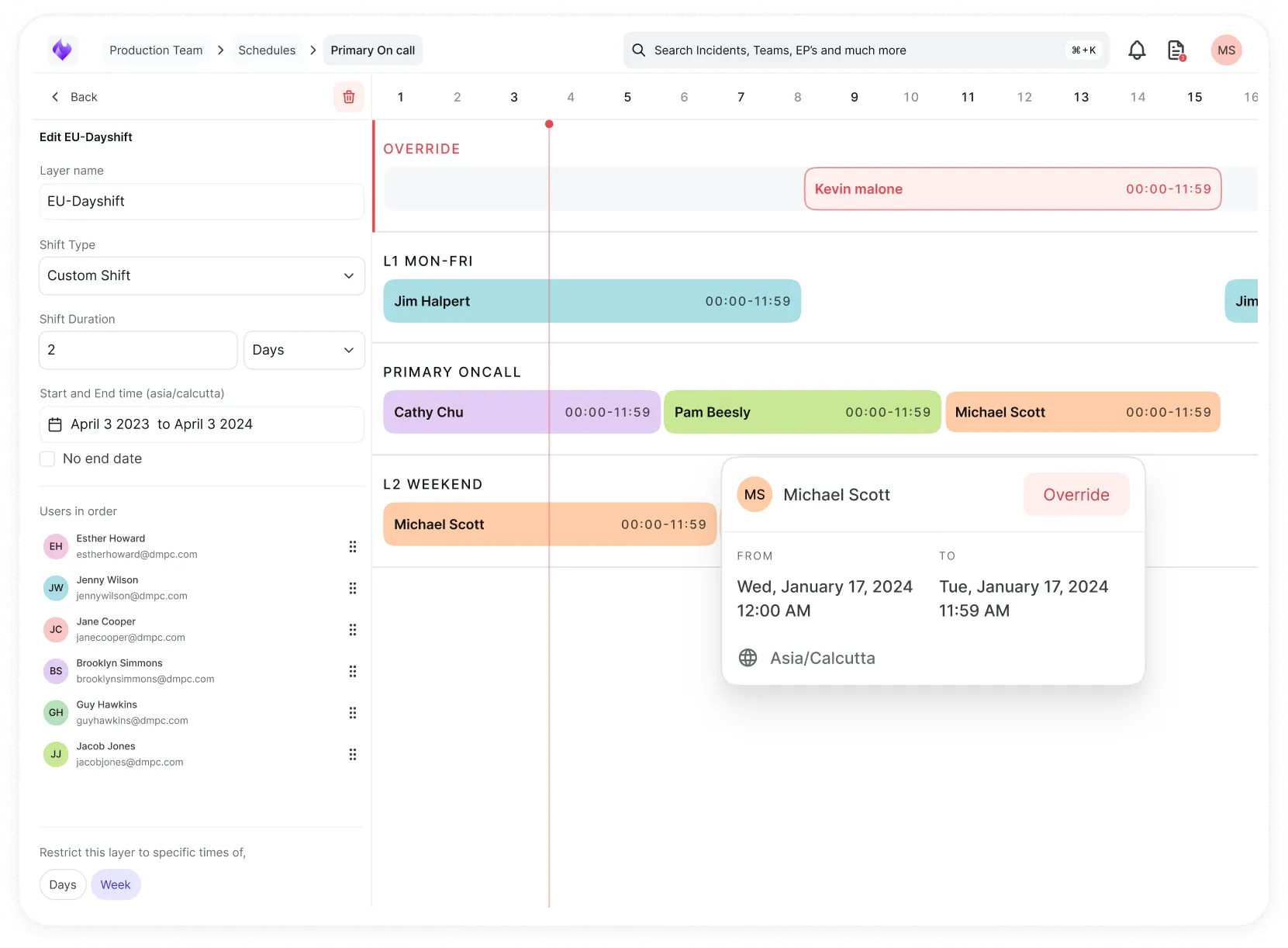
Simplify on-call scheduling, automate escalations, and reduce burnout.
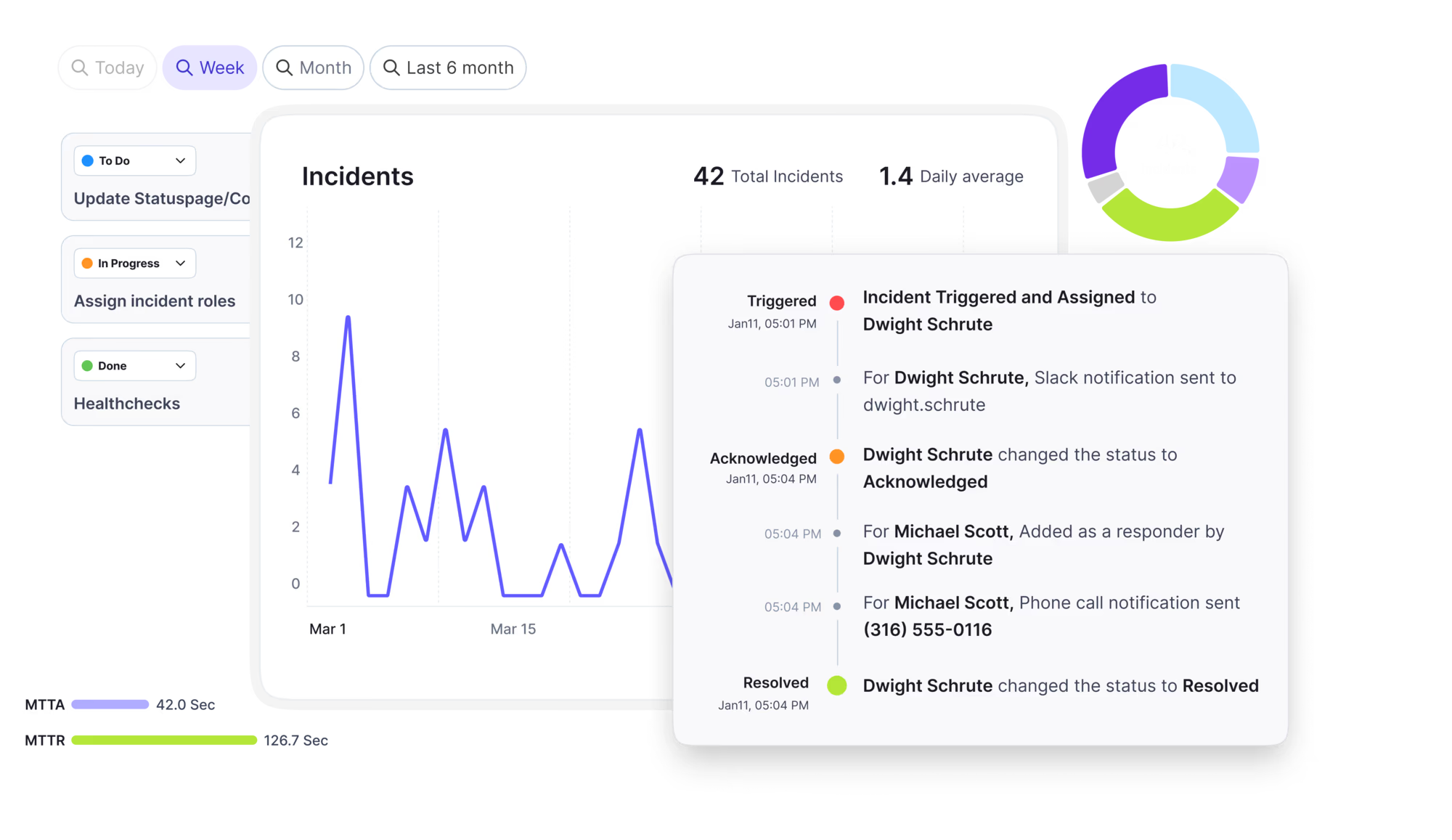
Automate postmortems, AI summaries, and post-incident workflows
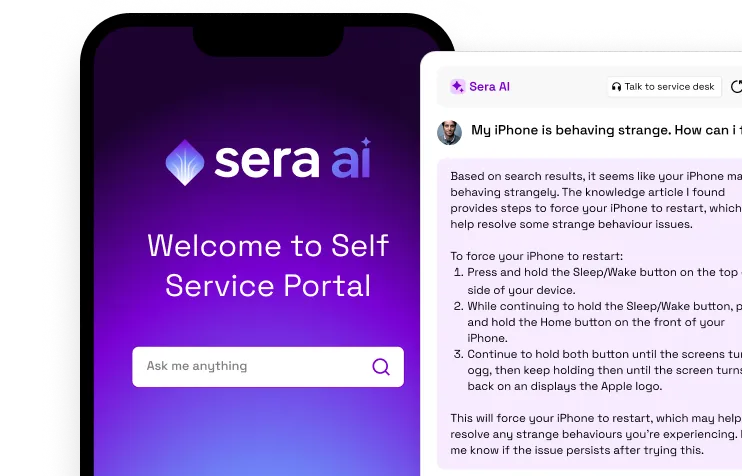
Create, organize, and continuously improve your knowledge base to find the right answers with Sera AI.
We're here to help

The integration with Atlassian Jira using the Xurrent Integration Service is

The integration with Atlassian Jira using the Xurrent Integration Service is

The integration with Atlassian Jira using the Xurrent Integration Service is

The integration with Atlassian Jira using the Xurrent Integration Service is

The integration with Atlassian Jira using the Xurrent Integration Service is

The integration with Atlassian Jira using the Xurrent Integration Service is

The integration with Atlassian Jira using the Xurrent Integration Service is

The integration with Atlassian Jira using the Xurrent Integration Service is
Resolve issues quickly with an AI-powered system that automates ticketing.
Unifiy IT, HR, Facilities, Finance, and more on a single, AI-powered service platform.
Simplify on-call scheduling, automate escalations, and reduce burnout.
Automate postmortems, AI summaries, and post-incident workflows
Create, organize, and continuously improve your knowledge base to find the right answers with Sera AI.
Resolve plant floor and IT issues before they disrupt production.
Stay audit-ready while resolving issues and reducing operational risk.

Detect, respond, and resolve incidents fast to cut downtime and MTTR.

Keep your store online, even during your biggest sales moments.

Protect patient data and resolve issues fast, so care teams stay focused on care.

Standardize service delivery across every store and channel.

We are here to help 24/7

Connect with other Xurrent Users

Get insights and tips on how to get the most out of Xurrent

Apps, APIs, and updates

Xurrent service functionality

Eliminate manual tasks, optimize workflows, and deliver faster resolutions.
Learn how organizations have reduced downtime, improved 50% MTTA & MTTR, and cut costs with Xurrent IMR.
Discover Xurrent IMR's quick support, bidirectional integrations with Jira and Slack, and more cohesive incident response capabilities compared to Opsgenie.
Understand why users value Xurrent IMR for its intuitive interface, efficient incident alerting, customizable On-call schedules, and escalations.
Information Security Management is the set of policies, processes, and controls an organization implements to protect the confidentiality, integrity, and availability of its information assets. It encompasses how IT and security teams identify risks to data and systems, define protection measures, enforce access controls, monitor for threats, respond to security incidents, and maintain compliance with regulatory standards like ISO 27001, SOC 2, and GDPR. Information Security Management operates as a continuous cycle—assessing vulnerabilities, implementing safeguards, detecting breaches, and improving defenses—rather than a one-time project. In ITSM environments, it integrates with incident management, change control, and access management workflows to ensure security considerations are embedded in every service interaction.
Without structured Information Security Management, organizations expose themselves to data breaches, service disruptions, regulatory penalties, and reputational damage. A single misconfigured access control or unpatched vulnerability can lead to unauthorized access, ransomware attacks, or compliance violations that halt operations and trigger costly audits. For IT service desks, poor security management creates friction—users face unnecessary access delays, security incidents escalate without clear ownership, and audit trails are incomplete or missing. For DevOps and SRE teams, weak security practices increase the blast radius of incidents, complicate root cause analysis, and slow recovery when credentials or configurations are compromised.
Effective Information Security Management reduces MTTR during security incidents by establishing clear escalation paths, pre-approved response playbooks, and automated containment workflows. It protects operational continuity by preventing unauthorized changes, detecting anomalies before they become outages, and ensuring that security controls don't block legitimate service requests. Compliance becomes manageable—audit-ready logs, role-based access controls, and documented security policies are maintained as part of standard operations rather than scrambled together during audits. Organizations that integrate security management into ITSM and incident response workflows see fewer repeat security incidents, faster resolution of access issues, and lower risk of downtime caused by security events.
Information Security Management operates through a structured lifecycle aligned with frameworks like ISO 27001 and ITIL's Information Security Management practice. It begins with risk assessment—identifying which information assets (customer data, system credentials, intellectual property) require protection and evaluating threats like unauthorized access, data loss, or service disruption. Teams then define security policies that establish acceptable use, access requirements, encryption standards, and incident response procedures.
Implementation follows through technical controls (firewalls, encryption, multi-factor authentication), procedural controls (access request workflows, change approval gates), and monitoring systems (SIEM tools, intrusion detection, audit logging). Access management integrates with ITSM ticketing—requests for elevated privileges or system access flow through approval workflows that enforce least-privilege principles and separation of duties. Change management processes include security impact assessments to prevent misconfigurations or unauthorized modifications.
Continuous monitoring detects security events—failed login attempts, unusual data transfers, configuration drift—and routes alerts to security operations or incident management teams. When security incidents occur, predefined response workflows activate: containment (isolating affected systems), investigation (analyzing logs and attack vectors), remediation (patching vulnerabilities, revoking compromised credentials), and recovery (restoring service while preventing recurrence). Post-incident reviews feed back into risk assessment, updating policies and controls based on lessons learned. Compliance audits validate that controls are functioning, logs are complete, and security practices align with regulatory requirements.
- Financial services firm implements Information Security Management by requiring multi-factor authentication for all service desk agents, encrypting customer data at rest and in transit, and maintaining audit logs that track every access to sensitive financial records. When a phishing attempt compromises an employee account, automated workflows immediately revoke access, trigger an incident investigation, and notify the security team—containing the breach within minutes and preventing unauthorized data access.
- Healthcare provider integrates Information Security Management into its ITSM platform by enforcing role-based access controls that restrict patient record access to authorized clinicians, logging all data queries for HIPAA compliance, and requiring security approval for any change to systems handling protected health information. When a vulnerability is discovered in a patient portal, the change management process includes a security impact assessment that validates patches won't introduce new risks before deployment.
- SaaS company embeds Information Security Management in its incident response workflows by automatically creating security incident tickets when monitoring tools detect anomalous API activity, routing alerts to on-call security engineers, and synchronizing investigation notes between ITSM and IMR platforms. Post-incident postmortems document root causes (misconfigured API permissions), generate remediation tasks (implement stricter OAuth scopes), and track completion in the change management system—ensuring vulnerabilities are fixed rather than deferred.
- Incident Management
- Change Enablement (Management)
- Configuration Management
- Access Management
- Compliance Management
---

.webp)
.webp)