





Blog
Insights & updates from our experts


Resolve plant floor and IT issues before they disrupt production.

Stay audit-ready while resolving issues and reducing operational risk.
Resolve issues quickly with an AI-powered system that automates ticketing.
Unifiy IT, HR, Facilities, Finance, and more on a single, AI-powered service platform.
Simplify on-call scheduling, automate escalations, and reduce burnout.
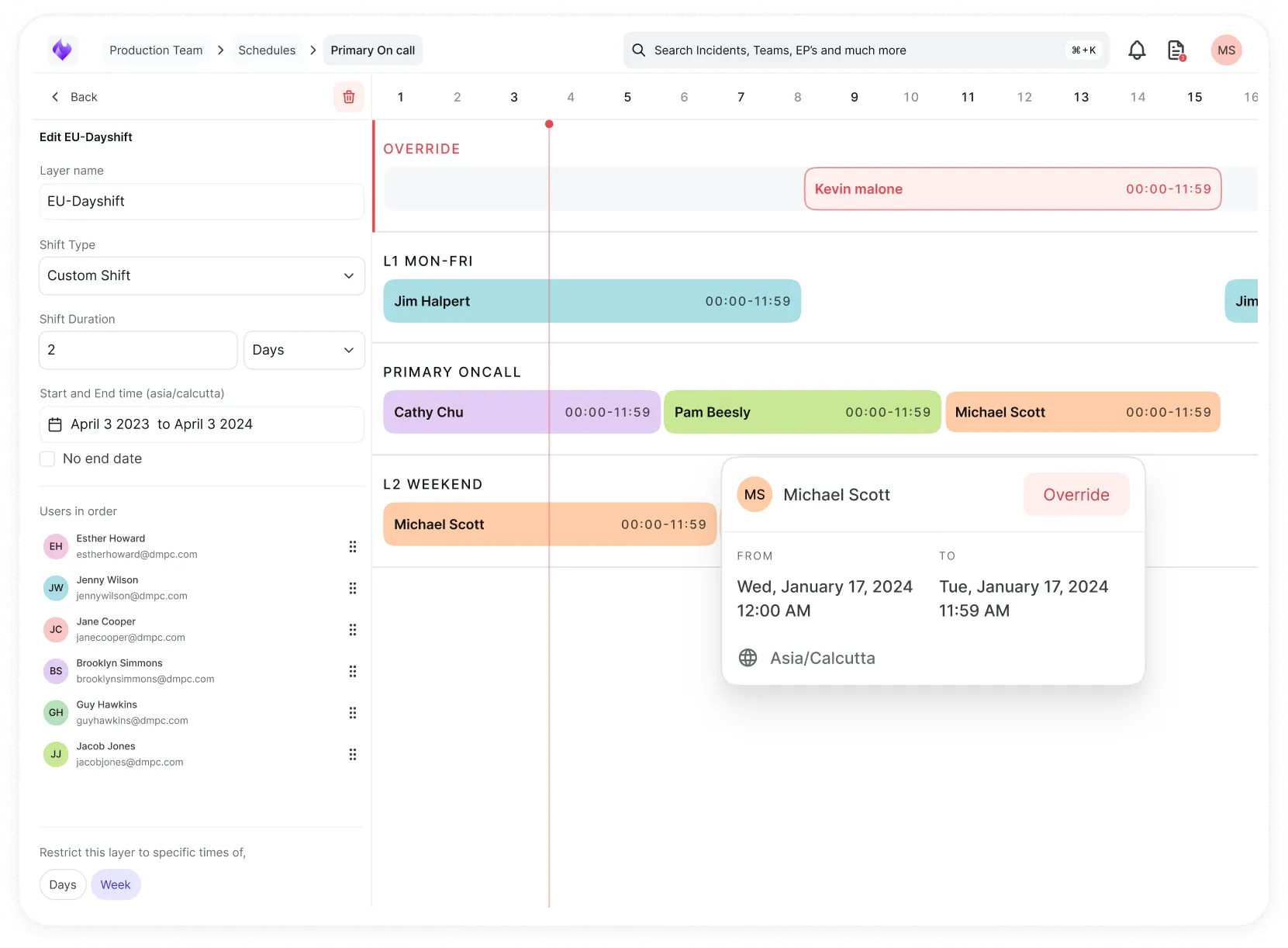
Automate postmortems, AI summaries, and post-incident workflows
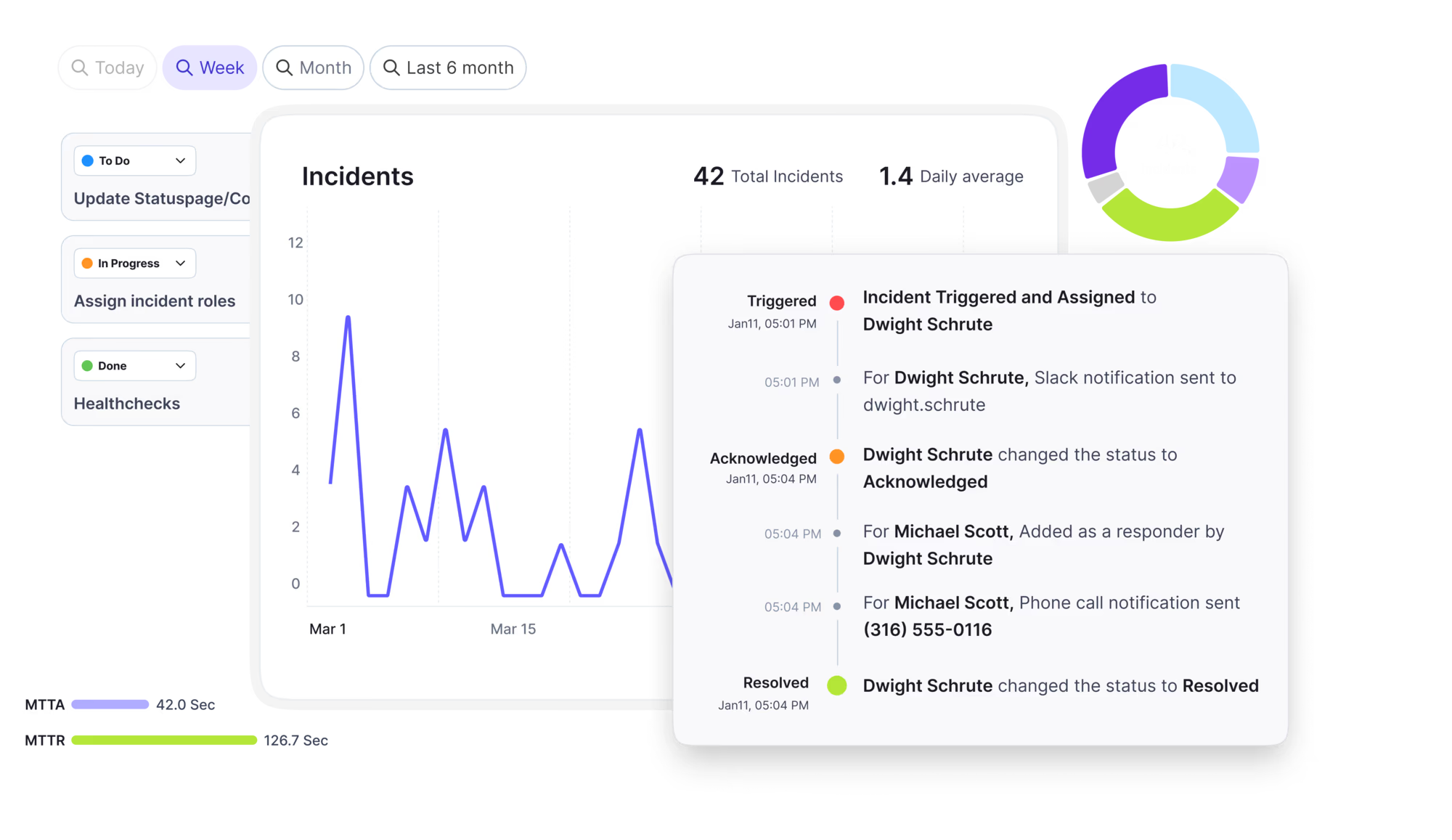
Create, organize, and continuously improve your knowledge base to find the right answers with Sera AI.
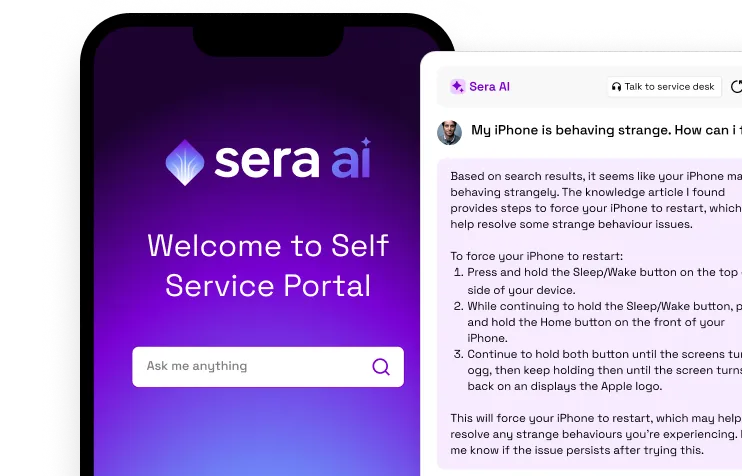
We're here to help

The integration with Atlassian Jira using the Xurrent Integration Service is

The integration with Atlassian Jira using the Xurrent Integration Service is

The integration with Atlassian Jira using the Xurrent Integration Service is

The integration with Atlassian Jira using the Xurrent Integration Service is

The integration with Atlassian Jira using the Xurrent Integration Service is

The integration with Atlassian Jira using the Xurrent Integration Service is

The integration with Atlassian Jira using the Xurrent Integration Service is

The integration with Atlassian Jira using the Xurrent Integration Service is
Resolve issues quickly with an AI-powered system that automates ticketing.
Unifiy IT, HR, Facilities, Finance, and more on a single, AI-powered service platform.
Simplify on-call scheduling, automate escalations, and reduce burnout.
Automate postmortems, AI summaries, and post-incident workflows
Create, organize, and continuously improve your knowledge base to find the right answers with Sera AI.
Resolve plant floor and IT issues before they disrupt production.
Stay audit-ready while resolving issues and reducing operational risk.

Detect, respond, and resolve incidents fast to cut downtime and MTTR.

Keep your store online, even during your biggest sales moments.

Protect patient data and resolve issues fast, so care teams stay focused on care.

Standardize service delivery across every store and channel.

We are here to help 24/7

Connect with other Xurrent Users

Get insights and tips on how to get the most out of Xurrent

Apps, APIs, and updates

Xurrent service functionality

Eliminate manual tasks, optimize workflows, and deliver faster resolutions.
Learn how organizations have reduced downtime, improved 50% MTTA & MTTR, and cut costs with Xurrent IMR.
Discover Xurrent IMR's quick support, bidirectional integrations with Jira and Slack, and more cohesive incident response capabilities compared to Opsgenie.
Understand why users value Xurrent IMR for its intuitive interface, efficient incident alerting, customizable On-call schedules, and escalations.

No. But not for the reasons you might think.
AI is on everyone's mind lately — and for good reason. The headlines swing from existential ("AI will eliminate millions of jobs") to utopian ("AI will handle everything, nothing will ever break").
Meanwhile, the people actually running IT service desks are somewhere in the middle — quietly wondering what it all means for their team, their role, and next Monday morning.
AI is ...
Handling more tickets.
Automating more workflows
Deflecting more requests
... and doing it faster than any L1 team ever could at scale.
The anxiety in the industry is real.
"So let's answer the question directly: No, AI is not going to replace L1 support. But that's only part of the answer. The more useful question is: What should L1 support actually look like when AI is doing what it's supposed to do?"
Those are very different conversations. And we believe the second one is far more useful.
Let's level set about AI. What is AI good at?
AI excels at the repetitive, high-volume, low-judgment work that has always been the least satisfying part of L1 work.
All tasks requiring human hands ... mostly because there was no better option, not because they required human judgment.
The numbers back this up.
Xurrent's own Sera AI platform has performed more than 3 million automated request summaries, generated over 900 AI-powered automation rules, and completed 1.7 million sentiment calculations across its customer base.
Customers are seeing the same. SEAS, a European nuclear energy provider, now resolves nearly half of all requests without any manual touch — saving more than 4,300 hours of labor annually. Fiskars eliminated over 1,200 hours of manual work in just six months after implementing Xurrent, while cutting ticket resolution time by 35%.
Note: AI is not replacing anything. Instead, AI is absorbing the work that never required human judgment in the first place.
There's a principle that anyone who has worked with data or AI knows intuitively: garbage in, garbage out.
AI doesn't arrive knowing your environment. It doesn't know your users, your quirks, your escalation history, or the three legacy systems that require a workaround nobody documented.
It needs clean data, accurate knowledge bases, well-structured workflows, and people who understand the context behind what it's being asked to do. Without that, automation doesn't solve your L1 volume problem — it scales your L1 errors instead.
Wrong routing, outdated answers, missed escalations. At speed.
In fact, according to this recent Gartner blog post, "over 40% of agentic AI projects will be canceled by the end of 2027, due to escalating costs, unclear business value or inadequate risk controls."
The L1 agents who understand your environment, your users, your edge cases, and your escalation logic are the same people who keep AI from producing bad outputs at scale.
And they're not being replaced by AI. They're the ones who will shape how AI performs and drive it toward real, meaningful success.
Not long ago, a typical L1 support job description looked something like this:
Reset passwords. Log tickets. Triage incoming requests. Route to L2 when needed. Repeat.
Here's what that same role looks like when AI is doing its job:
Curate and maintain the knowledge base AI draws from. Review automated outputs for accuracy and drift. Own the escalations that require judgment — emotional situations, novel problems, complex edge cases. Identify where automation is underperforming and why. Bring the human element that no AI can replicate when people call into the service desk.
That's not a smaller or lesser job, but it's certainly a more strategic one.
Gartner's November 2025 CIO survey put it plainly: "By 2030, CIOs expect that 0% of IT work will be done by humans without AI, 75% will be done by humans augmented with AI, and 25% will be done by AI alone, according to a July 2025 survey of over 700 CIOs by Gartner, Inc."
The future isn't humans out of the picture. It's humans working differently.
A modern service desk is essential for every modern enterprise — and the organizations getting AI right aren't building a service desk without people. They're building one where people and AI work together, each doing what they do best.
Replacement fear is understandable, but it's a distraction from the more pressing risk: deploying AI without the human infrastructure to support it.
Organizations that cut L1 headcount before their AI is properly trained and managed will end up with automated chaos.
On top of that, it may cost more than they saved. Gartner recently projected that costs per resolution for generative AI will exceed $3 by 2030 — more than many offshore agents — citing rising infrastructure costs and increasingly complex use cases.
Andy Venables, CTO at POPX, put it directly in a recent ITPro piece, aptly titled, "Is the traditional MSP service desk dead?" His response? "Far from it – in my view, it's turning into something much more powerful."
In POPX's latest "State of MSP Industry Survey," Andy's team found that "65% of organisations report that AI has freed up their agents for higher-value tasks, shifting workloads away from repetitive issues and toward more complex problem-solving."
The risk isn't that AI makes L1 agents obsolete. The risk is that organizations mistake AI deployment for AI readiness and skip the human work that makes it functional.
The enterprises that get this right aren't asking, "How do I replace L1?" They're asking, "How do I build a service desk where AI handles volume and people handle judgment?"
That means doing all of the following:
Sera AI, Xurrent's embedded AI fabric, is built on this exact premise. It's not a standalone chatbot added to the platform — it's woven throughout every workflow, continuously learning, surfacing recommendations in context, and designed to amplify the people behind it.
Before a ticket is even created, Sera helps end users troubleshoot independently. When a request enters the system, Sera is already classifying, routing, and recommending in real time.
The result: fewer tickets, faster resolutions, and service teams that spend less time triaging and more time solving.
— —
AI isn't going to replace great L1 support. It's going to make it more visible by clearing away the volume so the real work can finally be seen. The enterprises that recognize this early will get the most out of both their technology and their people.
Get started with Xurrent today.

.webp)
Most enterprise AI is a chatbot stuck to the side of your tools. We built something different. Two MCP servers, one for incident response and one for service operations, that let you ask your operational data anything, and in the case of ITSM, act on it, using whatever AI client your team already uses.
Most AI SREs are pattern matchers trained on public data. They know what a memory leak looks like in the abstract. They don't know that your payments-api has a flaky liveness probe everyone ignores, that the checkout team owns the retry policy, or that the last three "database incidents" were actually cache misconfigurations. That knowledge lives in your postmortems, your Slack channels, and the heads of two senior engineers.
Most vendors will tell you ITSM implementation takes six months to a year — but modern, configuration-first platforms have rewritten the math entirely. See what real implementations look like in 2026, and why a long rollout is now a choice, not a given.

.webp)
.webp)