




Blog
Insights & updates from our experts


Resolve plant floor and IT issues before they disrupt production.

Stay audit-ready while resolving issues and reducing operational risk.
Resolve issues quickly with an AI-powered system that automates ticketing.
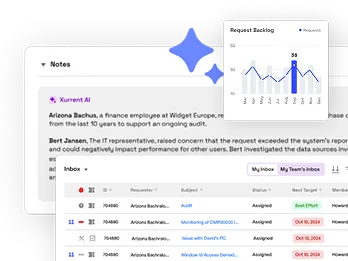
Unifiy IT, HR, Facilities, Finance, and more on a single, AI-powered service platform.
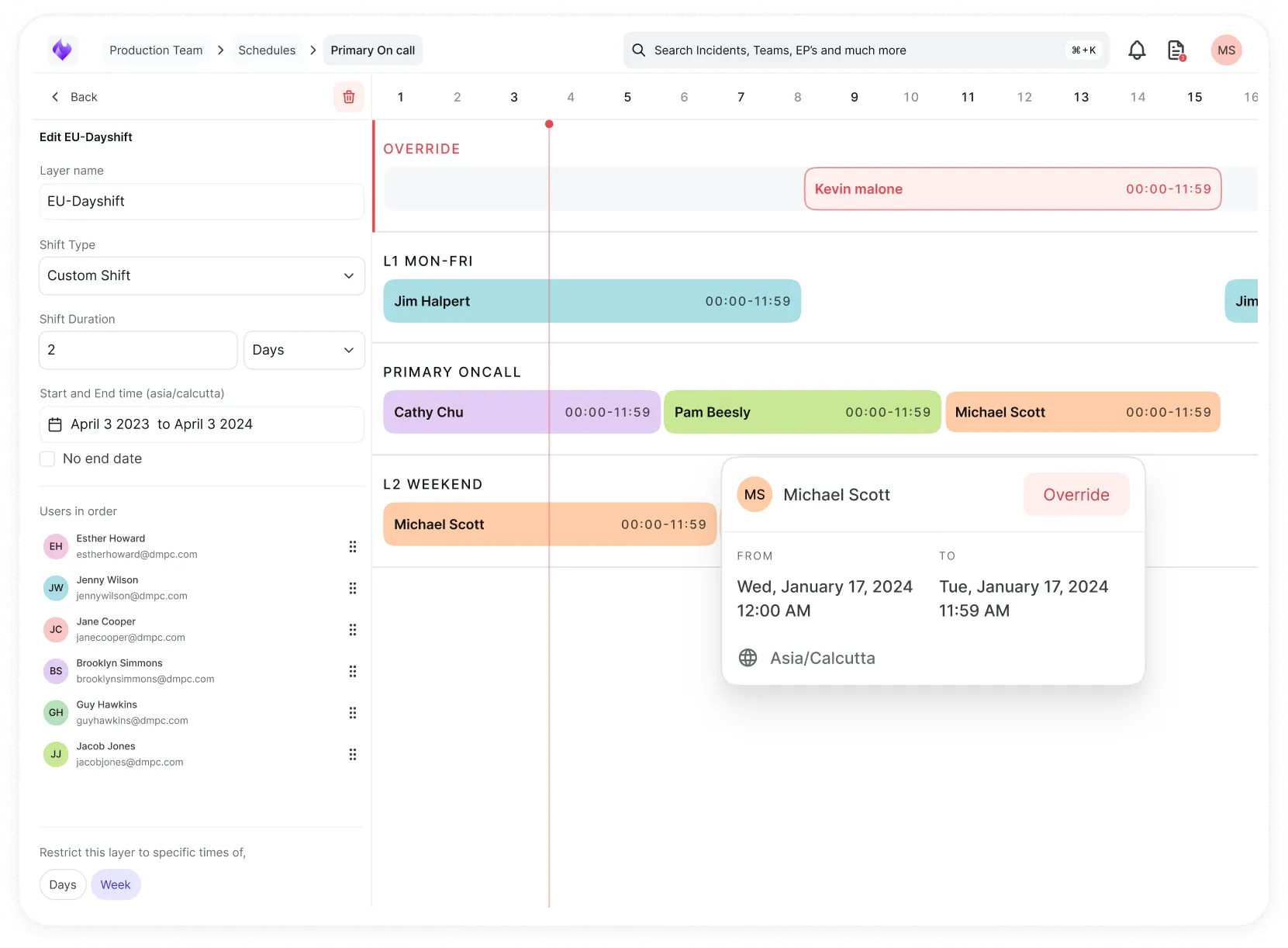
Simplify on-call scheduling, automate escalations, and reduce burnout.
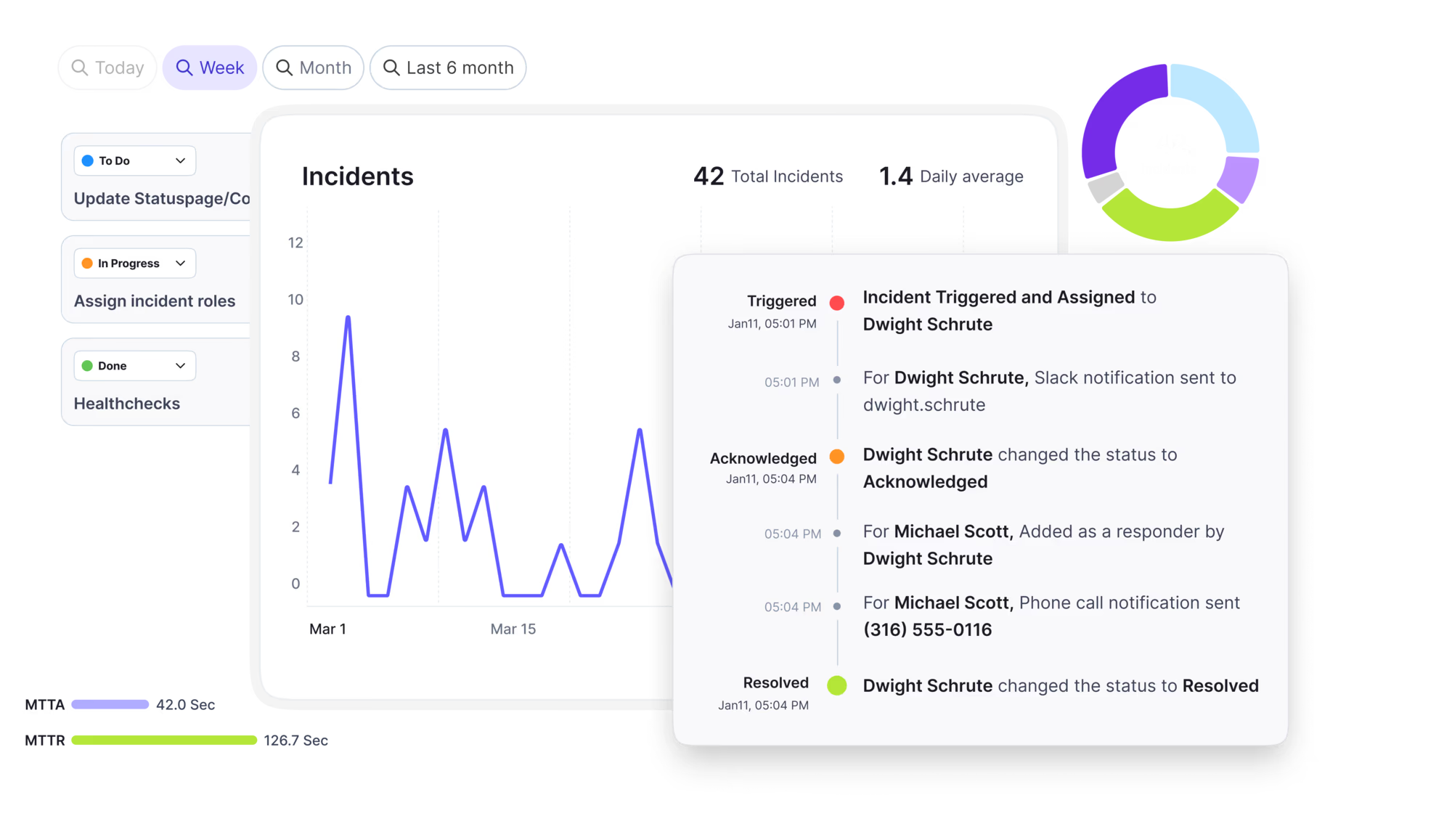
Automate postmortems, AI summaries, and post-incident workflows
Create, organize, and continuously improve your knowledge base to find the right answers with Sera AI.
We're here to help

The integration with Atlassian Jira using the Xurrent Integration Service is

The integration with Atlassian Jira using the Xurrent Integration Service is

The integration with Atlassian Jira using the Xurrent Integration Service is

The integration with Atlassian Jira using the Xurrent Integration Service is

The integration with Atlassian Jira using the Xurrent Integration Service is

The integration with Atlassian Jira using the Xurrent Integration Service is

The integration with Atlassian Jira using the Xurrent Integration Service is

The integration with Atlassian Jira using the Xurrent Integration Service is
Resolve issues quickly with an AI-powered system that automates ticketing.
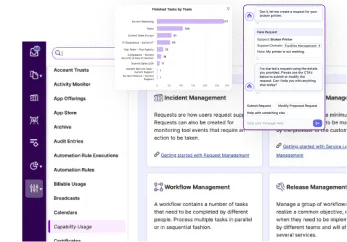
Unifiy IT, HR, Facilities, Finance, and more on a single, AI-powered service platform.
Simplify on-call scheduling, automate escalations, and reduce burnout.
Automate postmortems, AI summaries, and post-incident workflows
Create, organize, and continuously improve your knowledge base to find the right answers with Sera AI.
Resolve plant floor and IT issues before they disrupt production.
Stay audit-ready while resolving issues and reducing operational risk.

Detect, respond, and resolve incidents fast to cut downtime and MTTR.

Keep your store online, even during your biggest sales moments.

Protect patient data and resolve issues fast, so care teams stay focused on care.

Standardize service delivery across every store and channel.

We are here to help 24/7

Connect with other Xurrent Users

Get insights and tips on how to get the most out of Xurrent

Apps, APIs, and updates

Xurrent service functionality

Eliminate manual tasks, optimize workflows, and deliver faster resolutions.
Learn how organizations have reduced downtime, improved 50% MTTA & MTTR, and cut costs with Xurrent IMR.
Discover Xurrent IMR's quick support, bidirectional integrations with Jira and Slack, and more cohesive incident response capabilities compared to Opsgenie.
Understand why users value Xurrent IMR for its intuitive interface, efficient incident alerting, customizable On-call schedules, and escalations.

Phil Christianson has been in product management for over 20 years. He's used every ITSM system you can name. He knows the drill — the dropdown menus, the service catalogs, the "select your issue type" trees that never quite fit the problem you're actually having.
Today, as Chief Product Officer at Xurrent, he's responsible for the product roadmap, strategy, and — yes — actually using the platform his team builds.
One area of the platform he's really leaned into? Sera AI.
"I only use the virtual agent now," Phil says. "I've stopped entering tickets the old way."
If a CPO with two decades of experience has abandoned the "traditional approach," maybe there's something worth paying attention to.
This is the second post in our "How Xurtains Use Xurrent" series, where we pull back the curtain on how our own teams use the platform every day. (If it doesn't work for us, why would it work for you?)
In the first article, we looked at how teams across HR, IT, Finance, and more collaborate without silos. This time, we're looking at what happens when AI gets woven into that platform — not as a bolted-on feature, but as a fabric that runs through everything.
Phil describes "the old way" brilliantly when he says, "The old way you'd come into a ticketing system — you go to some sort of web page, you'd say 'I have a problem with my computer,' it would say 'do you mean this laptop?' and usually it was like three laptops ago."
We see this across many traditional service portals, which often have outdated asset information. The data is stale, the experience is frustrating, and it makes you feel like the system doesn't actually know you.
But that's not the only outdated experience many ITSM users experience. A few others include:
Never-ending service portal drop-down menus. Before reporting an issue, the system requires users to navigate a "tree of options" — Hardware or software? Desktop or laptop? Is this a request or an incident? The system forces you into predefined buckets that often don't match your actual situation.
Phil described it this way: "You'd select from a catalog — is it hardware, software, are you trying to move offices — and you sort of walk through this tree."
The "I don't know where this should go" problem — do I submit to IT? Facilities? HR? End users aren't expected to know the org chart. But traditional portals force them to guess: Is this an IT thing? A facilities thing? Should I submit to HR? If you pick the wrong one, it either gets bounced around or sits in the wrong queue for days.
As John Davis, Xurrent's Director of Business Operations, shared: "[From the end-user side], customers who come to our self-service portal and maybe they're in a hurry, maybe the request doesn't fit cleanly into one of the services we have defined — they can just go right into Sera AI and say what they need in normal English, and it makes it over to us."
The friction of having to learn the system instead of just reporting the problem: Users don't come to the service portal to learn how to use a service portal. They come to have their issue solved. If the system makes you do the work — figuring out categories, navigating menus, filling out forms that ask questions you don't know the answer to — you are not winning any advocates.
Phil nailed this: "Anyone that's put in IT tickets — you want to get it in and move on with your life. I'm not here to learn the system. I'm here to report a problem and get on with my day job."
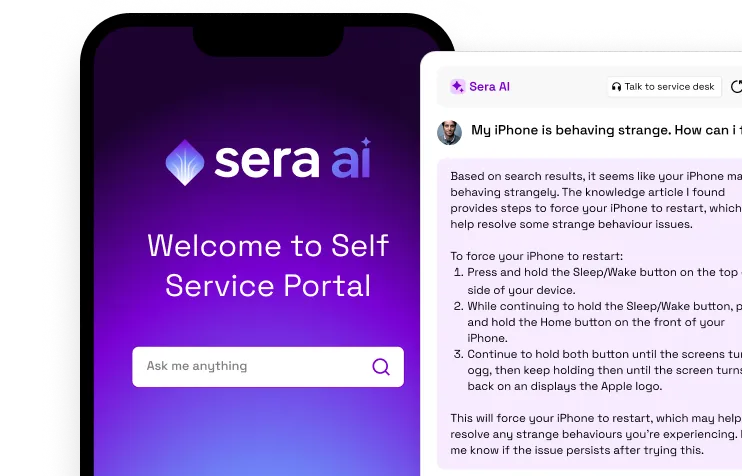
Sera AI is Xurrent's embedded intelligence layer that powers the virtual agent, but it's far more than a simple chatbot.
Our virtual agent allows users to describe their problem in plain language. From there, the virtual agent figures out where it should go, asking follow-up questions if needed (based on templates the team has configured). Users never have to know the org chart or the service catalog.
As Phil shared,
"I primarily interact with the virtual agent and explain the problem I'm having. The beautiful thing about that virtual agent is that it sort of abstracts everything. So I don't have to understand that this should go to marketing or this should go to IT. I just tell my problem and that thing sends it off to the right team."
He shared an example, as can be seen in this short clip:
But Phil is not the only person at Xurrent who takes advantage of our virtual agent. Cory Apperson, Xurrent's Chief Operating Officer, uses it "to create tickets [for] other internal teams."
"If it's TeamOps," she continues, "I'll use the virtual agent to create tickets for them. I've used it a couple of times for marketing when we need to update something on the marketing website — that gets into the marketing queue, and I have the AI just handle it for me."
Note: Cory isn't submitting tickets to IT — she's using the virtual agent to route requests across the organization. Marketing, TeamOps, wherever. Same tool, different use case.
The virtual agent is the most visible part of Sera AI, the front-end manifestation, but it's certainly not the only part.
We call it the "fabric" of the Xurrent platform. It's not a standalone tool you go to — it's woven throughout the platform, with intelligence infused into every layer of service delivery.
As Phil notes,
"We have this concept of Sera AI that's a bit of a fabric that ripples throughout the tools. Whether you know you're interacting with Sera or not, it is running in the background."
Sera is also used for summarization, sentiment analysis, auto-translation, knowledge article creation, knowledge article improvement, and our automation builder, to name a few.
Cory Apperson shared how she uses AI Summarization:
"I do use the AI notes summary a lot of times, especially if I'm tagged into a request that has a lot of commentary and notes. So I get a summary and then I kind of go to the bottom and check and see what's happening there."
John Davis, Xurrent's Director of Business Operations, added:
"Sera AI has saved me a ton of time because sometimes a ticket might've been with another team for a week with a lot of history on it before it makes it to us. The AI summarize feature can save a ton of time in getting to the bottom of what's already been done, what are the next steps, and how we're going to get this resolved as quickly as possible."
Summarization isn't the only thing happening in the background. For Tuan Vu, Xurrent's Global Training & Enablement Specialist, it's auto-translation that makes the difference.
Read our complete guide to Xurrent's AI-related features and functionality to learn more.
What does this actually mean for day-to-day work? In short:
We often refer to this as a win-win ... win ... win.
Remember: The virtual agent and Sera AI overall aren't about replacing the service desk — they're about removing the friction between people and the help they need.
Phil Christianson didn't stop using the service catalog because he was told to. He stopped because the virtual agent was simply faster, easier, and better.
And that really should be the bar for AI in service management: not "does it exist?" but "is it good enough that people actually use it?"
At Xurrent, the answer is yes — from the CPO down.
In the final post of this series, we'll look at how several Xurrent employees are using automation rules to eliminate repetitive work entirely — and how Sera AI can build those rules in 15 seconds from plain English.
Want to see how Sera AI could work in your organization? Get started with Xurrent today.

.webp)
Most enterprise AI is a chatbot stuck to the side of your tools. We built something different. Two MCP servers, one for incident response and one for service operations, that let you ask your operational data anything, and in the case of ITSM, act on it, using whatever AI client your team already uses.
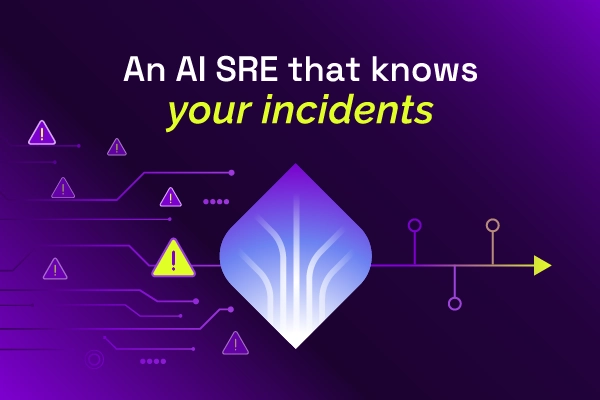
Most AI SREs are pattern matchers trained on public data. They know what a memory leak looks like in the abstract. They don't know that your payments-api has a flaky liveness probe everyone ignores, that the checkout team owns the retry policy, or that the last three "database incidents" were actually cache misconfigurations. That knowledge lives in your postmortems, your Slack channels, and the heads of two senior engineers.
Most vendors will tell you ITSM implementation takes six months to a year — but modern, configuration-first platforms have rewritten the math entirely. See what real implementations look like in 2026, and why a long rollout is now a choice, not a given.
.webp)
.webp)
.webp)