




Blog
Insights & updates from our experts


Resolve plant floor and IT issues before they disrupt production.

Stay audit-ready while resolving issues and reducing operational risk.
Resolve issues quickly with an AI-powered system that automates ticketing.
Unifiy IT, HR, Facilities, Finance, and more on a single, AI-powered service platform.
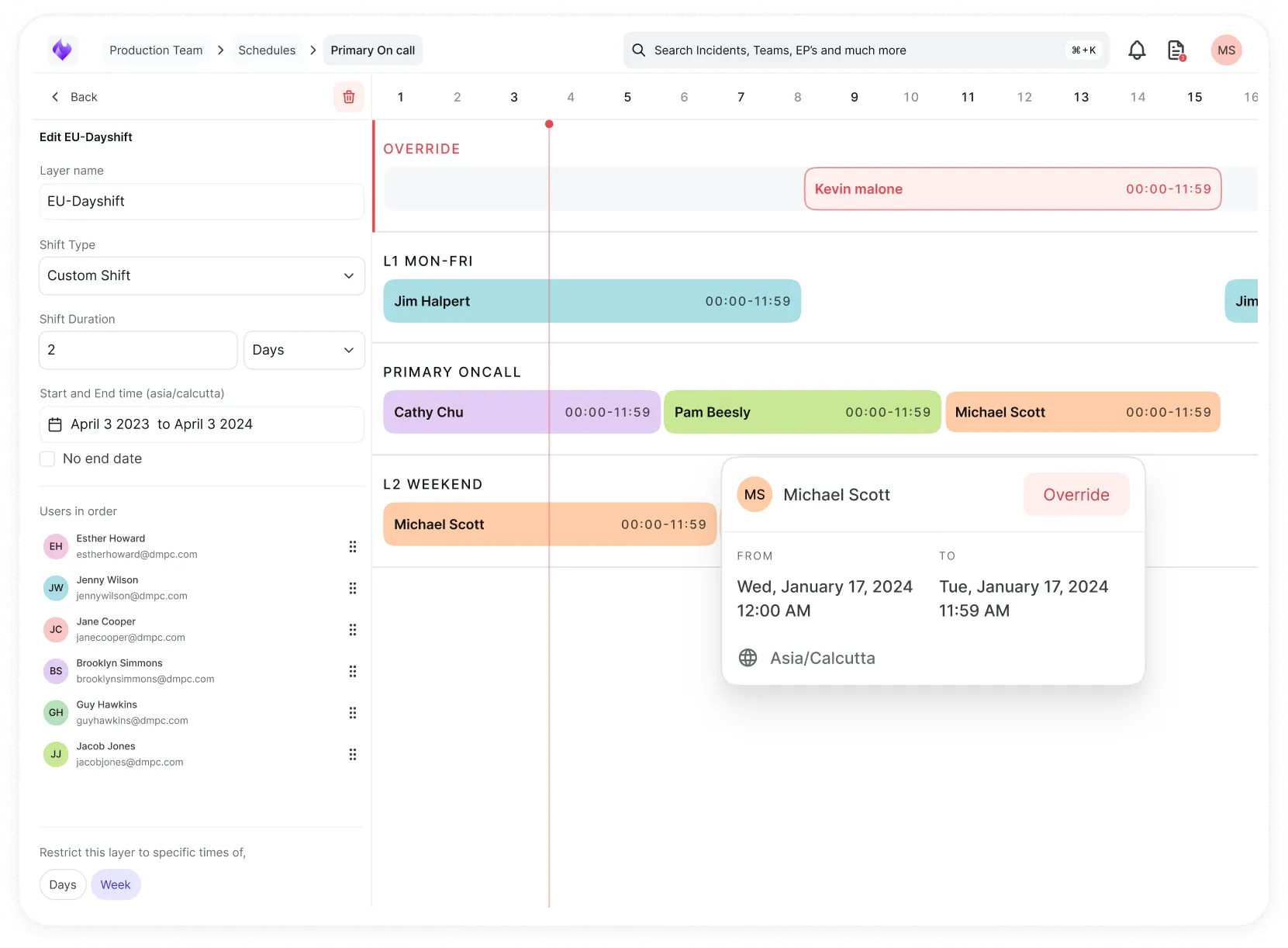
Simplify on-call scheduling, automate escalations, and reduce burnout.
Automate postmortems, AI summaries, and post-incident workflows
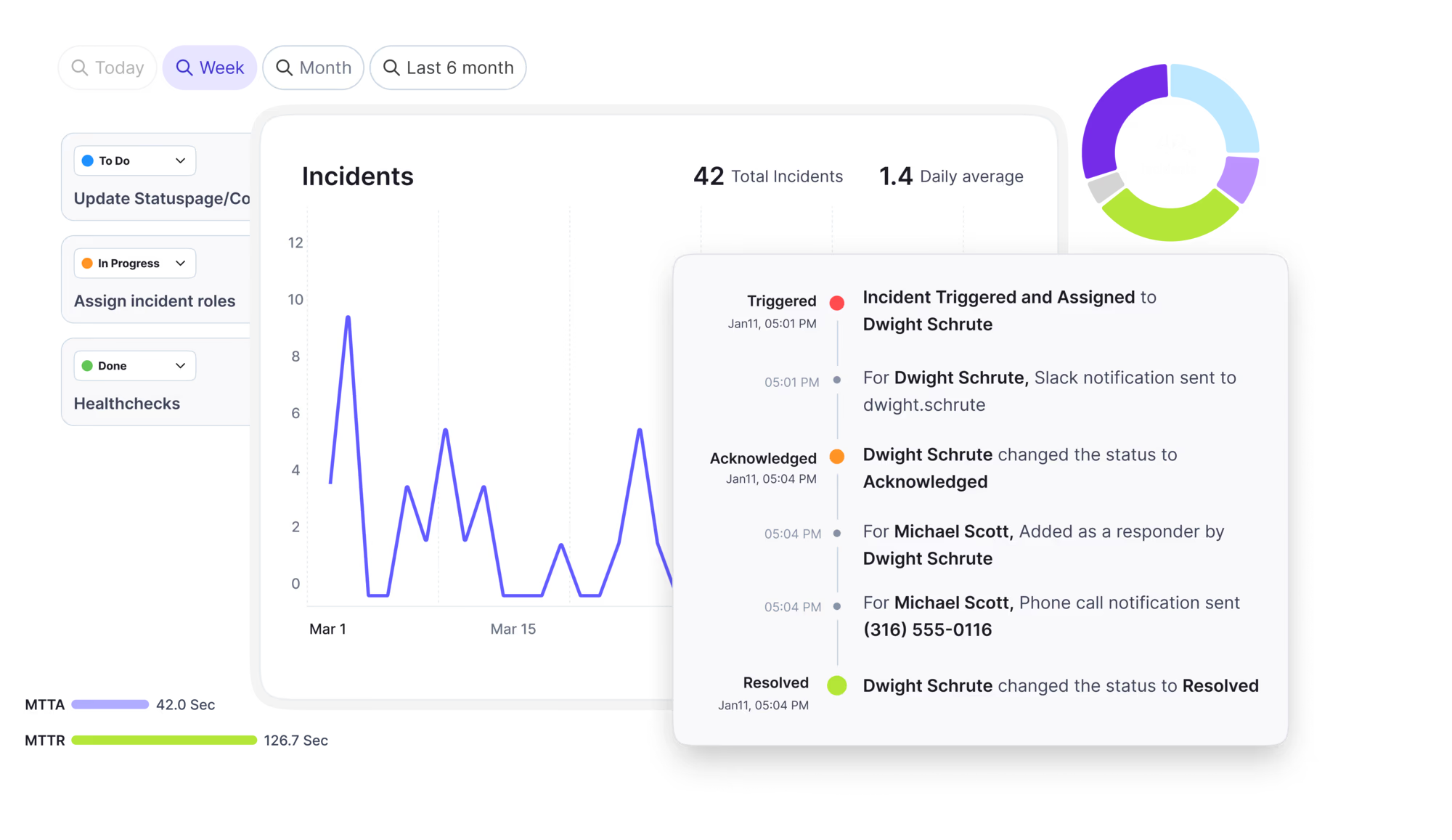
Create, organize, and continuously improve your knowledge base to find the right answers with Sera AI.
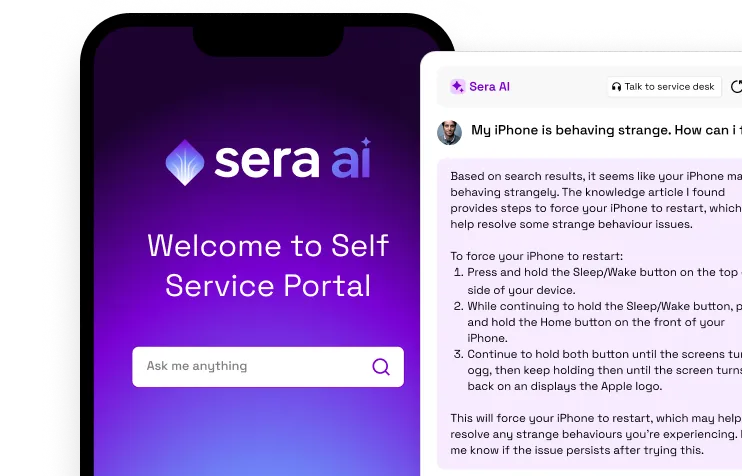
We're here to help

The integration with Atlassian Jira using the Xurrent Integration Service is

The integration with Atlassian Jira using the Xurrent Integration Service is

The integration with Atlassian Jira using the Xurrent Integration Service is

The integration with Atlassian Jira using the Xurrent Integration Service is

The integration with Atlassian Jira using the Xurrent Integration Service is

The integration with Atlassian Jira using the Xurrent Integration Service is

The integration with Atlassian Jira using the Xurrent Integration Service is

The integration with Atlassian Jira using the Xurrent Integration Service is
Resolve issues quickly with an AI-powered system that automates ticketing.
Unifiy IT, HR, Facilities, Finance, and more on a single, AI-powered service platform.
Simplify on-call scheduling, automate escalations, and reduce burnout.
Automate postmortems, AI summaries, and post-incident workflows
Create, organize, and continuously improve your knowledge base to find the right answers with Sera AI.
Resolve plant floor and IT issues before they disrupt production.
Stay audit-ready while resolving issues and reducing operational risk.

Detect, respond, and resolve incidents fast to cut downtime and MTTR.

Keep your store online, even during your biggest sales moments.

Protect patient data and resolve issues fast, so care teams stay focused on care.

Standardize service delivery across every store and channel.

We are here to help 24/7

Connect with other Xurrent Users

Get insights and tips on how to get the most out of Xurrent

Apps, APIs, and updates

Xurrent service functionality

Eliminate manual tasks, optimize workflows, and deliver faster resolutions.
Learn how organizations have reduced downtime, improved 50% MTTA & MTTR, and cut costs with Xurrent IMR.
Discover Xurrent IMR's quick support, bidirectional integrations with Jira and Slack, and more cohesive incident response capabilities compared to Opsgenie.
Understand why users value Xurrent IMR for its intuitive interface, efficient incident alerting, customizable On-call schedules, and escalations.
TL;DR
An AI SRE is an autonomous, LLM-based software agent that detects, triages, investigates, and helps remediate production incidents. It works alongside human site reliability engineers rather than replacing them. It reduces alert noise and speeds resolution so your on-call team stays focused on the incidents that matter.
The distinction is behavioral. A chatbot answers only when asked, and a copilot suggests only when prompted. An AI SRE acts on its own signals, opens an investigation, and drives toward a probable root cause on its own.
It is also more than threshold-based automation. Traditional scripts fire when a metric crosses a line, then stop. An AI SRE reasons across alerts, deploys, and service dependencies, then explains what it found and why.
Site reliability engineering has always been about protecting uptime under load. An AI SRE applies that discipline in software form: it watches continuously, investigates instantly, and never loses context between shifts. That is the shift from tools that assist a person to an agent that carries part of the on-call load itself.
Alerts scale with your architecture; engineering hours do not. Cloud-native services generate more signals than any on-call rotation can read, and the noise crowds out the reliability work that actually prevents outages.
The cost of that gap is measurable. The Uptime Institute's Annual Outage Analysis reports that more than half (54%) of respondents to Uptime Institute's 2024 survey said their most recent significant outage cost more than $100,000, and one in five (roughly 20%) topped $1 million.
Much of the daily burden is toil. Google's definition of toil describes it as manual, repetitive, automatable, tactical work that scales linearly as a service grows. Google's SRE practice aims to keep toil below 50% of each engineer's time.
That ceiling is under pressure. Catchpoint's 2025 SRE Report found the median time teams spend on operations activities rose from 25% to 30% year over year. AI-assisted coding accelerates deploys, which expands production surface area and adds still more to watch.
There is a human cost, too. Fragmented tools force engineers to stitch context together across monitoring, chat, and ticketing while the clock runs. Every extra tab is another minute added to MTTA and another reason for on-call burnout.
An AI SRE absorbs the first wave. It filters noise, opens investigations, and coordinates the response so humans move from firefighting to strategic reliability work. Pair it with fair, automated on-call management and coverage gaps and burnout shrink together.
An AI SRE mirrors how a senior engineer thinks, at machine speed. It triages the page, forms a plan, gathers evidence, pinpoints a probable root cause, recommends or executes a fix, and documents the timeline.
The difference between a useful agent and a guessing one is context. The Sera AI fabric connects that context across your signals, service data, and incident history, so recommendations reflect your environment instead of a generic model's assumptions.
An LLM alone guesses. On its own, a language model has no view of your runbooks, your deploys, or last quarter's outage. It produces plausible text, not grounded answers.
Retrieval-augmented generation fixes that. The AWS definition of RAG describes it as a technique that augments an LLM with external data, such as a company's internal documents, to produce accurate, context-specific output. For an AI SRE, that external data is your postmortems, runbooks, and service records.
Service topology adds the last layer. A dependency graph lets the agent reason about blast radius—which service failed, what it touches, and who is affected. Grounded retrieval plus topology is what separates a real AI SRE from a generic chatbot, the case for an AI SRE that knows your incidents.
Sequential checks waste minutes you do not have. An AI SRE runs parallel hypotheses instead of walking a runbook line by line. It correlates alerts, suppresses duplicates, and lines up observability spikes against recent change and deploy events.
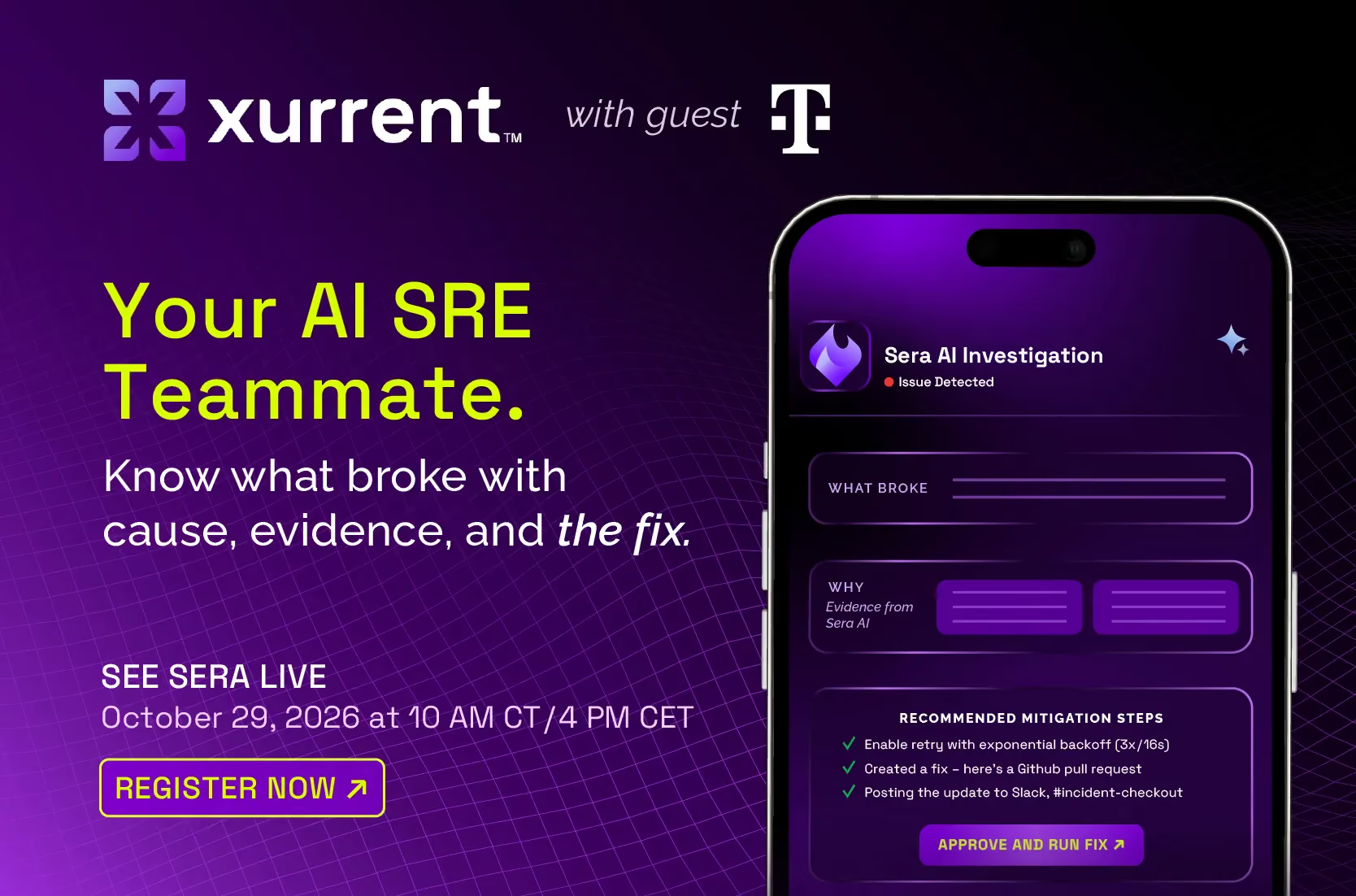
Transparency is the point. Xurrent IMR's AI Root Cause Agent returns a probable cause, a confidence level, the supporting evidence, and suggested mitigation steps. That is a glass box, not a black box: you see the reasoning before you act on it. This is the core of AI-powered incident management.
They sound alike and do different jobs. AIOps detects; an AI SRE reasons.
AIOps was introduced by Gartner in 2016 to detect, diagnose, and resolve system issues using machine learning, per a 2025 arXiv survey of the field. In practice, AIOps uses statistical ML for anomaly detection, event correlation, and noise reduction. It is very good at surfacing that something is wrong.
An AI SRE picks up from there. It uses generative, agentic reasoning to explain the anomaly, investigate across systems, and recommend or take action. The comparison is architecture and outcomes, not tool against tool.
The takeaway is simple: these are complementary. Feed AIOps detection into an AI SRE's investigation loop and you get both a cleaner signal and a faster path to root cause.
Think of it as a relay. AIOps compresses thousands of raw events into a handful of meaningful anomalies. The AI SRE then takes those anomalies and reasons about cause and blast radius. It hands your engineer a documented starting point instead of a wall of dashboards.
Speed is not judgment. An AI SRE wins on volume, parallel hypothesis testing, and tireless 3 a.m. consistency. It reads every alert the same way at hour ten as at minute one.
Humans win where context and accountability matter. Risk trade-offs, novel failures with no prior signature, and the call to roll back production stay with people. Someone has to own the outcome, and that is a human.
The two are strongest together. Let the agent do the wide, fast sweep across telemetry and history, then hand a ranked set of hypotheses to the engineer. The human confirms, decides, and acts, with the investigative legwork already done.
So will AI replace SREs? No. The role shifts toward reliability architecture, resilience engineering, and governing the AI systems now in the loop. Think force multiplier: the agent handles high-volume investigation while engineers set direction and make the hard calls. The model is human-on-the-loop, not hands-off.
Autonomy is a journey, not a switch. You do not hand production keys to an agent on day one. You grade its authority as it earns trust, and even the lowest rung pays off.
Google SRE's AI autonomy framework frames adoption as an L0–L4 journey across monitoring, investigation, approval, and actuation. Google governs that journey with a "Safety Trifecta" of transparency, real-time risk evaluation, and progressive authorization. In Google's own environment, informational assistance alone cut Mean Time to Mitigate by 10%, and AI investigation dashboards by roughly 44%.
Safe operation rests on a few non-negotiables:
Keep the AI itself private. Xurrent runs on AWS Bedrock, is SOC 2 Type II and ISO 27001/27018 certified, and supports BYOK. AI stays confined to your environment and is never trained on your data.
Not every task is a candidate; the repetitive ones are. Focus autonomy where the work is high-volume and low-ambiguity, and keep judgment calls with people.
Practical automation for reliability teams includes:
Postmortems are the highest, most repeatable return. The writeup is toil, it happens after every incident, and the agent already holds the timeline. Let it draft while the details are fresh, then have an engineer review and publish the automated postmortems.
Context-aware runbooks and war rooms tighten the loop further. When an incident opens, the agent can pull the relevant runbook and spin up a war room. It keeps the record and status page in sync as the response unfolds. Nothing is retyped, and no update is lost in a side channel.
This is where ITxM matters. Xurrent connects IMR, ITSM, and Status Pages on one data model, linking the incident, the service, the change record, and the status update. That breaks the incident-management doom loop: fixes stick because the change is tied to the service, and repeat failures drop.
Reliability spend has to prove itself to leadership. Measure an AI SRE the way you measure the team: MTTR and MTTA reduction, engineers pulled into each incident, alert-noise reduction, and engineering hours reclaimed.
External evidence corroborates the direction. As noted above, Google reported a 10% MTTM reduction from informational assistance and roughly 44% from investigation dashboards in its own production environment. Treat those as Google's measured results, not universal guarantees, and set your baseline before you start so your own numbers are defensible.
Do not stop at MTTR. Track leading indicators the board rarely sees: alert-to-incident ratio, percentage of postmortems completed within a week, and repeat-incident rate on the same service. A falling repeat rate means fixes are sticking, which is the clearest sign the doom loop is breaking.
Frame the return in the language of capacity, not just speed. Every hour an agent spends reconstructing a timeline or triaging a duplicate is an hour returned to roadmap work. At enterprise alert volume, that reclaimed capacity compounds across the whole rotation.
Evaluation and adoption are two different disciplines. Get the criteria right first, then roll out in a way your team can trust.
When you evaluate a tool, weigh these criteria:
Adoption should be gradual. Start read-only with a simple "what changed?" workflow, define the handoff format between agent and engineer, and pilot on real incidents. Expand autonomy as trust grows, not before. Integration depth is the practical differentiator here: Xurrent IMR supports ITIL, SRE, and DevOps approaches simultaneously and integrates with 100+ tools across monitoring, communication, ticketing, CI/CD, and cloud.
Build versus buy is a real fork here. Building an in-house agent means owning retrieval pipelines, topology graphs, and model governance while the incident backlog keeps growing. Buying a platform that already grounds investigation in your data lets your team spend its time on reliability, not on maintaining an AI stack.
Remember the role shift as you scale. The agent takes the toil; your engineers take architecture, risk, and accountability.
An AI SRE automates the investigative and documentation toil that eats on-call time, while humans keep judgment and accountability. That is the trade worth making.
Adopt it deliberately. Ground it in your own incidents, start read-only, keep humans on the loop, and measure MTTR, MTTA, and reclaimed hours against a baseline you set first. Do that and reliability gets simpler: detection, response, and communication connected on one platform, learning from every incident.
Ready to see it in practice? Start read-only, ground the agent in your incident history, and put an always-on first responder to work.
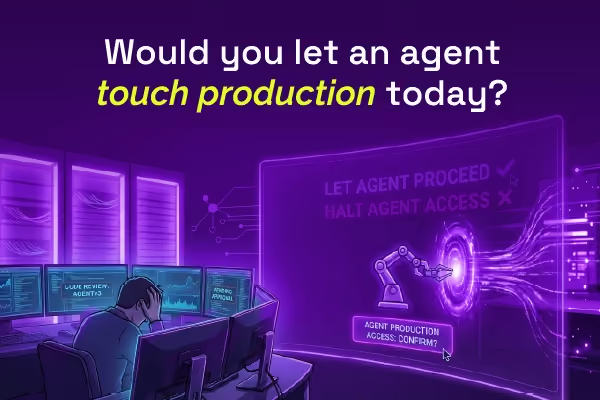
Most AI SREs are pattern matchers trained on public data. They know what a memory leak looks like in the abstract. They don't know that your payments-api has a flaky liveness probe everyone ignores, that the checkout team owns the retry policy, or that the last three "database incidents" were actually cache misconfigurations. That knowledge lives in your postmortems, your Slack channels, and the heads of two senior engineers.
Most AI SREs are pattern matchers trained on public data. They know what a memory leak looks like in the abstract. They don't know that your payments-api has a flaky liveness probe everyone ignores, that the checkout team owns the retry policy, or that the last three "database incidents" were actually cache misconfigurations. That knowledge lives in your postmortems, your Slack channels, and the heads of two senior engineers.