




Blog
Insights & updates from our experts


Resolve plant floor and IT issues before they disrupt production.

Stay audit-ready while resolving issues and reducing operational risk.
Resolve issues quickly with an AI-powered system that automates ticketing.
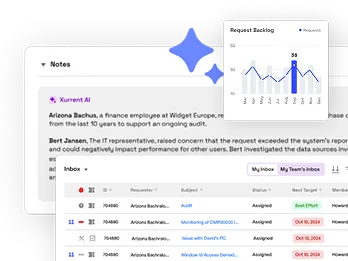
Unifiy IT, HR, Facilities, Finance, and more on a single, AI-powered service platform.
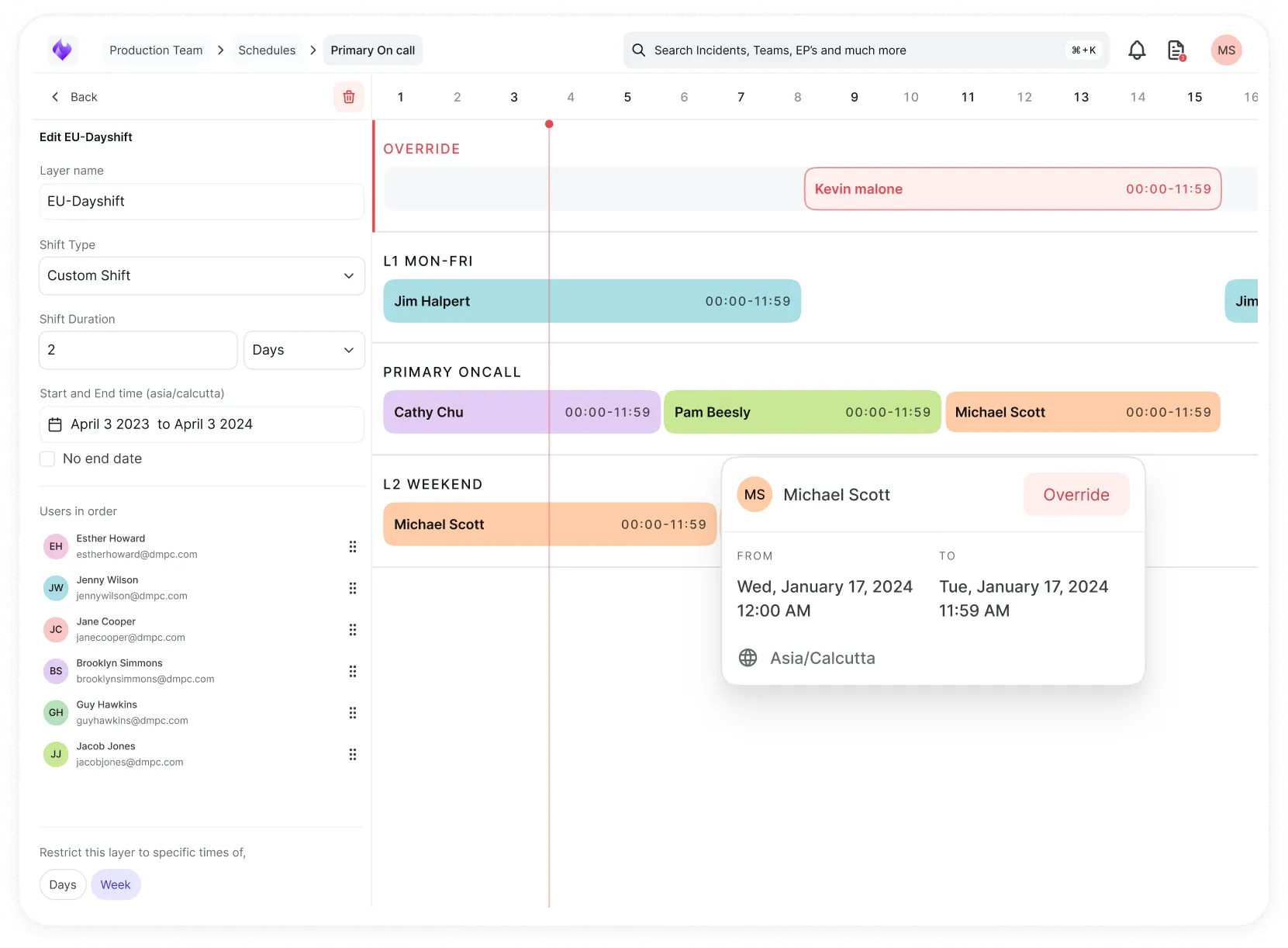
Simplify on-call scheduling, automate escalations, and reduce burnout.
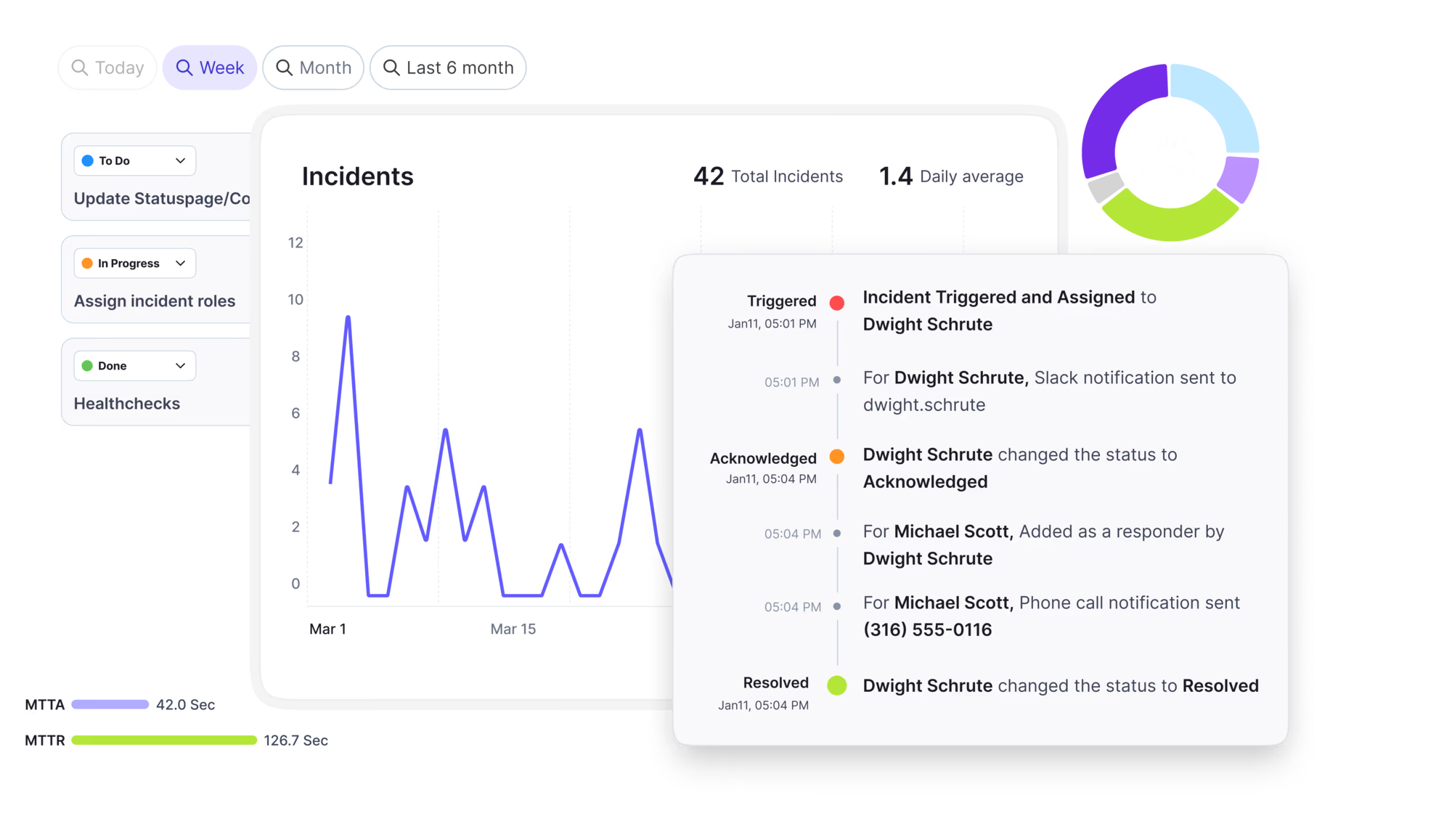
Automate postmortems, AI summaries, and post-incident workflows
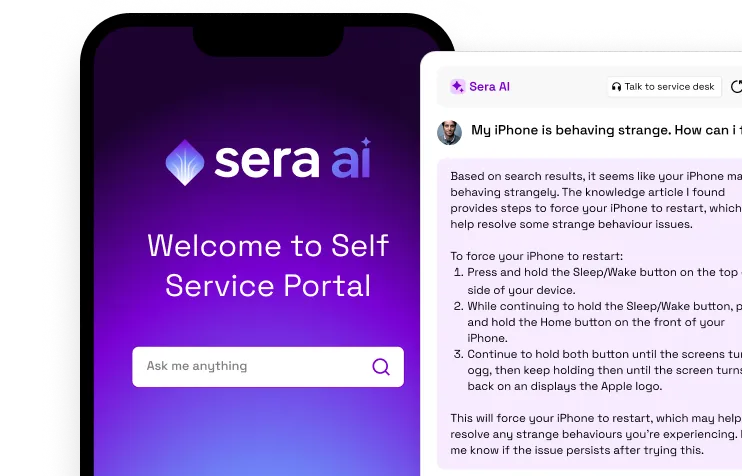
Create, organize, and continuously improve your knowledge base to find the right answers with Sera AI.
We're here to help

The integration with Atlassian Jira using the Xurrent Integration Service is

The integration with Atlassian Jira using the Xurrent Integration Service is

The integration with Atlassian Jira using the Xurrent Integration Service is

The integration with Atlassian Jira using the Xurrent Integration Service is

The integration with Atlassian Jira using the Xurrent Integration Service is

The integration with Atlassian Jira using the Xurrent Integration Service is

The integration with Atlassian Jira using the Xurrent Integration Service is

The integration with Atlassian Jira using the Xurrent Integration Service is
Resolve issues quickly with an AI-powered system that automates ticketing.
Unifiy IT, HR, Facilities, Finance, and more on a single, AI-powered service platform.
Simplify on-call scheduling, automate escalations, and reduce burnout.
Automate postmortems, AI summaries, and post-incident workflows
Create, organize, and continuously improve your knowledge base to find the right answers with Sera AI.
Resolve plant floor and IT issues before they disrupt production.
Stay audit-ready while resolving issues and reducing operational risk.

Detect, respond, and resolve incidents fast to cut downtime and MTTR.

Keep your store online, even during your biggest sales moments.

Protect patient data and resolve issues fast, so care teams stay focused on care.

Standardize service delivery across every store and channel.

We are here to help 24/7

Connect with other Xurrent Users

Get insights and tips on how to get the most out of Xurrent

Apps, APIs, and updates

Xurrent service functionality

Eliminate manual tasks, optimize workflows, and deliver faster resolutions.
Learn how organizations have reduced downtime, improved 50% MTTA & MTTR, and cut costs with Xurrent IMR.
Discover Xurrent IMR's quick support, bidirectional integrations with Jira and Slack, and more cohesive incident response capabilities compared to Opsgenie.
Understand why users value Xurrent IMR for its intuitive interface, efficient incident alerting, customizable On-call schedules, and escalations.
ZFV managed IT support for nearly 2,700 employees across 200+ hospitality establishments using an on-premises SharePoint environment that could capture requests but offered no dashboards, no KPIs, and no reliable way to measure resolution times without hours of manual effort. Cross-departmental requests were nearly impossible to track.
ZFV implemented Xurrent across 8 departments, achieving ~90% user-created tickets, saving an estimated three working days per week in administrative effort, and gaining real-time visibility into workloads, resolution times, and SLA adherence. Auto-translation removed language barriers across their multilingual Swiss operation.

How do you improve something you can’t measure?
That was the reality for ZFV-Unternehmungen (ZFV), one of Switzerland’s leading hospitality and food services cooperatives. Before implementing Xurrent, their IT support ran on an on-premises SharePoint environment that could capture requests — and not much else.
No dashboards.
No KPIs.
No reliable way to measure ticket resolution times without hours of manual effort.
Decisions were built on estimates. Cross-departmental requests were difficult to track. Accountability was hard to establish when no one could see the full picture.
Fast forward to today, and:
Here’s how they got there.
Founded in 1894 by visionary women in Zurich, Genossenschaft ZFV-Unternehmungen (ZFV) has grown into one of Switzerland’s most diverse hospitality operations. Nearly 2,700 employees serve guests across more than 200 establishments spanning gastronomy, hospitality, bakeries, childcare, and catering. As a cooperative, ZFV takes its social responsibility seriously — and that ethos extends to how it runs its operations.
ZFV’s previous ticketing setup was functional in the most basic sense: Someone submitted a request; someone else picked it up.
But beyond that, visibility dropped off sharply. No consistent metrics. No dashboards to assess service efficiency. No reliable history without significant manual digging. When questions arose about resolution times or service quality, debates followed — with no data to settle them.
Cross-departmental requests added another layer of complexity. When a ticket touched multiple teams, tracking it became a coordination problem with no clean solution.
Gérard Korda, CIO at ZFV, put it plainly:
“We were looking for transparency and simplicity. The new tool had to be able to display the complete history of support cases in just a few steps and be easy to use for the customer.”
The impact wasn’t just operational.
Without reliable metrics, support performance couldn’t be objectively assessed or improved. Resource planning was constrained. Managing user expectations — without data to back up decisions — was a constant challenge.
ZFV evaluated options based on 5 criteria: flexibility, an intuitive interface, strong reporting and dashboard capabilities, integration options, and scalability.
Xurrent met all 5.
Implementation was handled by IT Concepts, a partner Gérard credits with bringing both deep technical expertise and a strong understanding of operational realities. The collaboration was structural as much as technical — helping ZFV establish a more mature, measurable service management framework from the ground up.
What stuck with Gérard wasn’t just the rollout. It was what the process surfaced:
“Working with Xurrent made us reconsider our processes. It is not always about what is best for the department, but what is best for the customer receiving the service.”
The results didn't take long to show up.
ZFV didn't just fix a ticketing problem. What followed was a broader operational shift — one department at a time.
The most immediate shift was simply being able to see. Reporting and Analytics became one of ZFV’s most-used features — providing full visibility into workloads, resolution times, and SLA adherence. What had previously required hours of manual effort to reconstruct was now available in real time.
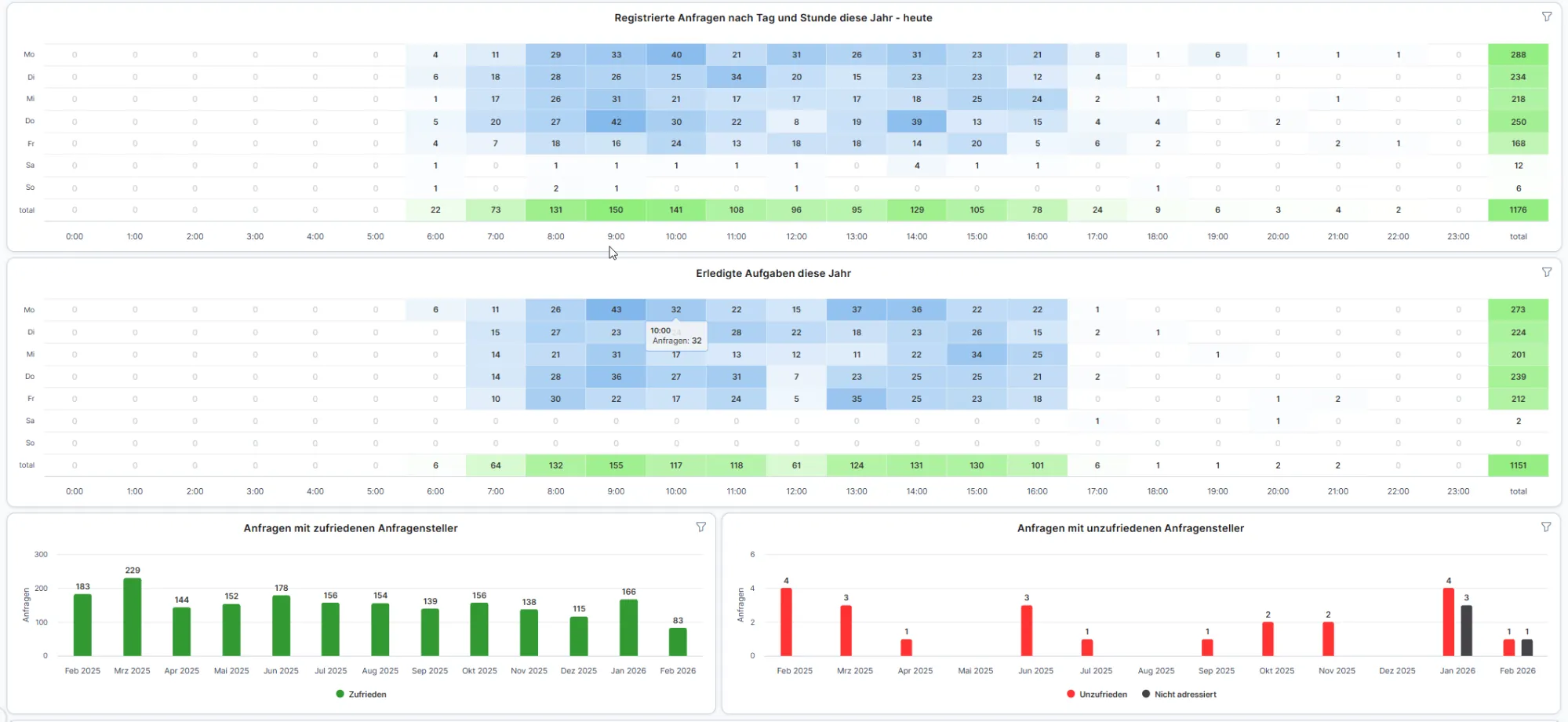
For a team that had been making decisions based on estimates, that visibility alone changed how support operated.
The numbers are straightforward. ~90% of tickets are now created directly by users — meaning the service desk spends less time on intake and more time on resolution. Across departments, administrative burden has dropped by an estimated three working days per week.
A modern service desk is essential for every modern enterprise — and for ZFV, the shift from manual coordination to structured, automated workflows is where that efficiency became real.
Perhaps the most telling result: Xurrent didn’t remain in the IT department. It expanded organically, driven by demand from other teams.
ZFV now runs the platform across eight departments: IT, Merchandise Management, Sorell Hotels, Marketing & Communications, Procurement, Finance, Real Estate, and Operation Support.
The Knowledge Base is actively used across all of them, supporting self-service and reducing repetitive support requests. Auto-translation has proven especially valuable in ZFV’s multilingual environment, removing language as a friction point in support interactions entirely.

In Gérard’s words,
“Thanks to Xurrent, we have achieved a new level of transparency, efficiency, and cross-departmental collaboration. What was once difficult to measure is now fully visible and manageable.”
ZFV plans to expand Xurrent to additional departments, building on what’s already in place. Enhanced reporting and analytics capabilities are a near-term priority, providing the team with more granular data to drive operational decisions going forward.
It’s a signal worth noting: the goal isn’t to maintain the current state. It’s to keep improving it.
For organizations still running support on tools that can’t tell them what’s actually happening, ZFV’s story is a useful reference point. Operational clarity isn’t a nice-to-have. It’s the foundation everything else is built on.
And Gérard loves Xurrent: “I would wholeheartedly recommend Xurrent to other companies looking for a new and modern service management solution. It is intuitive and comes with all the necessary functionalities and is absolutely fair in price.”
Thank you to Gérard and the ZFV team for sharing their experience so openly.



.webp)
.webp)
.webp)