




Blog
Insights & updates from our experts


Resolve plant floor and IT issues before they disrupt production.

Stay audit-ready while resolving issues and reducing operational risk.
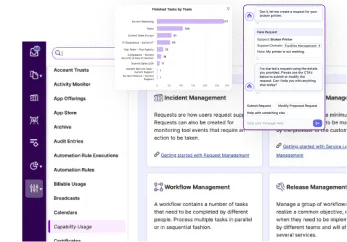
Resolve issues quickly with an AI-powered system that automates ticketing.
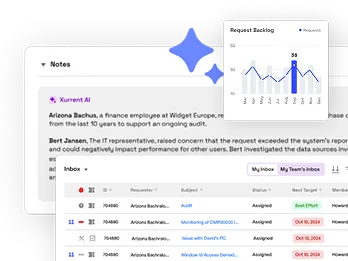
Unifiy IT, HR, Facilities, Finance, and more on a single, AI-powered service platform.
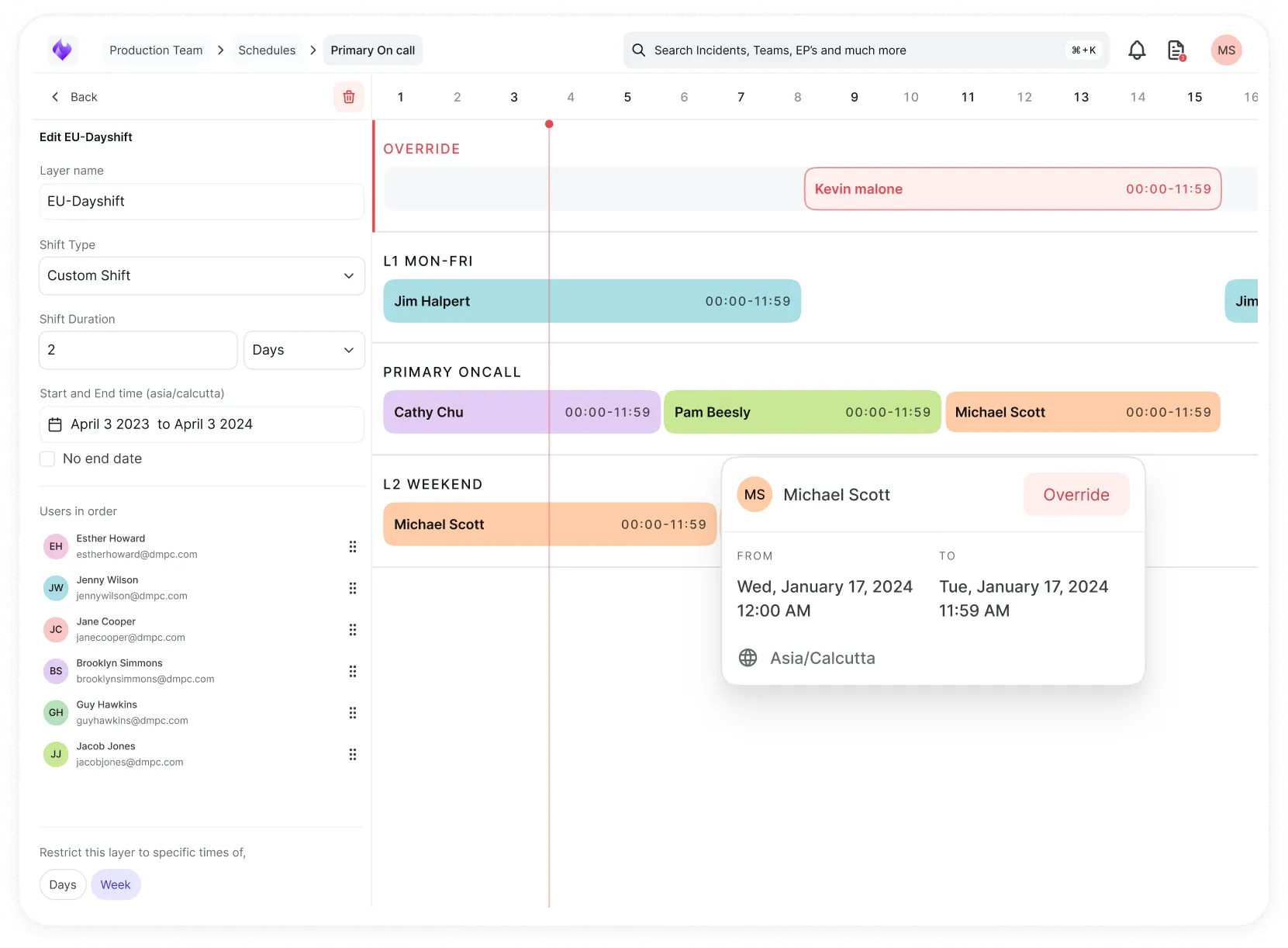
Simplify on-call scheduling, automate escalations, and reduce burnout.
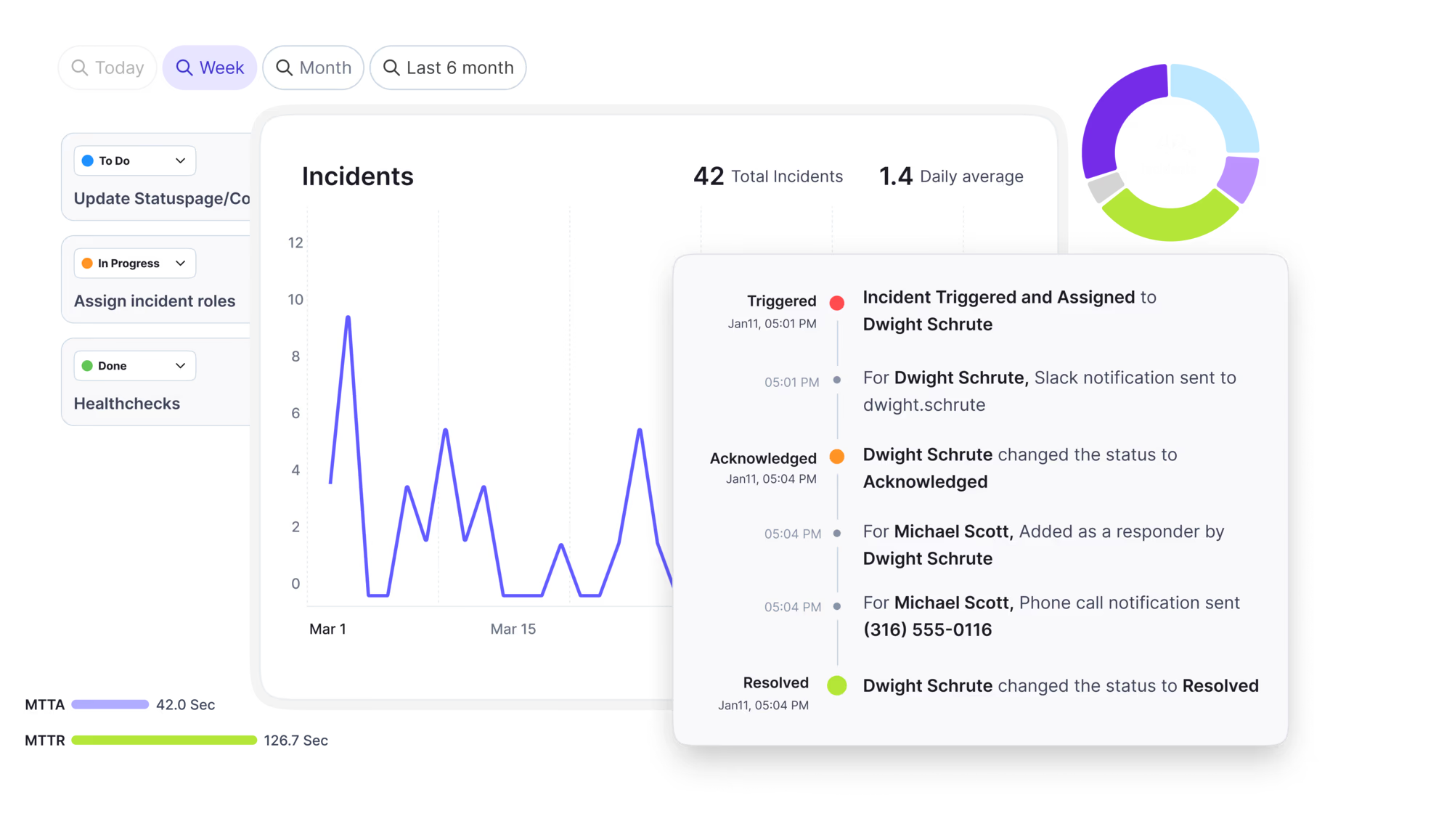
Automate postmortems, AI summaries, and post-incident workflows
Create, organize, and continuously improve your knowledge base to find the right answers with Sera AI.
We're here to help

The integration with Atlassian Jira using the Xurrent Integration Service is

The integration with Atlassian Jira using the Xurrent Integration Service is

The integration with Atlassian Jira using the Xurrent Integration Service is

The integration with Atlassian Jira using the Xurrent Integration Service is

The integration with Atlassian Jira using the Xurrent Integration Service is

The integration with Atlassian Jira using the Xurrent Integration Service is

The integration with Atlassian Jira using the Xurrent Integration Service is

The integration with Atlassian Jira using the Xurrent Integration Service is
Resolve issues quickly with an AI-powered system that automates ticketing.
Unifiy IT, HR, Facilities, Finance, and more on a single, AI-powered service platform.
Simplify on-call scheduling, automate escalations, and reduce burnout.
Automate postmortems, AI summaries, and post-incident workflows
Create, organize, and continuously improve your knowledge base to find the right answers with Sera AI.
Resolve plant floor and IT issues before they disrupt production.
Stay audit-ready while resolving issues and reducing operational risk.

Detect, respond, and resolve incidents fast to cut downtime and MTTR.

Keep your store online, even during your biggest sales moments.

Protect patient data and resolve issues fast, so care teams stay focused on care.

Standardize service delivery across every store and channel.

We are here to help 24/7

Connect with other Xurrent Users

Get insights and tips on how to get the most out of Xurrent

Apps, APIs, and updates

Xurrent service functionality

Eliminate manual tasks, optimize workflows, and deliver faster resolutions.
Learn how organizations have reduced downtime, improved 50% MTTA & MTTR, and cut costs with Xurrent IMR.
Discover Xurrent IMR's quick support, bidirectional integrations with Jira and Slack, and more cohesive incident response capabilities compared to Opsgenie.
Understand why users value Xurrent IMR for its intuitive interface, efficient incident alerting, customizable On-call schedules, and escalations.

Jira Service Management works well—until it doesn't. The moment your organization outgrows Atlassian-centric workflows or needs unified incident response alongside service requests, JSM's limitations start showing.
This guide compares ten alternatives across ITIL coverage, AI capabilities, and enterprise readiness, then walks through how to evaluate and migrate without disrupting operations.
The right Jira Service Management alternative depends on what your organization actually does. ServiceNow leads for complex enterprise ITSM at scale. Freshservice works well for growing IT teams wanting intuitive, cloud-based service management. ManageEngine ServiceDesk Plus offers solid ITIL tools with strong asset management. And for teams that want service requests, infrastructure alerts, and incident response in one place, platforms like Xurrent unify ITSM, ITOM, and incident management on a single connected system.
JSM fits naturally into Atlassian-centric organizations. If your developers already live in Jira Software, the familiar interface and tight integration make onboarding straightforward. But here's where things get tricky: as organizations grow, IT and engineering often end up managing service requests in one tool, monitoring alerts in another, and coordinating incidents somewhere else entirely. That fragmentation slows everything down.
Teams also look elsewhere when they want deeper ITIL practice coverage. ITIL—the Information Technology Infrastructure Library—provides a framework of best practices for managing IT services. JSM covers the basics, but organizations pursuing formal ITIL alignment sometimes find gaps in areas like Problem Management or Change Enablement.
Then there's enterprise service management. Extending service delivery to HR, Finance, and Facilities requires workflows designed for cross-department collaboration, and JSM handles that less maturely than purpose-built ESM platforms.
JSM earns its popularity for real reasons. The Atlassian interface feels familiar to teams already using Jira Software. Entry-level pricing stays competitive. And the connection between development and service management appeals to DevOps-oriented organizations.
StrengthsLimitationsTight Jira Software integrationLimited native ITIL practice coverageFamiliar UI for Atlassian usersAI features often require add-onsCompetitive entry-level pricingESM workflows less matureStrong for dev-centric teamsITOM and incident response not unified
Where JSM struggles is in connecting the full operational picture. IT operations management—monitoring infrastructure health, automating responses, correlating alerts—lives outside JSM's core capabilities. Teams managing both service requests and production incidents often find themselves switching between disconnected systems, which inflates resolution times and adds cognitive load.
Before diving into specific platforms, it helps to know what actually matters. The criteria below reflect what mature IT and engineering teams typically prioritize.
ITIL accreditation means a platform has been independently verified to support practices like Incident, Problem, Change, Knowledge, and Service Level Management. For organizations with formal service management programs, accreditation signals that the platform can genuinely support mature processes—not just claim to.
There's a real difference between AI bolted onto a platform and AI woven into its fabric. Bolt-on chatbots handle basic deflection. Embedded AI, on the other hand, classifies tickets automatically, routes work intelligently, generates knowledge articles, and produces postmortem drafts. The distinction matters because embedded AI reduces workload throughout the workflow, not just at the front door.
When service management, operations monitoring, and incident response live in separate systems, teams spend time reconciling information instead of resolving issues. A unified platform connects the flow from request to alert to incident to resolution, giving everyone shared visibility.
Heavy customization creates technical debt that compounds over time. Platforms emphasizing configuration—using low-code workflows and pre-built templates—can go live in weeks rather than months. This approach also makes upgrades smoother and reduces dependency on specialized developers.
Enterprise-grade controls like ISO 27001, SOC 2 Type II, and BYOK (Bring Your Own Key) encryption matter for regulated industries. Equally important: how the platform handles AI data. Some vendors train models on customer data, while others isolate AI interactions entirely within your environment.
List prices tell only part of the story. Per-agent costs, add-on modules, implementation fees, and training expenses all contribute to total cost of ownership. A platform with higher list prices but fewer add-ons may actually cost less over three years.
Best for: Organizations wanting unified ITSM, ITOM, and incident response on one platform
Xurrent brings service, incidents, and operations into a single connected system. The platform holds ITIL accreditation across 19 certified practices, and Sera AI is embedded natively to handle classification, routing, knowledge generation, and automated postmortems.
Best for: Complex enterprise ITSM at scale
ServiceNow dominates the enterprise market with deep functionality and extensive automation. Large organizations with dedicated platform teams can build sophisticated workflows, though the investment is substantial.
Best for: Growing IT teams wanting intuitive, ITIL-aligned ITSM
Freshservice delivers cloud-native ITSM with a clean interface and solid asset management. The platform handles routine automation effectively and stays accessible for mid-market teams.
Best for: Large enterprises with existing BMC investments
BMC Helix offers strong ITIL coverage and cognitive automation for organizations already in the BMC ecosystem. The platform scales well but carries legacy architecture elements.
Best for: ITIL and asset management in the mid-market
ManageEngine provides comprehensive ITSM tooling at accessible price points. Asset management capabilities stand out, though the interface feels dated compared to newer platforms.
Best for: Mid-sized IT teams prioritizing AI-driven incident management
SysAid focuses on automation and self-service for internal IT support. AI capabilities help reduce ticket volume, though the platform is less suited for cross-department workflows.
Best for: Organizations needing robust IT asset management with service automation
Ivanti combines ITSM with strong asset management and AI-augmented workflows. Self-healing capabilities appeal to organizations managing large device fleets.
Best for: Quick resolution and service portal customization
SolarWinds delivers cloud-based ITSM with AI-powered features suited for internal IT teams wanting fast deployment. The platform handles routine service management well.
Best for: European mid-market teams wanting simplicity
TOPdesk emphasizes ease of implementation and strong self-service capabilities. The platform has particular strength in European markets and handles straightforward service management well.
Best for: SMBs and MSPs wanting ITIL-aligned ITSM at accessible pricing
HaloITSM offers a modern interface with ITIL alignment at price points accessible to smaller organizations and managed service providers.
Start by listing which ITIL practices your organization actually uses—Incident, Problem, Change, Knowledge, Service Level Management. Then determine whether you want to extend service management to non-IT departments like HR, Finance, or Facilities.
Ask vendors directly: Is AI embedded throughout the platform or added as a separate module? Can it route tickets, classify requests, generate knowledge, and automate postmortems? The answers reveal whether AI will genuinely reduce workload.
Confirm certifications like ISO 27001 and SOC 2 Type II. Ask about BYOK encryption and how AI interactions are isolated. For regulated industries, these controls are non-negotiable.
Request a proof of concept. Can you go live in weeks? Does setup rely on configuration or custom development? Platforms emphasizing configuration typically deliver faster time to value.
Factor in implementation, training, add-ons, and hidden fees—not just per-agent pricing. The cheapest list price often isn't the cheapest total cost.
Migration anxiety is real, but modern platforms make the transition manageable. Most organizations follow a phased approach: export tickets, knowledge articles, and configurations from JSM, then import them into the new platform while running both systems in parallel.
Integration continuity matters as much as data migration. Confirm that your new platform connects to existing tools—Slack, Teams, monitoring systems, CI/CD pipelines—before committing.
The timeline depends on complexity. Configuration-first platforms can go live in weeks rather than months. Running parallel systems during transition lets teams validate workflows before full cutover.
Fragmented tools create fragmented workflows. When service requests, infrastructure alerts, and incident response live in separate systems, teams spend more time coordinating than resolving.
Xurrent brings ITSM, ITOM, and incident response together on one connected platform. Sera AI handles classification, routing, knowledge generation, and postmortems without requiring separate modules. Enterprise-grade security comes standard, with ISO/SOC certifications, BYOK encryption, and AI data isolation.

Most AI SREs are pattern matchers trained on public data. They know what a memory leak looks like in the abstract. They don't know that your payments-api has a flaky liveness probe everyone ignores, that the checkout team owns the retry policy, or that the last three "database incidents" were actually cache misconfigurations. That knowledge lives in your postmortems, your Slack channels, and the heads of two senior engineers.
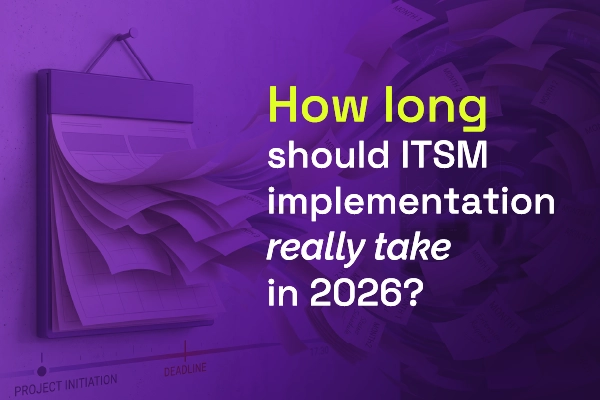
Most vendors will tell you ITSM implementation takes six months to a year — but modern, configuration-first platforms have rewritten the math entirely. See what real implementations look like in 2026, and why a long rollout is now a choice, not a given.

.webp)
.webp)
.webp)