




Blog
Insights & updates from our experts


Resolve plant floor and IT issues before they disrupt production.

Stay audit-ready while resolving issues and reducing operational risk.
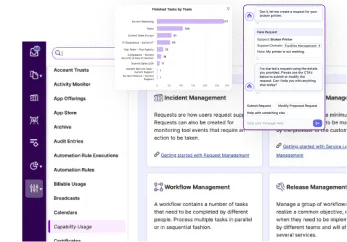
Resolve issues quickly with an AI-powered system that automates ticketing.
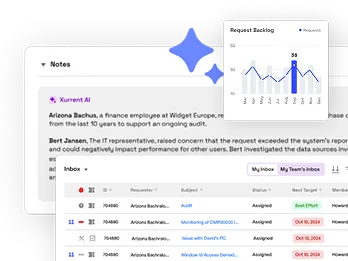
Unifiy IT, HR, Facilities, Finance, and more on a single, AI-powered service platform.
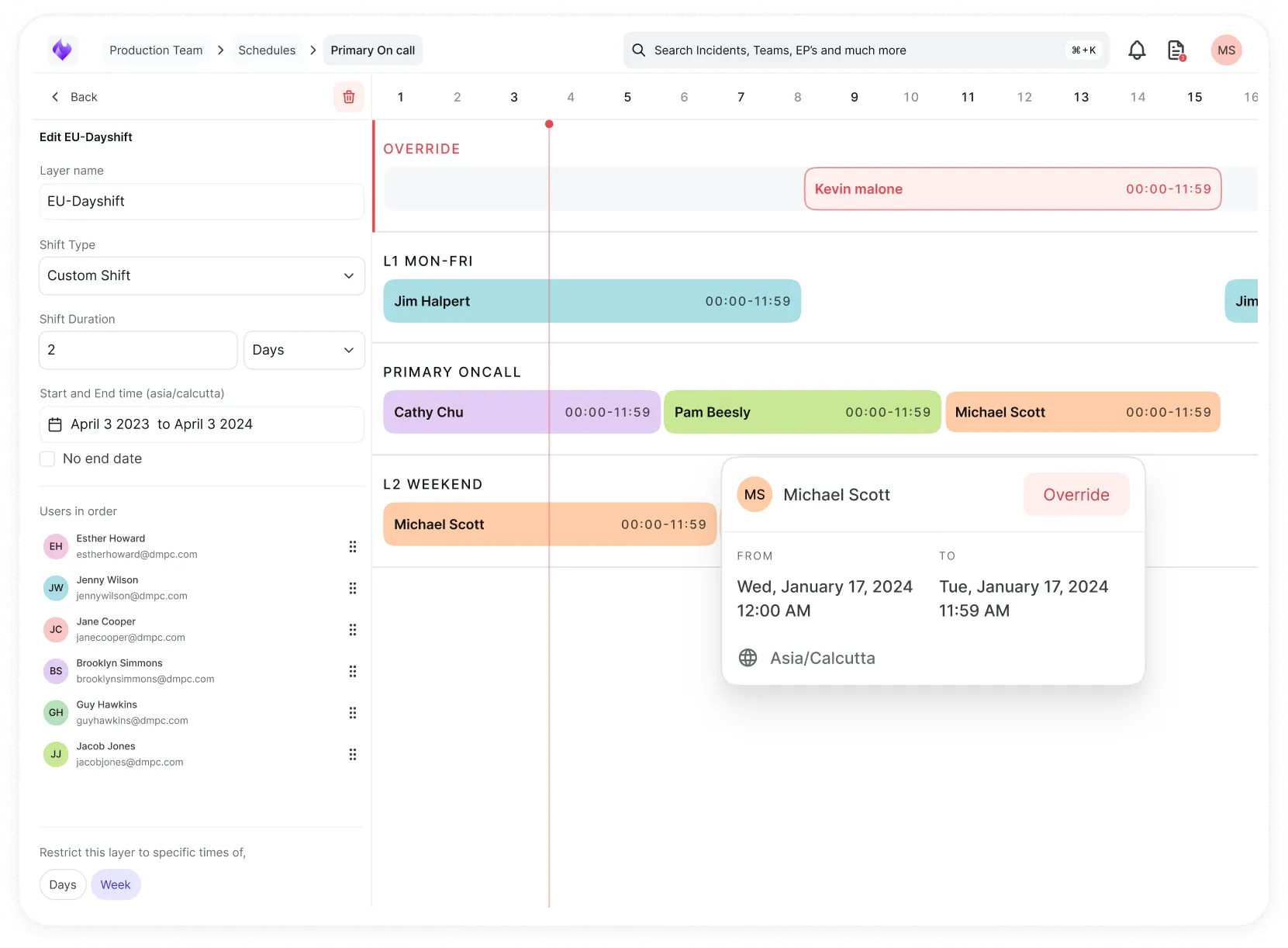
Simplify on-call scheduling, automate escalations, and reduce burnout.
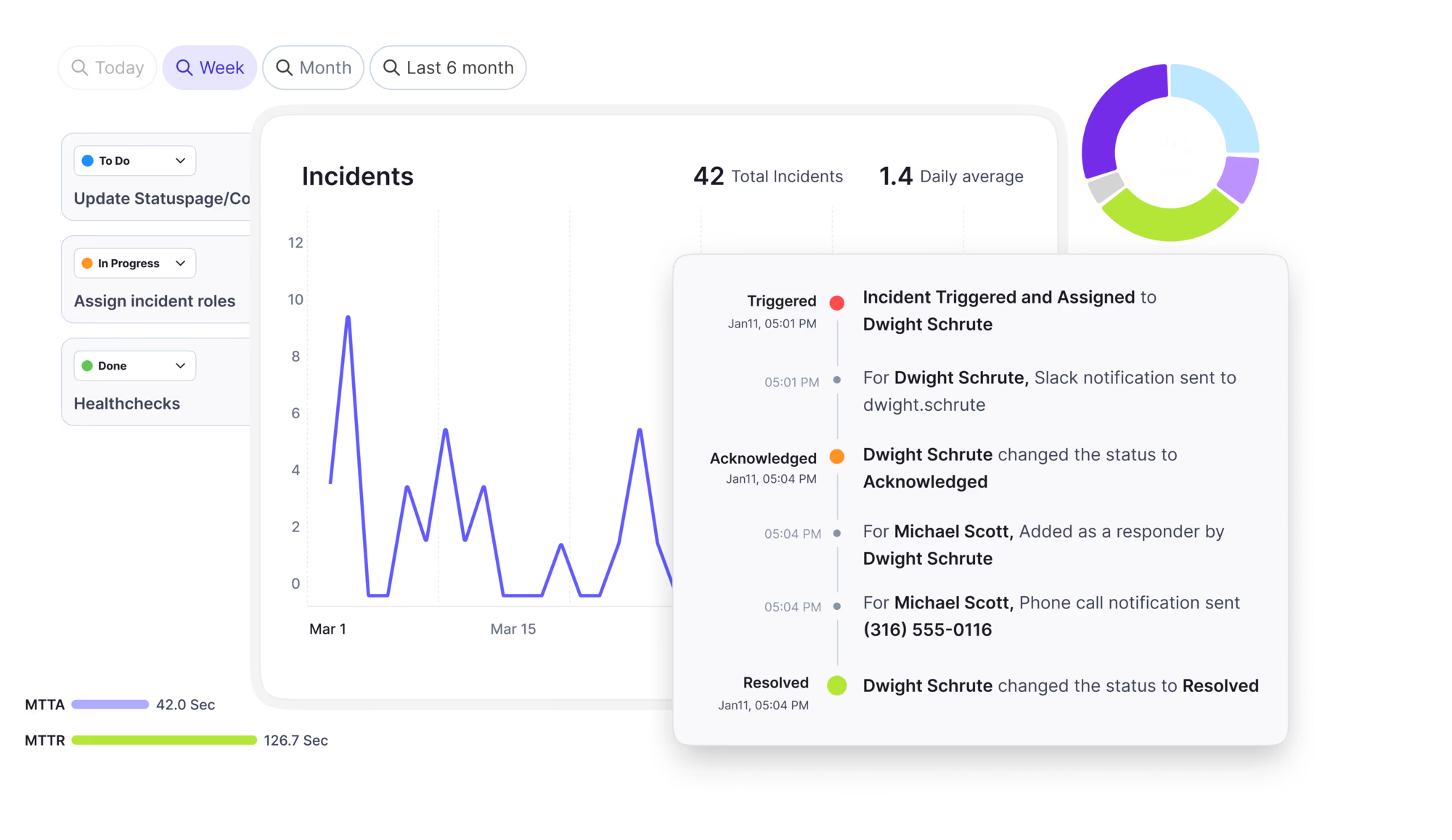
Automate postmortems, AI summaries, and post-incident workflows
Create, organize, and continuously improve your knowledge base to find the right answers with Sera AI.
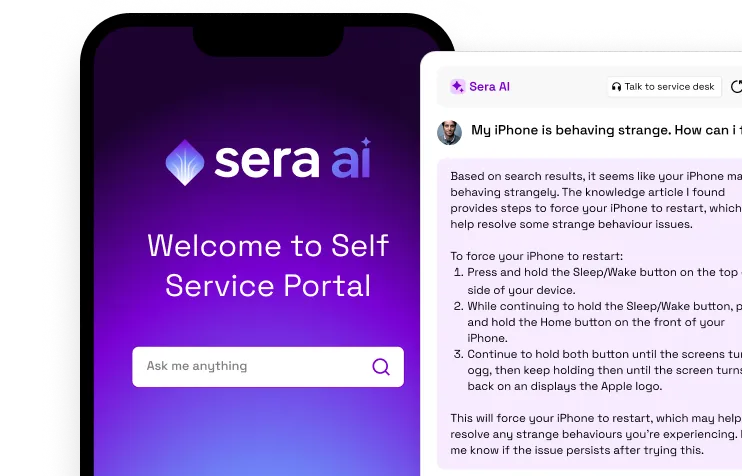
We're here to help

The integration with Atlassian Jira using the Xurrent Integration Service is

The integration with Atlassian Jira using the Xurrent Integration Service is

The integration with Atlassian Jira using the Xurrent Integration Service is

The integration with Atlassian Jira using the Xurrent Integration Service is

The integration with Atlassian Jira using the Xurrent Integration Service is

The integration with Atlassian Jira using the Xurrent Integration Service is

The integration with Atlassian Jira using the Xurrent Integration Service is

The integration with Atlassian Jira using the Xurrent Integration Service is
Resolve issues quickly with an AI-powered system that automates ticketing.
Unifiy IT, HR, Facilities, Finance, and more on a single, AI-powered service platform.
Simplify on-call scheduling, automate escalations, and reduce burnout.
Automate postmortems, AI summaries, and post-incident workflows
Create, organize, and continuously improve your knowledge base to find the right answers with Sera AI.
Resolve plant floor and IT issues before they disrupt production.
Stay audit-ready while resolving issues and reducing operational risk.

Detect, respond, and resolve incidents fast to cut downtime and MTTR.

Keep your store online, even during your biggest sales moments.

Protect patient data and resolve issues fast, so care teams stay focused on care.
Standardize service delivery across every store and channel.

We are here to help 24/7

Connect with other Xurrent Users

Get insights and tips on how to get the most out of Xurrent

Apps, APIs, and updates

Xurrent service functionality

Eliminate manual tasks, optimize workflows, and deliver faster resolutions.
Learn how organizations have reduced downtime, improved 50% MTTA & MTTR, and cut costs with Xurrent IMR.
Discover Xurrent IMR's quick support, bidirectional integrations with Jira and Slack, and more cohesive incident response capabilities compared to Opsgenie.
Understand why users value Xurrent IMR for its intuitive interface, efficient incident alerting, customizable On-call schedules, and escalations.
BMC Helix and BMC Remedy built their reputation on enterprise ITSM at a time when on-premises deployments and heavy customization were the norm. That era is fading. Organizations now expect cloud-native platforms, embedded AI, and implementation timelines measured in weeks rather than quarters.
If your team is spending more time maintaining BMC than delivering services, you're likely already evaluating alternatives. This guide covers the top 10 BMC competitors for 2026, what to look for in a replacement, and how to approach migration without recreating the complexity you're trying to escape.
If you're searching for BMC alternatives, you're likely evaluating platforms like ServiceNow, Freshservice, Jira Service Management, Ivanti Neurons for ITSM, and Xurrent. Each takes a different approach to IT service delivery. ServiceNow offers enterprise breadth, Freshservice focuses on ease of use, Jira Service Management bridges DevOps and IT, and Xurrent unifies service management with incident response on a single platform. The question isn't whether alternatives exist—it's which one fits your operational reality.
So why are teams moving away from BMC in the first place? The reasons tend to cluster around a few recurring pain points.
BMC licensing, infrastructure, and maintenance costs add up faster than most teams anticipate. On-premises deployments carry hardware refresh cycles, patching overhead, and staffing requirements that compound year over year. Modern SaaS platforms fold updates, support, and infrastructure into a single subscription, which often translates to lower three-year costs and more predictable budgeting.
A clunky interface creates friction at every step. When agents struggle to navigate the system, ticket quality drops. When end users find self-service confusing, they call the help desk instead. Today's IT teams expect consumer-grade experiences—clean navigation, mobile-friendly design, and minimal clicks to complete common tasks.
Here's a pattern that plays out in many BMC environments: over the years, teams build custom scripts, workflows, and integrations to fill gaps. That customization works until upgrade time arrives. Then every patch requires weeks of regression testing, and major version upgrades become multi-month projects.
This is what practitioners call "customization debt"—the accumulated cost of bespoke code that breaks during upgrades. Configuration-first platforms avoid this trap by building workflows on supported, low-code foundations that upgrade seamlessly.
BMC added AI capabilities after the core platform was already built. The result is often a separate chatbot module that handles deflection but doesn't touch the underlying workflows. Native AI works differently—it's woven into routing, classification, knowledge generation, and postmortem creation from the start.
The practical difference? Bolted-on AI requires separate training and maintenance. Native AI learns from your environment continuously without a parallel system to manage.
BMC deployments often stretch to six months or longer, depending on customization scope. Platforms designed for rapid go-live use pre-built ITIL templates and low-code workflows to compress timelines dramatically. Some organizations reach production in four to six weeks when they prioritize configuration over custom development.
Before diving into specific vendors, it helps to establish your evaluation criteria. The right alternative addresses the pain points that prompted your search while positioning your team for future scale.
The following platforms represent the most common alternatives organizations evaluate when moving away from BMC Helix or BMC Remedy. Each has distinct strengths depending on team size, technical maturity, and operational priorities.
Xurrent is an AI-native platform built for unified service and operations. Rather than treating ITSM and incident management as separate concerns, Xurrent connects them on a single service fabric—so requests, alerts, incidents, and updates flow through consistent workflows.
The platform holds ITIL accreditation across 19 certified practices and delivers sub-350ms response times. Three capabilities stand out:
Security is built in rather than bolted on. Xurrent provides ISO 27001/27018, SOC 2 Type II, C5 attestation, and BYOK encryption. AI interactions remain private through secure isolation—your data never trains external models.
ServiceNow dominates the enterprise ITSM market with the broadest module ecosystem available. The platform excels at complex, multi-department deployments where organizations have dedicated platform teams to manage configuration and governance.
The trade-offs are real, though. Implementation timelines often stretch to six months or longer, licensing costs run high, and the platform's flexibility can become a liability without strong governance. ServiceNow works best for organizations with the resources to invest in ongoing platform management.
Jira Service Management appeals to organizations already invested in the Atlassian ecosystem. The tight integration with Jira Software makes it natural for DevOps teams bridging development and IT operations.
That said, enterprise ITIL coverage is less mature than purpose-built ITSM platforms, and AI capabilities are still evolving. Teams with complex change management or SLA requirements may find gaps that require workarounds.
Ivanti actively markets itself as a BMC alternative, particularly for organizations seeking an easier migration path from legacy Remedy systems. The platform offers AI-driven automation and modular scalability.
Ivanti's strength lies in flexibility—you can adopt modules incrementally rather than committing to a full platform overhaul. Implementation timelines vary based on scope and existing infrastructure.
Freshservice delivers a user-friendly, mid-market ITSM experience with strong automation through Freddy AI. The platform is often praised for rapid implementation and intuitive design.
For complex enterprise workflows or multi-department ESM requirements, Freshservice may require workarounds. It's best suited for organizations prioritizing simplicity over deep customization.
SolarWinds Service Desk offers straightforward ticketing with solid asset management integration. The platform works well for IT teams prioritizing simplicity over advanced ITIL practices.
AI capabilities are basic compared to cloud-native competitors, and the platform is less suited for organizations with complex incident management or ESM requirements.
ManageEngine emphasizes affordability and offers both cloud and on-premises deployment options. The platform provides good ITIL coverage at a lower price point than enterprise competitors.
AI capabilities are less mature than cloud-native alternatives, and the user experience can feel dated. It's a solid choice for budget-conscious teams with straightforward requirements.
SysAid positions itself around agentic service management with built-in remote control and IT asset management. The platform aims to be an all-in-one IT management suite.
For organizations seeking a single vendor for help desk, asset management, and remote support, SysAid offers consolidation. Enterprise-scale deployments may require additional evaluation.
HaloITSM offers strong ITIL alignment with flexibility that appeals to managed service providers. The platform supports multi-tenant configurations and white-labeling for MSP use cases.
Market presence is smaller than enterprise-focused competitors, which may matter for organizations prioritizing vendor stability and ecosystem breadth.
TOPdesk is a European-focused option with strong facilities and HR service management capabilities. The platform is designed for ESM from day one, not as an ITSM extension.
Organizations prioritizing multi-department service delivery across IT, facilities, and HR may find TOPdesk's approach appealing. AI capabilities are moderate compared to newer entrants.
Migration feels daunting, but a structured approach reduces risk and accelerates time-to-value. The key is treating migration as an opportunity to retire technical debt rather than replicate it.
Start by documenting all active workflows, custom code, integrations, and automation rules. Identify which customizations are essential versus legacy technical debt that can be retired. Many organizations discover that a significant portion of their customizations are no longer used or needed.
Modern platforms offer pre-built ITIL templates that often cover standard processes without modification. Map existing workflows to templates to reduce configuration effort. Where gaps exist, prioritize configuration over custom code to avoid recreating the same upgrade friction you're trying to escape.
Start with high-volume processes like Incident and Request Fulfillment. A phased rollout reduces risk and builds confidence before tackling more complex workflows. Configuration-first platforms enable go-live in weeks rather than months.
Tip: Resist the urge to replicate every BMC customization. Migration is an opportunity to simplify, not just relocate complexity.
The right BMC alternative eliminates fragmentation between service, incidents, and operations. Instead of managing separate tools for ITSM, ITOM, and incident response, you get a connected workflow from request to resolution.
Look for a platform that embeds AI natively, deploys in weeks, and scales without customization debt. When service, incidents, and operations flow through a single fabric, teams stop reacting and start anticipating.

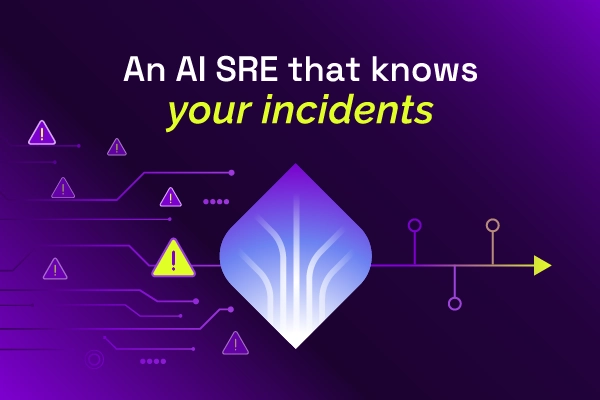
Most AI SREs are pattern matchers trained on public data. They know what a memory leak looks like in the abstract. They don't know that your payments-api has a flaky liveness probe everyone ignores, that the checkout team owns the retry policy, or that the last three "database incidents" were actually cache misconfigurations. That knowledge lives in your postmortems, your Slack channels, and the heads of two senior engineers.
Most vendors will tell you ITSM implementation takes six months to a year — but modern, configuration-first platforms have rewritten the math entirely. See what real implementations look like in 2026, and why a long rollout is now a choice, not a given.

.webp)
.webp)
.webp)