




Blog
Insights & updates from our experts


Resolve plant floor and IT issues before they disrupt production.

Stay audit-ready while resolving issues and reducing operational risk.
Resolve issues quickly with an AI-powered system that automates ticketing.
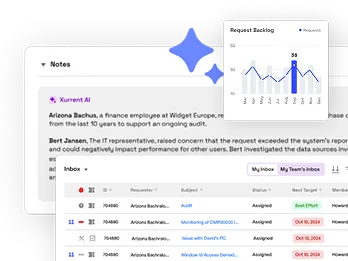
Unifiy IT, HR, Facilities, Finance, and more on a single, AI-powered service platform.
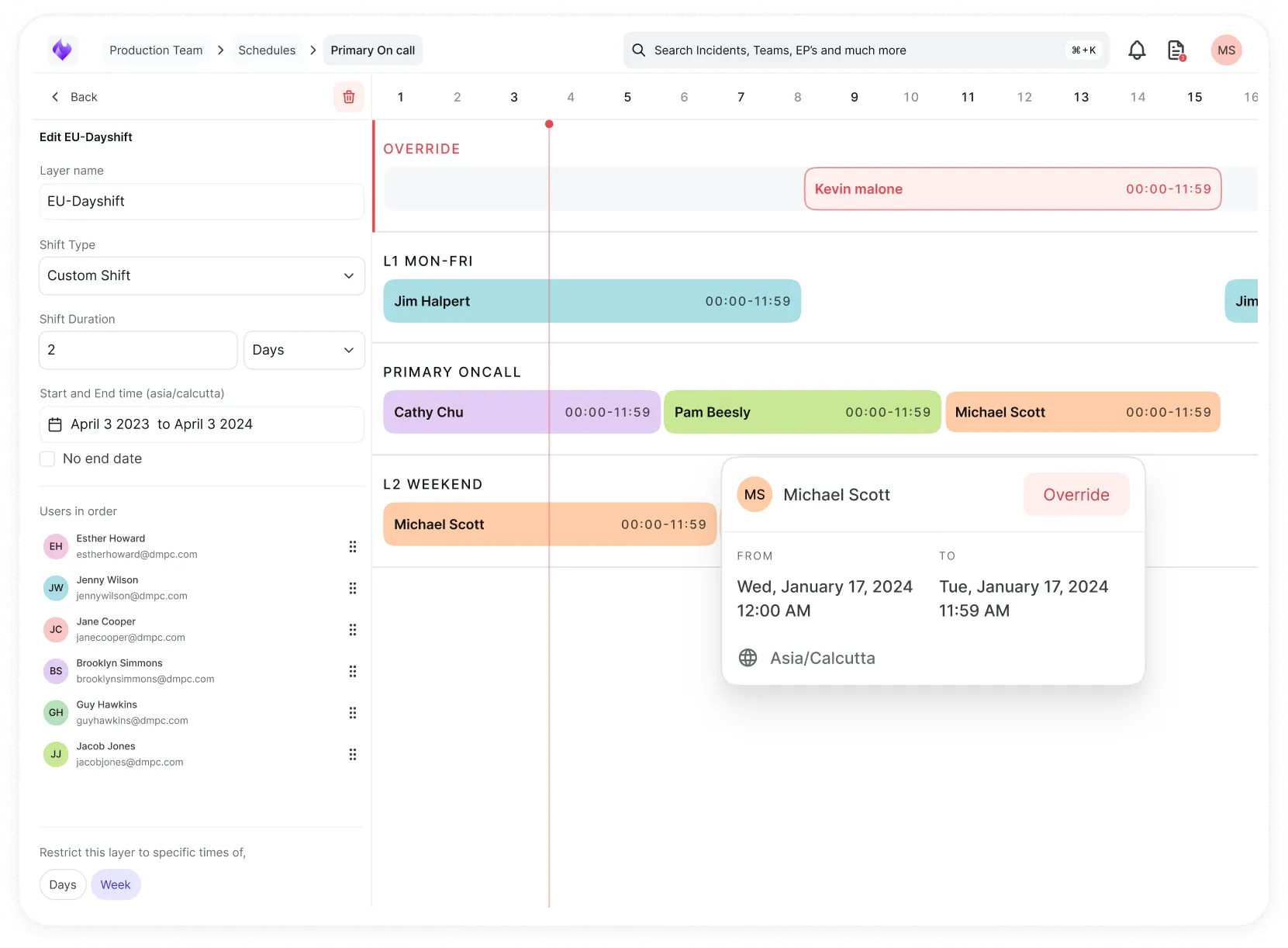
Simplify on-call scheduling, automate escalations, and reduce burnout.
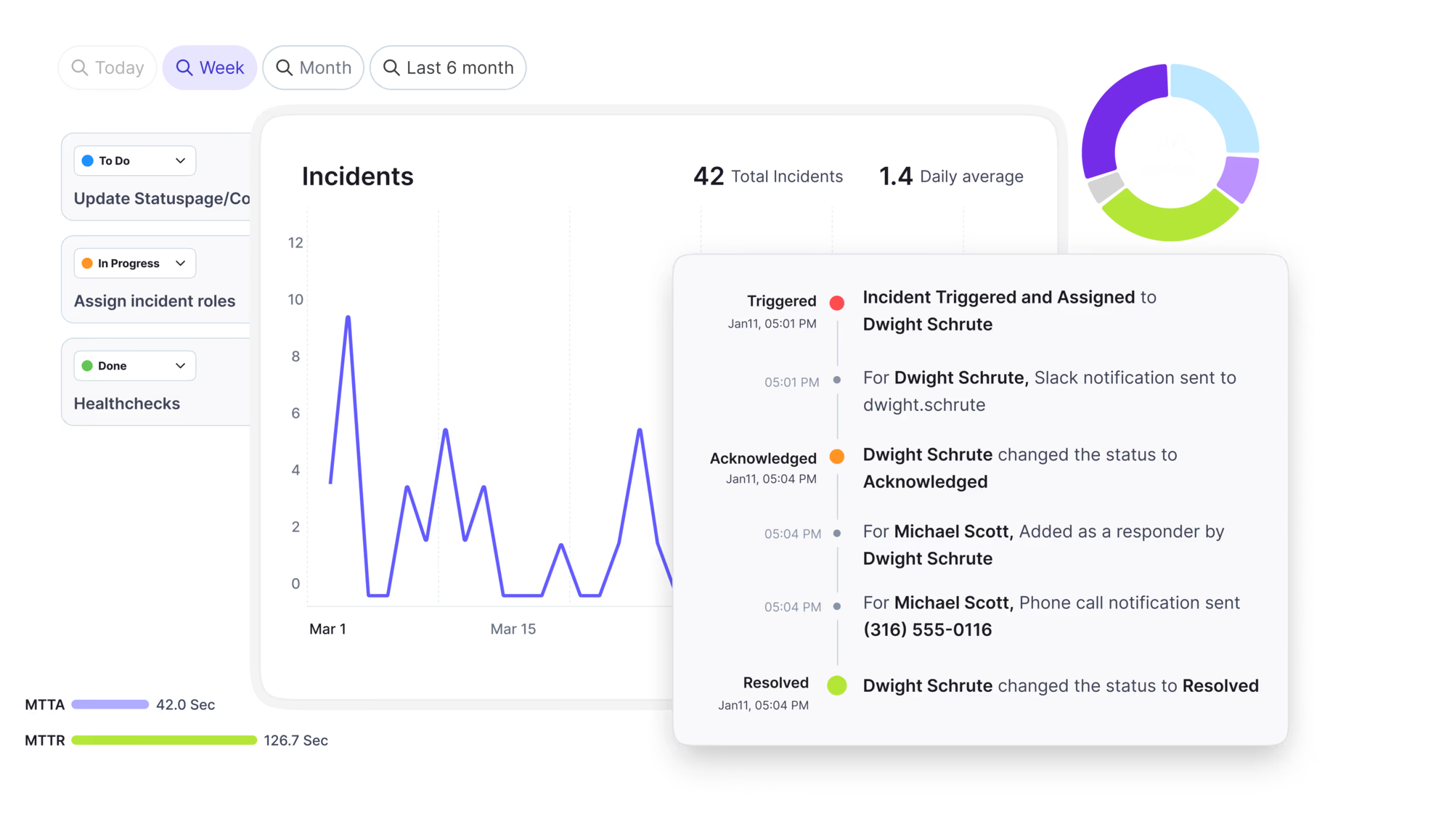
Automate postmortems, AI summaries, and post-incident workflows
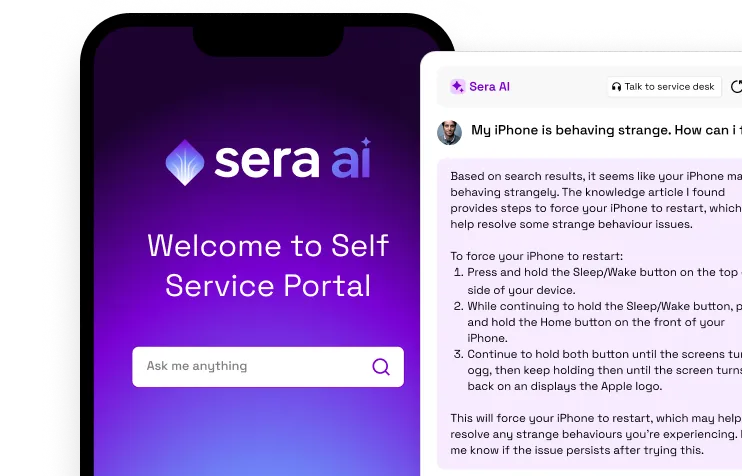
Create, organize, and continuously improve your knowledge base to find the right answers with Sera AI.
We're here to help

The integration with Atlassian Jira using the Xurrent Integration Service is

The integration with Atlassian Jira using the Xurrent Integration Service is

The integration with Atlassian Jira using the Xurrent Integration Service is

The integration with Atlassian Jira using the Xurrent Integration Service is

The integration with Atlassian Jira using the Xurrent Integration Service is

The integration with Atlassian Jira using the Xurrent Integration Service is

The integration with Atlassian Jira using the Xurrent Integration Service is

The integration with Atlassian Jira using the Xurrent Integration Service is
Resolve issues quickly with an AI-powered system that automates ticketing.
Unifiy IT, HR, Facilities, Finance, and more on a single, AI-powered service platform.
Simplify on-call scheduling, automate escalations, and reduce burnout.
Automate postmortems, AI summaries, and post-incident workflows
Create, organize, and continuously improve your knowledge base to find the right answers with Sera AI.
Resolve plant floor and IT issues before they disrupt production.
Stay audit-ready while resolving issues and reducing operational risk.

Detect, respond, and resolve incidents fast to cut downtime and MTTR.

Keep your store online, even during your biggest sales moments.

Protect patient data and resolve issues fast, so care teams stay focused on care.
Standardize service delivery across every store and channel.

We are here to help 24/7

Connect with other Xurrent Users

Get insights and tips on how to get the most out of Xurrent

Apps, APIs, and updates

Xurrent service functionality

Eliminate manual tasks, optimize workflows, and deliver faster resolutions.
Learn how organizations have reduced downtime, improved 50% MTTA & MTTR, and cut costs with Xurrent IMR.
Discover Xurrent IMR's quick support, bidirectional integrations with Jira and Slack, and more cohesive incident response capabilities compared to Opsgenie.
Understand why users value Xurrent IMR for its intuitive interface, efficient incident alerting, customizable On-call schedules, and escalations.

The IT commission for Omaha and Douglas County retired a homegrown dashboard for a status page it doesn't have to code, on Xurrent IMR.
When the IT provider for an entire city and county has a problem, two very different audiences need to know: the engineers who can fix it, and the thousands of staff and residents who just want to know whether it is safe to assume the system is down. For DOTComm, telling both groups had become the hard part. The monitoring existed. The communication did not.
DOTComm had built its own dashboard for this a decade earlier. By the time it started showing its age, maintaining it had become a job in itself. The fix was to stop maintaining a tool and start using one, so DOTComm moved to Xurrent IMR.
DOTComm's in-house dashboard served its purpose but carried growing costs: it was time-consuming to maintain and demanded new code for every service added. Worse, the service desk fielded every IT call yet had no usable view into it, so when something broke, the people answering the phones were the last to know.
Because Xurrent IMR runs as SaaS, DOTComm took on no new hardware or software to maintain, which removed the burden that made the old dashboard a drain. The integration model is where it earns its keep: DOTComm's first-tier alerting systems send alerts into Xurrent IMR, which feeds on-call technicians. When something goes wrong overnight, technicians are already working it before the help desk calls start.
The status page now carries everything the help desk and end users need, including third-party vendor maintenance. The dashboard and alerting have helped DOTComm meet the KPIs in its service level agreement, a meaningful outcome for a public-sector provider accountable to two government authorities. The service desk is markedly quieter now that stakeholders can watch progress online.
Get started with Xurrent today.
See how Xurrent IMR keeps every stakeholder informed without a tool your team has to maintain.


.webp)
.webp)