




Blog
Insights & updates from our experts


Resolve plant floor and IT issues before they disrupt production.

Stay audit-ready while resolving issues and reducing operational risk.
Resolve issues quickly with an AI-powered system that automates ticketing.
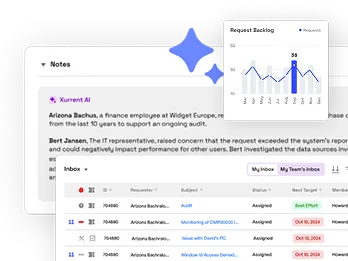
Unifiy IT, HR, Facilities, Finance, and more on a single, AI-powered service platform.
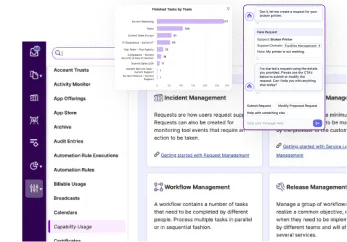
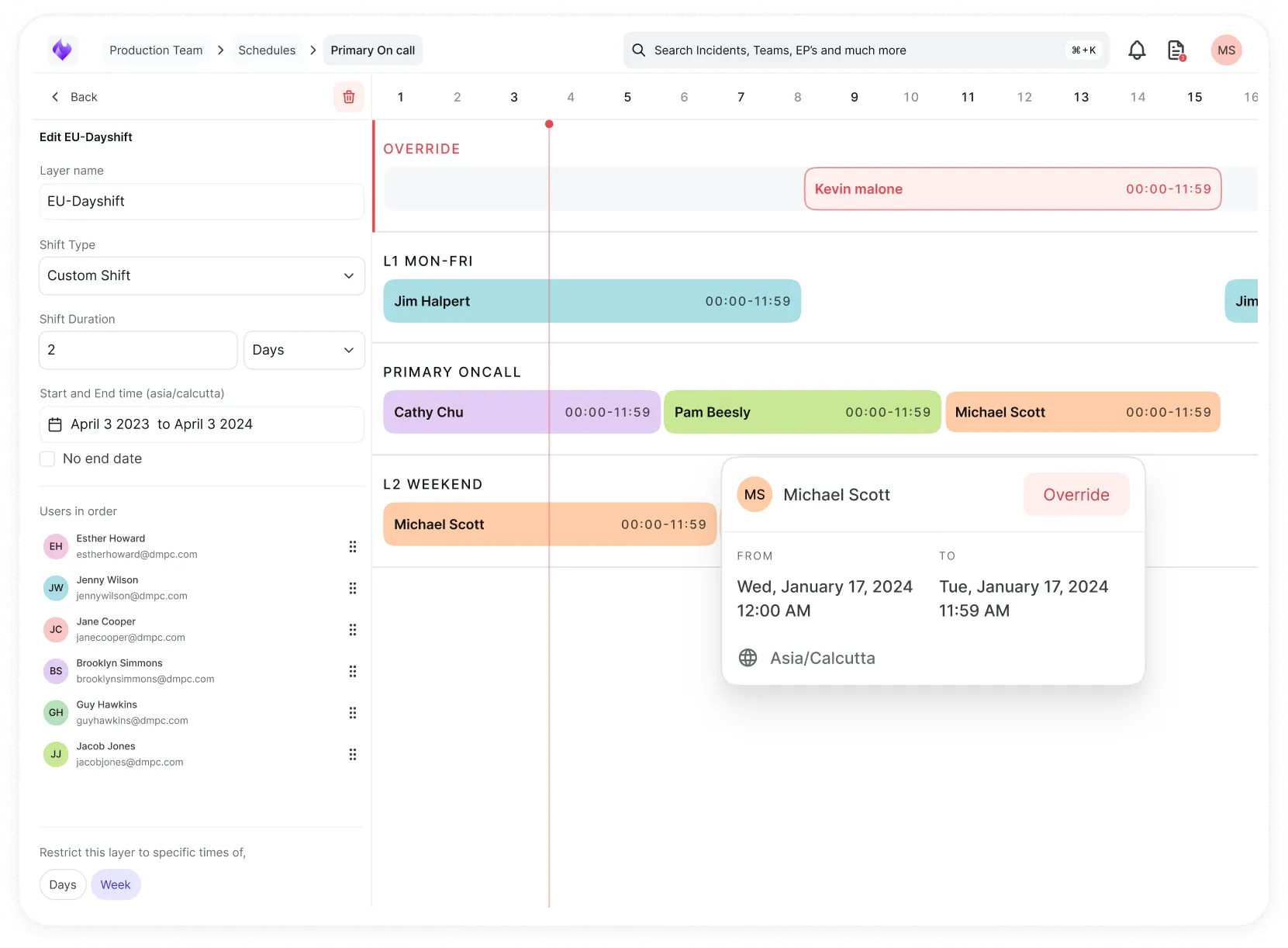
Simplify on-call scheduling, automate escalations, and reduce burnout.
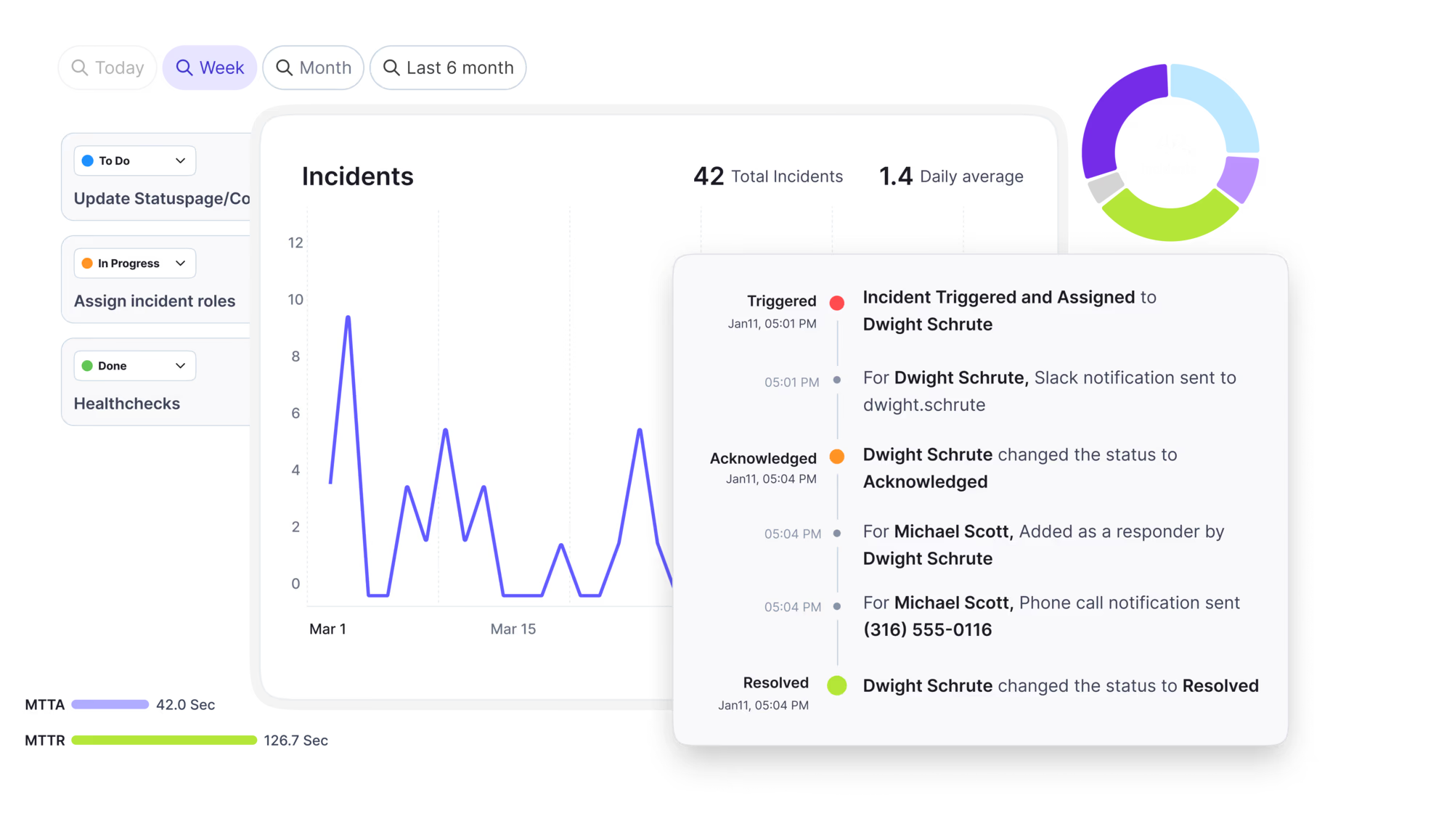
Automate postmortems, AI summaries, and post-incident workflows
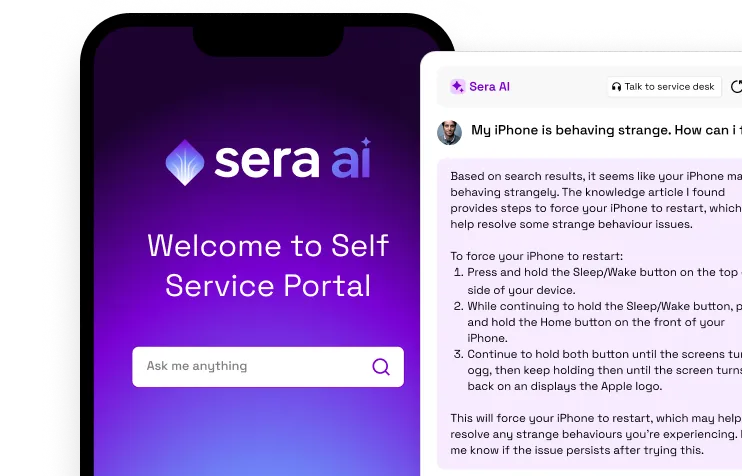
Create, organize, and continuously improve your knowledge base to find the right answers with Sera AI.
We're here to help

The integration with Atlassian Jira using the Xurrent Integration Service is

The integration with Atlassian Jira using the Xurrent Integration Service is

The integration with Atlassian Jira using the Xurrent Integration Service is

The integration with Atlassian Jira using the Xurrent Integration Service is

The integration with Atlassian Jira using the Xurrent Integration Service is

The integration with Atlassian Jira using the Xurrent Integration Service is

The integration with Atlassian Jira using the Xurrent Integration Service is

The integration with Atlassian Jira using the Xurrent Integration Service is
Resolve issues quickly with an AI-powered system that automates ticketing.
Unifiy IT, HR, Facilities, Finance, and more on a single, AI-powered service platform.
Simplify on-call scheduling, automate escalations, and reduce burnout.
Automate postmortems, AI summaries, and post-incident workflows
Create, organize, and continuously improve your knowledge base to find the right answers with Sera AI.
Resolve plant floor and IT issues before they disrupt production.
Stay audit-ready while resolving issues and reducing operational risk.

Detect, respond, and resolve incidents fast to cut downtime and MTTR.

Keep your store online, even during your biggest sales moments.

Protect patient data and resolve issues fast, so care teams stay focused on care.

Standardize service delivery across every store and channel.

We are here to help 24/7

Connect with other Xurrent Users

Get insights and tips on how to get the most out of Xurrent

Apps, APIs, and updates

Xurrent service functionality

Eliminate manual tasks, optimize workflows, and deliver faster resolutions.
Learn how organizations have reduced downtime, improved 50% MTTA & MTTR, and cut costs with Xurrent IMR.
Discover Xurrent IMR's quick support, bidirectional integrations with Jira and Slack, and more cohesive incident response capabilities compared to Opsgenie.
Understand why users value Xurrent IMR for its intuitive interface, efficient incident alerting, customizable On-call schedules, and escalations.

A global communications provider gave 3 million end users a single, reliable view of service health, on Xurrent IMR.
There is a particular bind that comes with being a communications company. When your own services hit a snag, the channels you would normally use to tell people are sometimes the very channels that are down. For 8x8, a global provider of cloud voice, contact center, and messaging, incident communication had to work independently of its own infrastructure, and reach a base that ranges from single users to enterprises with thousands of stakeholders.
8x8 already cared deeply about customer experience. What it needed was a way to make service health visible to more than three million end users the moment something changed, without drowning anyone in noise. It built that on Xurrent IMR.
Reaching 55,000 customers and more than 3 million end users, with fewer redundant tickets and IT freed to focus on resolution.
One of the largest hidden costs of any outage is lost productivity, and 8x8's existing tool made it worse: no customization, design flaws, formatting that obscured information instead of surfacing it. 8x8 needed regional views, a deep component structure, and subscriptions that let users follow only what affected them.
8x8 used a trial to design its new approach, and flexibility and customization rose to the top. Xurrent IMR supports multiple levels of nested components, letting 8x8 give customers an accurate view of dependencies and availability. Onboarding was hands-on, through design sessions and wireframes, with branding consistent with the experience customers trusted. Because 8x8 runs voice services, one capability mattered most: the page works as a third-party channel, independent of 8x8's own systems.
8x8's customers are no longer left in the dark. The page is information-rich and tailored to individual subscribers, with historical performance that proves reliability over time. It also spares both sides a flood of redundant tickets: when a disruption hits, customers can immediately see whether it sits with 8x8 or their own environment. Adoption shows it, more than 10 million views, around 22,000 notifications a month, and 2,000 subscribers.
For a communications company, being open about service health is not a risk. It is a differentiator. 8x8 turned incident communication from a back-office chore into visible proof of reliability, available to every one of its three million end users, even on the days its own systems cannot keep that promise.
See how Xurrent IMR keeps your customers informed and your IT team focused on resolution.



.webp)
.webp)
.webp)