



.webp)
%20(1).webp)
Blog
Insights & updates from our experts


Resolve issues quickly with an AI-powered system that automates ticketing.

Resolve issues quickly with an AI-powered system that automates ticketing.

Resolve issues quickly with an AI-powered system that automates ticketing.

Resolve issues quickly with an AI-powered system that automates ticketing.
We're here to help

The integration with Atlassian Jira using the Xurrent Integration Service is

The integration with Atlassian Jira using the Xurrent Integration Service is

The integration with Atlassian Jira using the Xurrent Integration Service is

The integration with Atlassian Jira using the Xurrent Integration Service is

The integration with Atlassian Jira using the Xurrent Integration Service is

The integration with Atlassian Jira using the Xurrent Integration Service is

The integration with Atlassian Jira using the Xurrent Integration Service is

The integration with Atlassian Jira using the Xurrent Integration Service is
Resolve issues quickly with an AI-powered system that automates ticketing.
Resolve issues quickly with an AI-powered system that automates ticketing.
Resolve issues quickly with an AI-powered system that automates ticketing.
Resolve issues quickly with an AI-powered system that automates ticketing.

We are here to help 24/7

Connect with other Xurrent Users

Get insights and tips on how to get the most out of Xurrent

Apps, APIs, and updates

Xurrent service functionality

Eliminate manual tasks, optimize workflows, and deliver faster resolutions.
Learn how organizations have reduced downtime, improved 50% MTTA & MTTR, and cut costs with Xurrent IMR.
Discover Xurrent IMR's quick support, bidirectional integrations with Jira and Slack, and more cohesive incident response capabilities compared to Opsgenie.
Understand why users value Xurrent IMR for its intuitive interface, efficient incident alerting, customizable On-call schedules, and escalations.
Xurrent's AI service desk combines intelligent ticket routing, an always-current knowledge base, and Sera AI automation to cut resolution time and reduce L1 volume—without sacrificing governance, audit trails, or ITIL compliance. Go live in as little as 4 weeks.












on password resets, access requests, and status questions that a well-configured system should handle automatically. Meanwhile, complex issues sit in queue because the team is buried.
because there's no consistent classification logic. Users wait hours for a response to a request that should resolve in minutes. SLA breaches stack up. CSAT scores drop. And when leadership asks for a report on resolution trends, someone has to manually pull data from three different systems.
Articles written two years ago are still surfacing as top results. Agents give inconsistent answers. Users stop trusting self-service and go straight to email.
between the service desk and the engineering team. IT operates in one system, DevOps in another. Handoffs are slow. MTTR climbs. And nobody has a clear picture of what broke, who responded, or how long it took.
Your service desk is reactive by design, not by choice—and no amount of headcount fixes a structural problem.
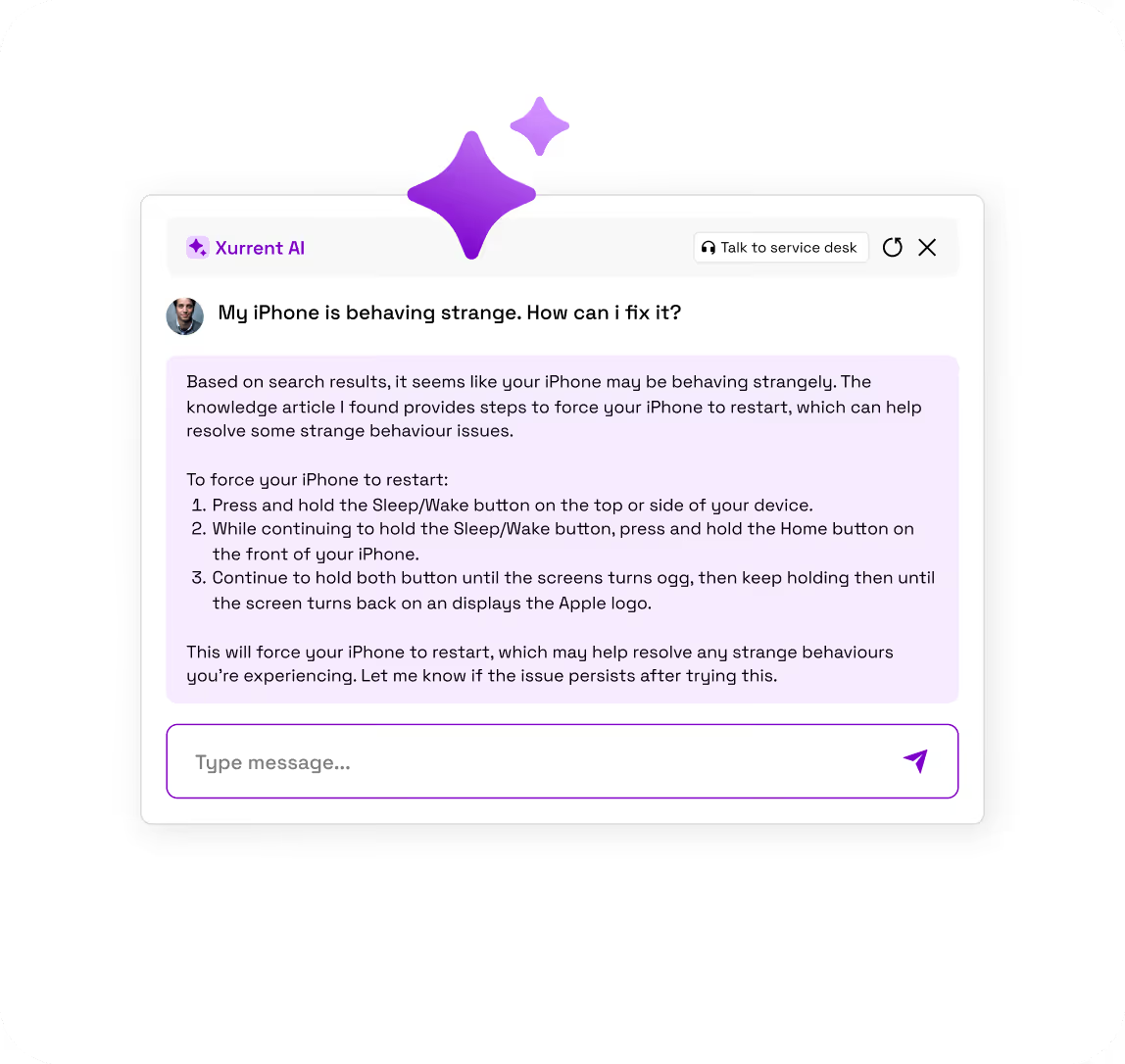
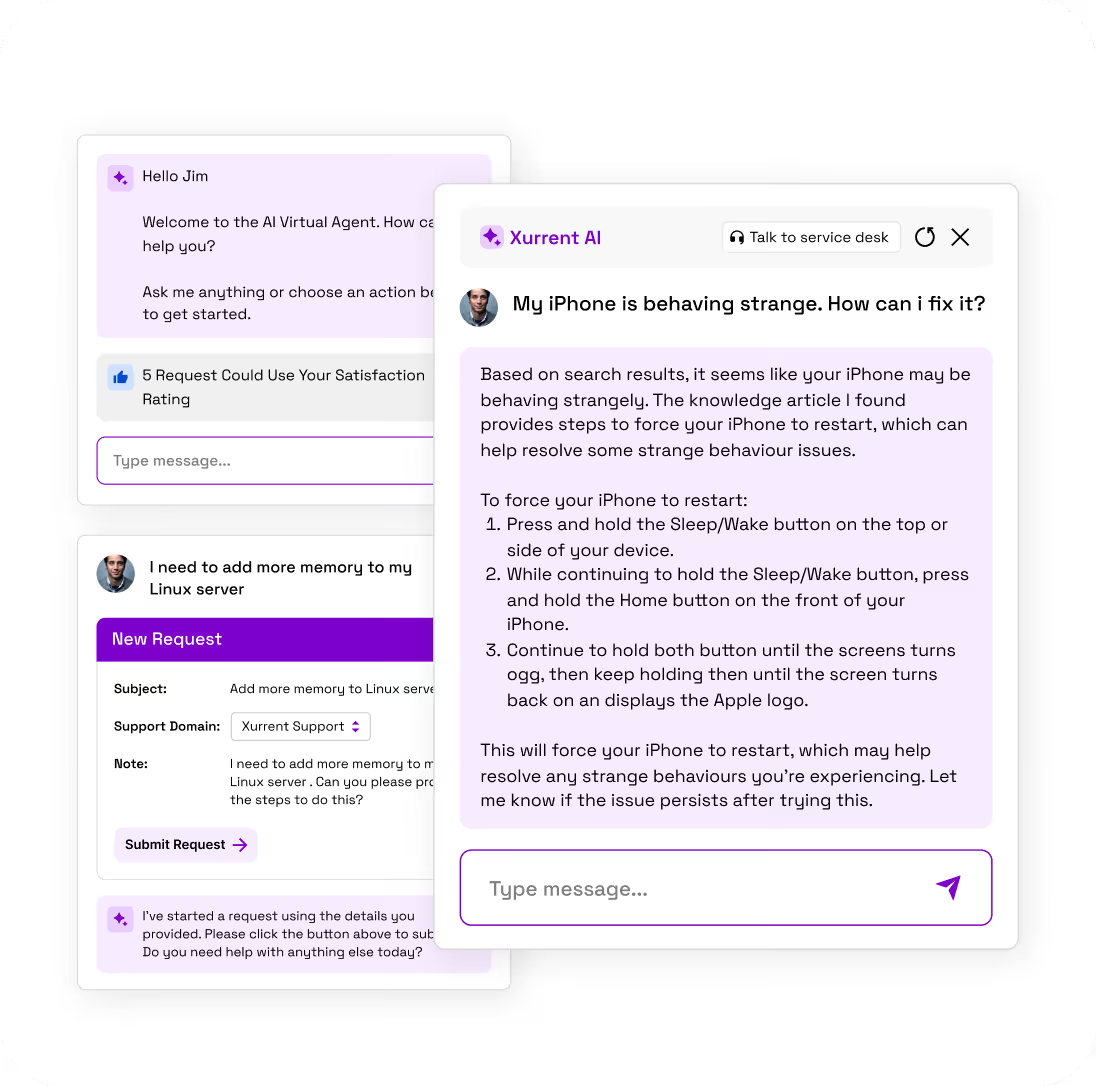
Sera AI handles password resets, access requests, FAQs, and status checks directly in the employee portal—24/7, without a queue. Users get an answer in seconds. Agents get their time back for work that actually requires judgment.
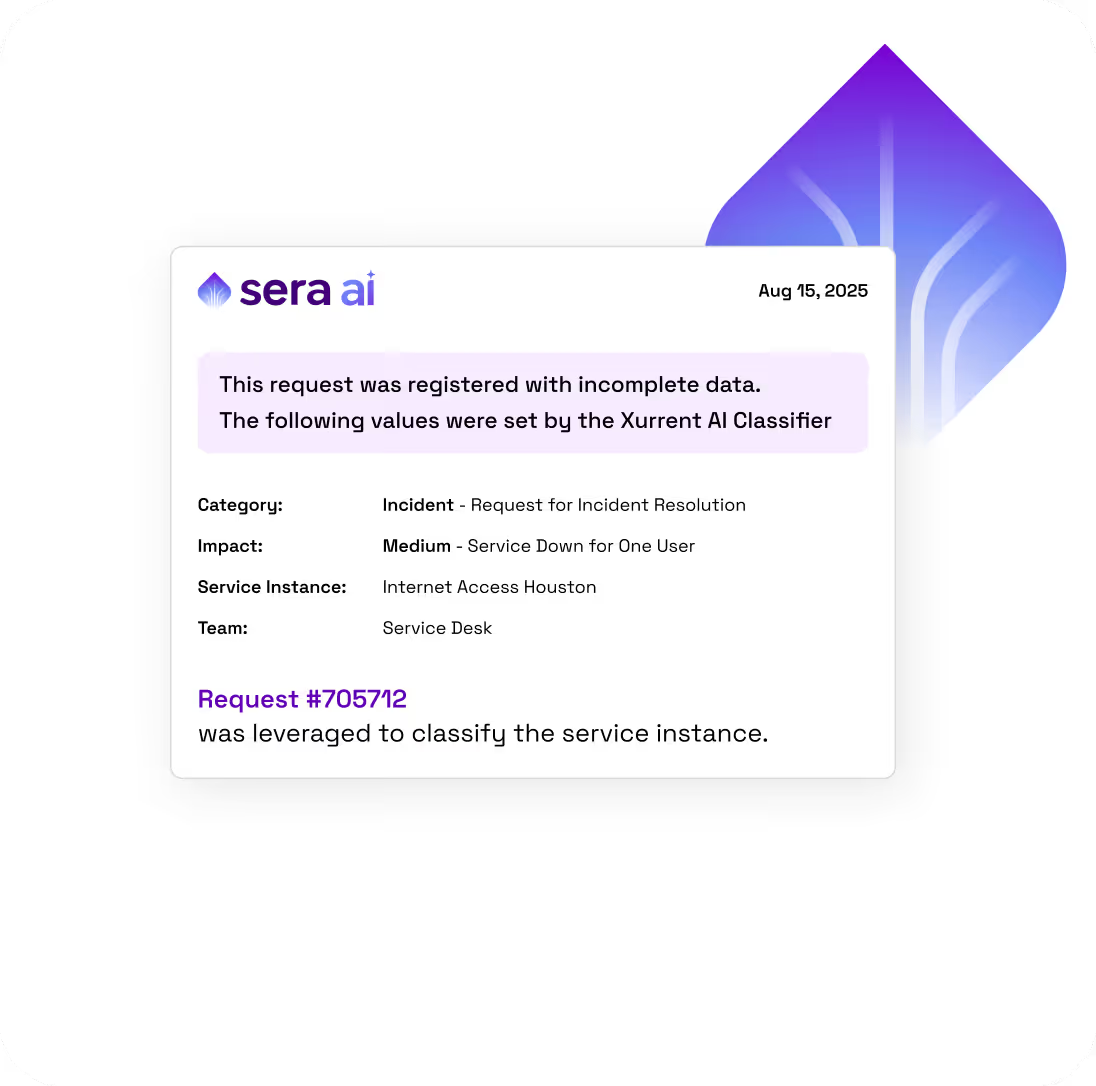
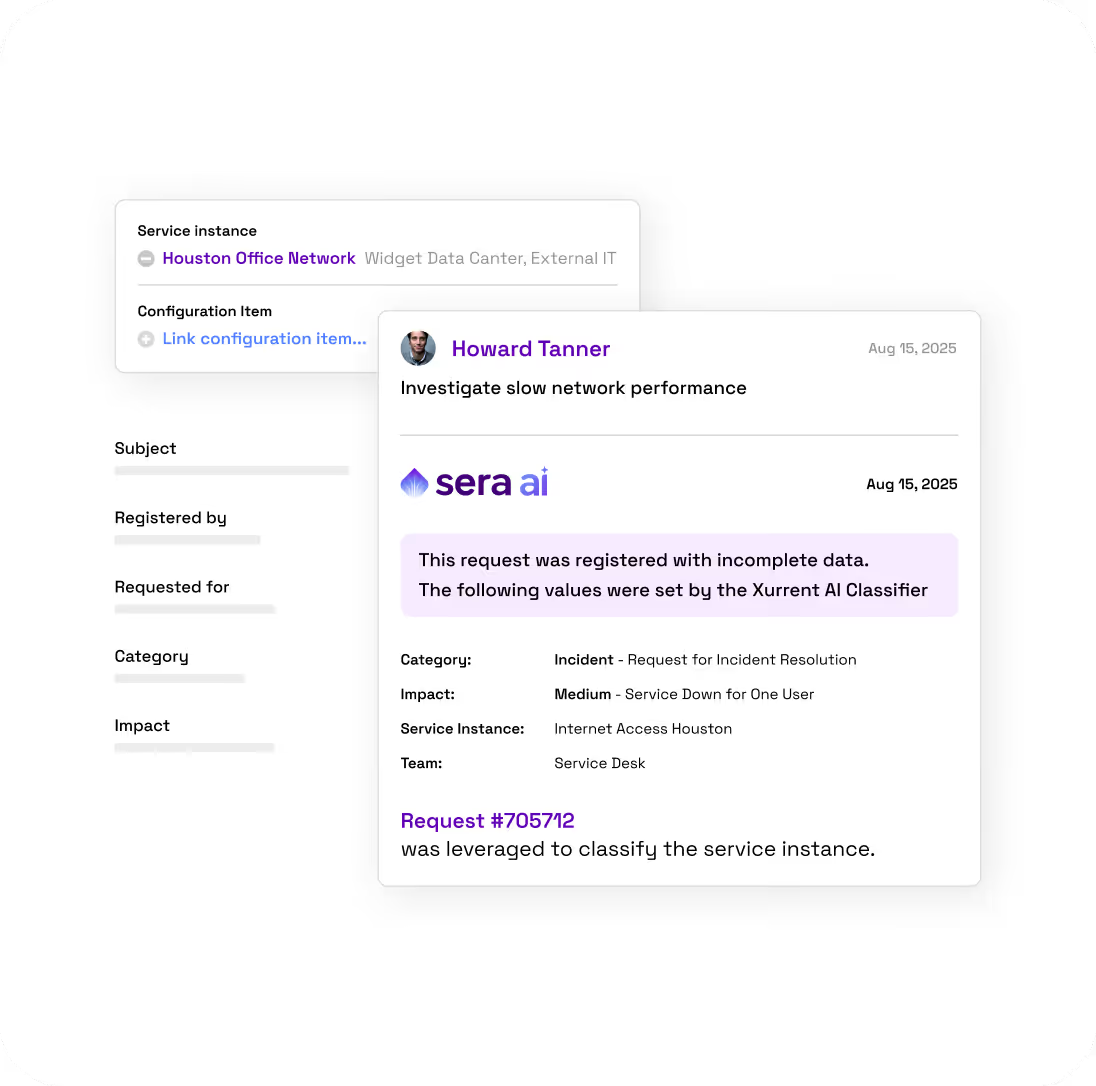
Misrouted tickets are one of the most preventable causes of slow resolution. Xurrent reads each incoming request, applies classification logic trained on your environment, and sends it directly to the correct team with a detailed AI-generated summary—no manual triage required.
Knowledge decay is a silent service desk killer. Xurrent's AI continuously generates and updates knowledge articles from real resolved tickets—so the information agents and users surface is current, specific, and actually useful.
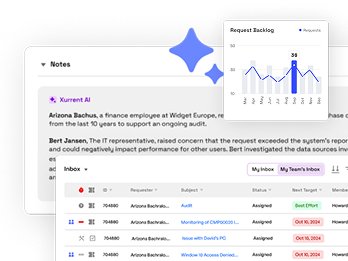
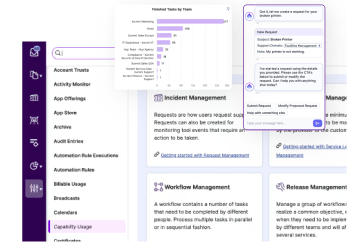
IT leaders need more than anecdotal evidence when justifying headcount, tooling, or process changes. Xurrent gives you 400+ pre-built reports and live dashboards covering MTTR, first-contact resolution (FCR), SLA adherence, ticket volume trends, and user sentiment—updated in real time.
Legacy platforms like ServiceNow and BMC Software were built for a different era. They deliver broad functionality at the cost of configuration complexity, long implementation cycles, and expensive consulting engagements. Freshservice and Jira Service Management offer faster setup but limited ITIL depth and AI that operates as a bolt-on rather than a core capability.
Xurrent is different by design. AI is embedded directly into every workflow—routing, knowledge, summarization, analytics, and escalation—not added as a separate module you pay extra for. Implementation takes 4–5 weeks, not quarters. And unlike tools that require custom code to extend to HR, Facilities, or Finance, Xurrent includes full ESM capabilities from day one with no additional licensing fees per department.


The difference isn't just features—it's the operational model. Xurrent is built on configuration, not customization. Your team sets up workflows through low-code tools, not developer sprints. When your environment changes, you adapt in hours, not weeks.
An AI service desk is an ITIL-aligned platform that manages the full lifecycle of IT service requests, incidents, changes, and problems—with AI embedded across classification, routing, knowledge, and resolution workflows. An AI help desk typically handles reactive, front-line support without structured ITIL processes, SLA management, or change/problem workflows. If your organization needs formal service levels, audit trails, and cross-team workflows, you need an AI service desk—not a help desk.
Xurrent automates ticket classification and routing, knowledge article generation and updates, virtual agent responses to common requests (password resets, access provisioning, status checks, FAQs), SLA monitoring and escalation alerts, incident timeline reconstruction, and postmortem drafting. These are fully automated workflows—not suggestions that require an agent to approve before anything happens. Human-in-the-loop escalation is configurable for any step where your policy requires it.
Xurrent uses Retrieval-Augmented Generation (RAG) to pull answers exclusively from your approved internal knowledge sources—not the open internet or shared training data. Every AI-generated answer includes source citations so agents and users can verify accuracy. Sera AI also flags outdated articles and generates new ones from resolved tickets, keeping the knowledge base current without manual maintenance. Your data never trains the underlying model.
Xurrent holds ISO 27001/27018, SOC 2 Type II, and C5 certifications. BYOK (Bring Your Own Key) encryption is supported for full control over data at rest. AI interactions run in secure isolation via AWS Bedrock—your operational data is confined to your environment and never used to train AI models. Role-based access controls, detailed audit logs, and configurable approval workflows meet enterprise governance requirements across regulated industries.
Xurrent integrates bi-directionally with your existing monitoring, observability, CI/CD, and collaboration tools through pre-built, low-code connectors—including Slack, Microsoft Teams, Jira, and major observability platforms. You can run Xurrent as your primary ITSM platform or connect it to existing workflows to add AI-assisted routing, knowledge, and incident management. Most teams go fully live in 4–5 weeks, with integrations configured during that same window.
Xurrent's AI service desk gives IT service managers, SRE leads, and operations directors a single platform to automate L1 resolution, enforce ITIL processes, and prove performance with real data—all with enterprise-grade security from day one. The analyst research is already done. Read what EMA found.

.jpg)
.jpg)