





Blog
Insights & updates from our experts


Resolve plant floor and IT issues before they disrupt production.

Stay audit-ready while resolving issues and reducing operational risk.
Resolve issues quickly with an AI-powered system that automates ticketing.
Unifiy IT, HR, Facilities, Finance, and more on a single, AI-powered service platform.
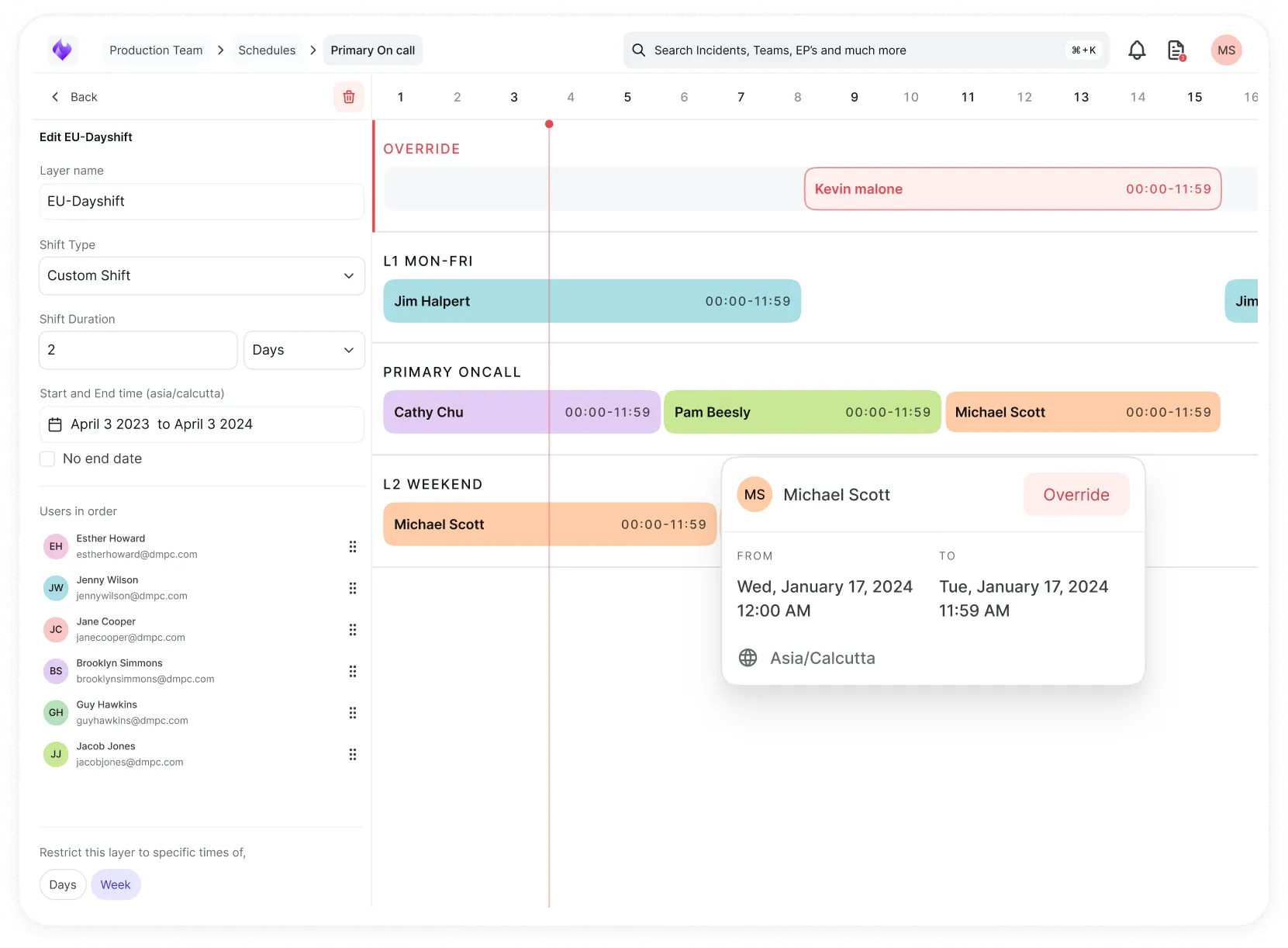
Simplify on-call scheduling, automate escalations, and reduce burnout.
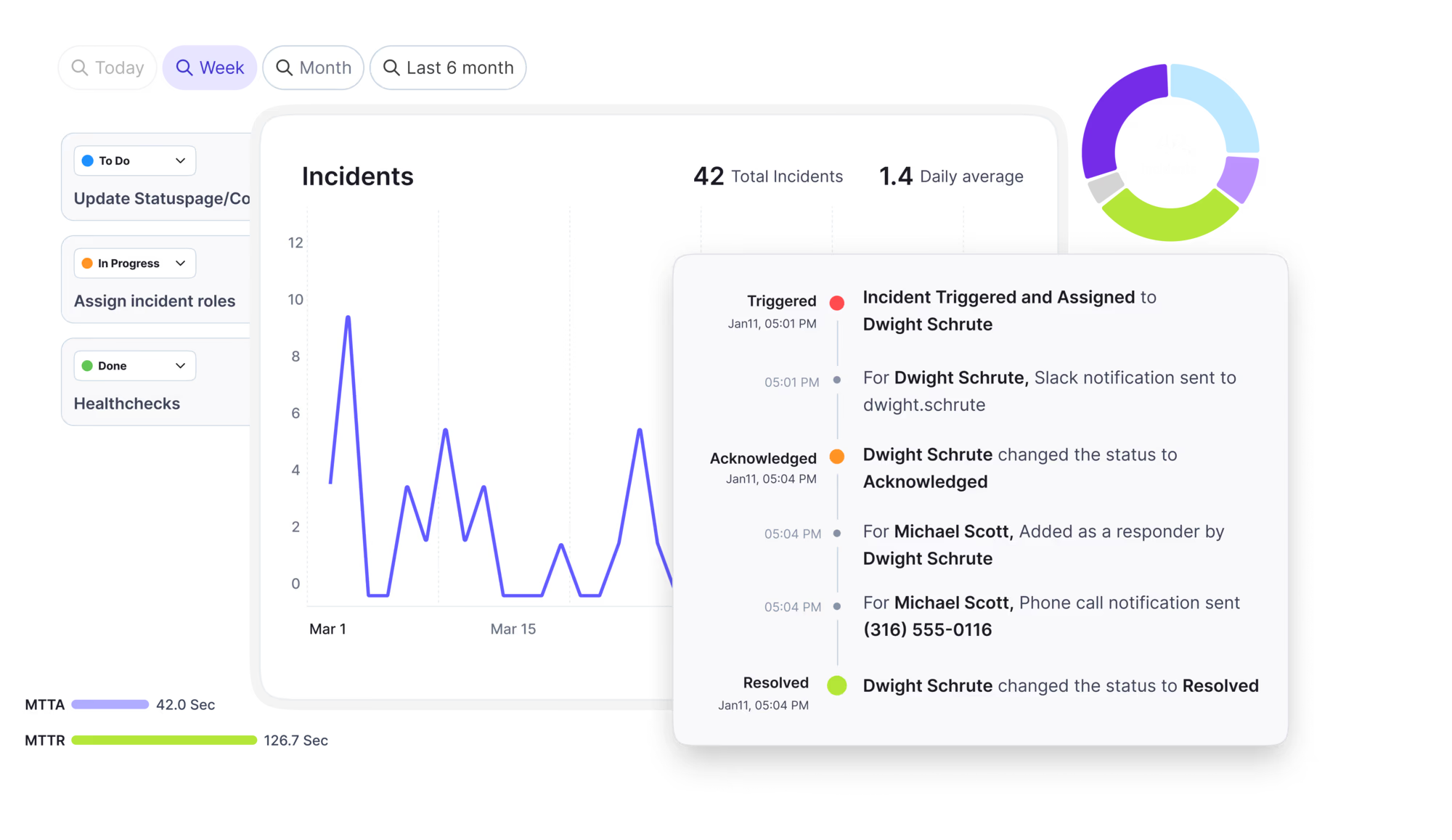
Automate postmortems, AI summaries, and post-incident workflows
Create, organize, and continuously improve your knowledge base to find the right answers with Sera AI.

We're here to help

The integration with Atlassian Jira using the Xurrent Integration Service is

The integration with Atlassian Jira using the Xurrent Integration Service is

The integration with Atlassian Jira using the Xurrent Integration Service is

The integration with Atlassian Jira using the Xurrent Integration Service is

The integration with Atlassian Jira using the Xurrent Integration Service is

The integration with Atlassian Jira using the Xurrent Integration Service is

The integration with Atlassian Jira using the Xurrent Integration Service is

The integration with Atlassian Jira using the Xurrent Integration Service is
Resolve issues quickly with an AI-powered system that automates ticketing.
Unifiy IT, HR, Facilities, Finance, and more on a single, AI-powered service platform.
Simplify on-call scheduling, automate escalations, and reduce burnout.
Automate postmortems, AI summaries, and post-incident workflows
Create, organize, and continuously improve your knowledge base to find the right answers with Sera AI.
Resolve plant floor and IT issues before they disrupt production.
Stay audit-ready while resolving issues and reducing operational risk.

Detect, respond, and resolve incidents fast to cut downtime and MTTR.

Keep your store online, even during your biggest sales moments.

Protect patient data and resolve issues fast, so care teams stay focused on care.

Standardize service delivery across every store and channel.

We are here to help 24/7

Connect with other Xurrent Users

Get insights and tips on how to get the most out of Xurrent

Apps, APIs, and updates

Xurrent service functionality

Eliminate manual tasks, optimize workflows, and deliver faster resolutions.
Learn how organizations have reduced downtime, improved 50% MTTA & MTTR, and cut costs with Xurrent IMR.
Discover Xurrent IMR's quick support, bidirectional integrations with Jira and Slack, and more cohesive incident response capabilities compared to Opsgenie.
Understand why users value Xurrent IMR for its intuitive interface, efficient incident alerting, customizable On-call schedules, and escalations.

Auto-resolve trusted matches and escalate uncertain ones.
Reconciliation rules let you tune how the matching engine behaves on your own data: auto-resolve the cases you trust, escalate the ones you do not, and keep reviewers focused on the records that genuinely need a decision.
If you are new to the feature, read Getting Started with Reconciliation and The Reconciliation Queue first.
The Reconciliation Rules tab splits into two kinds of rule, matching the two phases of the pipeline:
Rules react to what the engine does at each phase. Four triggers are available:
This lets you write logic like "auto-resolve on a confident serial match" or "escalate anything ambiguous to a specific team."
In a rule's conditions, you can read the matches the engine produced:
matched_cis: the candidate Configuration Items for the record.confidence score, what it matched_on, and the ci it points to.Because the confidence score and match basis are available to rules, you can tune matching to your own tolerance: auto-resolve above a confidence threshold, require review below it, or treat a specific match basis as always trustworthy.
Auto-resolve is opt-in. Records do not resolve themselves by default; you enable it with a review rule. To keep the CMDB safe, only strong, hard-identity matches are eligible to auto-resolve, so a weak signal always surfaces as a candidate for a person rather than merging silently, even at high confidence.
Out of the box, the engine matches on a small set of signals so you see useful behavior before writing any rules:
Start with these defaults, watch the queue for a week, and add rules where you notice the same manual decision repeating. Expand deliberately: a rule that auto-resolves too aggressively is harder to unwind than a queue that is slightly too full.



.webp)
.webp)