





Blog
Insights & updates from our experts


Resolve plant floor and IT issues before they disrupt production.

Stay audit-ready while resolving issues and reducing operational risk.
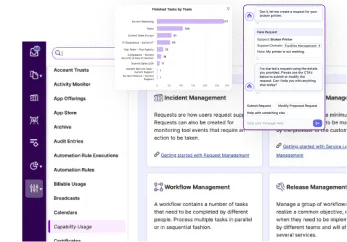
Resolve issues quickly with an AI-powered system that automates ticketing.
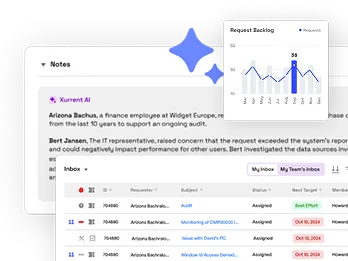
Unifiy IT, HR, Facilities, Finance, and more on a single, AI-powered service platform.
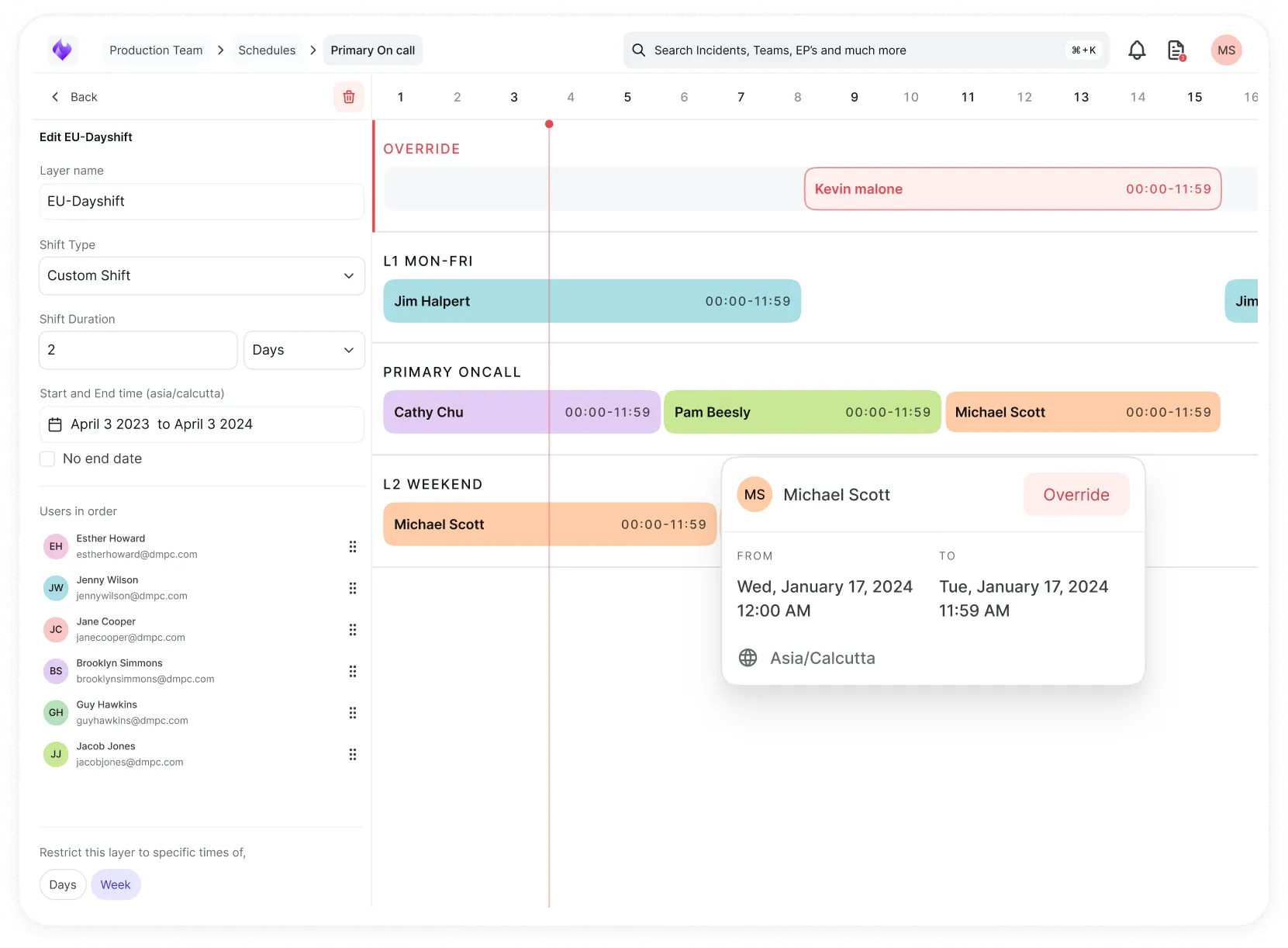
Simplify on-call scheduling, automate escalations, and reduce burnout.
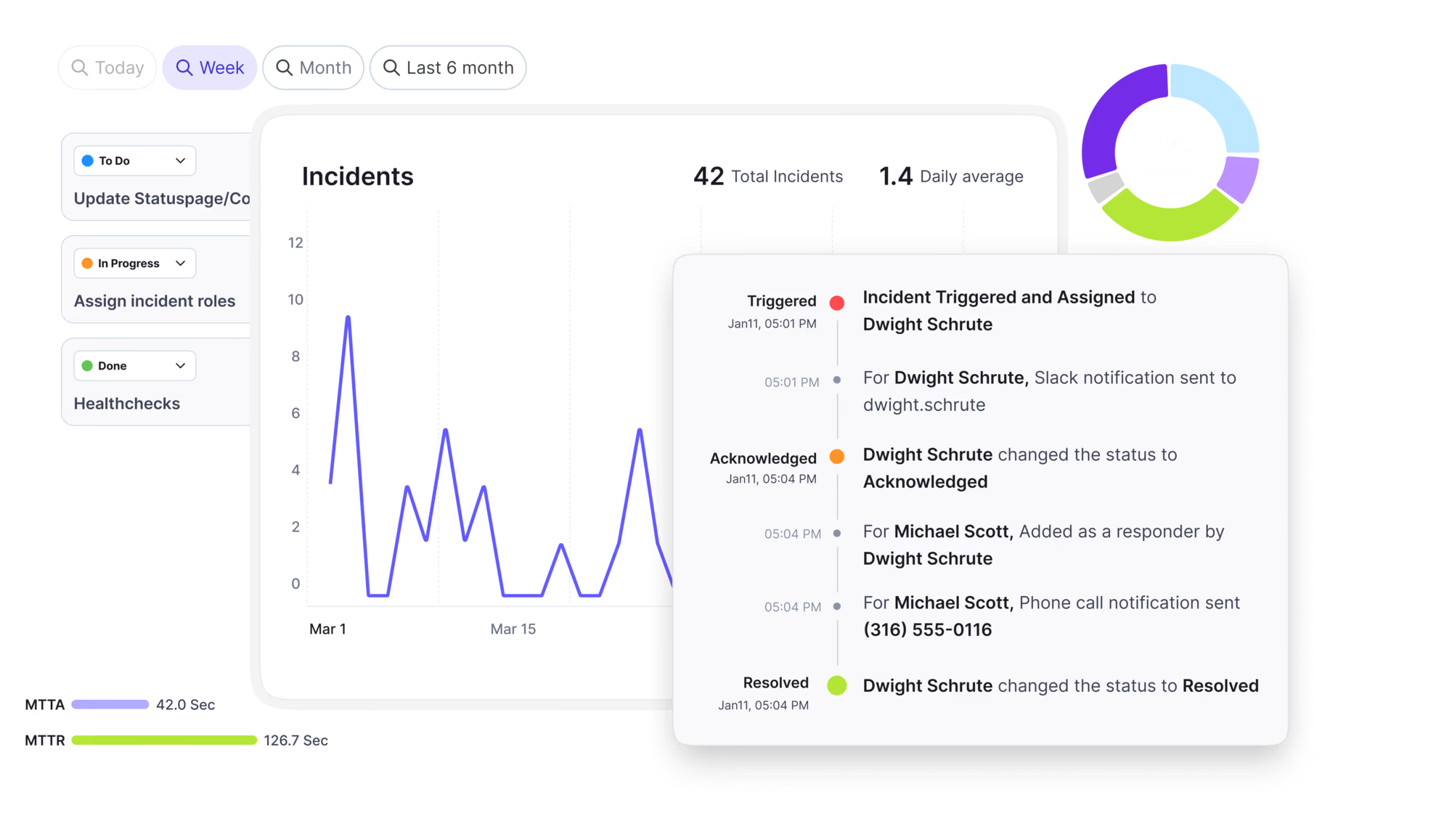
Automate postmortems, AI summaries, and post-incident workflows
Create, organize, and continuously improve your knowledge base to find the right answers with Sera AI.
We're here to help

The integration with Atlassian Jira using the Xurrent Integration Service is

The integration with Atlassian Jira using the Xurrent Integration Service is

The integration with Atlassian Jira using the Xurrent Integration Service is

The integration with Atlassian Jira using the Xurrent Integration Service is

The integration with Atlassian Jira using the Xurrent Integration Service is

The integration with Atlassian Jira using the Xurrent Integration Service is

The integration with Atlassian Jira using the Xurrent Integration Service is

The integration with Atlassian Jira using the Xurrent Integration Service is
Resolve issues quickly with an AI-powered system that automates ticketing.
Unifiy IT, HR, Facilities, Finance, and more on a single, AI-powered service platform.
Simplify on-call scheduling, automate escalations, and reduce burnout.
Automate postmortems, AI summaries, and post-incident workflows
Create, organize, and continuously improve your knowledge base to find the right answers with Sera AI.
Resolve plant floor and IT issues before they disrupt production.
Stay audit-ready while resolving issues and reducing operational risk.

Detect, respond, and resolve incidents fast to cut downtime and MTTR.

Keep your store online, even during your biggest sales moments.

Protect patient data and resolve issues fast, so care teams stay focused on care.

Standardize service delivery across every store and channel.

We are here to help 24/7

Connect with other Xurrent Users

Get insights and tips on how to get the most out of Xurrent

Apps, APIs, and updates

Xurrent service functionality

Eliminate manual tasks, optimize workflows, and deliver faster resolutions.
Learn how organizations have reduced downtime, improved 50% MTTA & MTTR, and cut costs with Xurrent IMR.
Discover Xurrent IMR's quick support, bidirectional integrations with Jira and Slack, and more cohesive incident response capabilities compared to Opsgenie.
Understand why users value Xurrent IMR for its intuitive interface, efficient incident alerting, customizable On-call schedules, and escalations.

The simplified end-user side of Xurrent: what the portal offers, and how a portal submission becomes the same request a specialist works.
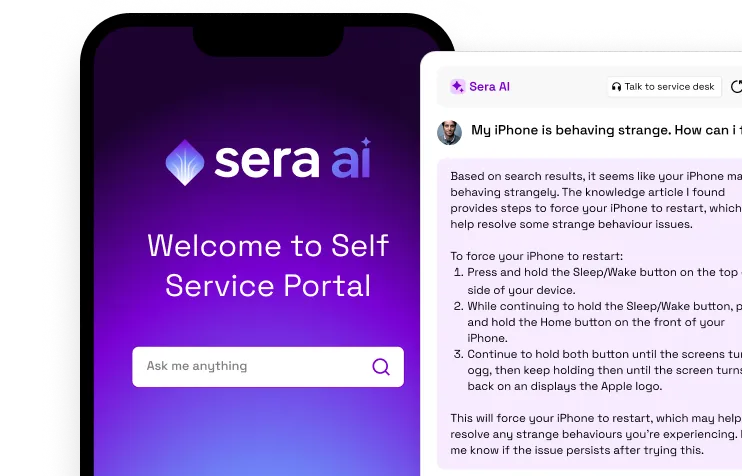
Self Service is the simplified, end-user-facing side of Xurrent. Where specialists work in the full Specialist Interface, everyone else uses the Self-Service Portal, a clean, mobile friendly front end for getting help from a service without needing to understand the model behind it.
From the portal an end user can submit new requests, track the progress of their requests, browse a knowledge base, order from a service catalog, approve workflows, work on project tasks, and report time.
Almost every interaction an end user has with IT, or with HR, facilities, or any other service provider on the platform, starts in the portal.
It is deliberately narrow: an intuitive interface, direct access to a knowledge base, a service catalog to request services or support in a few clicks, and request logging with real-time status tracking. The Specialist Interface provides considerably more functionality, but Self Service trades that breadth for simplicity so an end user can self-serve without training.
The same portal is available on a phone through the Xurrent App, on any device.
What an end user submits through the portal becomes the same request record a specialist works. There is no separate portal record type. That is what lets the service instance and SLA model apply to self-service submissions exactly as it does to requests registered by an analyst.
See Self Service Design for branding and customization, and Knowledge Management for the knowledge base behind the portal.

.webp)
.webp)