Workflows are powerful automated processes within the Xurrent IMR platform, designed to enhance incident response, task management, and team communication. By connecting system events to a sequence of actions, workflows enable teams to automate critical operations efficiently.
Accessing Workflows
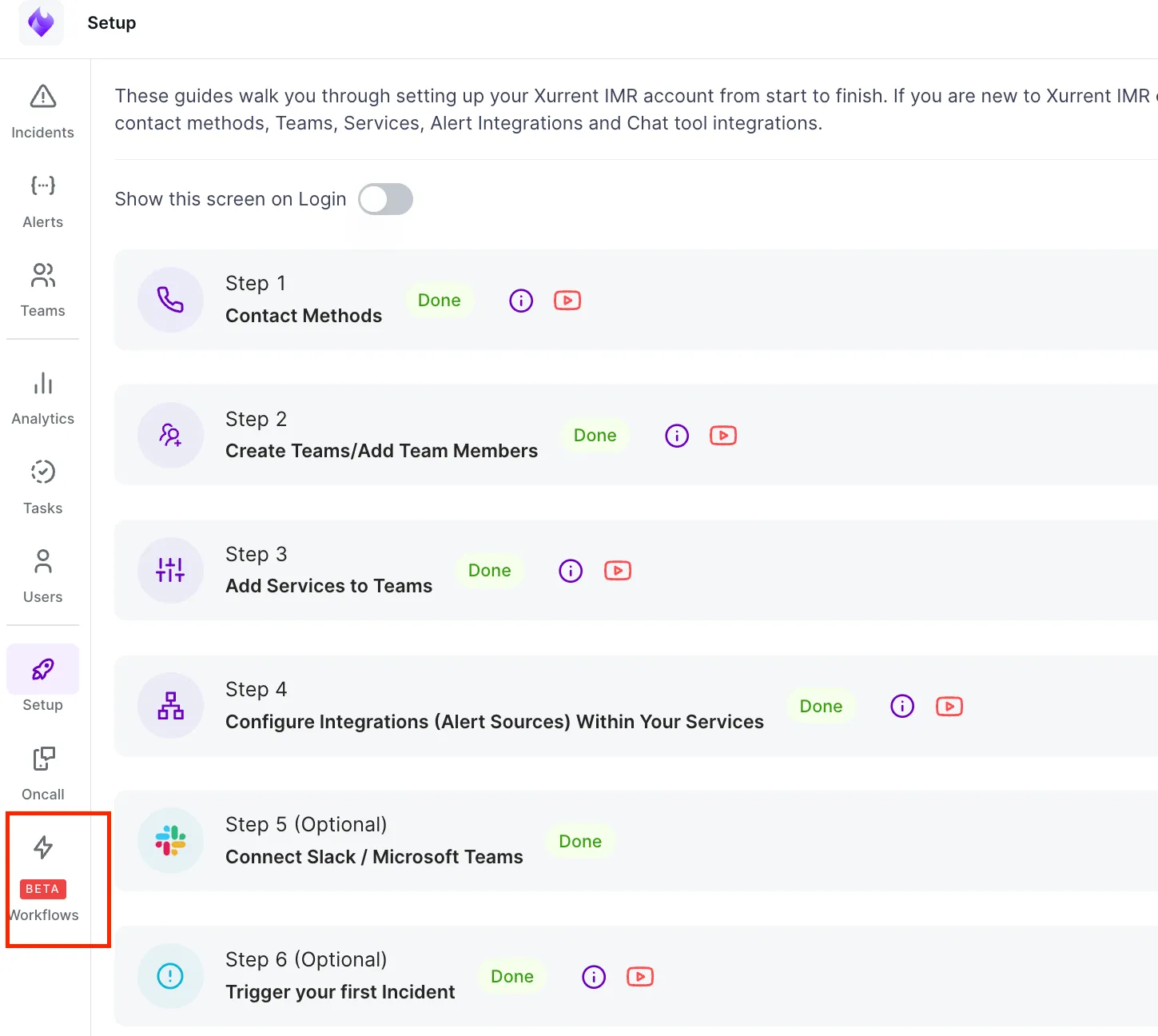
Navigate to the left-side navigation panel
Click Workflows
Click Create Workflow
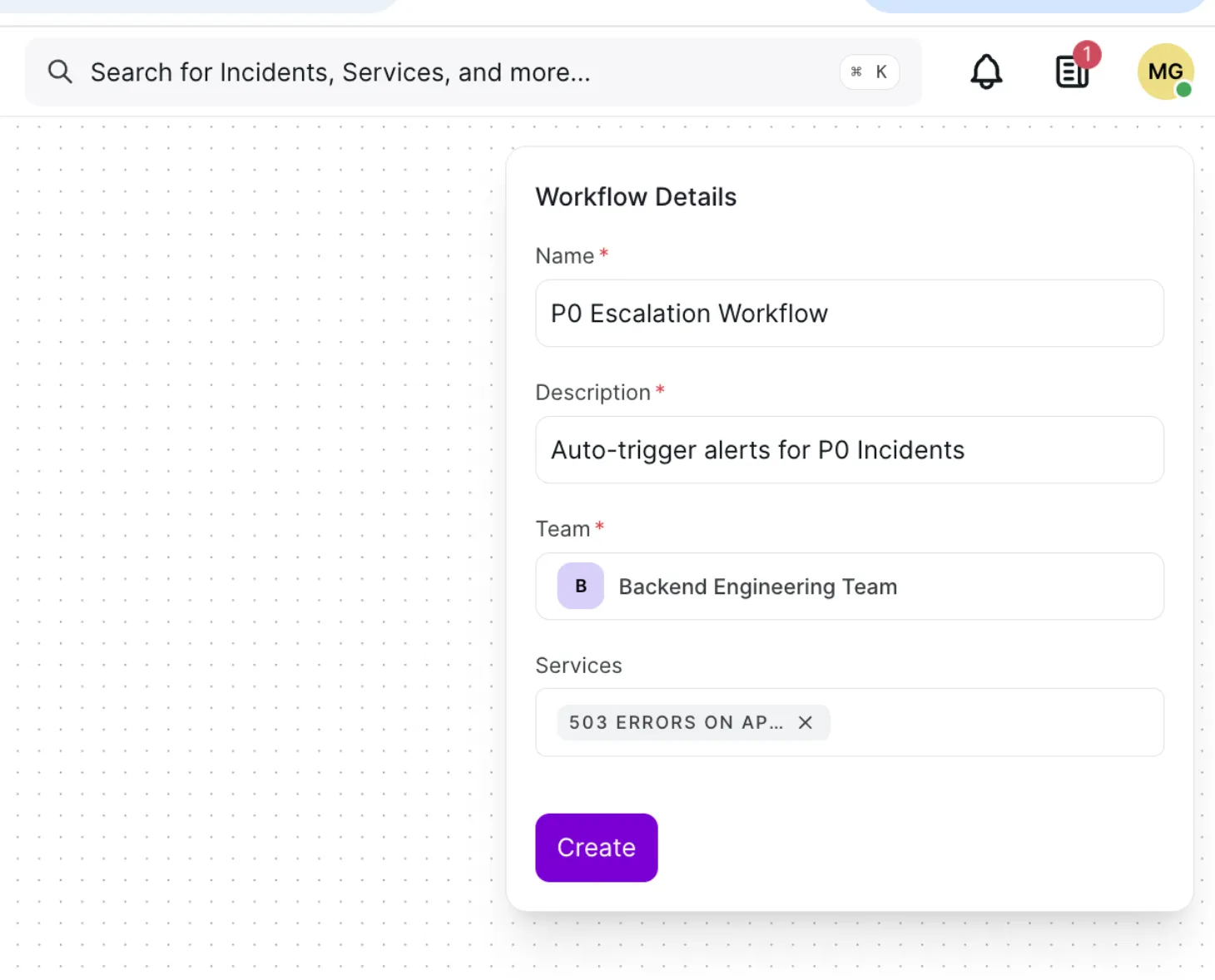
Creating a New Workflow
Provide the following details:
Name: A clear, descriptive name (e.g., "P0 Escalation Workflow")
Description: Brief explanation of the workflow's purpose
Team: Select the team to which this workflow applies
How Workflows Work
Workflows are triggered by specific events in the system and execute a series of predefined actions based on configured conditions. They support automation for tasks such as:
Incident assignment
Priority adjustments
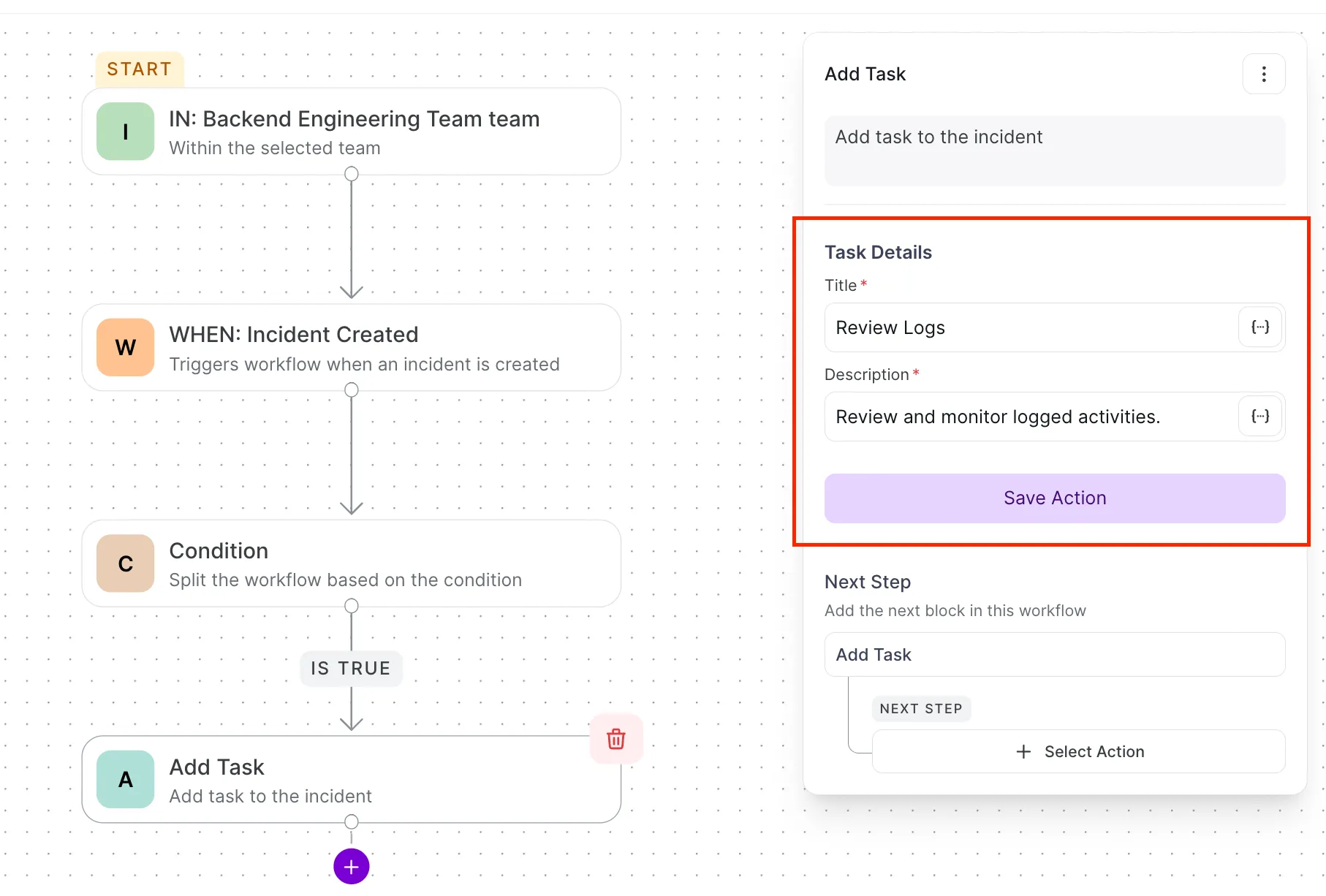
Task creation
Responder notifications
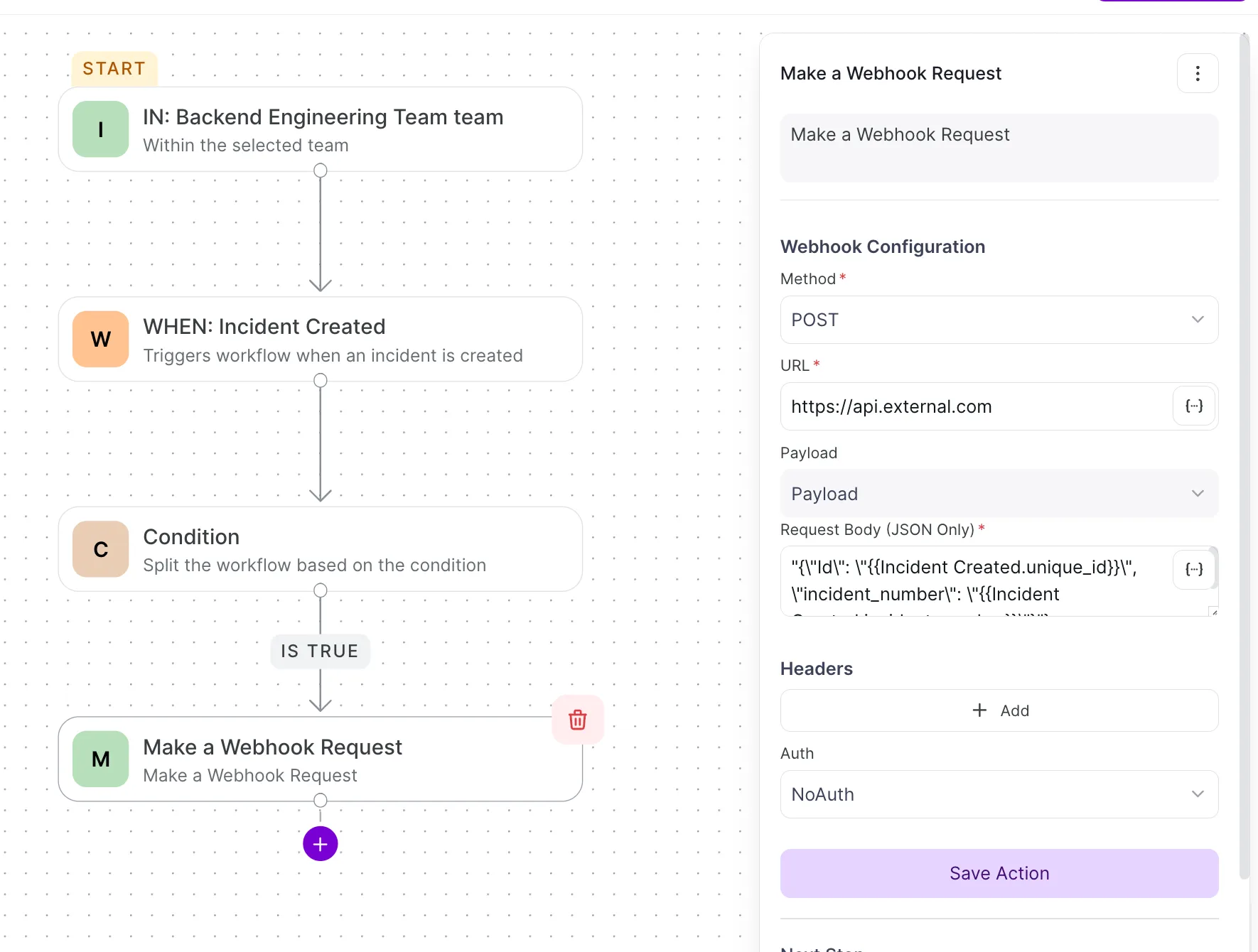
Email/webhook communications
Conditional branching and delays
This flexibility allows teams to tailor responses to various scenarios, improving response times and reducing manual effort.
Workflow Structure
A workflow is constructed using four core building blocks
Trigger: The event that initiates the workflow
Action: The specific tasks or operations performed
Condition: Logic that determines the workflow's path
Delay: A timed pause to allow for resolution or further evaluation
Building Blocks of Workflows
Triggers
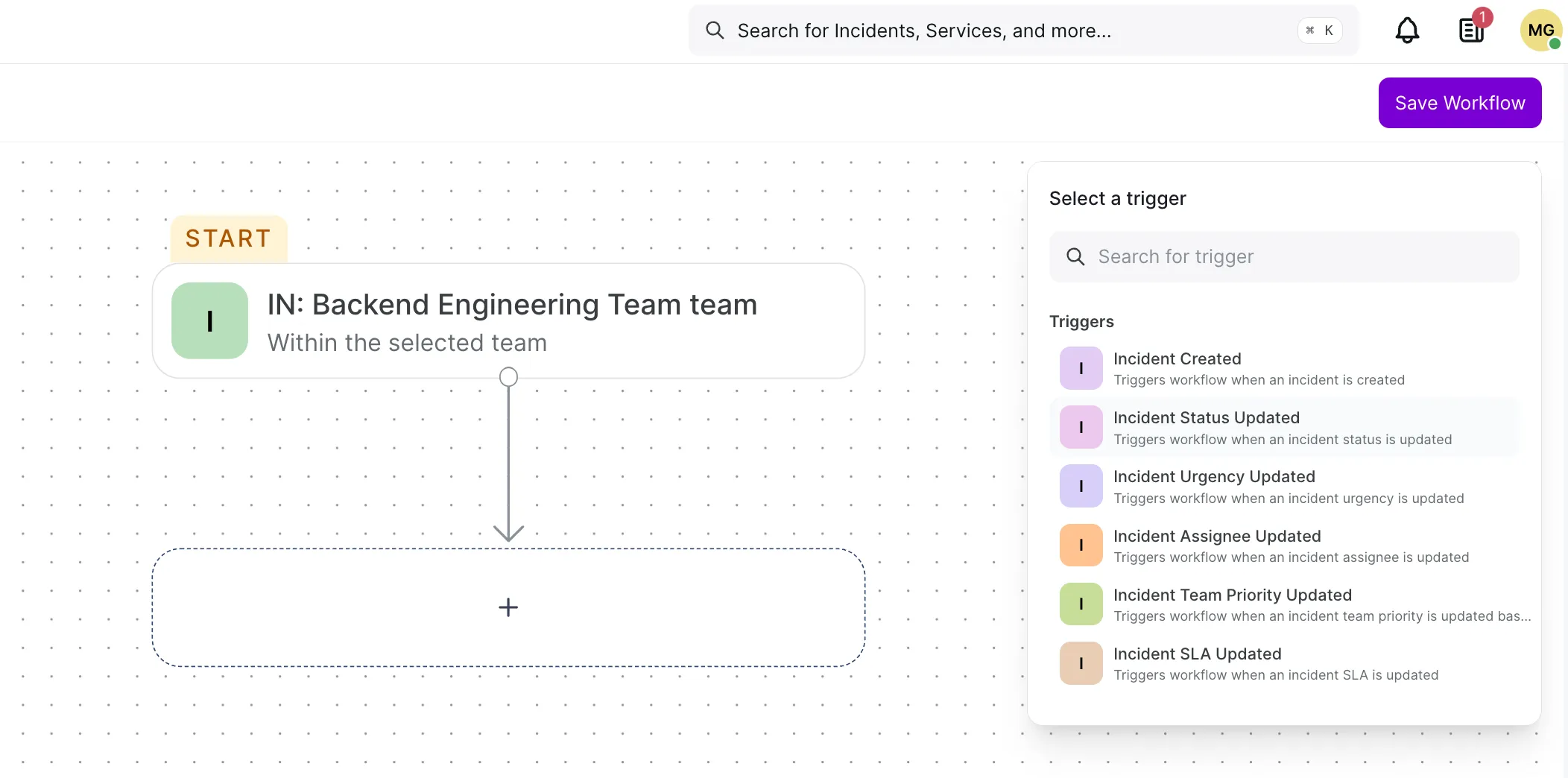
A trigger is the event that starts the workflow, acting as the entry point for automation. Xurrent IMR supports six triggers, so a workflow can respond either to a new incident or to a change on an existing one.
Available Triggers
Incident Created
Description: Activates the workflow when a new incident is logged in the system. This is the most common starting point for most workflows.
Example: A workflow triggers when a new incident titled "Server Down" is created, initiating automated steps.
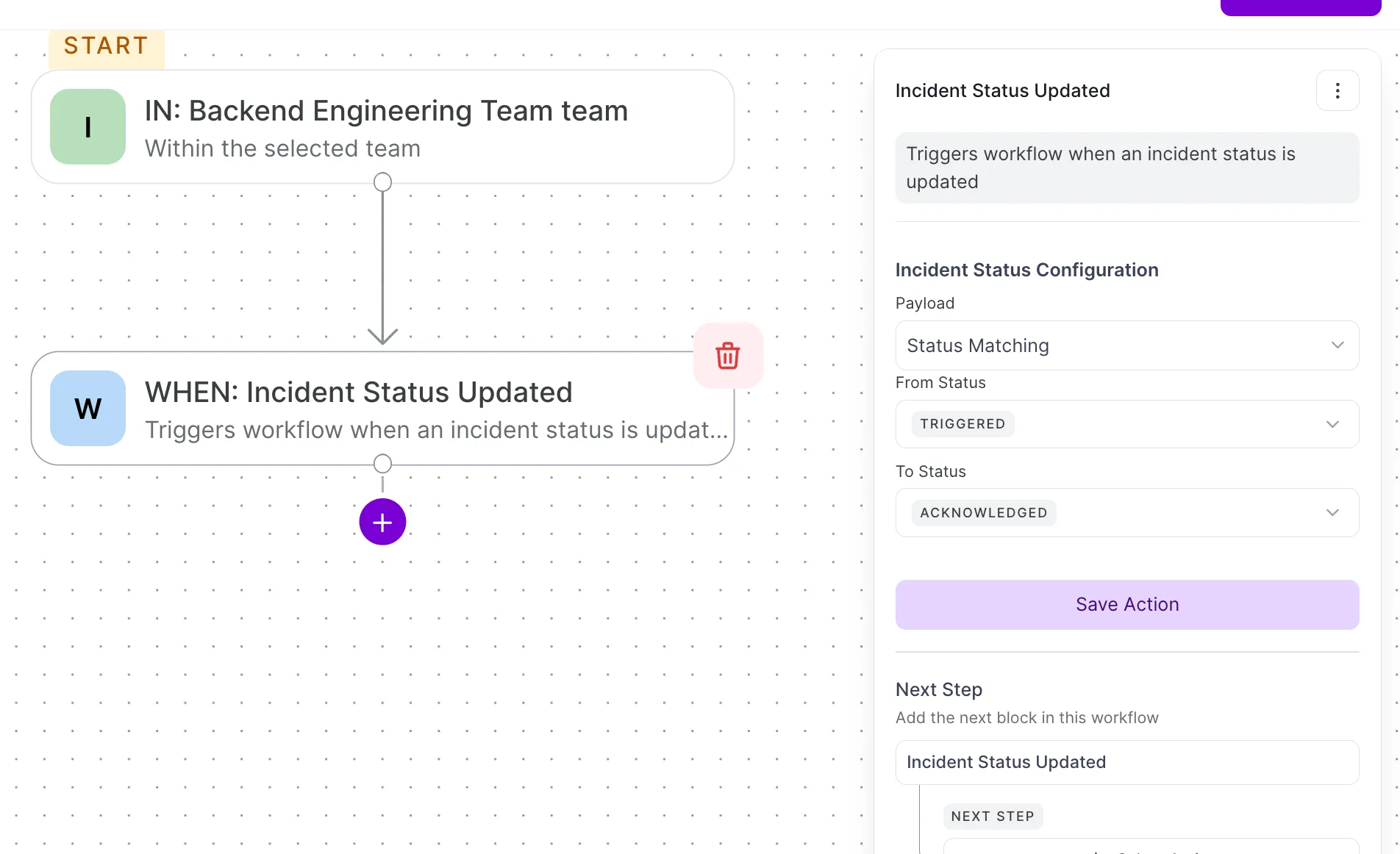
Incident Status Updated
Description: Activates when an incident moves from one status to another.
Configurable: From Status and To Status
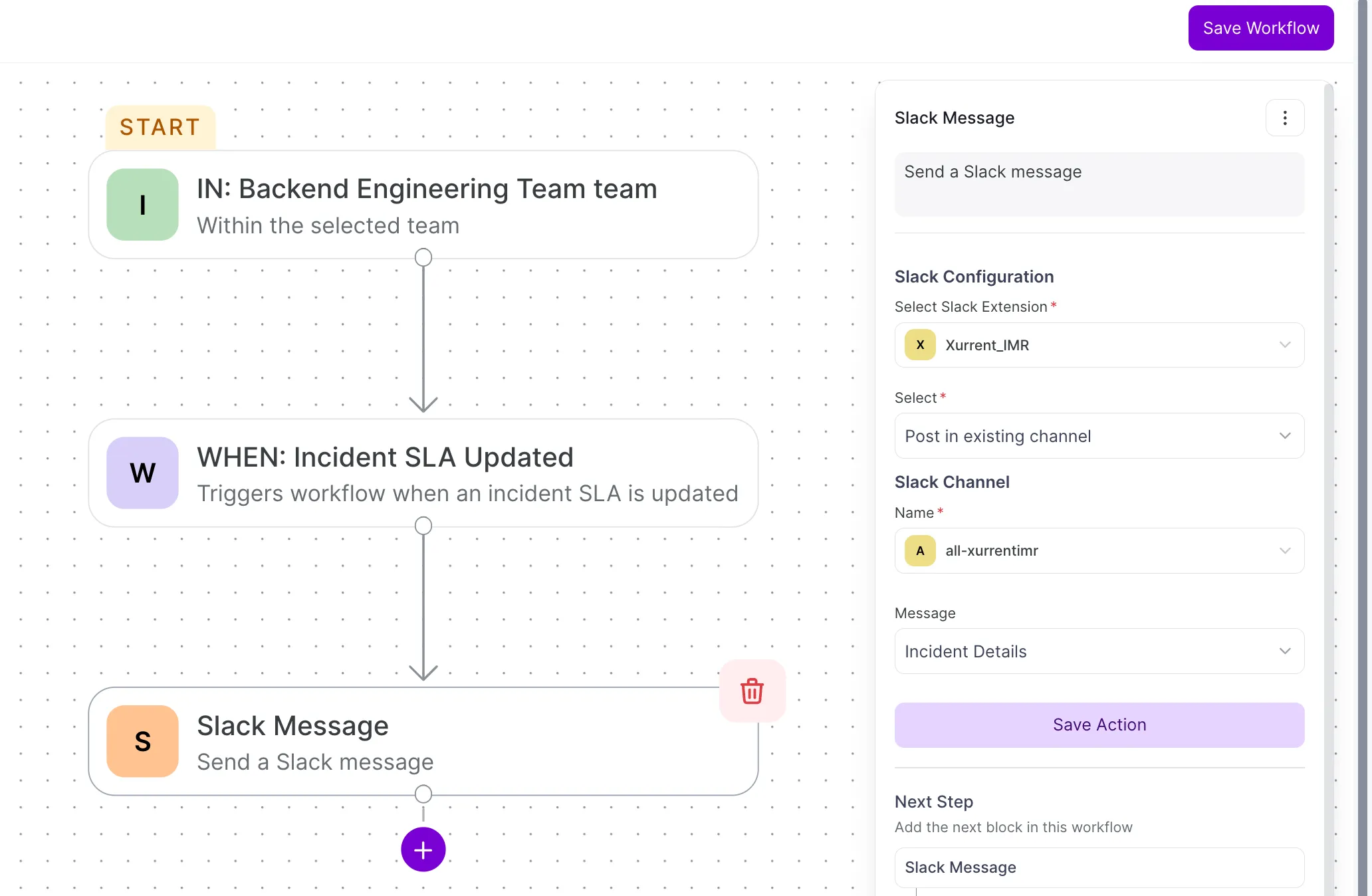
Example: Send a Slack notification to the team when an incident moves from Triggered to Acknowledged.
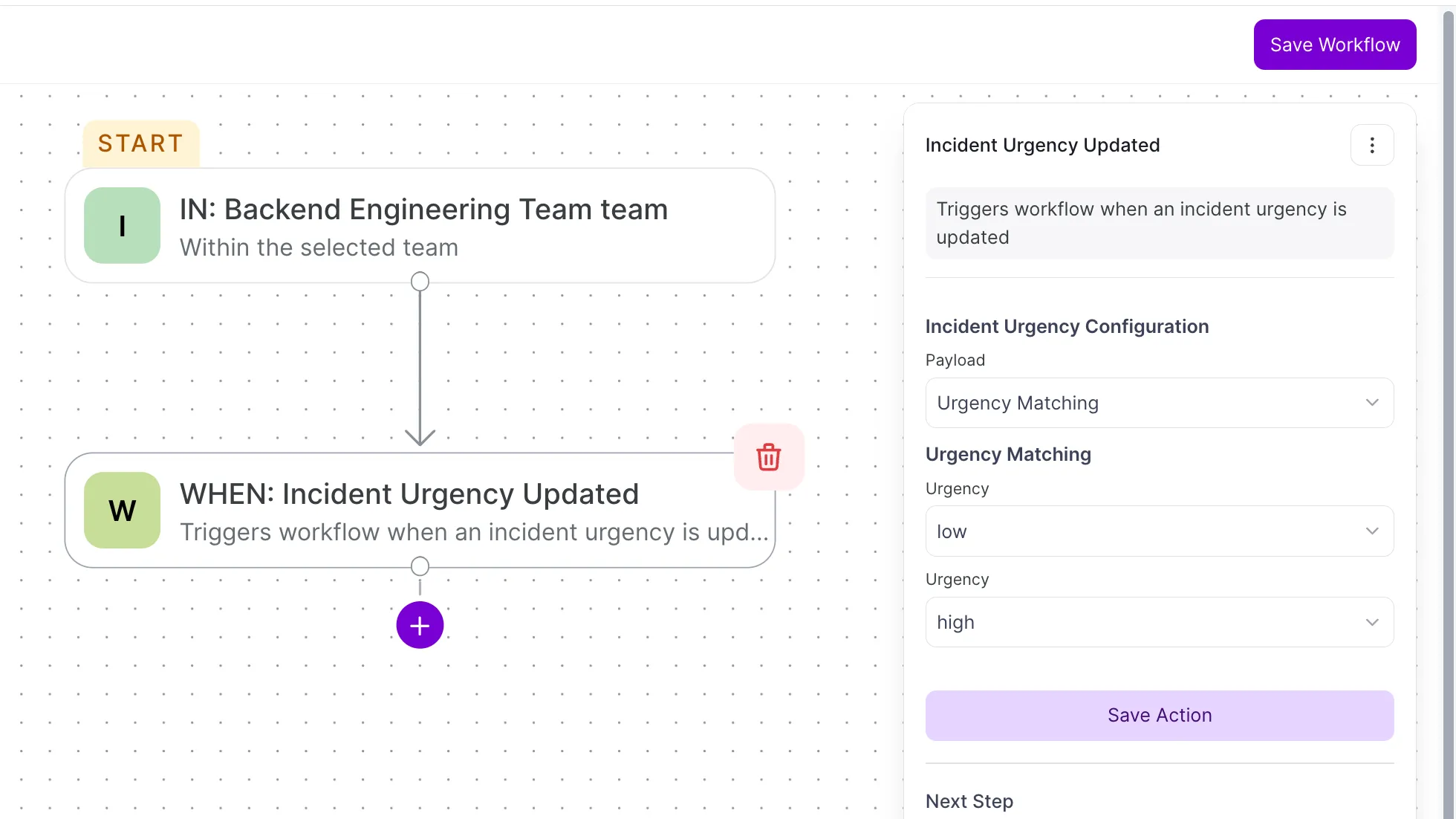
Incident Urgency Updated
Description: Activates when the urgency of an incident changes.
Configurable: From Urgency and To Urgency (e.g. Low to High)
Example: Escalate to a senior engineer automatically when urgency is bumped from Low to High.
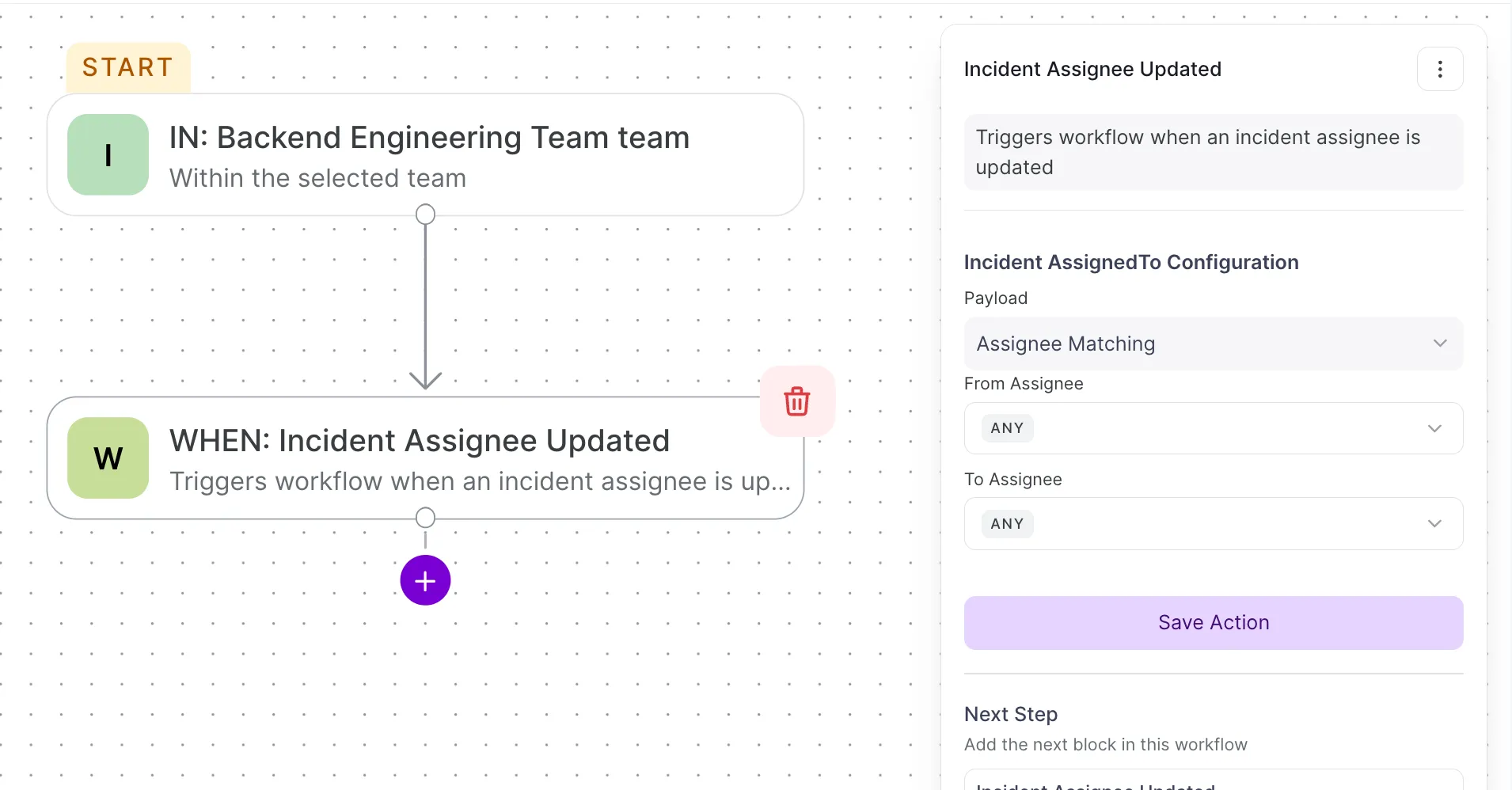
Incident Assignee Updated
Description: Activates when an incident is reassigned to a different user.
Configurable: From Assignee and To Assignee (defaults to ANY)
Example: Send an email to the newly assigned engineer with full incident details when ownership changes.
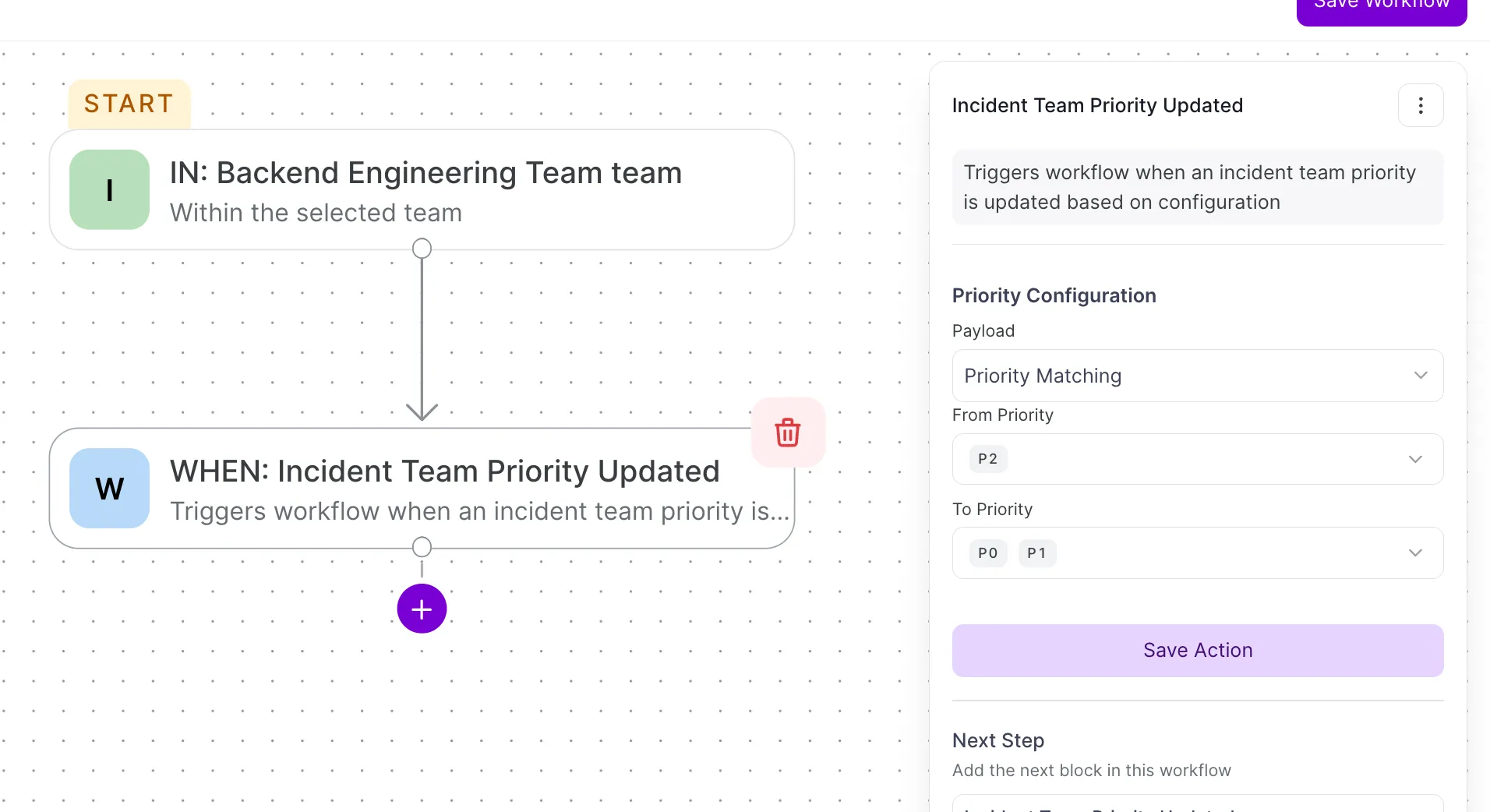
Incident Team Priority Updated
Description: Activates when the team priority of an incident changes.
Configurable: From Priority and To Priority (e.g. P2 to P0 or P1)
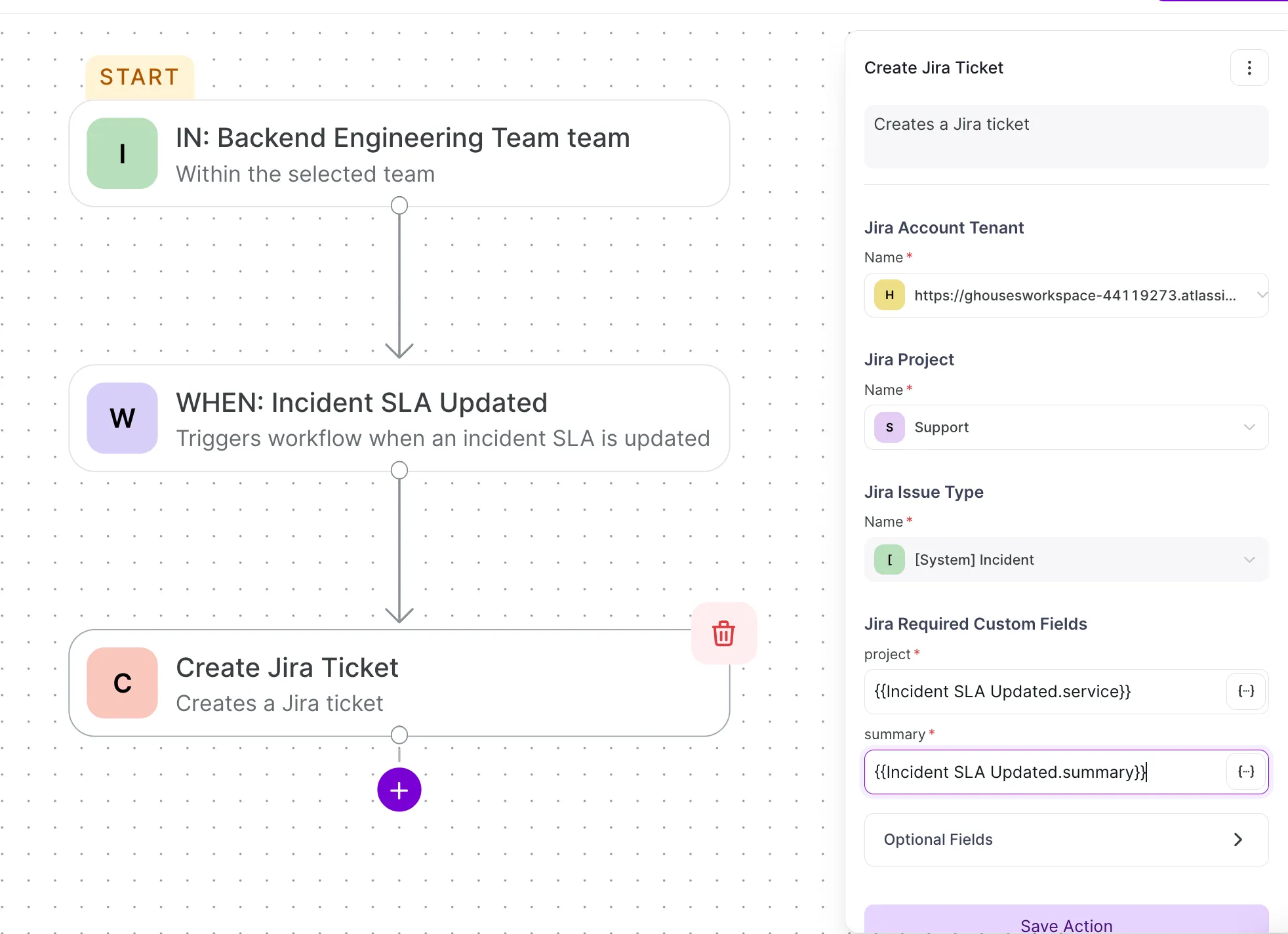
Example: Trigger a major incident workflow and create a Jira ticket when priority escalates from P2 to P0.
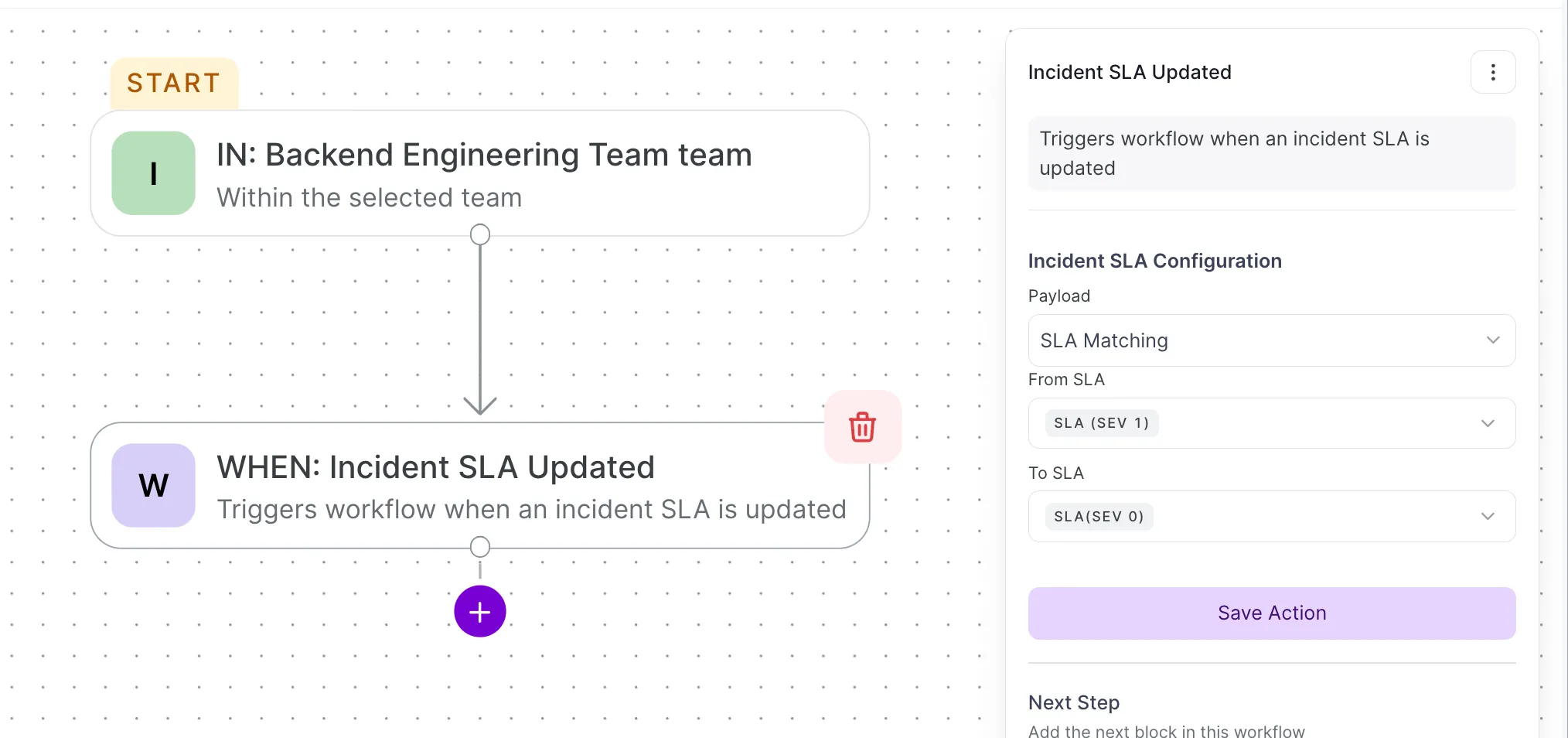
Incident SLA Updated
Description: Activates when the SLA associated with an incident is updated.
Configurable: From SLA and To SLA (e.g. SLA SEV1 to SLA SEV0)
Example: Notify the team manager via email when an incident SLA escalates from SEV1 to SEV0.
Context Variables
Context variables let you insert incident data into actions such as emails and webhooks. They are available for every trigger.
{{trigger_data.assigned_to}}: Assigned user (e.g. john.doe or null)
{{trigger_data.team_priority}}: Team priority UUID
Example: A workflow triggers when a new incident titled "Server Down" is created, using the "Incident Created" trigger to initiate automated steps.
Actions
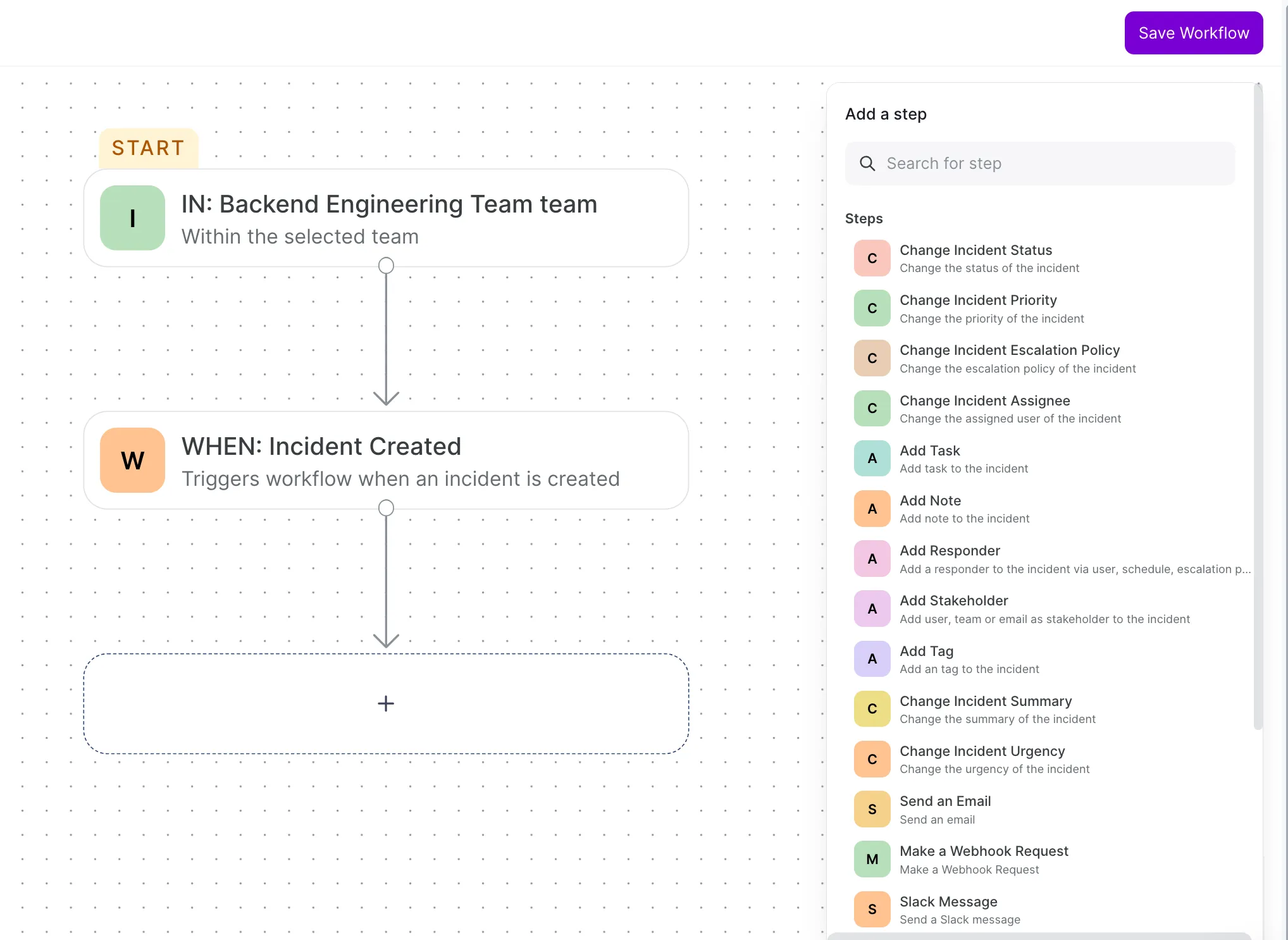
Actions are the operational steps executed within the workflow, defining what happens after a trigger. Users can chain multiple actions to handle incidents comprehensively.
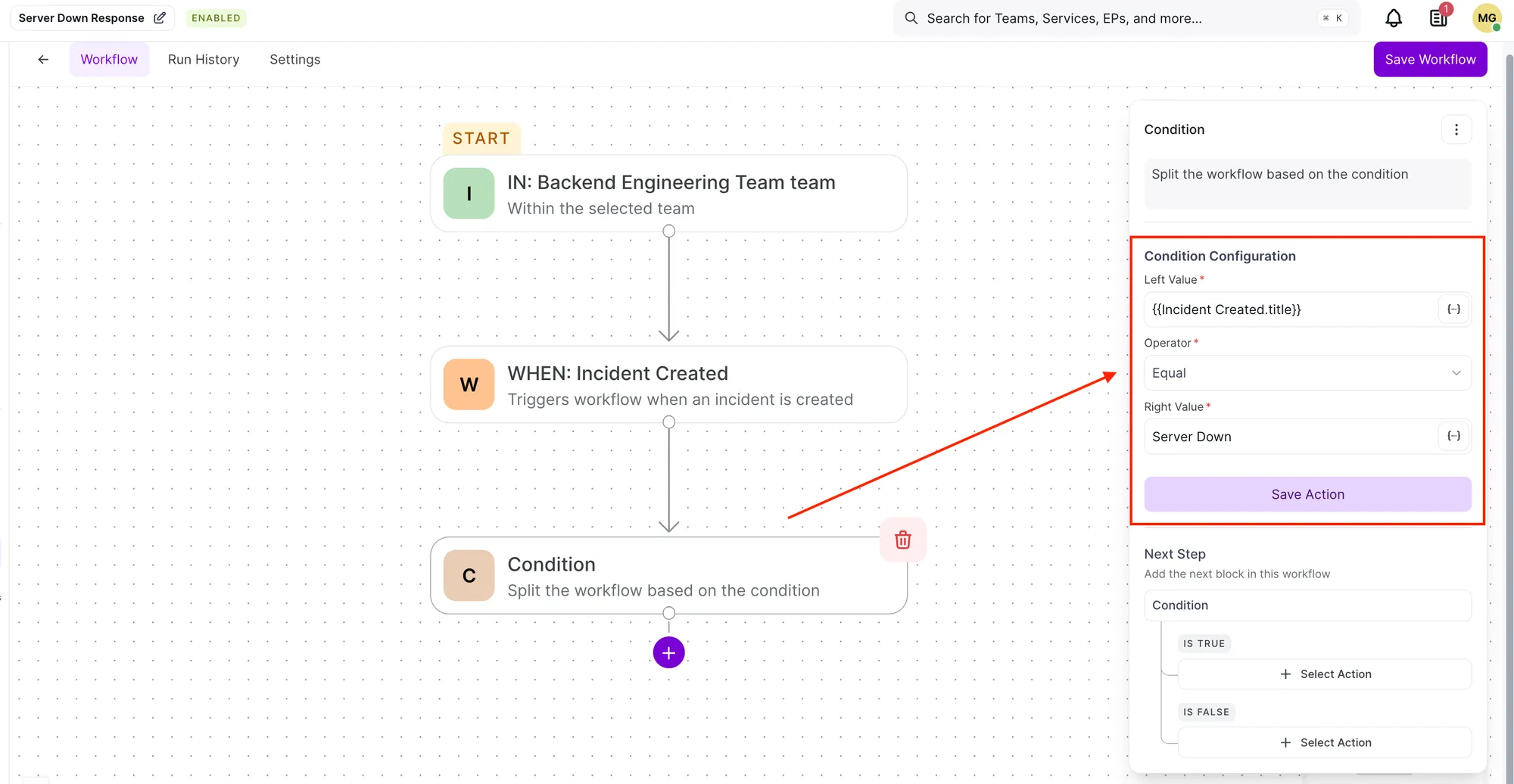
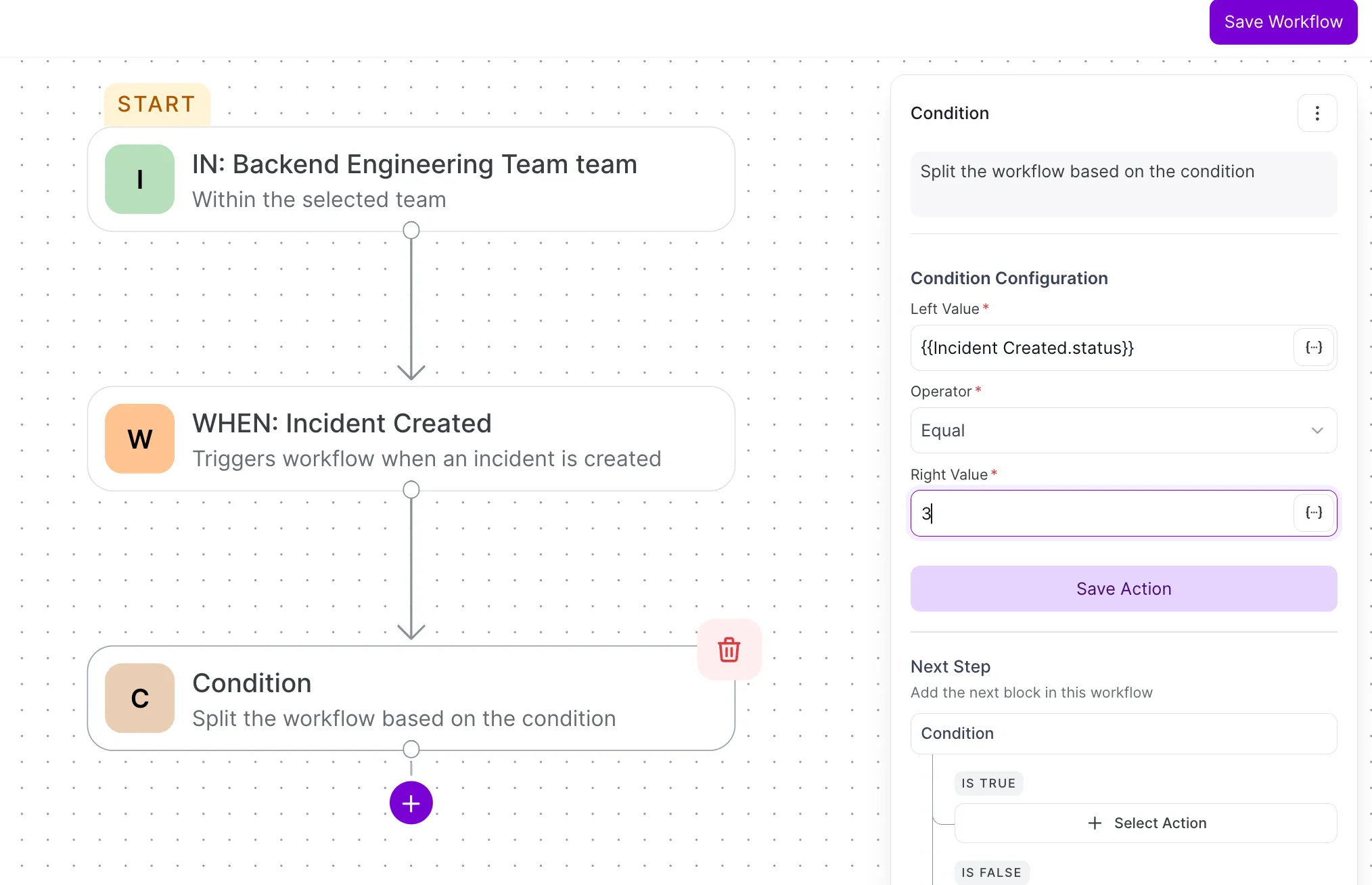
Conditions evaluate logic to branch the workflow, using "left value," "operator," and "right value," with True and False outcomes deciding the next steps.
Supported Operators
eq: Equal
neq: Not Equal
lt: Less Than
gt: Greater Than
lte: Less Than or Equal
gte: Greater Than or Equal
contains: Contains
does not contain: Does Not Contain
Parameters
left_value: the variable to evaluate (e.g. {{trigger_data.urgency}})
operator: the comparison operator (e.g. eq)
right_value: the value to compare against (e.g. 1)
Example: A condition checks if the incident status is Resolved: {"left_value": "{{Incident Created.status}}", "operator": "eq", "right_value": 3}. If true, it follows the next step; if false, it proceeds normally.
Delays
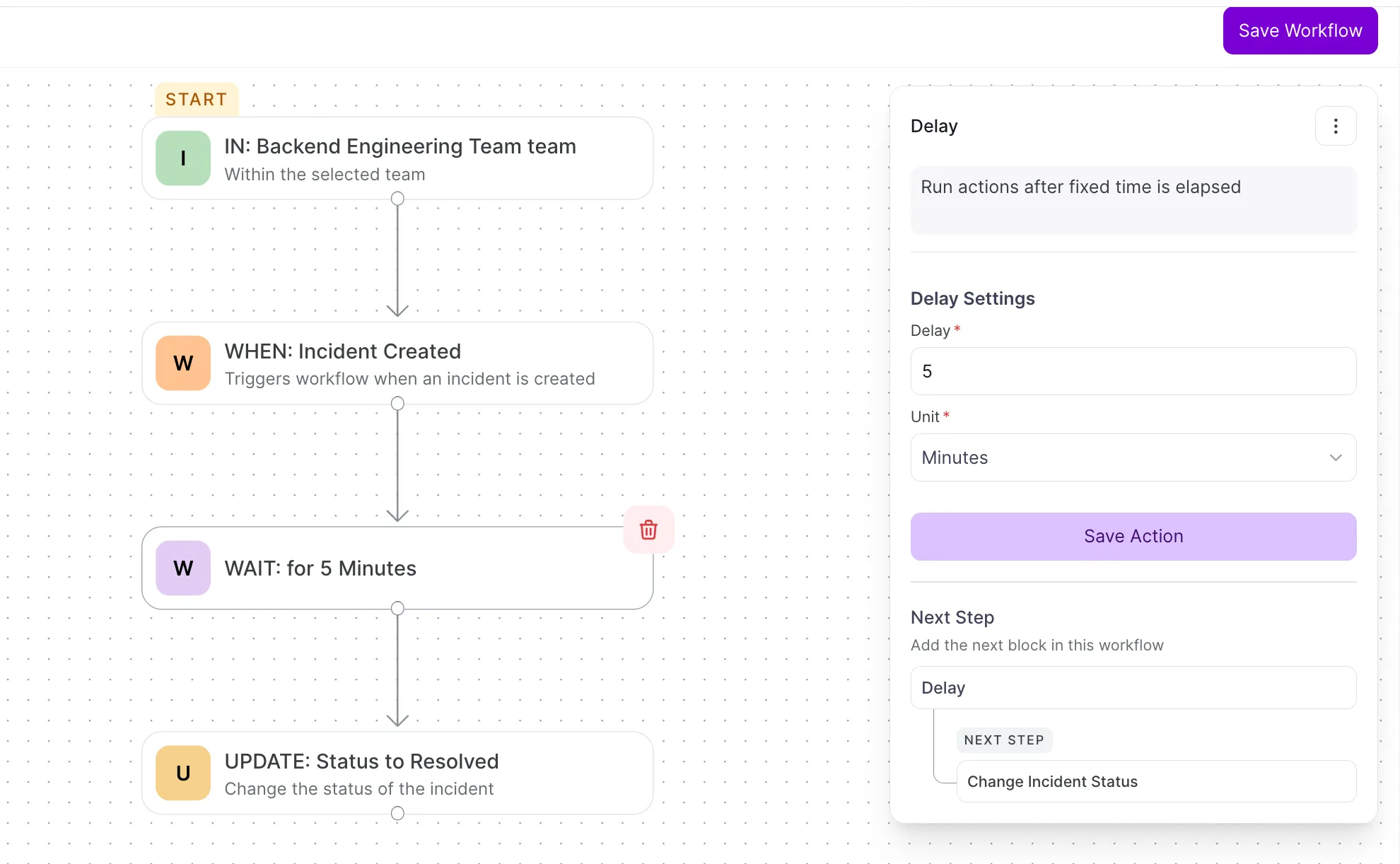
A delay pauses the workflow for a specified duration, allowing time for manual intervention or status updates.
Parameters
delay: number of time units (e.g. 15)
unit: time unit (minutes or seconds)
Example: A delay of 15 minutes {"delay": 15, "unit": "minutes"} waits before checking if an incident is resolved.
Use Cases and Examples
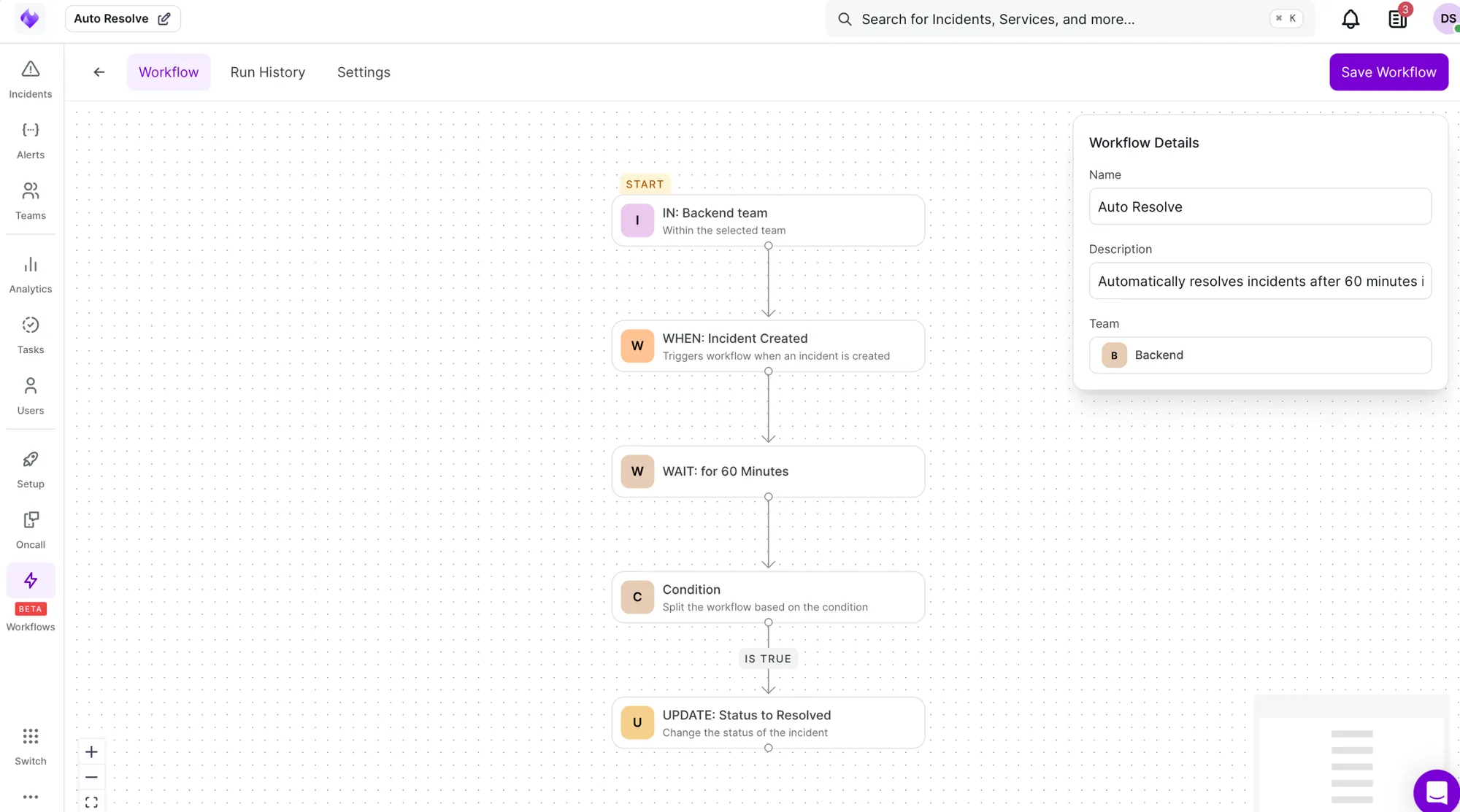
Use Case 1: Auto-Resolve an Incident
Automates the resolution of minor incidents after a 60-minute window.
Create the Workflow
Name: "Auto Resolve"
Description: "Automatically resolves incidents after 60 minutes if unresolved"
Team: Backend Team
Flow Steps
Trigger: "Incident Created" initiates the workflow
Delay: Wait 60 minutes to allow resolution attempts
Condition: Check if status is not "Resolved" ({{trigger_data.status}} not equal 3)
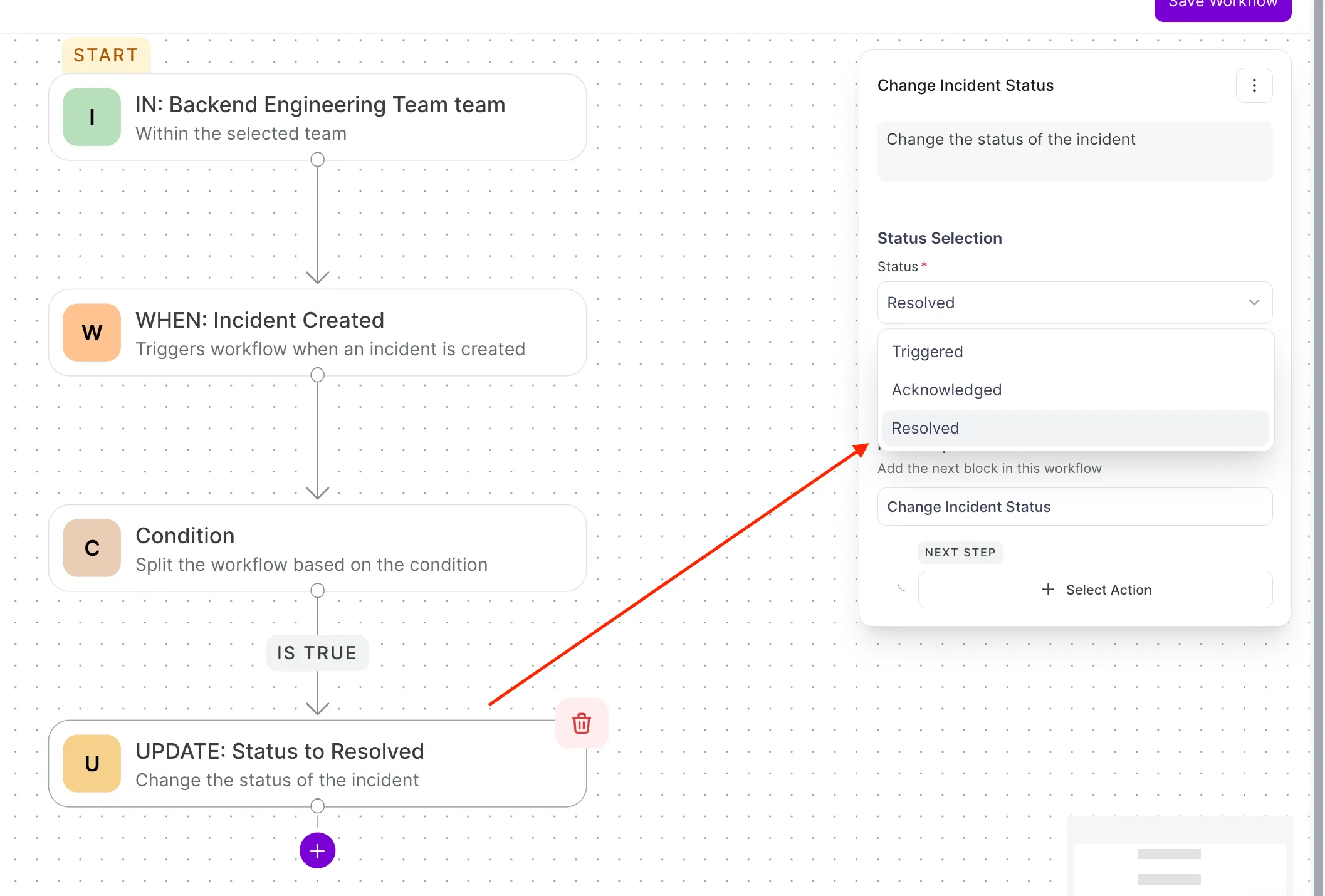
Action (True): Update status to "Resolved" ({"status": 3})
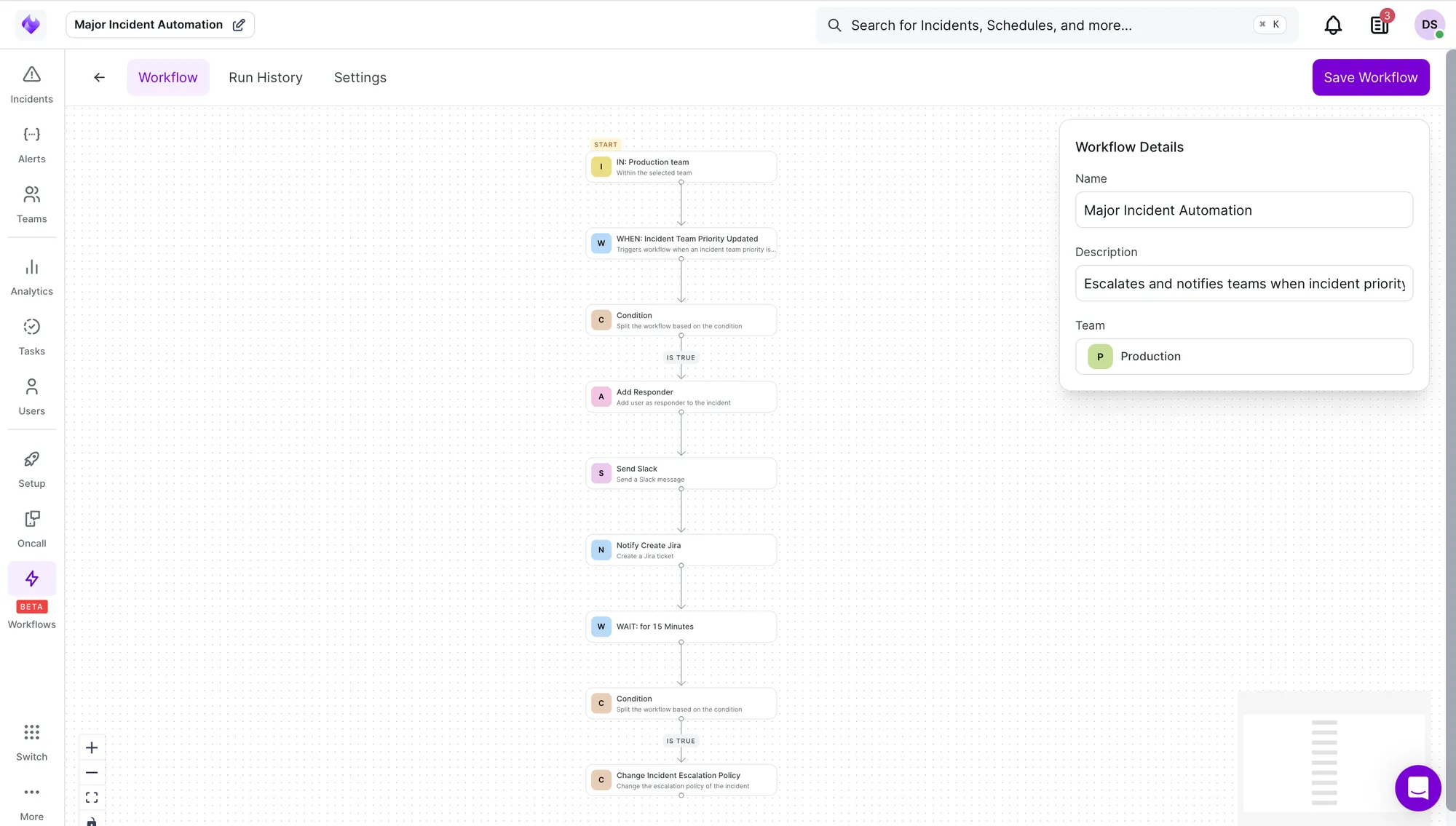
Use Case 2: Major Incident Workflow — P0 Incident Updates
Manages critical P0 incidents with timely updates.
Create the Workflow
Name: "Major Incident Workflow"
Description: "Sending updates for P0 incidents"
Team: API Team
Flow Steps
Trigger: "Incident Created" starts the process
Condition: Check if team priority is P0 ({{trigger_data.team_priority}} eq your P0 priority UUID)
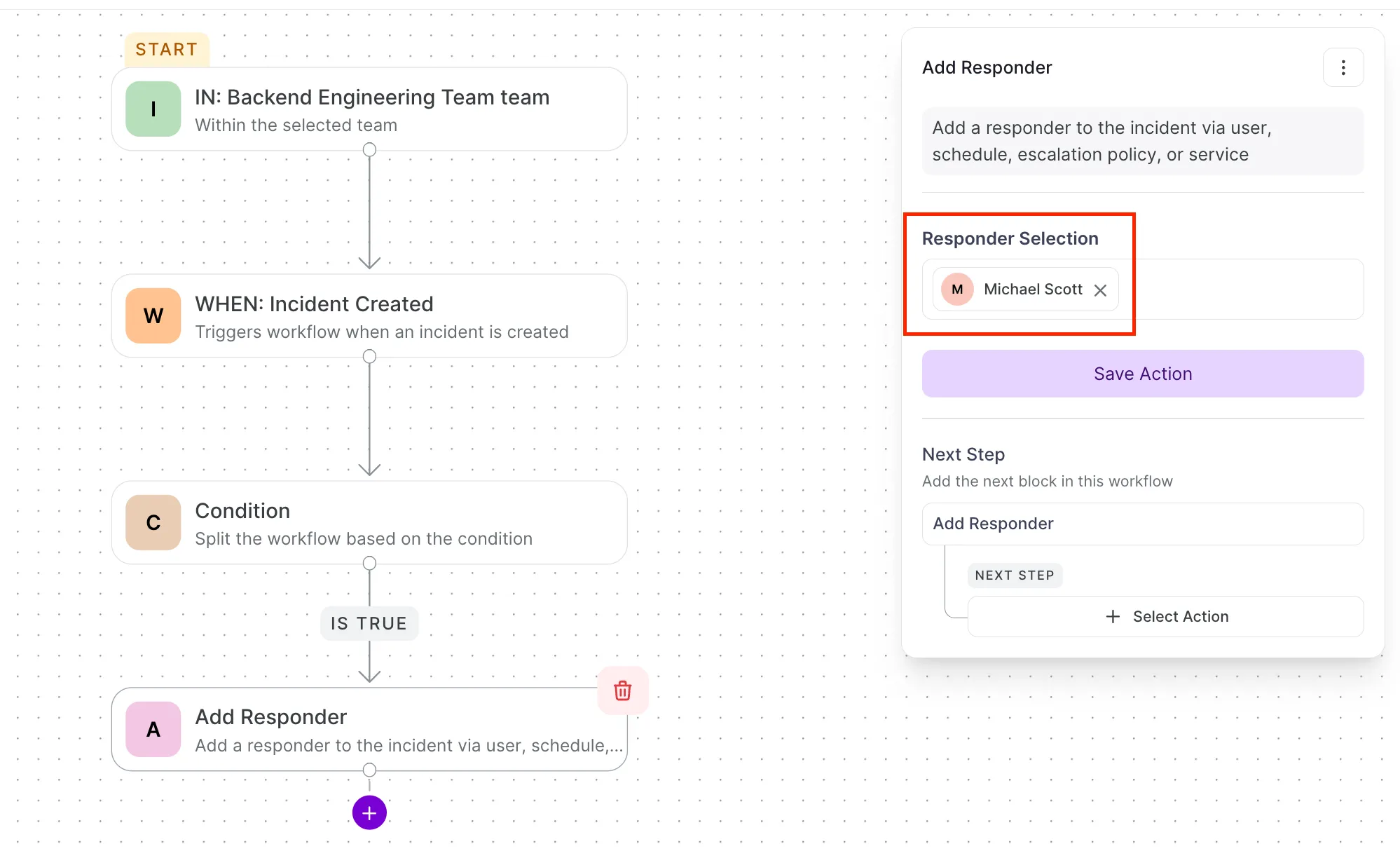
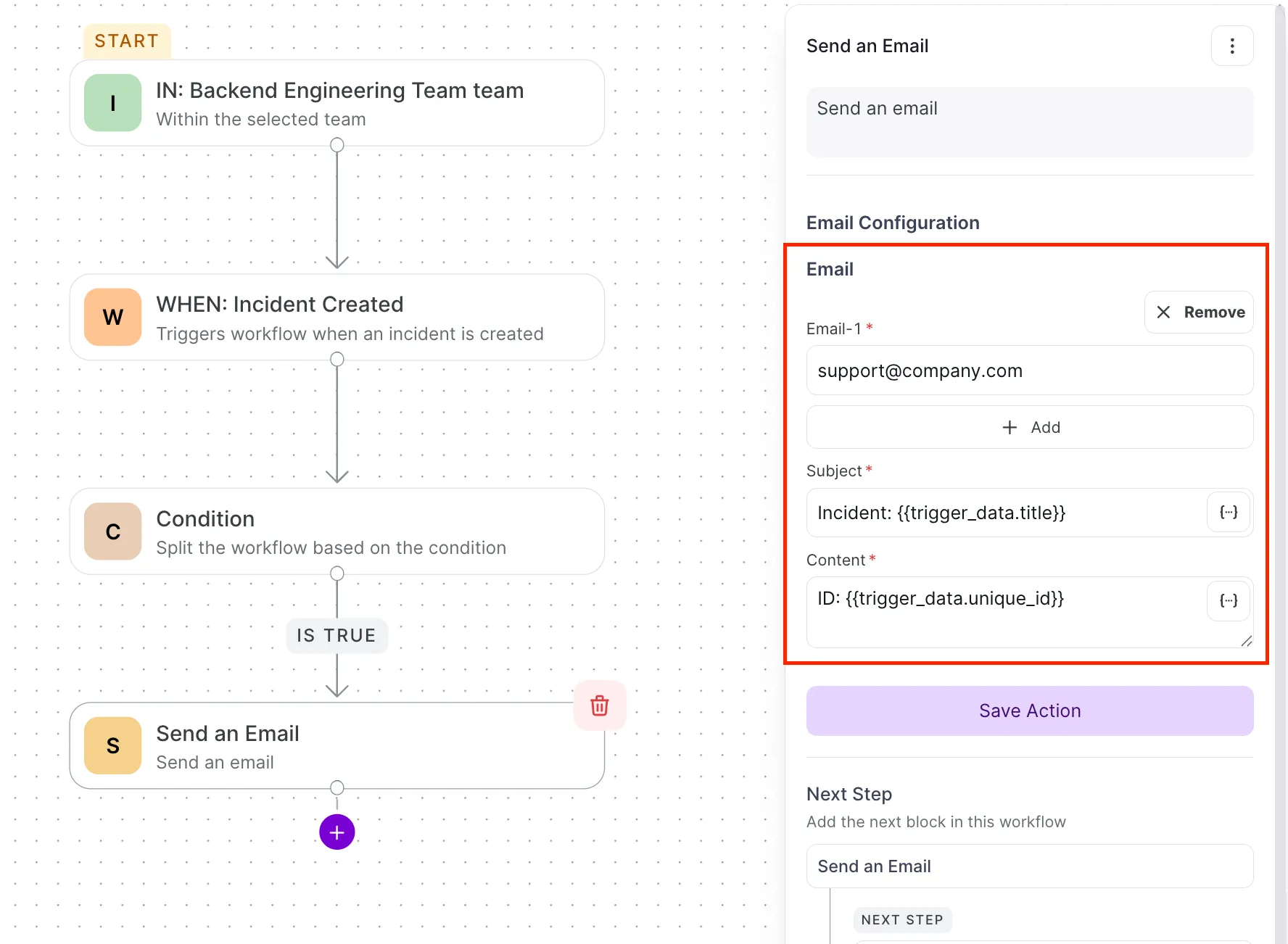
Action (True): Add responder "Michael", then send an email to support@acme.org with subject "P0 Incident Detected: {{trigger_data.title}} (Incident #{{trigger_data.incident_number}})"
Delay: Wait 15 minutes
Condition: Check if status is "Resolved" ({{trigger_data.status}} eq 3)
Action (True): Send resolution email to support@acme.org
Note: The team priority condition uses the priority's UUID, which you can find in your team's priority settings.
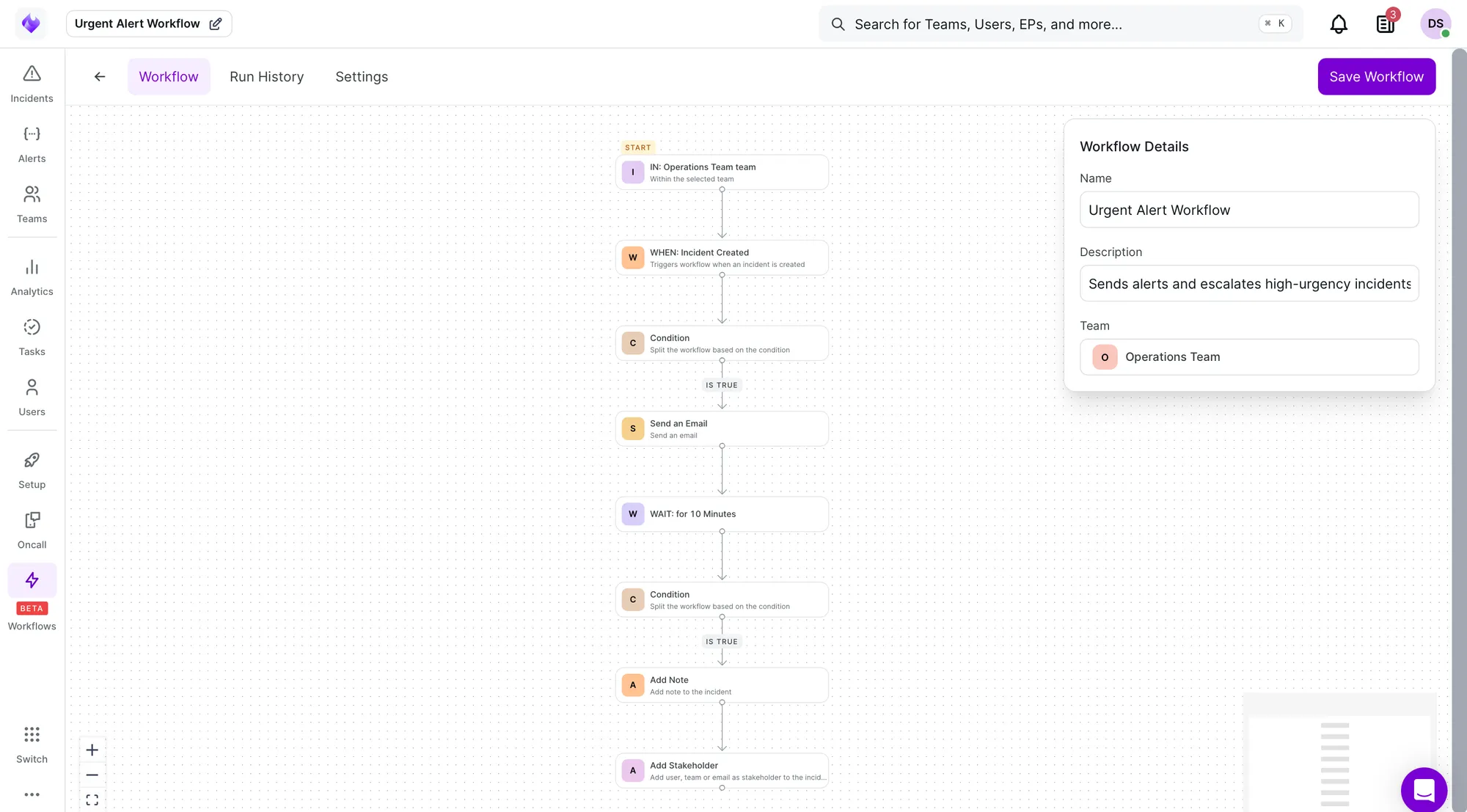
Use Case 3: Proactive Monitoring Alert
Automate notifications for incidents requiring immediate attention based on urgency.
Create the Workflow
Name: "Urgent Alert Workflow"
Description: "Sends alerts for high-urgency incidents"
Team: Operations Team
Flow Steps
Trigger: "Incident Created" starts the workflow
Condition: Check if urgency is "High" ({{trigger_data.urgency}} eq 1)
Action (True): Send email to ops@acme.org with urgent alert
Delay: Wait 10 minutes
Condition: Check if status is not "Resolved" ({{trigger_data.status}} neq 3)
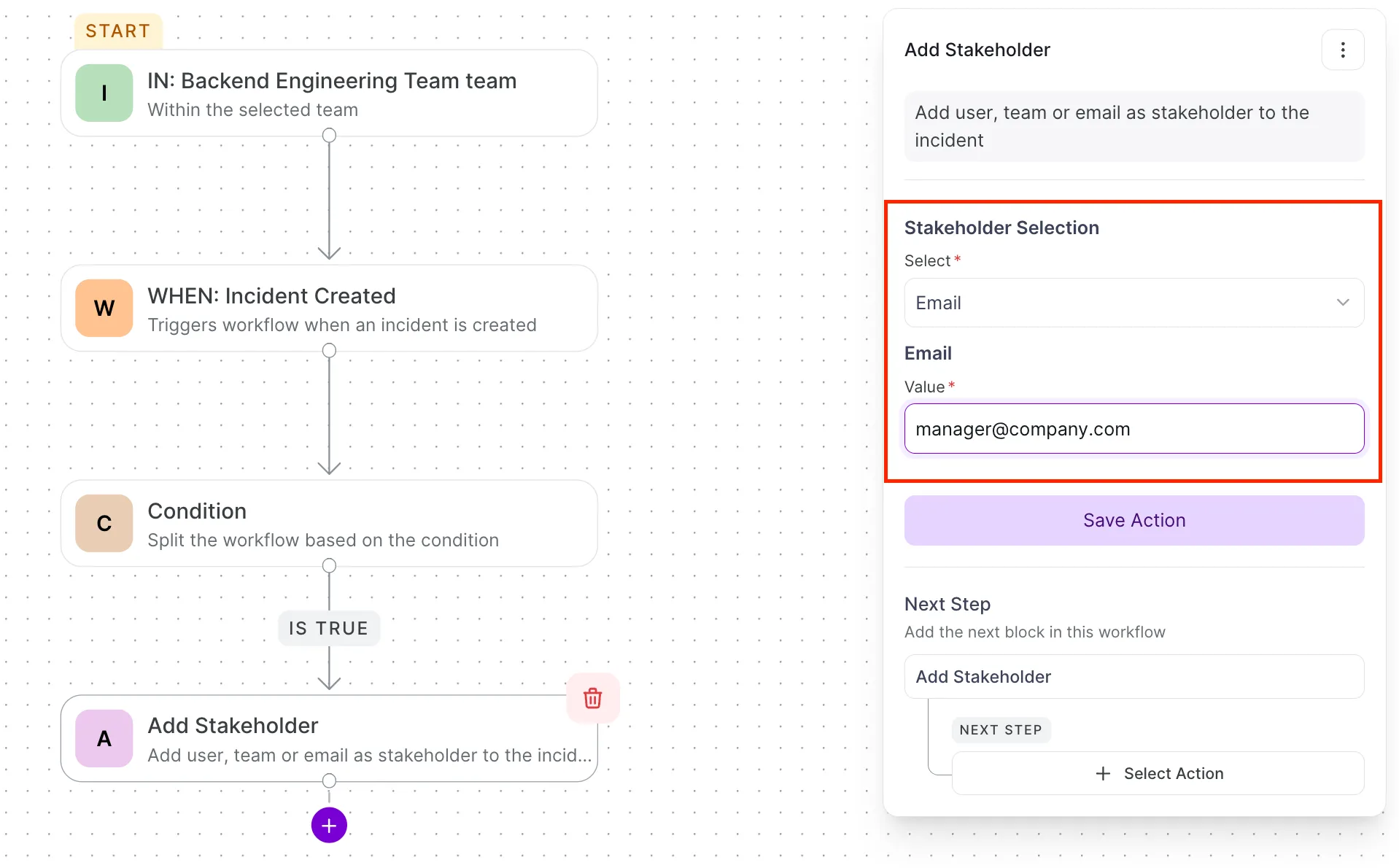
Action (True): Add note about ongoing triage, then add stakeholder manager@company.com
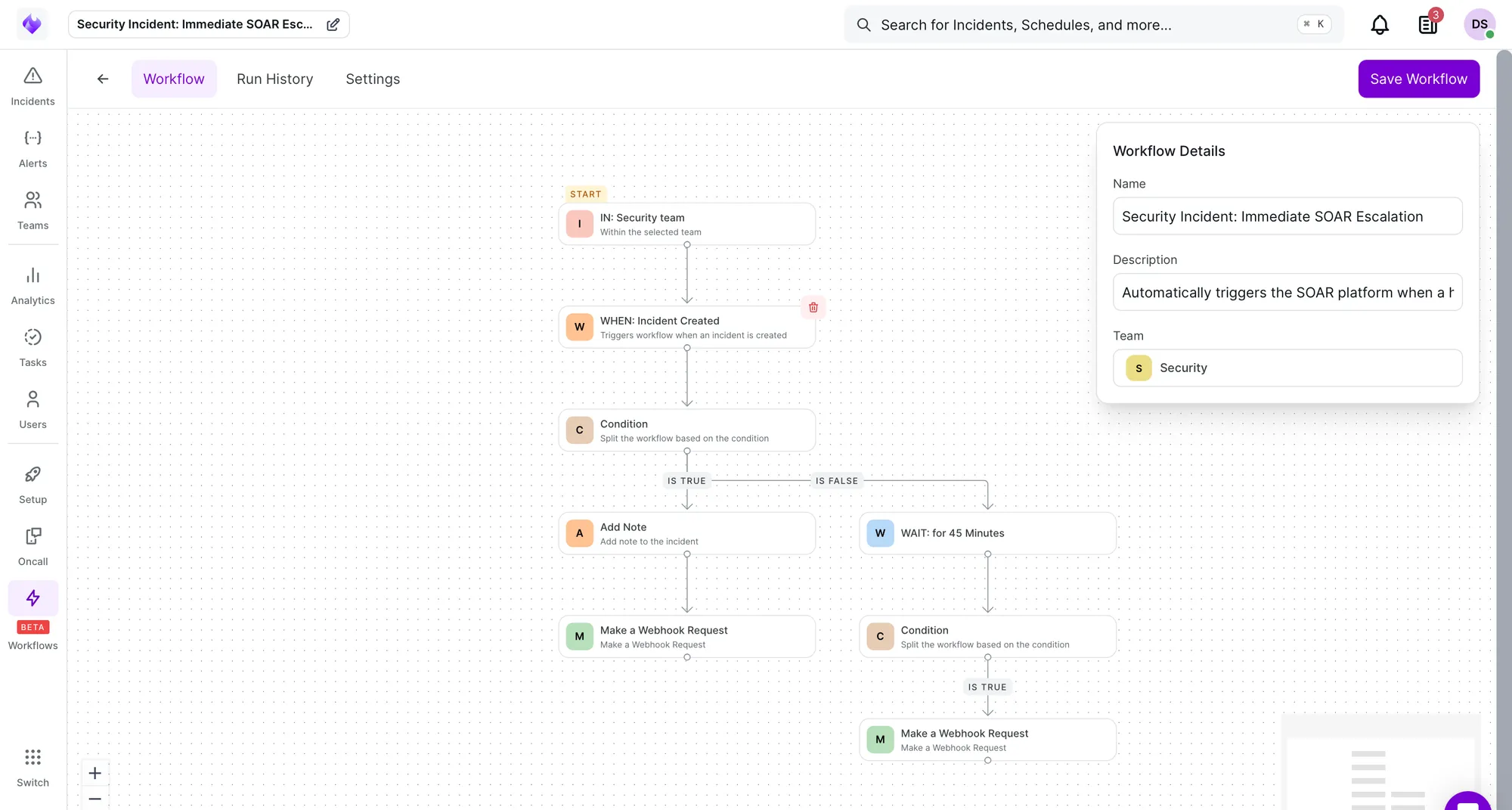
Use Case 4: Security Incident — Delayed SOAR Escalation
Automatically escalates critical P0 security incidents to the SOAR platform.
Create the Workflow
Name: "SOAR Escalation"
Description: "Escalates P0 security incidents to SOAR"
Examine Delay Timing: Verify delay duration aligns with expected behaviour
Check Condition Branches: Ensure delays are placed in the correct branch of conditional logic
Frequently Asked Questions
What happens if a delay exceeds the incident resolution time? The workflow continues after the delay and checks the latest incident status. If the incident is already resolved, condition logic can prevent unnecessary actions.
Are there limits on the number of actions per workflow? There are no strict limits, but workflows should remain efficient and focused.
Can I edit a workflow after it's created? Yes, changes take effect immediately for new trigger events.
Can workflows trigger other workflows? Yes, if a workflow action updates an incident property (like status or priority), it can trigger another workflow listening for that specific update.
For additional help, contact support with your workflow details and logs.


























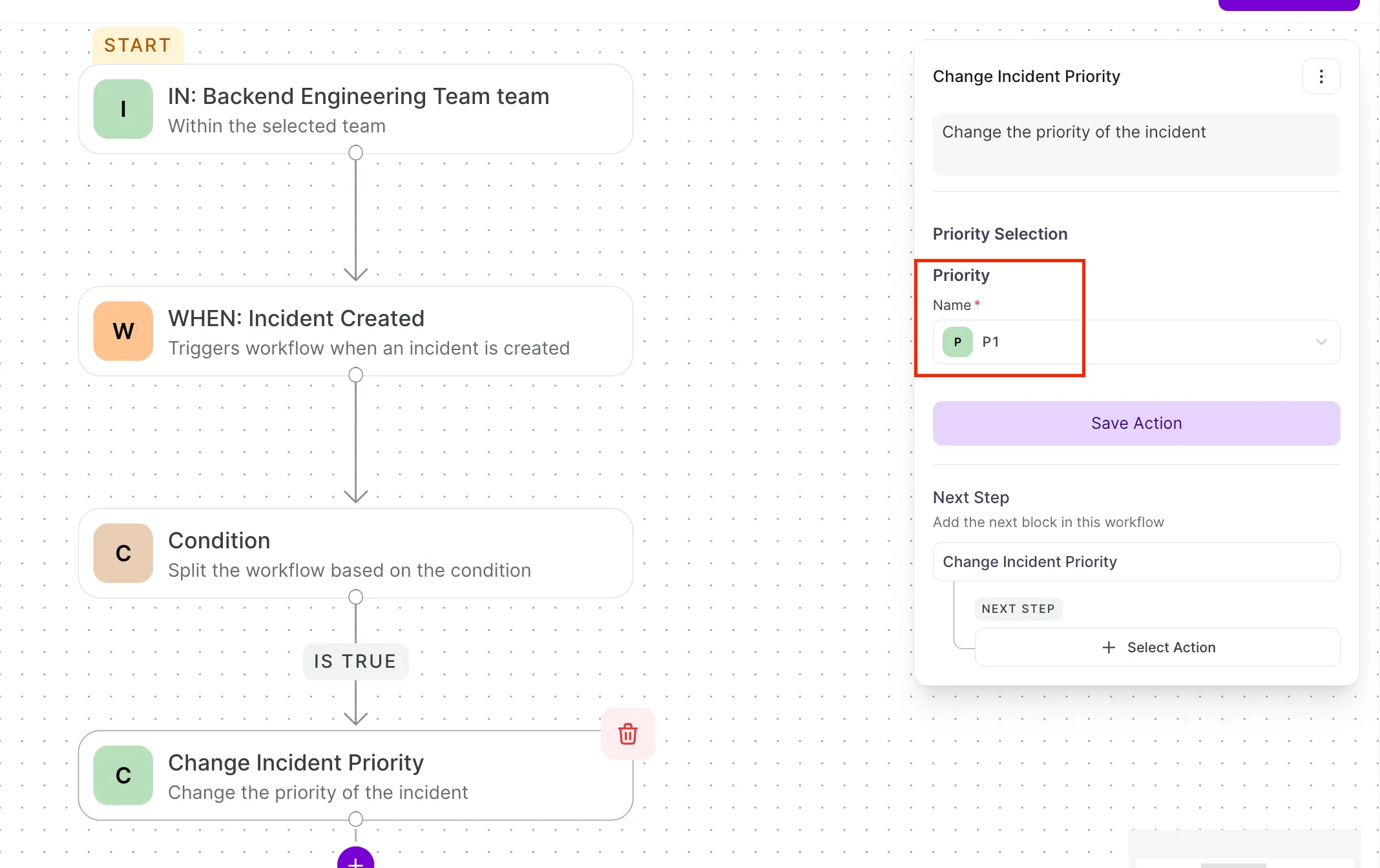
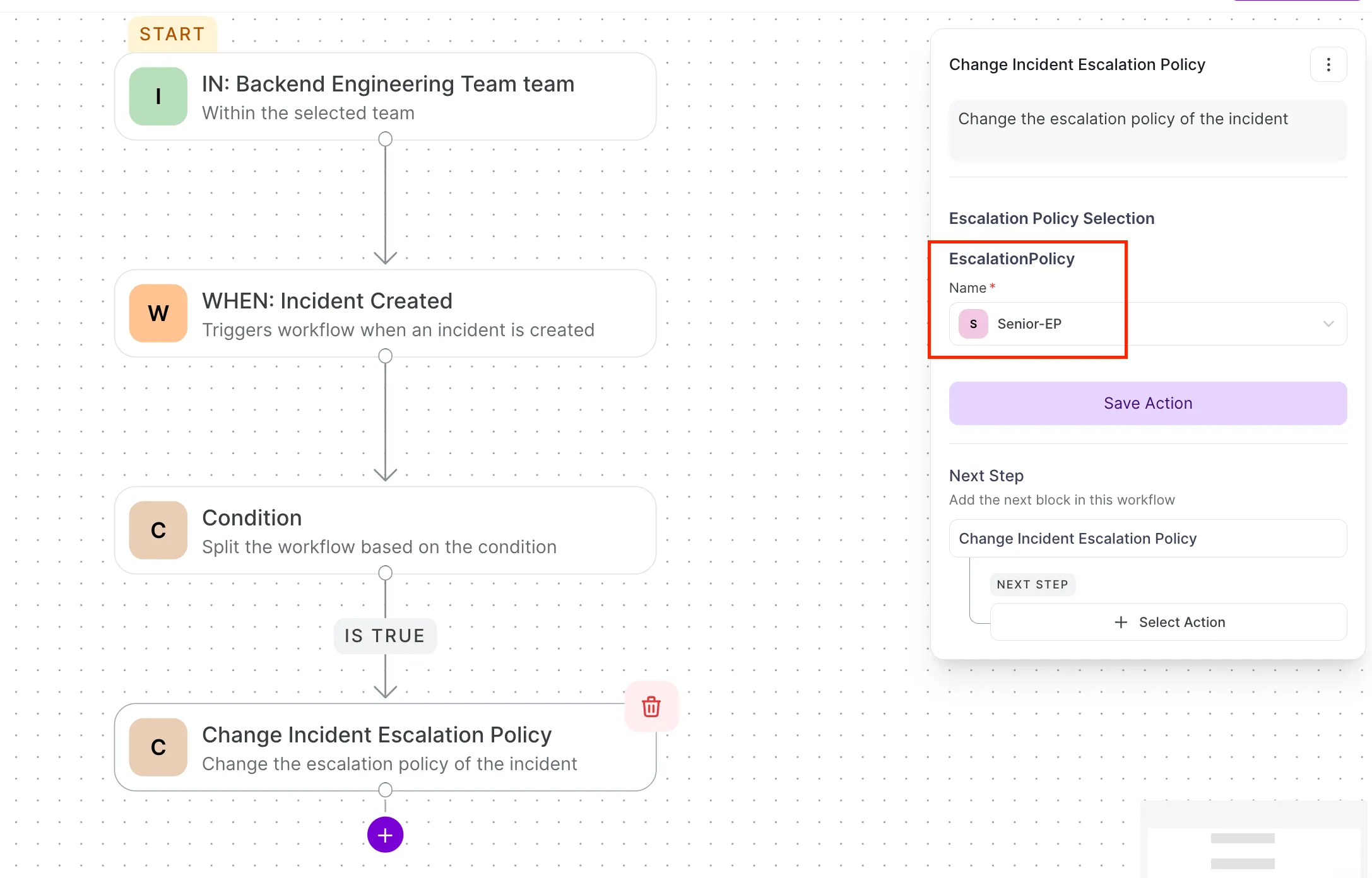



.webp)
.webp)