




Blog
Insights & updates from our experts


Resolve plant floor and IT issues before they disrupt production.

Stay audit-ready while resolving issues and reducing operational risk.
Resolve issues quickly with an AI-powered system that automates ticketing.
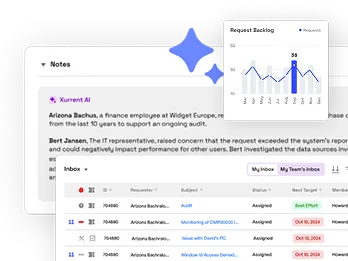
Unifiy IT, HR, Facilities, Finance, and more on a single, AI-powered service platform.
Simplify on-call scheduling, automate escalations, and reduce burnout.
Automate postmortems, AI summaries, and post-incident workflows
Create, organize, and continuously improve your knowledge base to find the right answers with Sera AI.
We're here to help

The integration with Atlassian Jira using the Xurrent Integration Service is

The integration with Atlassian Jira using the Xurrent Integration Service is

The integration with Atlassian Jira using the Xurrent Integration Service is

The integration with Atlassian Jira using the Xurrent Integration Service is

The integration with Atlassian Jira using the Xurrent Integration Service is

The integration with Atlassian Jira using the Xurrent Integration Service is

The integration with Atlassian Jira using the Xurrent Integration Service is

The integration with Atlassian Jira using the Xurrent Integration Service is
Resolve issues quickly with an AI-powered system that automates ticketing.
Unifiy IT, HR, Facilities, Finance, and more on a single, AI-powered service platform.
Simplify on-call scheduling, automate escalations, and reduce burnout.
Automate postmortems, AI summaries, and post-incident workflows
Create, organize, and continuously improve your knowledge base to find the right answers with Sera AI.
Resolve plant floor and IT issues before they disrupt production.
Stay audit-ready while resolving issues and reducing operational risk.

Detect, respond, and resolve incidents fast to cut downtime and MTTR.

Keep your store online, even during your biggest sales moments.

Protect patient data and resolve issues fast, so care teams stay focused on care.

Standardize service delivery across every store and channel.

We are here to help 24/7

Connect with other Xurrent Users

Get insights and tips on how to get the most out of Xurrent

Apps, APIs, and updates

Xurrent service functionality

Eliminate manual tasks, optimize workflows, and deliver faster resolutions.
Learn how organizations have reduced downtime, improved 50% MTTA & MTTR, and cut costs with Xurrent IMR.
Discover Xurrent IMR's quick support, bidirectional integrations with Jira and Slack, and more cohesive incident response capabilities compared to Opsgenie.
Understand why users value Xurrent IMR for its intuitive interface, efficient incident alerting, customizable On-call schedules, and escalations.

What each of the two administrator roles controls, and how shared master data lives in the directory account.
Xurrent has two administrator roles. The Account Administrator governs a single account. The Directory Administrator governs the shared records in the directory account and can reach across the support domain accounts linked to it. Between them they configure account-wide settings, the Settings console, support domains, and the shared master data, Organizations, People, Sites, and Teams, that the rest of the platform depends on.
| Capability | Account Administrator | Directory Administrator |
|---|---|---|
| Maintain the account's configuration | Yes | No |
| Grant or revoke roles to people | In this account | In the directory account, its support domain accounts, and any roles trusted accounts have made available |
| Establish trust relations with other accounts | Yes | No |
| Add or edit Organizations, Teams, People, Sites, Calendars, Holidays, Broadcasts | Yes, in this account | Organizations, People, Sites of the directory account, plus Broadcasts |
| Activate integrations, including single sign-on | Yes | Yes |
| See all fields of all records | Yes, all fields and audit trails, except invoices | All fields of directory account Organizations, People, and Sites |
| Modify all fields of a workflow and project task regardless of who manages it | Yes | No |
A directory account holds shared Organization, Person, and Site records and links them to each support domain account. That means master data is maintained once and reused, rather than duplicated per account. The two administrator roles map onto that split: one owns the shared records, the other owns a single account's configuration.
See Roles Overview for the full role list, Account Trust for cross-account relationships, and Accounts for the account model.



.webp)
.webp)