


Blog
Insights & updates from our experts


Resolve plant floor and IT issues before they disrupt production.

Stay audit-ready while resolving issues and reducing operational risk.
Resolve issues quickly with an AI-powered system that automates ticketing.
Unifiy IT, HR, Facilities, Finance, and more on a single, AI-powered service platform.
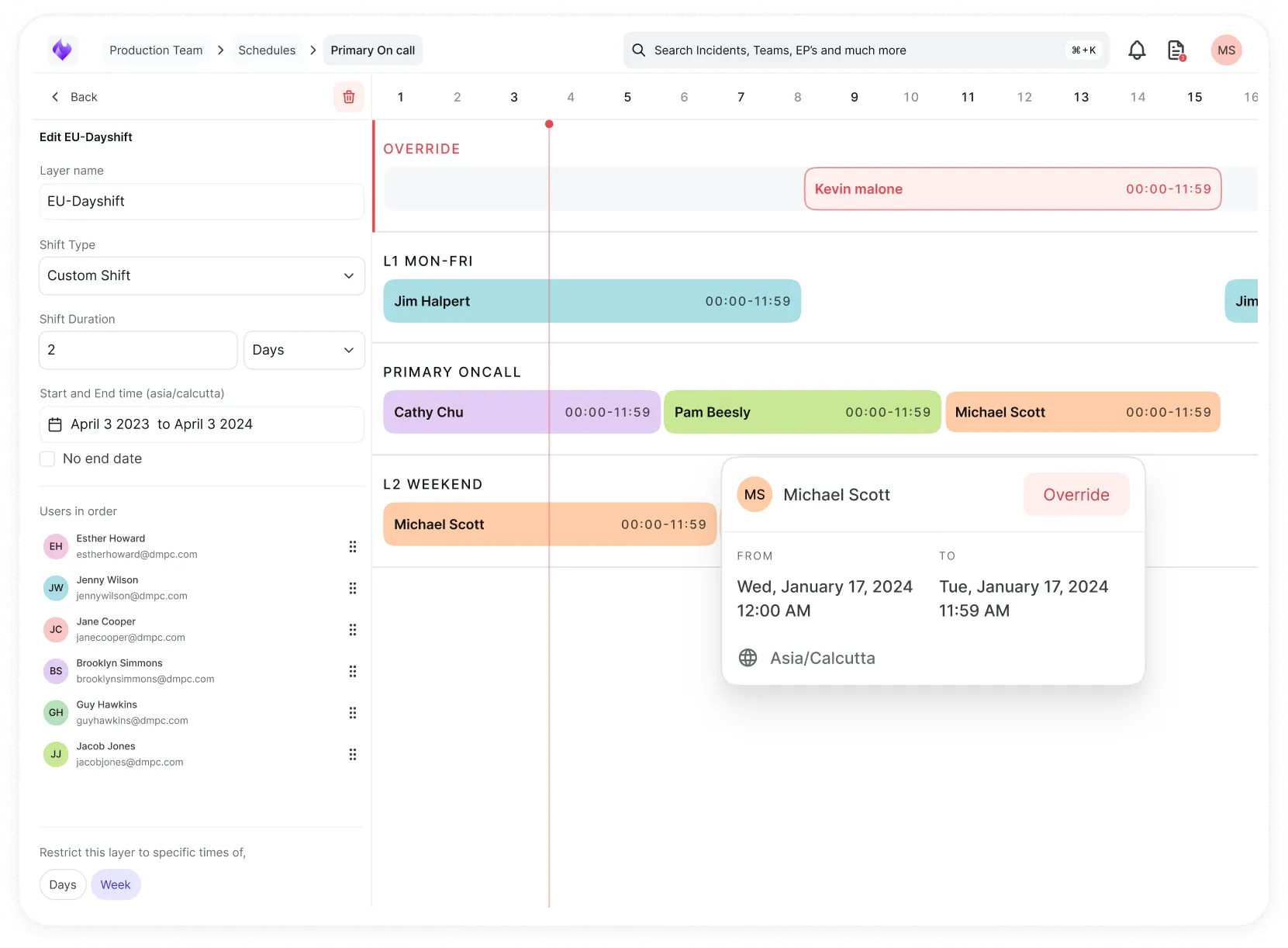
Simplify on-call scheduling, automate escalations, and reduce burnout.
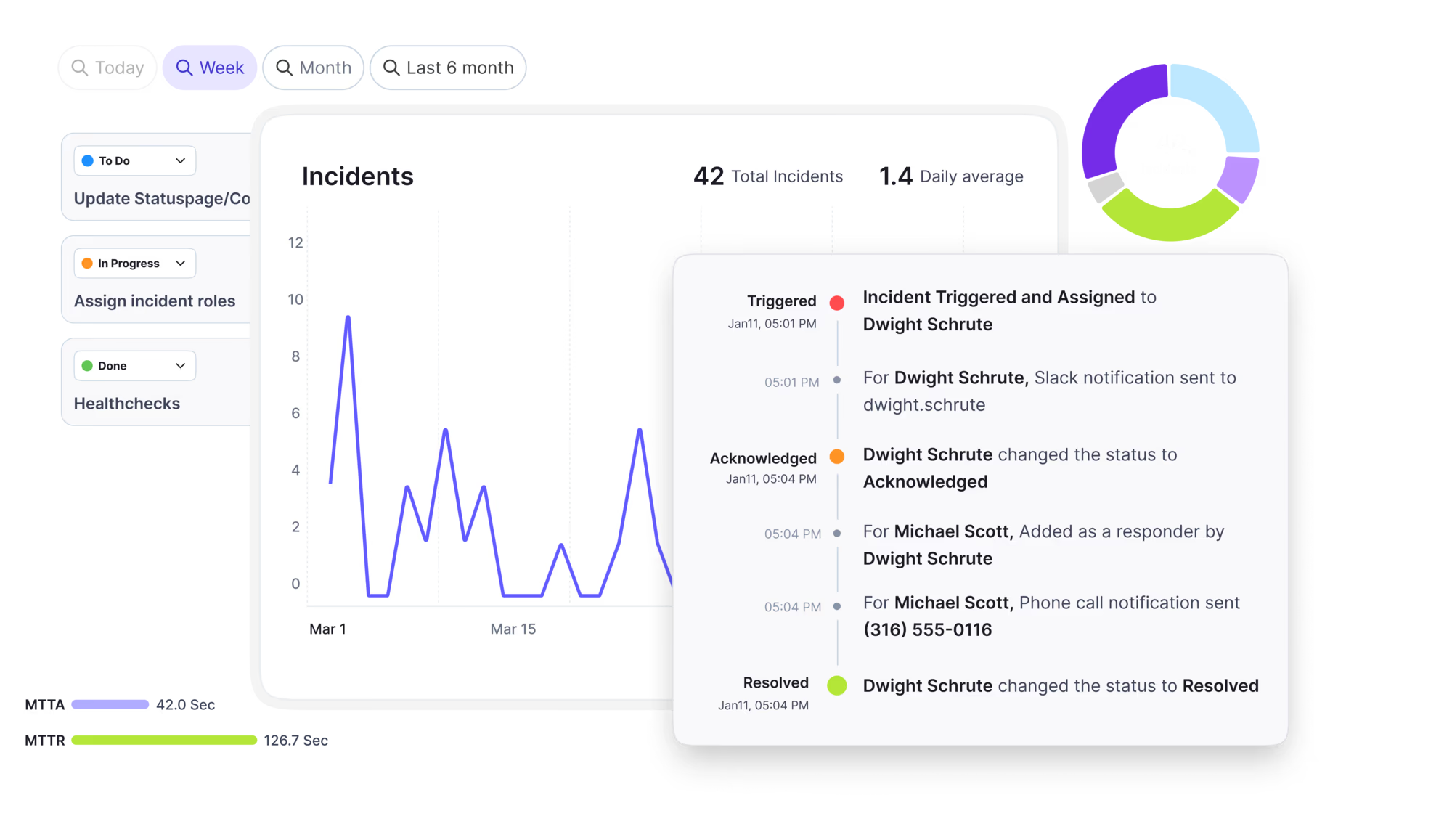
Automate postmortems, AI summaries, and post-incident workflows
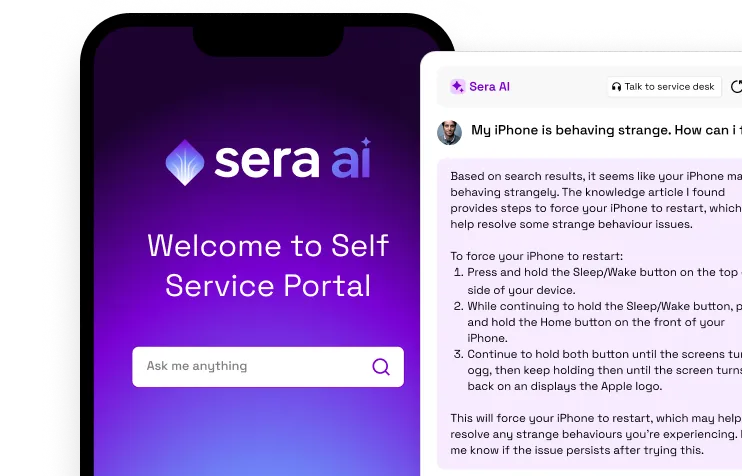
Create, organize, and continuously improve your knowledge base to find the right answers with Sera AI.
We're here to help

The integration with Atlassian Jira using the Xurrent Integration Service is

The integration with Atlassian Jira using the Xurrent Integration Service is

The integration with Atlassian Jira using the Xurrent Integration Service is

The integration with Atlassian Jira using the Xurrent Integration Service is

The integration with Atlassian Jira using the Xurrent Integration Service is

The integration with Atlassian Jira using the Xurrent Integration Service is

The integration with Atlassian Jira using the Xurrent Integration Service is

The integration with Atlassian Jira using the Xurrent Integration Service is
Resolve issues quickly with an AI-powered system that automates ticketing.
Unifiy IT, HR, Facilities, Finance, and more on a single, AI-powered service platform.
Simplify on-call scheduling, automate escalations, and reduce burnout.
Automate postmortems, AI summaries, and post-incident workflows
Create, organize, and continuously improve your knowledge base to find the right answers with Sera AI.
Resolve plant floor and IT issues before they disrupt production.
Stay audit-ready while resolving issues and reducing operational risk.

Detect, respond, and resolve incidents fast to cut downtime and MTTR.

Keep your store online, even during your biggest sales moments.

Protect patient data and resolve issues fast, so care teams stay focused on care.

Standardize service delivery across every store and channel.

We are here to help 24/7

Connect with other Xurrent Users

Get insights and tips on how to get the most out of Xurrent

Apps, APIs, and updates

Xurrent service functionality

Eliminate manual tasks, optimize workflows, and deliver faster resolutions.
Learn how organizations have reduced downtime, improved 50% MTTA & MTTR, and cut costs with Xurrent IMR.
Discover Xurrent IMR's quick support, bidirectional integrations with Jira and Slack, and more cohesive incident response capabilities compared to Opsgenie.
Understand why users value Xurrent IMR for its intuitive interface, efficient incident alerting, customizable On-call schedules, and escalations.
The block below is the intro paragraph to this blog post, but it's in Klingon. Why Klingon? Read it and you will see. You can toggle between Klingon and English using the button we provided. Happy reading!
Pink 26 is not a massive event. Thirty exhibitors, housed in a single room in a Vegas hotel. No concerts, no famous keynote speakers flown in for the occasion, no parties that end at 2 AM.
That's not a knock on the event. It's the point.
"This was not the ultra sexy Lamborghini show of the IT world. This was a 30-exhibitor showcase with people who have been going to the show for 30-plus years. Credibility and authenticity seem to be the two biggest hallmarks of the Pink 26 show."
Most conferences reward scale. Pink rewards substance. Those are two very different things.
Xurrent came in not entirely sure what to expect — boldly going to a new conference for the first time has a way of keeping you humble. That uncertainty disappeared quickly. The attendees weren't there because the conference happened to be near somewhere they were already going. They made the trip specifically to talk IT — and they came prepared.
Here's the clearest signal that Pink is a different kind of conference: the questions.
At large trade shows, the typical attendee interaction goes something like this — a few surface-level questions, some polite nodding, an exchange of contact information that may or may not lead anywhere. The questions are usually about capability. Can your platform do X? Does it integrate with Y?
At Pink, the questions had already moved past that.
"The questions were very specific, very niche. It wasn't 'Can you do this?' It was 'How do you do that?' And I think that's something that would be new for a lot of folks who haven't been placed in that situation."
This matters because "how" is a buying question. "can" is a browsing question.
Attendees came with notes from internal discussions. They knew their vendor requirements. They had already aligned with their leadership on what AI questions were relevant to their company's direction.
Some sent their most senior IT person — in smaller organizations, that was a senior manager. Others sent their CIO directly.
This is a practitioner conference. The room assumes you know what service management is. What people want to understand is how you specifically do it — and whether that matches what they need.
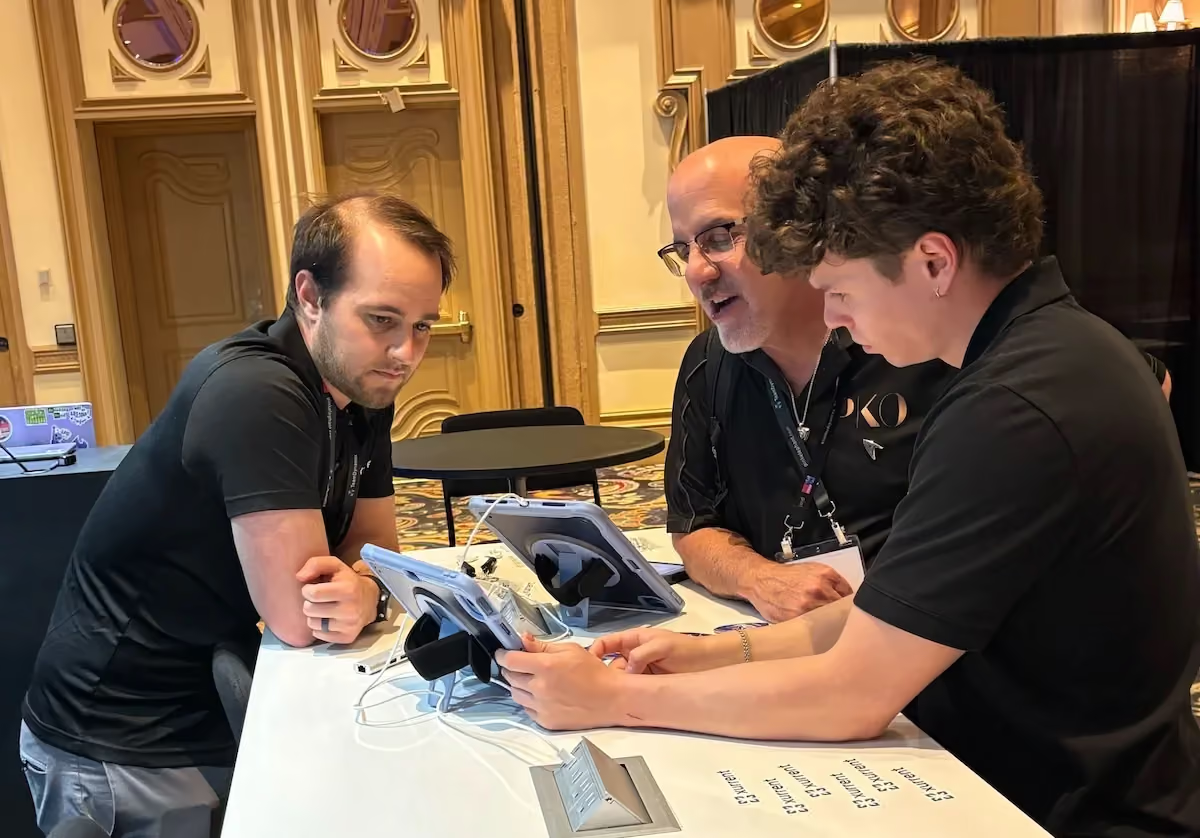
One of the more interesting dynamics at large trade shows is the subtle pressure to move quickly. When hundreds of people walk past your booth each hour, a long conversation starts to feel like a missed opportunity.
Pink flips that entirely.
"When there's someone in front of you that's curious, that's asking questions, that wants to understand more — at some of the larger shows, you're almost incentivized to end that conversation as quickly as possible so you can get on to the next one. Here at Pink, there wasn't really a line of people always lining up to talk to you."
The absence of foot traffic pressure is, paradoxically, what makes deeper conversations possible.
What filled that space instead was something genuinely unusual: attendees from different industries, standing together at the booth at the same time, riffing off each other's questions. Someone from manufacturing would mention a challenge, and someone from healthcare would say "that's exactly what we're seeing." The exhibitor becomes a moderator as much as a presenter — which, for a technical product that needs more than 30 seconds to explain, is the best possible format. Nobody was looking to beam out of the conversation early.
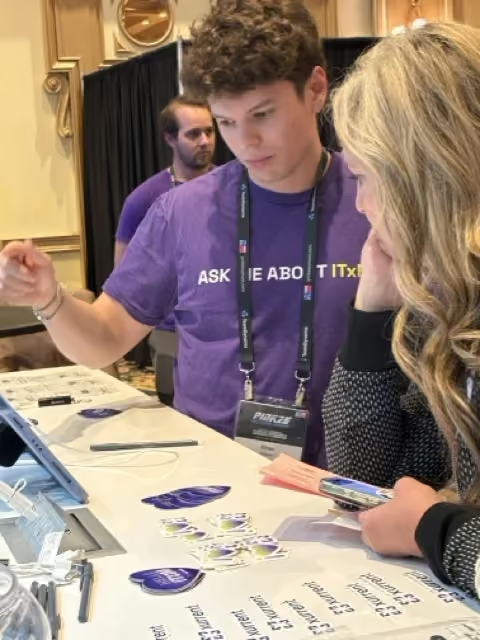
Xurrent had a product manager at the booth the entire time. He would regularly offer to pull up the product roadmap for anyone who wanted to go deeper. That level of access — being able to say "I can show you where this is heading, not just where it is" — is something that doesn't happen in a crowded hall.
Something else worth mentioning: Pink attendees were remarkably direct when something wasn't a fit.
"They would quickly disqualify you if you couldn't do XYZ — but they didn't leave. They told you exactly why you weren't a good fit. And they told you what they would need to see on your roadmap for you to be reconsidered."
Honest disqualification is rare. And it's actually more valuable than a lukewarm lead that goes cold in three weeks.
Knowing exactly what a potential buyer would need to change their mind — and having them tell you directly, face to face — is the kind of market intelligence that's hard to get anywhere else. That's a different kind of ROI than lead volume, but it's a real one.
Pink 26's opening keynote was something called Pink Predicts — a forward-looking session covering expected changes in IT through 2030. AI dominated the conversation, as it does everywhere right now.
But the framing was different.
Most AI conversations at industry events tend to oscillate between breathless optimism and existential dread. Pink's crowd was more measured — more Spock than hysteria. The conversation wasn't about when to adopt AI or whether it was going to eliminate entire teams. It was about intentionality.
"The conversation was much more about 'Why AI?' and 'What AI?' — not 'When?' Not 'Right now is when you need to do it.' It's about what is your company's approach and what is your approach, as an IT leader, to understanding this tool and integrating it into your overarching environment."
That shift — from "when" to "why" and "what" — reflects a maturing conversation. It's the difference between chasing a trend and building a strategy.
Pink's take on the jobs question was equally grounded: yes, AI will eliminate some roles, the same way every major technological shift has. It will also create new ones. What matters right now is identifying where human judgment is irreplaceable — and investing there. Perception, nuance, the ability to recognize that a user hates a UI even when the data says otherwise. Those things don't get automated away.
The audience blended legacy IT leaders who've been in the industry for decades with practitioners who are actively implementing new tools. That combination — institutional knowledge sitting next to bleeding-edge experience — made for sessions that were more honest than most.
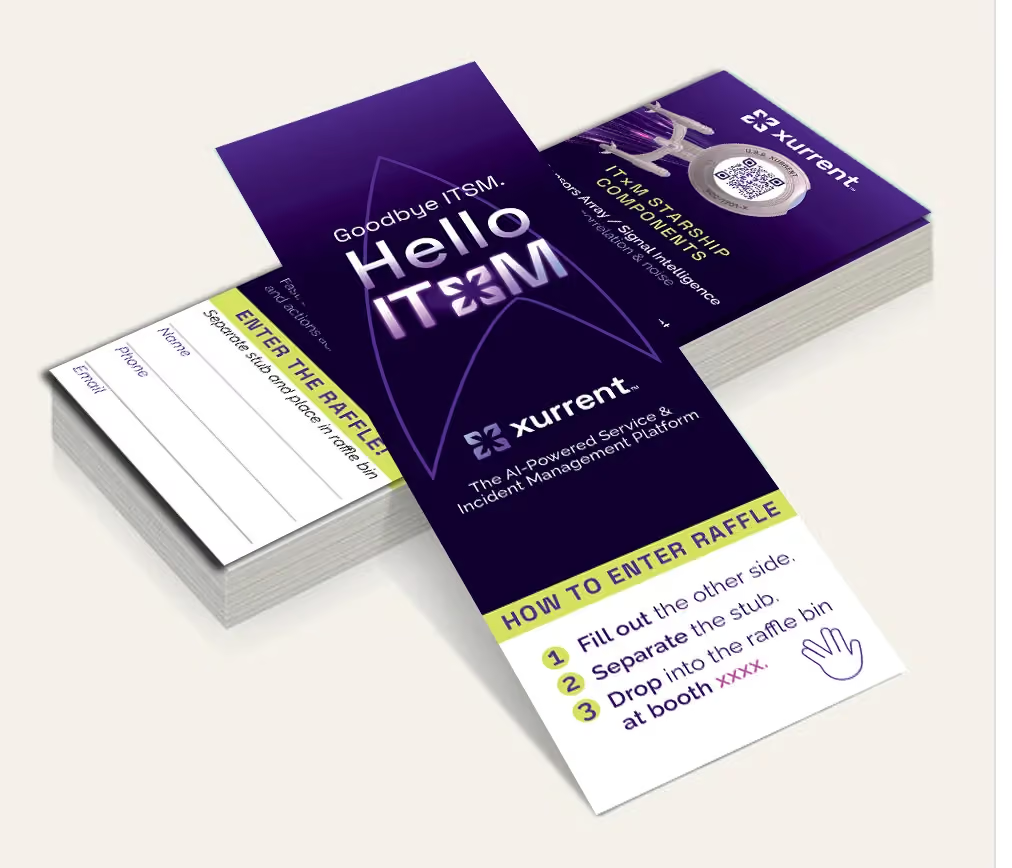
Pink 27 returns to Las Vegas — which means the conference prep starts before you land.
Vegas is a dehydration machine. The desert air is dry year-round, the casino floors are aggressively air-conditioned, and the walking distances inside hotels are longer than they look on a map. If you're exhibiting, you'll be on your feet for hours at a stretch. Drink water consistently throughout the day — not just at meals — and don't wait until you feel thirsty to start. The people who arrive well-rested and hydrated are noticeably sharper in conversations by day two than those who aren't.
Wear shoes you've already broken in. This sounds obvious until you show up in the pair you bought for the trip. Convention center floors are unforgiving, and Pink's format — where meaningful conversations often happen in the hallways between sessions as much as at the booths — means you'll be standing and moving more than you expect. Comfortable footwear is a genuine competitive advantage by the afternoon of day one.
Plan your sessions before you arrive. Pink's conference tracks cover a range of topics across the day, and the best seats and conversations fill up early. Review the agenda in advance and identify the two or three sessions most relevant to your role or evaluation criteria. Showing up to a session with a specific question in mind — rather than general curiosity — means you'll get more out of it and have something concrete to discuss with the person sitting next to you afterward. That's how a lot of the best conversations at Pink actually start.
Build your vendor shortlist ahead of time. Check the exhibitor list before you go and map it against your current tooling gaps. If you arrive knowing which three or four vendors you specifically want to evaluate — and what questions you need answered — you'll use the exhibition hours far more effectively. Pink's exhibitors are technically oriented and happy to go deep, but the conversations that go somewhere tend to start with a specific problem, not a general browse.
Bring your DevOps counterpart. No away team goes into unknown territory with only half the crew — and ITSM and major incident response are converging fast enough that sending just one side of that partnership to Pink is leaving value on the table. The boundaries between service management and DevOps are blurring in ways that affect both teams' tools, workflows, and priorities. Pink 27 will have conversations relevant to both sides of that equation. If your DevOps partner is still treating ITSM as someone else's problem — or vice versa — a shared conference experience is one of the fastest ways to close that gap. You'll leave with a common frame of reference, which is worth more than any slide deck you could share back at the office.
Introduce yourself to the person sitting next to you. Set your phasers to listen. It sounds almost too simple to mention, but the hallway conversations and the offhand exchanges between sessions are where some of the most useful intelligence at Pink actually surfaces. The person next to you in a keynote might be three years ahead of you in their AI implementation, or dealing with the exact vendor problem you're trying to solve. Pink's culture actively encourages that kind of peer exchange — lean into it. A short "what brought you here this year?" has a way of turning into a conversation you'll still be thinking about on the flight home.
Give yourself permission to linger. The instinct at any conference is to keep moving, cover as much ground as possible, and collect as many contacts as you can. Pink rewards the opposite approach. If a conversation is going somewhere interesting, stay in it. The format is designed for depth, and the people most likely to become useful long-term connections — whether that's a vendor, a peer practitioner, or a speaker — are the ones you actually spent thirty minutes talking to. The final frontier of IT, it turns out, is a long conversation in a Vegas hotel that runs ten minutes past the next session.
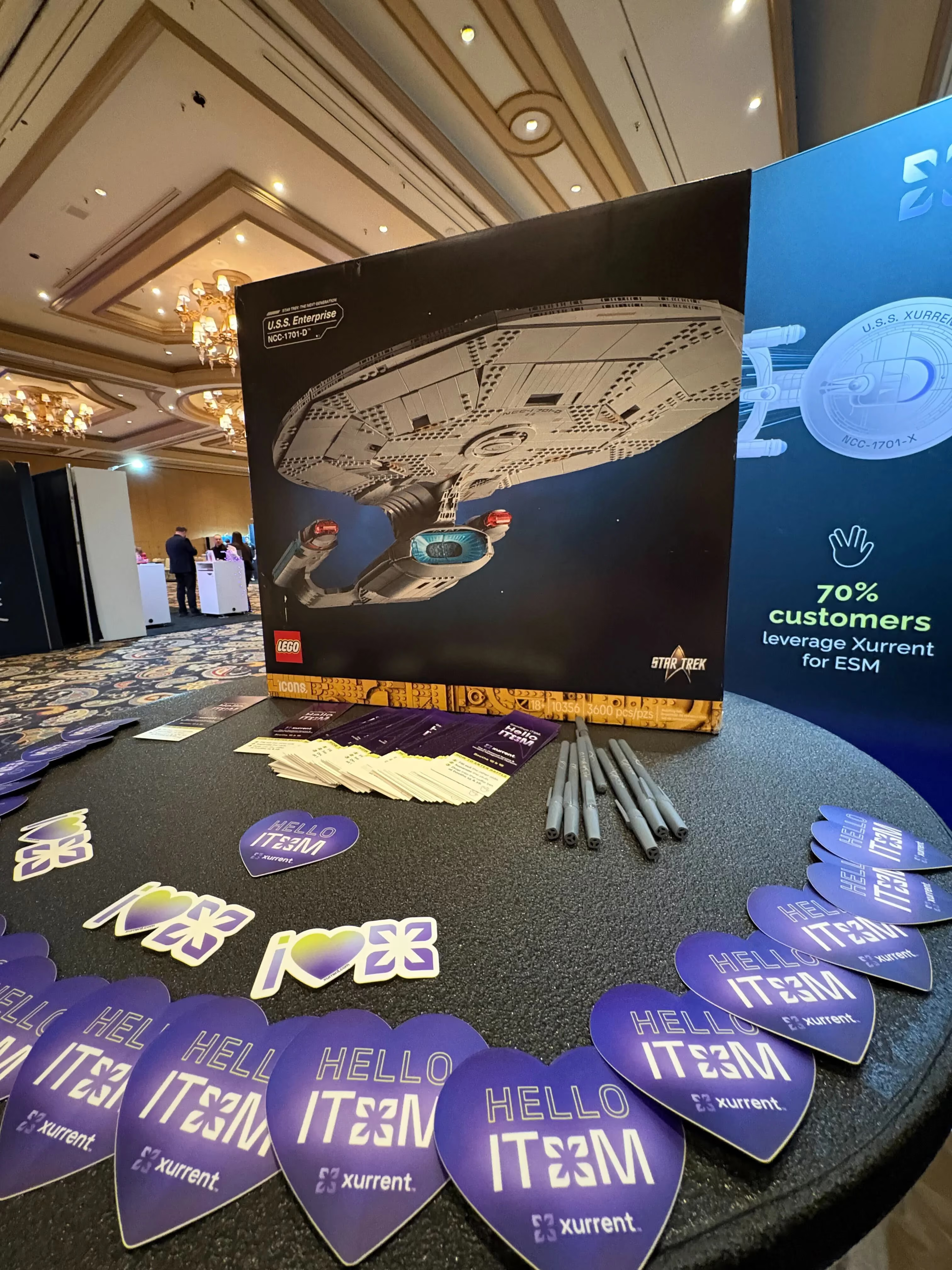
Pink is a quality-over-quantity conference. That phrase gets used a lot. At Pink, it's actually true.
The business case for exhibiting isn't in the lead count. It's in the conversations — with buyers who've done their homework, practitioners who'll tell you exactly where your product falls short, and peers across industries who share what's actually working.
For a product like Xurrent, which requires more than a glance at a banner to grok, that format is a natural advantage. The "aha" moment — the one that happens when someone sees how enterprise service management actually works, not just what it's capable of — needs room to breathe. Pink gives you that room.
If you're evaluating your conference strategy and your product needs a real conversation to make its case, this is a show worth putting on the list.
And if you're on the other side of that table — actively shopping for a new ITSM vendor — Pink might be the most efficient room you'll ever walk into. The people exhibiting here came to talk, not to hand you a brochure. You'll leave knowing exactly what each platform can do, where it falls short, and what's on the roadmap. That's normally three separate meetings. At Pink, it's one conversation.
Curious how Xurrent shows up for IT practitioners — not just at conferences, but in the platform itself? See it in action with a personalized demo. Engage.

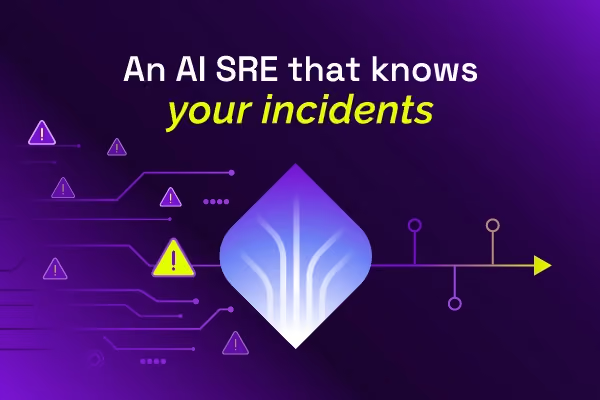
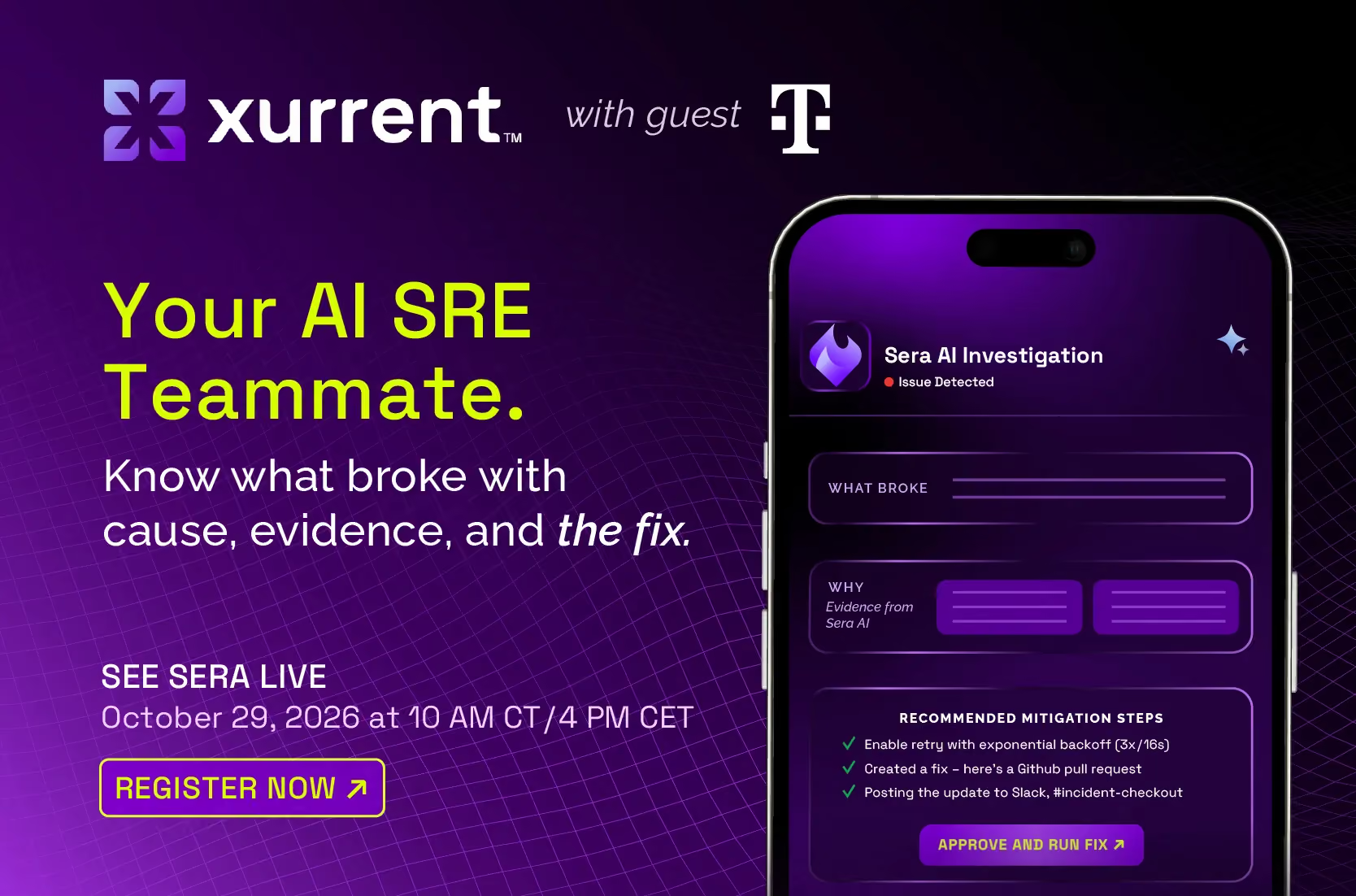
Most AI SREs are pattern matchers trained on public data. They know what a memory leak looks like in the abstract. They don't know that your payments-api has a flaky liveness probe everyone ignores, that the checkout team owns the retry policy, or that the last three "database incidents" were actually cache misconfigurations. That knowledge lives in your postmortems, your Slack channels, and the heads of two senior engineers.

.avif)