




Blog
Insights & updates from our experts


Resolve plant floor and IT issues before they disrupt production.

Stay audit-ready while resolving issues and reducing operational risk.
Resolve issues quickly with an AI-powered system that automates ticketing.
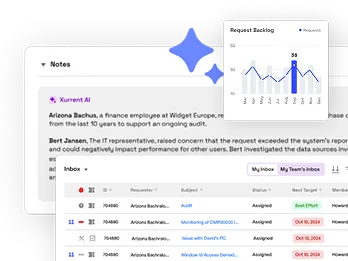
Unifiy IT, HR, Facilities, Finance, and more on a single, AI-powered service platform.
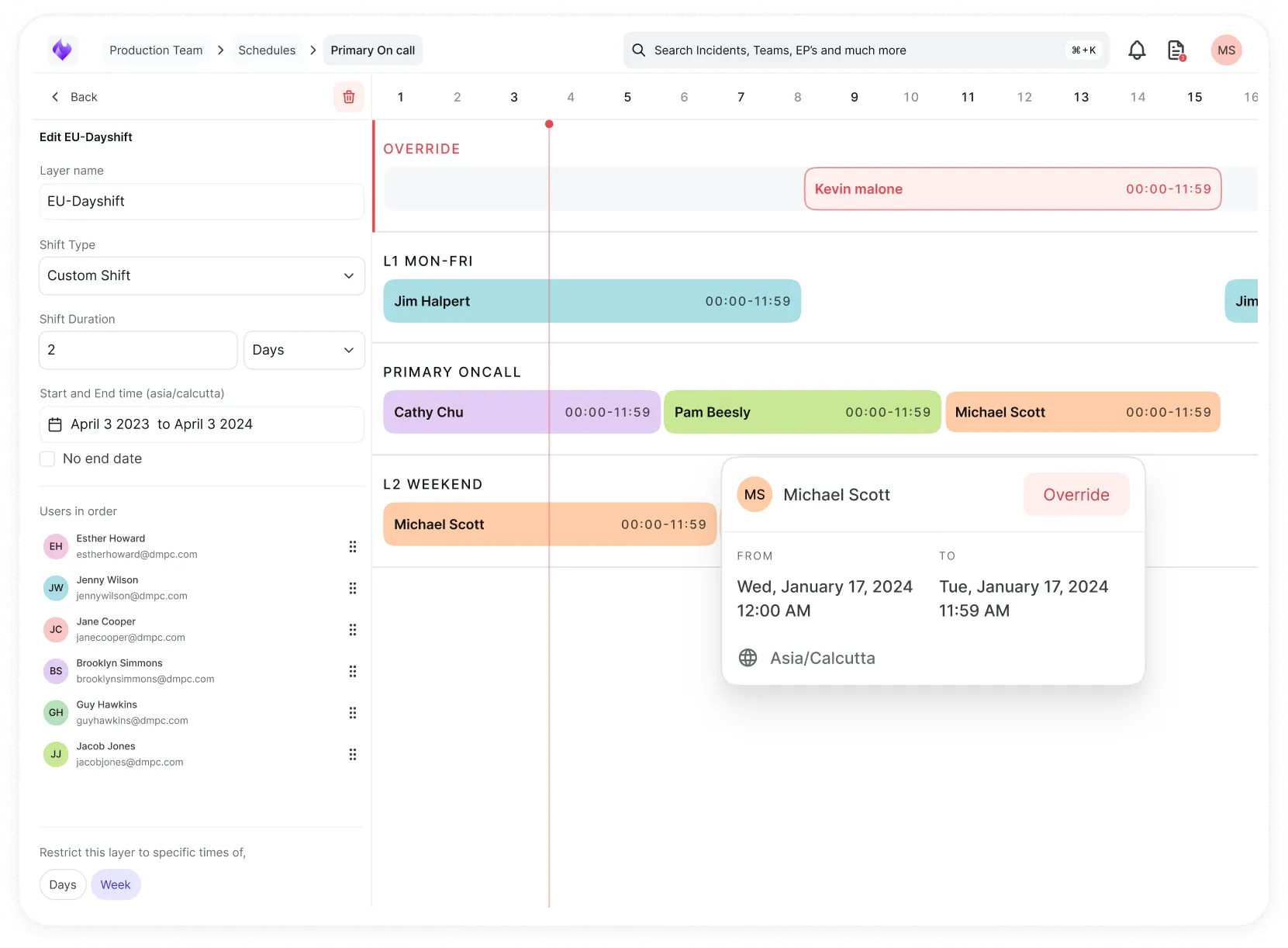
Simplify on-call scheduling, automate escalations, and reduce burnout.
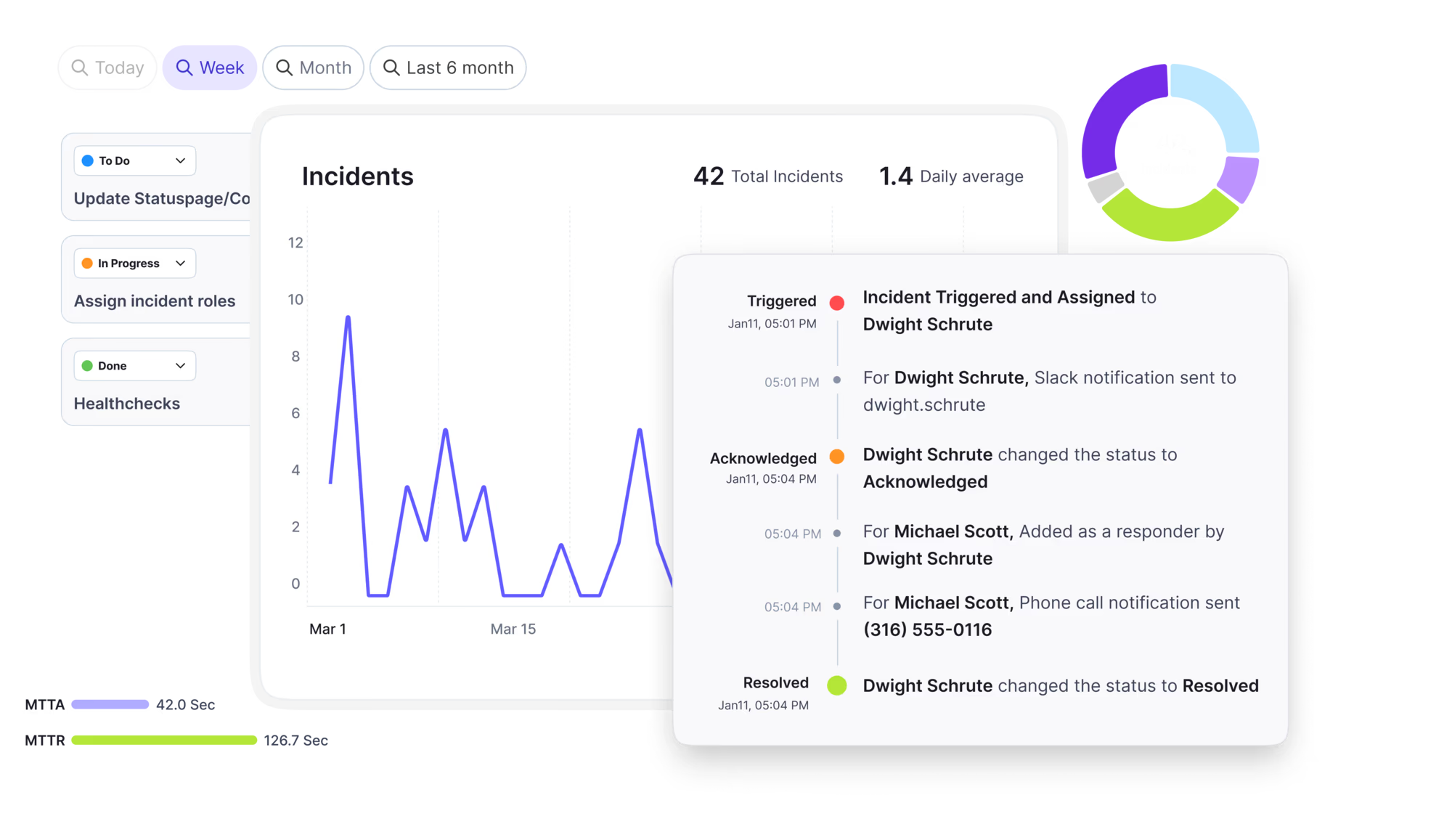
Automate postmortems, AI summaries, and post-incident workflows
Create, organize, and continuously improve your knowledge base to find the right answers with Sera AI.
We're here to help

The integration with Atlassian Jira using the Xurrent Integration Service is

The integration with Atlassian Jira using the Xurrent Integration Service is

The integration with Atlassian Jira using the Xurrent Integration Service is

The integration with Atlassian Jira using the Xurrent Integration Service is

The integration with Atlassian Jira using the Xurrent Integration Service is

The integration with Atlassian Jira using the Xurrent Integration Service is

The integration with Atlassian Jira using the Xurrent Integration Service is

The integration with Atlassian Jira using the Xurrent Integration Service is
Resolve issues quickly with an AI-powered system that automates ticketing.
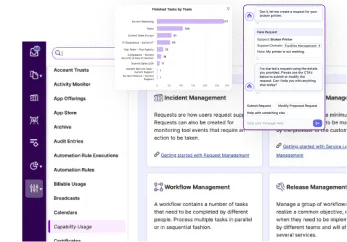
Unifiy IT, HR, Facilities, Finance, and more on a single, AI-powered service platform.
Simplify on-call scheduling, automate escalations, and reduce burnout.
Automate postmortems, AI summaries, and post-incident workflows
Create, organize, and continuously improve your knowledge base to find the right answers with Sera AI.
Resolve plant floor and IT issues before they disrupt production.
Stay audit-ready while resolving issues and reducing operational risk.

Detect, respond, and resolve incidents fast to cut downtime and MTTR.

Keep your store online, even during your biggest sales moments.

Protect patient data and resolve issues fast, so care teams stay focused on care.
Standardize service delivery across every store and channel.

We are here to help 24/7

Connect with other Xurrent Users

Get insights and tips on how to get the most out of Xurrent

Apps, APIs, and updates

Xurrent service functionality

Eliminate manual tasks, optimize workflows, and deliver faster resolutions.
Learn how organizations have reduced downtime, improved 50% MTTA & MTTR, and cut costs with Xurrent IMR.
Discover Xurrent IMR's quick support, bidirectional integrations with Jira and Slack, and more cohesive incident response capabilities compared to Opsgenie.
Understand why users value Xurrent IMR for its intuitive interface, efficient incident alerting, customizable On-call schedules, and escalations.

Before a new hire's first day at Xurrent, a small "orchestra" is already playing — silently, automatically, across multiple departments.
✔️ Kelsey in People Ops kicks off the onboarding workflow.
✔️ John in Biz Ops gets assigned tasks: equipment, building access, system permissions.
✔️ Finance gets looped in for payroll.
✔️ Security/compliance gets flagged for access controls.
If the new hire is in dev, specific tooling permissions route to the right team.
Nobody sent a single email. Nobody forgot a step. Nobody asked, "Wait, who's handling that?"
This is not a fictional scenario, and these are not made-up names (Kelsey and John are real humans!).
The process described above is what happens at Xurrent for every single new hire.
Note: This is the first post in our "How Xurtains Use Xurrent" series. We're pulling back the curtain on how our own teams use the platform every day because we believe in eating our own dog food, drinking our own champagne. If it doesn't work for us, why would it work for you?
In this post, we're specifically talking about Xurrent ITSM, an enterprise service management solution.
The new hire example above is just one of the many ways Xurtains (people who work at Xurrent) are using Xurrent, and one that's quite different from other organizations that are not using Xurrent.
Most companies cobble together tools. Besides the obvious cost implications and the unnecessary waste of time learning various platforms, "too many tools" also means information gets lost and handoffs break down.
Different tools for different teams. You already know how this ends.
Jira for development + spreadsheets for HR + disparate Slack threads for everything else.
A new hire needs building access, but the request has been sitting in someone's inbox for 3 days because IT thought HR was handling it. A feature request from finance never makes it to the product team because it's buried in a Slack thread. A compliance deadline gets missed because the handoff between security and IT happened over email — and nobody followed up.
This often creates the "telephone game" problem, as context is lost with each new request passed between teams.
Nobody has visibility into the full picture, and the manual handoffs = missed steps, delays, and frustration.
As Xurrent's Training & Enablement Specialist, Tuan Vu, shared: "Before Xurrent, I used to ping pong requests and comms between people through all sorts of channels and mediums like email and Slack and Teams."
So what happens when everyone's on the same platform?
When everyone has access to a single source of truth — one platform (aka Xurrent) — everything just works smoothly, seamlessly, and without incident.
As Xurrent's Director of People Operations, Kelsey Bardfield, shared:
"Xurrent is really helpful because I can work cross-functionally across different departments and make sure that I'm not miscommunicating or forgetting to tell a different team that we're having changes — especially with the finance team, the IT team, and the security and compliance team."
"It really keeps us all on the same page, gives us visibility, and helps us ensure that we're having a really good employee experience."
Kelsey uses Xurrent primarily for onboarding and offboarding, but those workflows touch nearly every department.
John Davis, Xurrent's Director of Business Operations, shared his thoughts:
"If something comes to our IT help desk that is actually a responsibility of our DevOps team, it's only a few clicks for us to send it over to them — and make sure that we are honoring our SLAs while it also tracks against theirs when the work makes it to them."
In practice, this means John can reassign a ticket with two clicks, add a note for the DevOps team, and move on — without opening Slack, without sending an email, without wondering if it got lost. Requests route to the right team without losing history. SLAs stay intact. And the person who submitted the request? They don't need to know any of this happened — it's invisible to them.
Jacob Roscoe, a Product Manager at Xurrent, added:
"Marketing and finance have their own support domains. And when they have feedback about the product or feature requests, we're tracking those in Xurrent the same as we would if a customer or partner is giving us that input. So it's keeping everything in one place."
Internal teams submit requests the same way external customers do. No separate system. No second-class tickets. And because everything's tracked in one place, nothing falls through the cracks — whether it's a bug report from a paying customer or a feature idea from the marketing team.
Tuan shared his thoughts in this short clip:
ITxM is a new category created by Xurrent that unifies ITSM, ITOM, and IT Incident Management into a single connected system. The "x" in ITxM represents the intersection and synchronization of every IT discipline — from service and operations to incident and asset management — working together in real time.
With ITxM, every department has its own "support domain" with services tailored to its needs. All live on the same platform with shared visibility and shared workflows. Requests can move between domains without losing context or history.
ITxM is service management that spans IT, operations, and the entire enterprise.
Phil Christianson, Chief Product Officer at Xurrent, sums it up best:
"Every department now in Xurrent — whether it's HR or IT or marketing — has their own support domain where they have put in different types of services that they're providing to the rest of the company."
This means HR can design workflows that make sense for HR. Finance can structure its services around finance needs. But leadership still gets a unified view across all of them ... without asking anyone to build a report.
And that visibility doesn't stop at internal teams.
Phil adds: "The neat thing about Xurrent is that if those requests (product enhancement requests) are coming in from our customers … they get to watch that ticket through its life cycle as the new product functionality is moved across the team and eventually into the QA and PROD environments."
The result? Transparency and collaboration that extend beyond the company to the customer.
So what does this actually mean for day-to-day work?
For the people doing the work, the difference is immediate:
The work just … flows.
"I can see how the customer is responding, how the partner is responding, how we respond — and it's all kind of tracked and managed and it's outside of email, which is nice." — Cory Apperson, Xurrent's Chief Operating Officer
Kelsey Barfield shared her thoughts in this short clip:
Cross-functional collaboration isn't a feature you turn on; it's an architecture decision. An intentional choice.
When everyone's on the same platform, handoffs become invisible. That new hire we mentioned at the start? They showed up on day one with a laptop, building access, system permissions, and a payroll record — and nobody had to chase a single thread to make it happen.
That's what ITxM looks like in practice: service management that doesn't stop at IT.
In our next post in this series, we'll look at how Sera AI is changing the way Xurtains interact with the service desk — starting with a CPO who stopped entering tickets the old way.
Want to see how ITxM will work in your organization? Get started with Xurrent today.
The "telephone game" problem occurs when context is lost with each new request passed between teams. This happens when companies use different tools for different teams — such as Jira for development, spreadsheets for HR, and disparate Slack threads for everything else. Information gets lost and handoffs break down, resulting in nobody having visibility into the full picture, with manual handoffs leading to missed steps, delays, and frustration.
When everyone has access to a single source of truth — one platform — everything works smoothly, seamlessly, and without incident. Teams can work cross-functionally across different departments without miscommunicating or forgetting to tell a different team about changes. It keeps everyone on the same page, gives visibility, and helps ensure a good employee experience.
ITxM is a new category created by Xurrent that unifies ITSM, ITOM, and IT Incident Management into a single connected system. The "x" in ITxM represents the intersection and synchronization of every IT discipline — from service and operations to incident and asset management — working together in real time. ITxM is service management that spans IT, operations, and the entire enterprise.
Every department — whether it's HR, IT, or marketing — has their own support domain where they have put in different types of services that they're providing to the rest of the company. HR can design workflows that make sense for HR, and Finance can structure its services around finance needs. But leadership still gets a unified view across all of them without asking anyone to build a report.
If something comes to an IT help desk that is actually a responsibility of another team, it's only a few clicks to send it over to them — while honoring SLAs and tracking against theirs when the work makes it to them. Requests route to the right team without losing history, SLAs stay intact, and the person who submitted the request doesn't need to know any of this happened — it's invisible to them.
Besides the obvious cost implications and the unnecessary waste of time learning various platforms, "too many tools" also means information gets lost and handoffs break down. A new hire might need building access, but the request sits in someone's inbox for days because IT thought HR was handling it. A feature request from finance never makes it to the product team because it's buried in a Slack thread. Compliance deadlines get missed because handoffs happen over email with no follow-up.
When a new hire starts, workflows can automatically kick off across multiple departments. People Ops initiates the onboarding workflow, Business Ops gets assigned tasks for equipment, building access, and system permissions, Finance gets looped in for payroll, and Security/compliance gets flagged for access controls. If the new hire is in dev, specific tooling permissions route to the right team. Nobody sends a single email, nobody forgets a step, and nobody asks "who's handling that?"
Internal teams submit requests the same way external customers do — no separate system and no second-class tickets. Because everything's tracked in one place, nothing falls through the cracks — whether it's a bug report from a paying customer or a feature idea from the marketing team. Marketing and finance have their own support domains, and when they have feedback about the product or feature requests, those are tracked the same as customer or partner input.
If product enhancement requests are coming in from customers, they get to watch that ticket through its life cycle as the new product functionality is moved across the team and eventually into the QA and PROD environments. This creates transparency and collaboration that extend beyond the company to the customer.
For the people doing the work, the difference is immediate: no more "who's handling this?", no more lost context when tickets change hands, and leadership can see metrics across departments without asking for spreadsheets. The work just flows. Everything is tracked and managed outside of email, with visibility into how customers, partners, and internal teams are responding.