




Blog
Insights & updates from our experts


Resolve plant floor and IT issues before they disrupt production.

Stay audit-ready while resolving issues and reducing operational risk.
Resolve issues quickly with an AI-powered system that automates ticketing.
Unifiy IT, HR, Facilities, Finance, and more on a single, AI-powered service platform.
Simplify on-call scheduling, automate escalations, and reduce burnout.
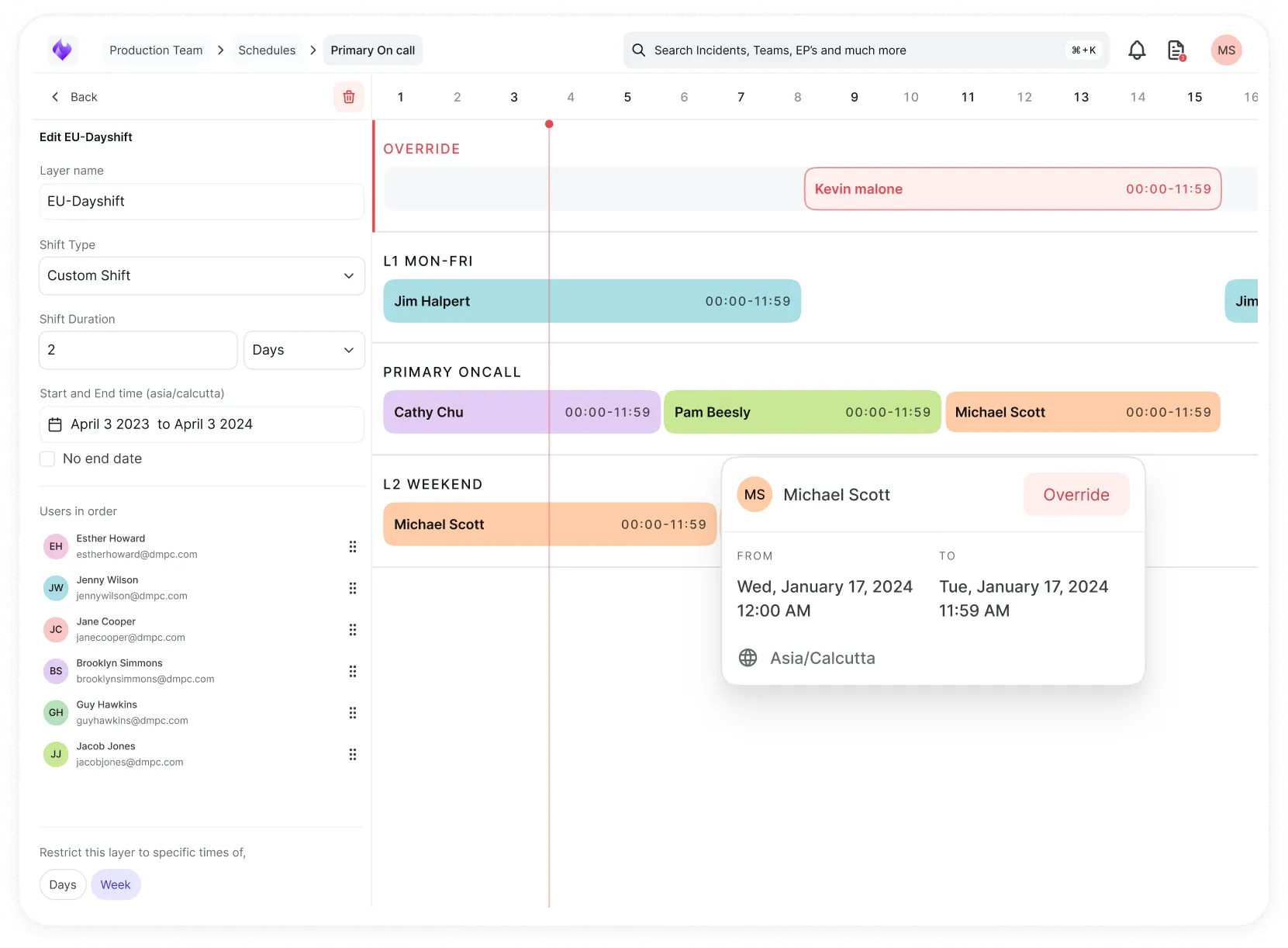
Automate postmortems, AI summaries, and post-incident workflows
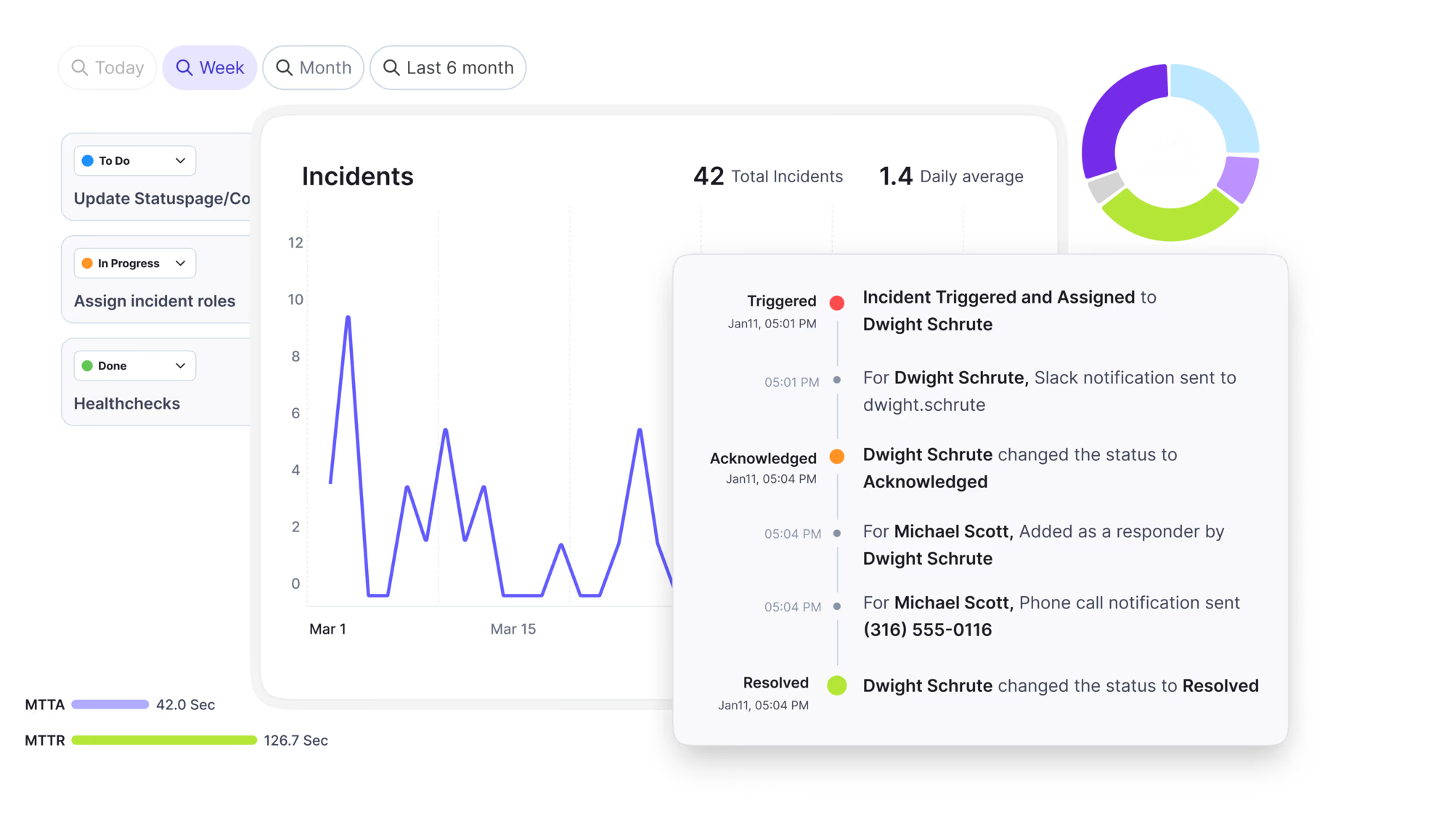
Create, organize, and continuously improve your knowledge base to find the right answers with Sera AI.
We're here to help

The integration with Atlassian Jira using the Xurrent Integration Service is

The integration with Atlassian Jira using the Xurrent Integration Service is

The integration with Atlassian Jira using the Xurrent Integration Service is

The integration with Atlassian Jira using the Xurrent Integration Service is

The integration with Atlassian Jira using the Xurrent Integration Service is

The integration with Atlassian Jira using the Xurrent Integration Service is

The integration with Atlassian Jira using the Xurrent Integration Service is

The integration with Atlassian Jira using the Xurrent Integration Service is
Resolve issues quickly with an AI-powered system that automates ticketing.
Unifiy IT, HR, Facilities, Finance, and more on a single, AI-powered service platform.
Simplify on-call scheduling, automate escalations, and reduce burnout.
Automate postmortems, AI summaries, and post-incident workflows
Create, organize, and continuously improve your knowledge base to find the right answers with Sera AI.
Resolve plant floor and IT issues before they disrupt production.
Stay audit-ready while resolving issues and reducing operational risk.

Detect, respond, and resolve incidents fast to cut downtime and MTTR.

Keep your store online, even during your biggest sales moments.

Protect patient data and resolve issues fast, so care teams stay focused on care.

Standardize service delivery across every store and channel.

We are here to help 24/7

Connect with other Xurrent Users

Get insights and tips on how to get the most out of Xurrent

Apps, APIs, and updates

Xurrent service functionality

Eliminate manual tasks, optimize workflows, and deliver faster resolutions.
Learn how organizations have reduced downtime, improved 50% MTTA & MTTR, and cut costs with Xurrent IMR.
Discover Xurrent IMR's quick support, bidirectional integrations with Jira and Slack, and more cohesive incident response capabilities compared to Opsgenie.
Understand why users value Xurrent IMR for its intuitive interface, efficient incident alerting, customizable On-call schedules, and escalations.

Freshservice lists its pricing starting at $19 per agent per month, but that number rarely reflects what organizations actually pay. Add-on fees for AI sessions, orchestration transactions, and asset overages can push the real cost significantly higher.
This breakdown covers what each Freshservice pricing tier includes, where hidden costs appear, and how to evaluate whether the platform delivers enough value for your organization's specific needs.
Freshservice uses a per-agent, per-month pricing model with four tiers: Starter at $19, Growth at $49, Pro at $99, and Enterprise at custom pricing when billed annually. "Per-agent" means every IT support person who logs in to handle tickets pays for their own license. If you choose monthly billing instead of annual, the prices jump—Starter goes from $19 to $29 per agent.
| PLAN | ANNUAL PRICE (PER AGENT/MONTH) | MONTHLY PRICE (PER AGENT/MONTH) | BEST FOR |
|---|---|---|---|
| Starter | $19 | $29 | Small teams with basic ticketing |
| Growth | $49 | $59 | Teams tracking assets and approvals |
| Pro | $99 | $119 | IT orgs adopting formal ITIL processes |
| Enterprise | Custom | Custom | Large orgs with heavy automation |
The annual commitment saves roughly 35% compared to paying month-to-month.
That said, locking into a year-long contract before you've tested the platform in production can be risky. Plus, the pricing is just increasing as highlighted by Freshservice users on reddit in this thread:
Comment
by u/evielursh from discussion
in ITManagers
Each tier stacks on top of the one below it. Starter covers the basics, and every step up adds more advanced ITSM capabilities. Here's what you actually get at each level.
Starter handles the fundamentals: incident management, a knowledge base, and a self-service portal. In plain terms, you can log tickets, write help articles, and give employees a place to submit requests and find answers on their own.
This plan works well for small teams or single departments that want clean, simple ticketing without workflow complexity.
Growth adds asset management, a service catalog, and approval workflows. Asset management means tracking your hardware, software, and other IT resources throughout their lifecycle—from the day you buy a laptop to the day you retire it.
One catch worth knowing: Growth caps you at 100 managed assets. If your organization tracks more than 100 devices and software licenses combined, you'll either pay overage fees or upgrade to Pro.
Pro brings in problem management, change management, project management, and better analytics. While incident management fixes the immediate issue, problem management digs into why the issue keeps happening in the first place.
This tier tends to attract IT organizations that are formalizing their ITIL practices and want tighter control over how changes move through their environment. The analytics upgrades also help teams report on SLA performance and ticket trends.
Enterprise unlocks the most advanced features: Freddy AI, orchestration, sandbox environments, and detailed audit logs. Orchestration lets you automate workflows across different systems—like automatically creating accounts in Active Directory, email, and Slack when HR submits a new hire request.
Freddy AI is Freshworks' artificial intelligence engine. It powers chatbots, suggests ticket classifications, and offers predictive insights. However, many Freddy AI features come with additional usage-based costs, which we'll cover in a moment.
Freshservice does not have a permanent free tier. You can sign up for a 21-day free trial without entering a credit card, and the trial typically gives you access to Enterprise-level features so you can test the full platform.
Keep in mind that trial environments are temporary. Any workflows, automations, or configurations you build during the trial will either need to be recreated or migrated if you decide to buy.
The per-agent price on Freshservice's website rarely tells the whole story. According to Gartner's Market Guide for ITSM, 80% of IT buyers overspend on their ITSM tools, and several add-ons and usage-based fees can push your actual costs well beyond the base subscription.
Freddy AI powers chatbots, automated suggestions, and predictive features inside Freshservice. But here's the thing: many of those capabilities require purchasing "Freddy AI sessions" as a separate add-on, typically running $29 to $35 per agent per month.
A session usually represents one AI-powered interaction—a chatbot conversation, an automated ticket classification, or a predictive suggestion. Organizations with high employee engagement through virtual agents can see session costs climb quickly.
Orchestration automates workflows across your business systems. Every time an orchestration runs—creating a user account, updating an asset record, triggering an action in a third-party tool—it consumes a transaction from your allotment.
For teams building extensive automation, transaction costs can scale significantly with volume. Before committing, it's worth modeling how many automated actions you expect to run each month.
The obvious cost driver: adding more agents increases your subscription proportionally. Less obvious is how asset pricing works. Some plans have asset limits, and going over triggers extra fees.
Growing teams often face compounding costs from both new agent licenses and an expanding inventory of tracked devices and software.
Asset management comes bundled with Growth and higher plans, but understanding what counts as a "managed asset" matters for budgeting accurately.
Growth's 100-asset limit can feel restrictive for mid-sized organizations. If you're tracking a few hundred devices plus software licenses, you'll likely end up on Pro or Enterprise—or paying per-asset overage fees.
Promotional pricing and first-year discounts often don't carry over to renewal, and with SaaS inflation running nearly 5x higher than standard market rates, costs can escalate quickly. Some organizations report price increases of 10-20% or more when their initial contract term ends.
Review your contract terms well before the renewal deadline. Pay attention to auto-renewal clauses and understand what leverage you have based on your usage patterns and growth trajectory.
Tip: Track your actual feature usage throughout the contract period. This data strengthens your position during renewal negotiations and helps you figure out whether you're on the right tier—or paying for capabilities you never touch.
Whether Freshservice delivers good ROI depends on your organization's size, complexity, and what you actually need from an ITSM platform. If the cost wasn't enough, you might be wondering this cost might ease up configuration for you but, it's quite the opposite. Freshservice users voiced their frustration that it takes a village to set this tool up, here's a thread to hear from users:
Freshservice configuration frustrations, anyone know a ticketing system that can do this better?
by u/JenovaImproved in sysadmin
Some scenarios make Freshservice's cost structure less attractive.
Organizations that want unified ITSM and incident response in one platform often end up paying for multiple tools—Freshservice for service management plus a separate solution for on-call alerting and incident coordination. Teams that want advanced AI and automation without per-session or per-transaction fees may find the add-on costs unpredictable. And large enterprises looking for a consolidated platform across all IT operations sometimes outgrow what Freshservice offers.
Platforms like Xurrent address these gaps by embedding AI throughout the platform without usage-based fees and unifying service management with incident response in a single workflow. Go live in as little as four weeks with sub-350ms response times.
and if this all wasn't enough, this is something that every Freshservice user will relate to:
Comment
by u/Lightning_Winter from discussion
in sysadmin
ITSM platforms vary widely in pricing models, included capabilities, and total cost of ownership. Looking beyond the sticker price reveals important differences.
| FACTOR | FRESHSERVICE | ENTERPRISE PLATFORMS | MODERN UNIFIED PLATFORMS |
|---|---|---|---|
| Pricing Model | Per-agent + add-ons | Per-agent, often complex | Per-agent, all-inclusive |
| AI Included | Requires add-on fees | Varies by module | Typically embedded |
| Implementation Timeline | Weeks to months | Months to years | Weeks |
| Best For | SMB to mid-market | Large enterprise | Mid-market to enterprise |
Some platforms take a different approach entirely. Xurrent, for example, offers configuration-based deployment with AI embedded throughout—no per-session fees or transaction limits. For organizations scaling their automation and AI usage, this all-inclusive pricing model provides more predictable costs over time.
Evaluating ITSM platforms on total cost of ownership, time-to-value, and operational fit—rather than just base subscription price—leads to better long-term decisions. The cheapest per-agent rate doesn't always mean the lowest total cost once you factor in add-ons, implementation, and scaling—especially as SaaS prices are rising 9–25% annually while corporate IT budgets grow at just 2.8%.
For teams that want unified service and incident management with predictable, all-inclusive pricing, Xurrent offers an alternative worth exploring.
Freshservice may offer volume discounts or custom pricing for large deployments, though negotiation flexibility varies. Contact their sales team directly for enterprise-tier quotes and be prepared to discuss your expected agent count and contract length.
Freshservice typically has a lower entry-level price point than ServiceNow. However, ServiceNow offers a broader suite of enterprise capabilities, so total cost depends heavily on your organization's size and required features. ServiceNow implementations also tend to require significantly more time and professional services investment.
Total cost of ownership includes the base subscription plus potential add-ons for additional agents, managed assets, Freddy AI sessions, orchestration transactions, and any professional implementation or training fees. For accurate budgeting, model your expected usage across all of these dimensions.
Freshservice provides self-service onboarding resources at no additional cost. Professional implementation services, data migration assistance, and advanced training programs are available but typically come with additional fees.
Basic deployments can go live within a few weeks. More complex enterprise configurations with multiple integrations and customizations require longer timelines—sometimes several months depending on scope.
Yes, Freshservice offers both monthly and annual billing. Annual commitments come with a discount, resulting in lower per-agent pricing. Monthly billing provides flexibility but costs roughly 35-50% more per agent.


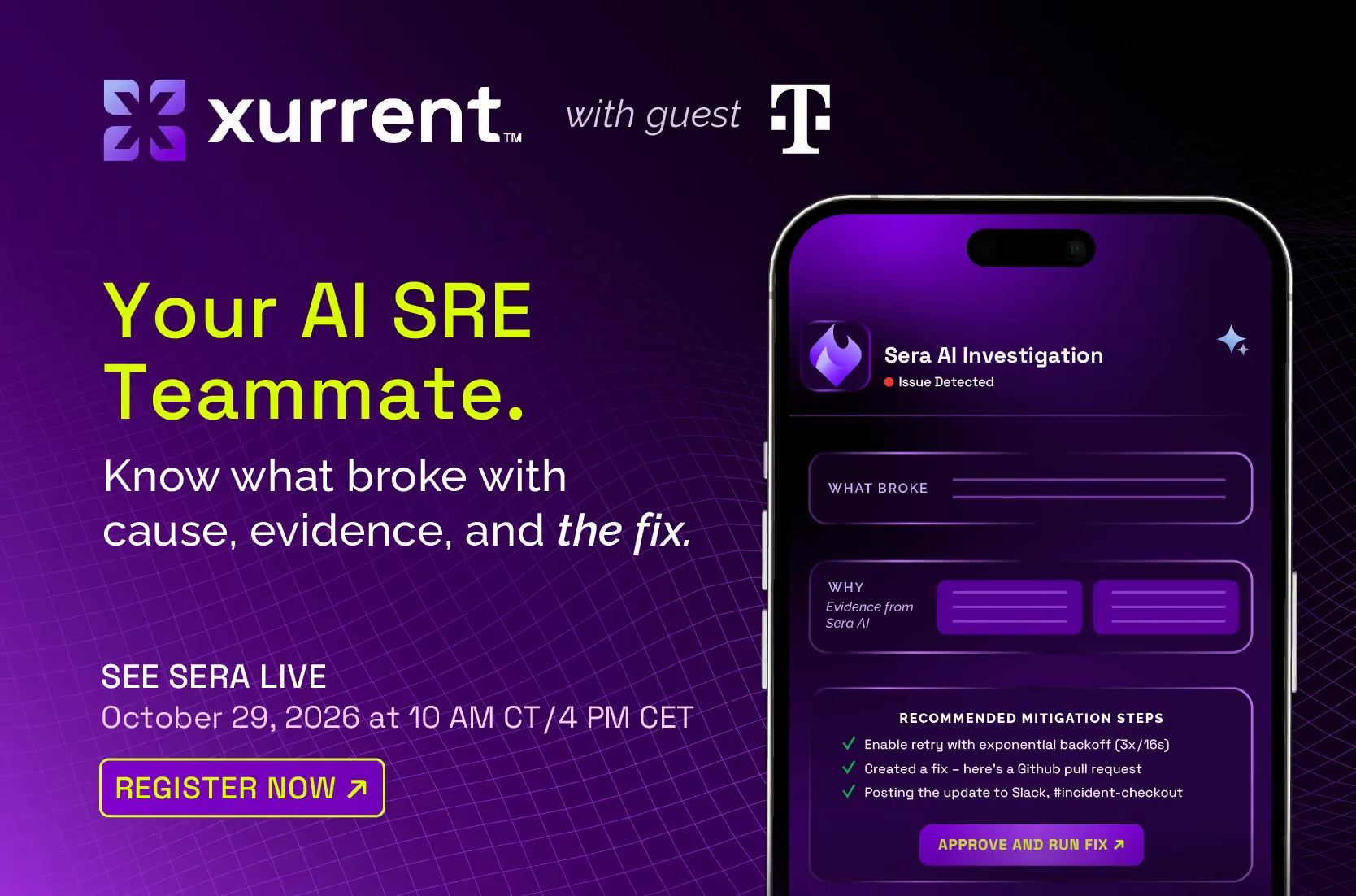
Most AI SREs are pattern matchers trained on public data. They know what a memory leak looks like in the abstract. They don't know that your payments-api has a flaky liveness probe everyone ignores, that the checkout team owns the retry policy, or that the last three "database incidents" were actually cache misconfigurations. That knowledge lives in your postmortems, your Slack channels, and the heads of two senior engineers.



.avif)