



Blog
Insights & updates from our experts


Resolve plant floor and IT issues before they disrupt production.

Stay audit-ready while resolving issues and reducing operational risk.
Resolve issues quickly with an AI-powered system that automates ticketing.
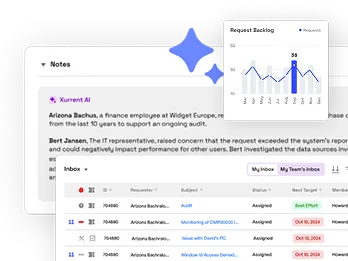
Unifiy IT, HR, Facilities, Finance, and more on a single, AI-powered service platform.
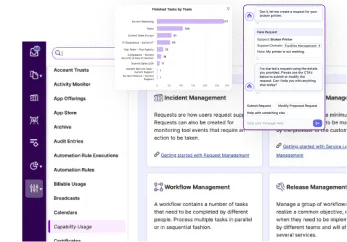
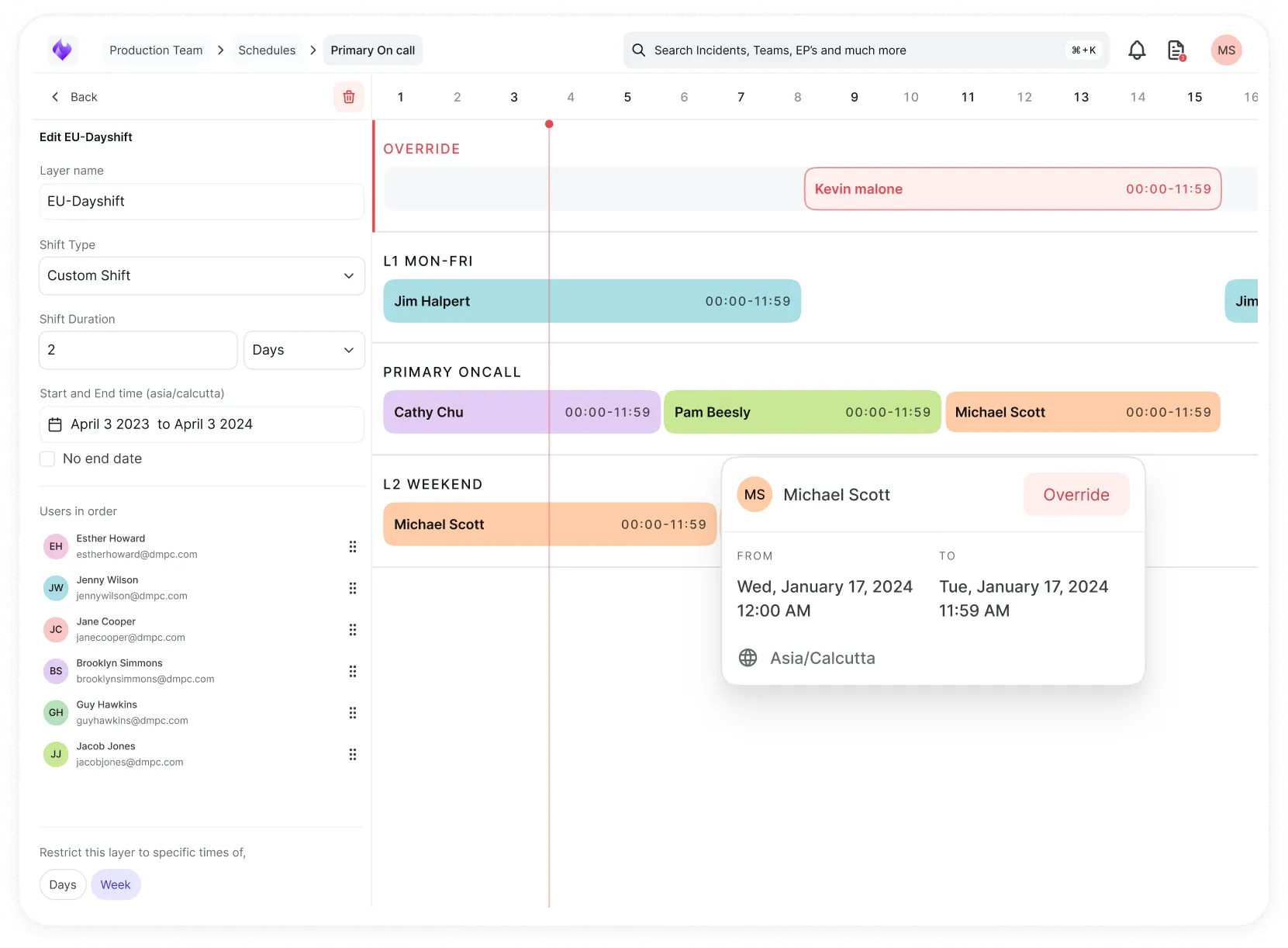
Simplify on-call scheduling, automate escalations, and reduce burnout.
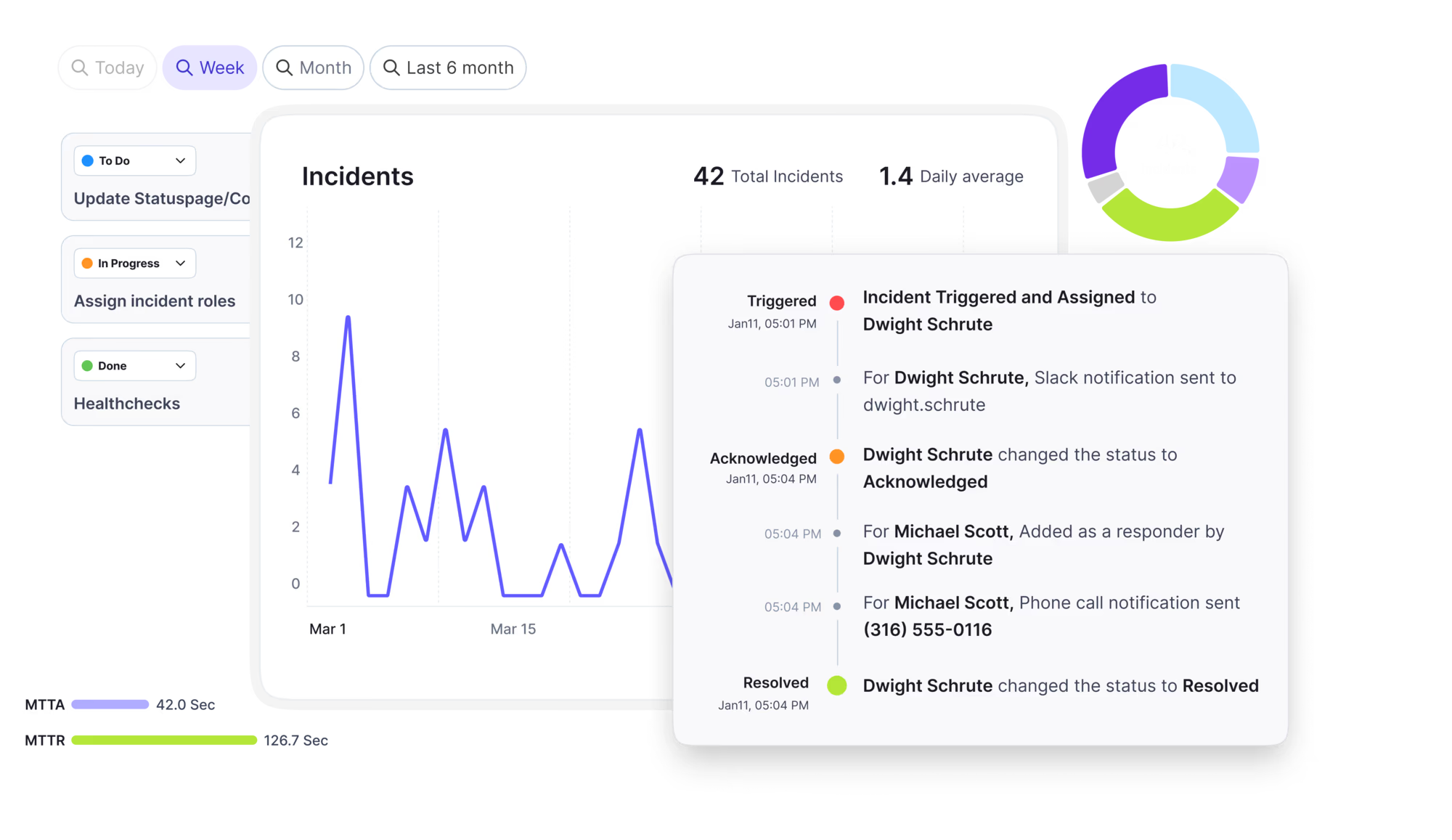
Automate postmortems, AI summaries, and post-incident workflows
Create, organize, and continuously improve your knowledge base to find the right answers with Sera AI.
We're here to help

The integration with Atlassian Jira using the Xurrent Integration Service is

The integration with Atlassian Jira using the Xurrent Integration Service is

The integration with Atlassian Jira using the Xurrent Integration Service is

The integration with Atlassian Jira using the Xurrent Integration Service is

The integration with Atlassian Jira using the Xurrent Integration Service is

The integration with Atlassian Jira using the Xurrent Integration Service is

The integration with Atlassian Jira using the Xurrent Integration Service is

The integration with Atlassian Jira using the Xurrent Integration Service is
Resolve issues quickly with an AI-powered system that automates ticketing.
Unifiy IT, HR, Facilities, Finance, and more on a single, AI-powered service platform.
Simplify on-call scheduling, automate escalations, and reduce burnout.
Automate postmortems, AI summaries, and post-incident workflows
Create, organize, and continuously improve your knowledge base to find the right answers with Sera AI.
Resolve plant floor and IT issues before they disrupt production.
Stay audit-ready while resolving issues and reducing operational risk.

Detect, respond, and resolve incidents fast to cut downtime and MTTR.

Keep your store online, even during your biggest sales moments.

Protect patient data and resolve issues fast, so care teams stay focused on care.

Standardize service delivery across every store and channel.

We are here to help 24/7

Connect with other Xurrent Users

Get insights and tips on how to get the most out of Xurrent

Apps, APIs, and updates

Xurrent service functionality

Eliminate manual tasks, optimize workflows, and deliver faster resolutions.
Learn how organizations have reduced downtime, improved 50% MTTA & MTTR, and cut costs with Xurrent IMR.
Discover Xurrent IMR's quick support, bidirectional integrations with Jira and Slack, and more cohesive incident response capabilities compared to Opsgenie.
Understand why users value Xurrent IMR for its intuitive interface, efficient incident alerting, customizable On-call schedules, and escalations.

Service level agreement form fields define performance commitments between service providers and customers.
The table below lists the fields of the Service Level Agreement form and provides utilization guidelines for each field.
| Field Label | Utilization Guideline |
|---|---|
| Name |
The
[Service Offering] “for” [Customer] If a unique agreement ID is given to each service level agreement, then this ID can be added at the start of the name. Examples:
|
| Status |
The
The available options are:
|
| Customer |
The
When a new SLA is being registered, all organizations of the SLA’s account (and the SLA’s directory account ) can be selected, as well as all organizations that are directly linked to the trusted accounts of the SLA’s account. When an existing SLA is updated, and the customer organization of this SLA belongs to a trusted account, then any organization of this trusted account or its directory account can be selected. |
| Customer account |
The
This field is hidden, except when a new
SLA
is being registered and the
organization
selected in the
The value in this field cannot be updated once the SLA has been saved for the first time. |
| Customer representatives |
The
The customer representative can also be used by a provider to assign an approval task to a customer. If it is not possible to select a person from the customer organization, then the provider can select someone from its own organization in the
Persons who are selected as a customer representative of an SLA are able to see the ‘All Requests’ section in Xurrent Self Service, where all requests that are related to the service of the SLA (via an affected SLA ) are displayed. The customer representative can add notes to a request, withdraw a request, or add it to a watchlist. The customer representative can also access some reports in the ‘Dashboards’ section of Xurrent Self Service, with the possibility to drill down into the data. To make a dashboard available to a customer representative, this must be configured on the dashboard. |
| Service provider |
The
|
| Service level manager |
The
|
| Support domain |
Displays the title of the
support domain account
under which the service for which the
SLA
is registered is presented when a new request is opened for a user who is covered by the
SLA
. This field is visible only when the organization selected in the
|
| Service offering |
The
|
| Service instance |
The
|
| Start date |
The
The time zone of the service offering that is related to the SLA applies to this date. |
| Notice date |
The
As long as notice still needs to be given to terminate the
SLA
, the
The time zone of the service offering that is related to the SLA applies to this date. |
| Expiry date |
The
As long as notice still needs to be given to terminate the
SLA
, the
The time zone of the service offering that is related to the SLA applies to this date. |
| Time zone |
The
|
| Remarks |
The
This field allows basic text formatting. |
| Attachments |
The Attach file… link is used to attach a file to the service level agreement. Multiple attachments can be added to an SLA . |
| Invoices | |
| Invoices |
The
|
| Coverage | |
| Coverage |
The
|
| Customer account |
The
|
| Organizations |
The
This table field is available only when the
|
| Sites |
The
This table field is available only when the
|
| People |
The
This table field is available only when the
|
| Skill pools |
The
This table field is available only when the
|
| Service instances |
The
This table field is available only when the
For each of the selected coverage service instances, an impact relation with the underpinning service instance must be selected. Either:
|
| Use knowledge from service provider |
The
|
| Financial Details | |
| Agreement ID |
The
|
| Activities | |
| Activity ID |
The
|
| Effort Classes | |
| Rate ID |
The
|