



.webp)

Blog
Insights & updates from our experts


Resolve plant floor and IT issues before they disrupt production.

Stay audit-ready while resolving issues and reducing operational risk.
Resolve issues quickly with an AI-powered system that automates ticketing.
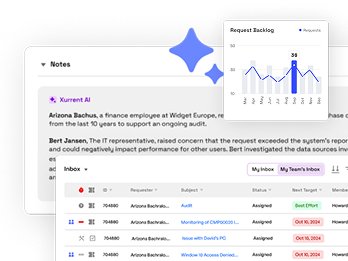
Resolve issues quickly with an AI-powered system that automates ticketing.
Simplify on-call scheduling, automate escalations, and reduce burnout.
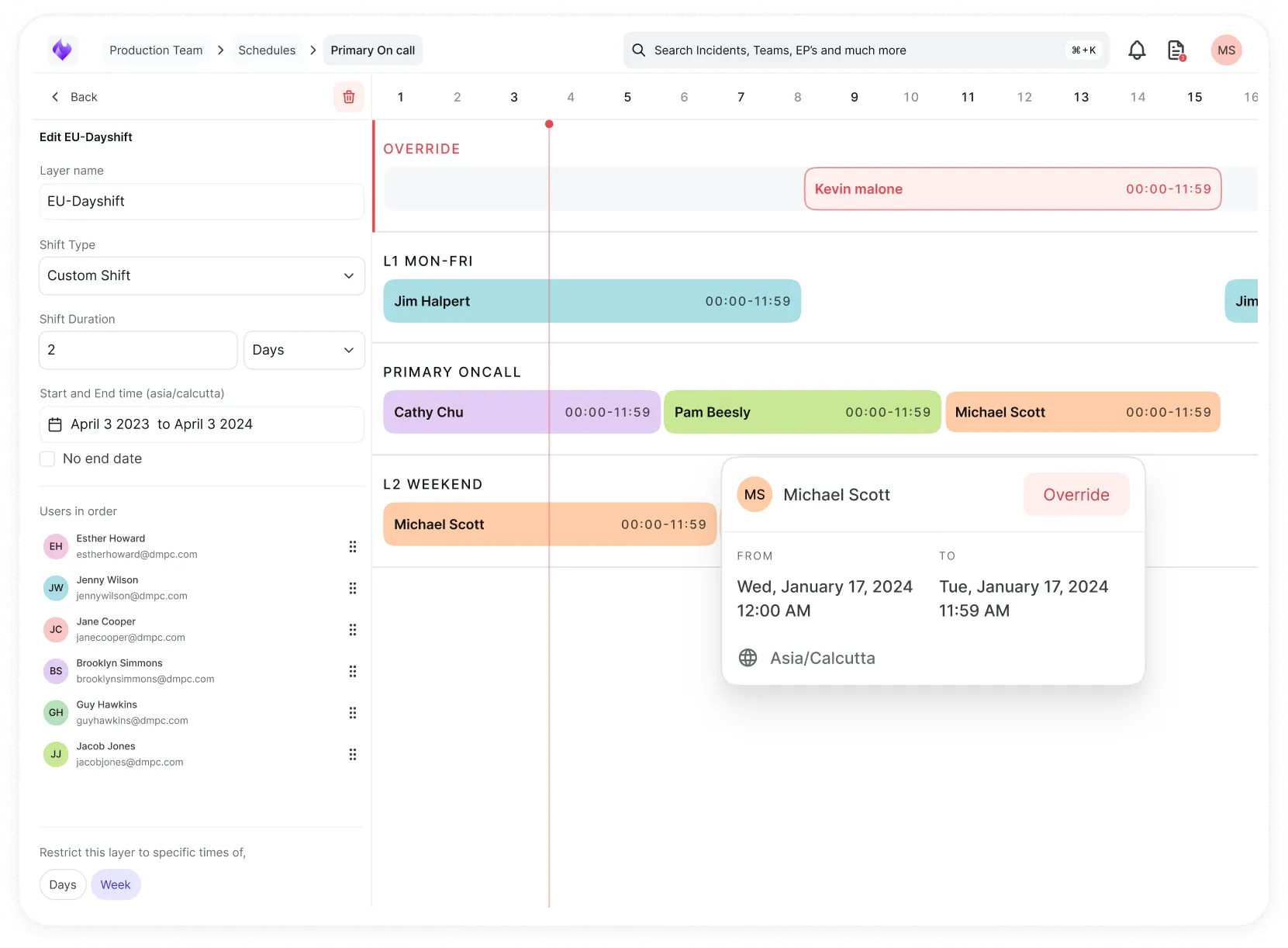
Automate postmortems, AI summaries, and post-incident workflows
We're here to help

The integration with Atlassian Jira using the Xurrent Integration Service is

The integration with Atlassian Jira using the Xurrent Integration Service is

The integration with Atlassian Jira using the Xurrent Integration Service is

The integration with Atlassian Jira using the Xurrent Integration Service is

The integration with Atlassian Jira using the Xurrent Integration Service is

The integration with Atlassian Jira using the Xurrent Integration Service is

The integration with Atlassian Jira using the Xurrent Integration Service is

The integration with Atlassian Jira using the Xurrent Integration Service is
Resolve issues quickly with an AI-powered system that automates ticketing.
Resolve issues quickly with an AI-powered system that automates ticketing.
Simplify on-call scheduling, automate escalations, and reduce burnout.
Automate postmortems, AI summaries, and post-incident workflows
Resolve plant floor and IT issues before they disrupt production.
Stay audit-ready while resolving issues and reducing operational risk.

Detect, respond, and resolve incidents fast to cut downtime and MTTR.

Keep your store online, even during your biggest sales moments.

Protect patient data and resolve issues fast, so care teams stay focused on care.

Standardize service delivery across every store and channel.

We are here to help 24/7

Connect with other Xurrent Users

Get insights and tips on how to get the most out of Xurrent

Apps, APIs, and updates

Xurrent service functionality

Eliminate manual tasks, optimize workflows, and deliver faster resolutions.
Learn how organizations have reduced downtime, improved 50% MTTA & MTTR, and cut costs with Xurrent IMR.
Discover Xurrent IMR's quick support, bidirectional integrations with Jira and Slack, and more cohesive incident response capabilities compared to Opsgenie.
Understand why users value Xurrent IMR for its intuitive interface, efficient incident alerting, customizable On-call schedules, and escalations.

Generate a Personal Access Token, pick the right scopes, and protect your credentials when using the Xurrent MCP server.
The Xurrent MCP server authenticates every request using a Personal Access Token (PAT) sent as a Bearer token in the Authorization header. There is no separate MCP-specific credential. Your PAT is what grants access.
Before you start: Sera AI must be enabled on the account the MCP server connects to. If Sera AI is off, the connection handshake still succeeds and the tools still list, but every tool call returns a 403 error. Enable it under Settings, Self Service Settings, Enable Sera AI.
Important: create your PAT from a support domain account. This is the supported and recommended setup. When the token belongs to a support domain account, the MCP server resolves the account for you automatically.
To use the MCP server, your Personal Access Token needs one scope:
This single scope grants the MCP server access to all its prompts, resources, and tools. The server's actual permissions on Xurrent data (what it can read, what it can write) are inherited from the user the PAT belongs to.
Use a Personal Access Token that belongs to a support domain account. The MCP server reconciles the account from the token automatically, so you do not need to specify it anywhere in your client configuration. Your roles and permissions within that account govern what the MCP server can read and do on your behalf. To work against a different account, create a token in that support domain account and use that token instead.
You can also use a Directory Account token, but then you have to specify the target account yourself by passing it in the X-Xurrent-Account header. The support domain account token is the recommended path because it removes that step.
PATs do not expire by default, but you can set an expiration date when creating one. We recommend setting an expiration of 90 days for MCP use and rotating regularly.

.webp)


.webp)
.webp)