


Help Desk vs Service Desk vs ITSM: Key Differences Explained


The terms get thrown around interchangeably, but help desk, service desk, and ITSM represent fundamentally different approaches to IT support and choosing the wrong one can leave your team stuck in reactive mode while requests pile up.
Help desk fixes what's broken. A service desk manages ongoing service delivery. ITSM governs how all of it works together across the organization.
This guide breaks down the key differences, explains how the three connect, and helps you determine which approach fits your operational reality.
What is a help desk
ITSM is the overarching strategic framework for managing IT services. A service desk is the functional, user-facing point of contact for support and requests. A help desk? It's a more limited, reactive subset focused solely on technical issues—what ITIL calls incident management.
Think of a help desk as your first line of defense when something breaks. A user calls in, an agent troubleshoots, and the goal is straightforward: get things working again as fast as possible. Help desks operate in "break-fix" mode. They're not designed to anticipate problems or manage the full lifecycle of IT services—they exist to put out fires.
Core functions of an IT help desk
Most help desk teams handle a predictable set of activities:
- Incident logging: Recording user-reported issues in a ticketing system so nothing falls through the cracks
- Basic troubleshooting: Resolving common problems like password resets, software errors, and connectivity issues
- Ticket routing: Escalating complex issues to specialized teams when first-level support hits a wall
- User communication: Keeping end users informed on ticket status until the issue is resolved
Benefits of help desk support
For organizations with straightforward IT environments, a help desk delivers real value. Users get quick answers to everyday technical problems without navigating complex processes. Immediate support minimizes productivity loss when something goes wrong. And having one place to report all IT issues eliminates confusion about where to go for help.
When a help desk is the right fit
A help desk works well for smaller teams with limited IT complexity. If your support model is primarily reactive—users report problems, you fix them—a help desk might be all you need right now.
As organizations grow, though, the limitations become apparent. You'll notice recurring issues that never get permanently resolved, requests that don't fit the "something's broken" model, and a lack of visibility into how well IT is actually performing.
What is a service desk
A service desk expands beyond break-fix into a broader, more strategic function. It serves as the single point of contact (SPOC) between IT and the business, handling not just incidents but also service requests, communication, and coordination across teams.
The key difference between a help desk and service desk comes down to scope and intent. A service desk isn't just waiting for things to break—it's actively managing the delivery of IT services.
Core capabilities of an IT service desk
Service desks handle everything a help desk does, plus quite a bit more:
- Incident and request management: Both break-fix issues and service requests like new equipment, software access, or account provisioning
- Change communication: Informing users about planned maintenance, system updates, and service changes before they happen
- Service catalog management: Providing a menu of available IT services users can browse and request on their own
- Integration with ITSM processes: Connecting to problem management, change management, and asset management for end-to-end visibility
Advantages of service desk services
Moving from help desk to service desk unlocks strategic benefits. Teams can anticipate user needs rather than just reacting to problems. Streamlined request fulfillment and clear communication reduce friction for everyone involved. And IT services become tied to organizational goals and measurable SLAs—service level agreements that define expected performance.
Types of service desk structures
Organizations structure service desks differently based on geography and operational needs. A local service desk provides on-site support for a single location. A centralized service desk has one team supporting multiple locations remotely. A virtual service desk connects distributed agents through technology, regardless of where they sit. And follow-the-sun models provide global coverage with handoffs across time zones for 24/7 support.
What is ITSM
IT Service Management (ITSM) is the overarching discipline and framework for designing, delivering, managing, and improving IT services. It encompasses both help desk and service desk functions as part of a broader strategy.
While a help desk fixes problems and a service desk manages service delivery, ITSM governs how all of it works together. It's the difference between having a support team and having a service management practice.
Essential ITSM processes and practices
ITSM includes multiple interconnected processes:
- Incident management: Restoring normal service as quickly as possible when disruptions occur
- Problem management: Identifying and eliminating root causes of recurring incidents so they stop happening
- Change management: Controlling modifications to IT infrastructure and services to minimize risk
- Request fulfillment: Processing user requests for standard services efficiently
- Knowledge management: Capturing and sharing solutions to improve future resolution and enable self-service
Benefits of IT service management
Organizations that adopt ITSM see measurable improvements. Standardized processes ensure predictable outcomes regardless of who handles the work. Data-driven insights identify areas for optimization over time. And shared workflows connect IT, engineering, and business units on common goals.
How ITIL shapes ITSM frameworks
ITIL (Information Technology Infrastructure Library) is the most widely adopted ITSM framework. It provides best practices and guidance for implementing ITSM processes across 34 management practices.
Modern ITSM platforms often align with ITIL-certified practices, though the framework itself is vendor-agnostic. ITIL 4, the current version, emphasizes value co-creation, flexibility, and integration with DevOps and Agile methodologies.
Help desk vs service desk vs ITSM key differences
Understanding the distinctions helps you evaluate what your organization actually needs. Here's how the three compare across key dimensions:
AspectHelp DeskService DeskITSMPrimary focusBreak-fix, incident resolutionSingle point of contact for all IT needsEnd-to-end service lifecycle managementScopeReactive, tacticalProactive, operationalStrategic, organization-wideITIL alignmentLimited (incident management)Moderate (multiple practices)Comprehensive (full framework)User interactionIssue reporting and resolutionRequests, incidents, communicationGovernance of all IT servicesTypical usersEnd users with technical problemsAll employees needing IT servicesIT leadership and service owners
Scope and strategic focus
The difference between help desk and service desk is primarily about breadth and business integration. A help desk solves immediate problems. A service desk manages ongoing service relationships. ITSM provides the strategy and processes that govern both.
ITIL alignment and process maturity
Help desks may operate without formal frameworks—they just fix things. Service desks typically adopt some ITIL practices like incident and request management. Full ITSM represents comprehensive framework adoption across the service lifecycle.
Typical use cases for each approach
Small IT teams handling password resets, printer issues, and basic software support often start with a help desk. Mid-sized organizations managing incidents, service requests, and IT communication with SLA tracking typically move to a service desk. Enterprises requiring standardized change control, problem management, and cross-functional workflows adopt full ITSM.
How help desk, service desk, and ITSM connect
Help desk, service desk, and ITSM aren't competing options—they're layers of maturity. Help desk and service desk are operational functions that exist within an ITSM framework. ITSM is the strategy and processes that govern them.
Organizations often evolve from help desk to service desk to full ITSM as they mature. The progression typically follows growing complexity: more users, more services, more integrations, and higher expectations for reliability.
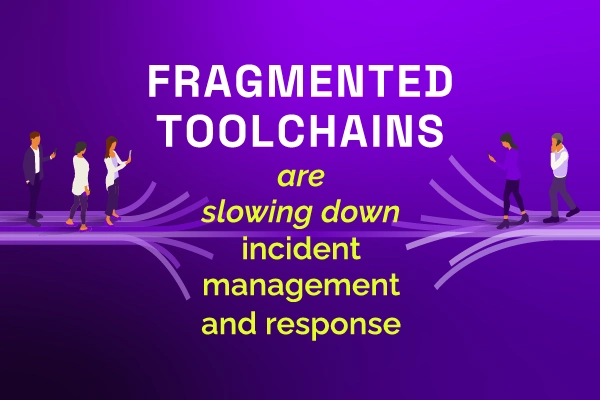
Modern platforms unify all three functions rather than treating them as separate tools. When service management, incident response, and operations share a common workflow fabric, teams avoid the slow handoffs and missing context that plague fragmented toolchains.
How to choose the right approach for your organization
The right choice depends on your current pain points, organizational size, and maturity level. There's no universal answer—but there are clear signals that indicate when you've outgrown your current approach.
Signs you have outgrown your help desk
Watch for indicators like recurring incidents where the same issues keep appearing without root cause resolution. Siloed teams operating in disconnected systems create friction. A lack of SLAs, metrics, or reporting leaves you blind to service performance. High volumes of manual, repetitive tasks without automation slow everything down. And work that stalls when crossing team boundaries points to slow handoffs.
Questions to ask before selecting a solution
Start by evaluating your needs honestly. Do you require break-fix support only, or broader service request management? Are you required to meet compliance standards or SLA commitments? Will multiple departments beyond IT use the platform? How important is integration with monitoring, alerting, and incident response tools? Do you want AI-assisted automation and knowledge management?
How AI is transforming IT service desk management
AI is reshaping what's possible across help desk, service desk, and ITSM functions. The technology accelerates resolution, reduces manual work, and enables proactive operations that weren't feasible before.
AI-powered ticket routing and classification
Machine learning automatically categorizes and routes tickets to the right team, reducing misrouted tickets and accelerating first response. AI-driven classification adapts to your environment over time, learning from patterns in your data.
Platforms with embedded AI—rather than bolt-on chatbots—can classify tickets in milliseconds and continuously improve accuracy without manual rule maintenance.
Automated knowledge generation and self-service
AI generates and maintains knowledge articles, enabling users to resolve issues without submitting tickets. Virtual agents deflect common requests and provide instant answers, reducing ticket volume while improving user satisfaction.
The best implementations keep AI confined to your environment, never training on your data—a critical consideration for organizations with strict data governance requirements.
Predictive incident detection and response
AI connects ITSM with IT operations management (ITOM) to detect issues before users report them. Smart alerting, automated incident creation, and guided resolution workflows keep response times low.
The integration between service management and operations is where modern platforms differentiate themselves. When alerts flow directly into incident workflows with full context, teams resolve issues faster and learn continuously from every incident.
Why leading teams unify service and incident operations
Fragmented tools create slow handoffs and missing context. When IT and engineering operate in different systems, work slows down and teams end up reacting instead of anticipating.
Modern organizations benefit from a single platform connecting ITSM, incident management, and operations. Unified platforms provide shared visibility across service, incident, and operational workflows—every request, alert, incident, and update moves through a consistent workflow.
Configuration-first deployment gets teams live faster than heavily customized legacy tools. AI embedded across workflows reduces busywork and accelerates MTTR throughout the reliability lifecycle. The choice isn't really help desk vs service desk vs ITSM. It's whether you want disconnected point solutions or a connected platform that scales with your organization.

A Letter From Our CEO: What I've Learned, What I Believe, and Where We're Headed Together
When I joined Xurrent as CEO in February, I made a commitment to myself before I made any commitments publicly: I would listen before I led. I would get in front of customers, sit down with our partners, and spend real time with the incredible team that built this platform — before I said a word about where I thought we were going.

Xurrent named a Market Leader in Research In Action’s Vendor Selection Matrix™ for IT & Enterprise Service Management Solutions
Xurrent earns #1 rankings in customer satisfaction, price vs value, and recommendation index in Research In Action's global ITSM/ESM Vendor Selection Matrix report.