





Blog
Insights & updates from our experts


Resolve issues quickly with an AI-powered system that automates ticketing.

Resolve issues quickly with an AI-powered system that automates ticketing.

Resolve issues quickly with an AI-powered system that automates ticketing.

Resolve issues quickly with an AI-powered system that automates ticketing.
We're here to help

The integration with Atlassian Jira using the Xurrent Integration Service is

The integration with Atlassian Jira using the Xurrent Integration Service is

The integration with Atlassian Jira using the Xurrent Integration Service is

The integration with Atlassian Jira using the Xurrent Integration Service is

The integration with Atlassian Jira using the Xurrent Integration Service is

The integration with Atlassian Jira using the Xurrent Integration Service is

The integration with Atlassian Jira using the Xurrent Integration Service is

The integration with Atlassian Jira using the Xurrent Integration Service is
Resolve issues quickly with an AI-powered system that automates ticketing.
Resolve issues quickly with an AI-powered system that automates ticketing.
Resolve issues quickly with an AI-powered system that automates ticketing.
Resolve issues quickly with an AI-powered system that automates ticketing.

We are here to help 24/7

Connect with other Xurrent Users

Get insights and tips on how to get the most out of Xurrent

Apps, APIs, and updates

Xurrent service functionality

Eliminate manual tasks, optimize workflows, and deliver faster resolutions.
Learn how organizations have reduced downtime, improved 50% MTTA & MTTR, and cut costs with Xurrent IMR.
Discover Xurrent IMR's quick support, bidirectional integrations with Jira and Slack, and more cohesive incident response capabilities compared to Opsgenie.
Understand why users value Xurrent IMR for its intuitive interface, efficient incident alerting, customizable On-call schedules, and escalations.
Freshworks splits your work across Freshservice, Freshdesk, and Freshchat. Xurrent puts every request, alert, incident, and update on one connected platform — with AI-native workflows, 100% ITIL coverage, and a go-live timeline measured in weeks, not quarters.












Most IT and engineering teams choose Freshworks for its clean UI and quick setup. Then operational reality sets in.
Each product has its own data model, its own automations, and its own reporting. When an incident crosses the line between IT operations and customer support, context disappears — and your team wastes time reconstructing what happened instead of fixing it.
Analytics hit paywalls. Advanced reporting and custom dashboards are locked behind higher tiers, so you're making decisions with incomplete data.
Integrations break. Freshworks' proprietary integration layer creates friction with monitoring tools, CI/CD pipelines, and observability platforms your engineering team already depends on.
Costs escalate unpredictably. Per-agent pricing plus add-on modules plus enterprise tier gates means your bill grows faster than your headcount.
ITSM and incident management stay siloed. Freshservice manages tickets. But when a P1 hits, your SRE team is in a completely different tool — with no shared context, no automated escalation, and no unified postmortem workflow.
Customization creates debt. Getting Freshworks to match your workflows requires customization that slows down upgrades and locks your team into configurations that are painful to change.
These aren't edge cases. They're the documented reasons engineering leads, IT service managers, and SRE teams start looking for a Freshworks alternative.
When your ITSM, incident management, and enterprise service workflows run on separate systems, every handoff is a risk. Xurrent connects service requests, alerts, incidents, and status updates on a single operational fabric — so context travels with the work, not against it.
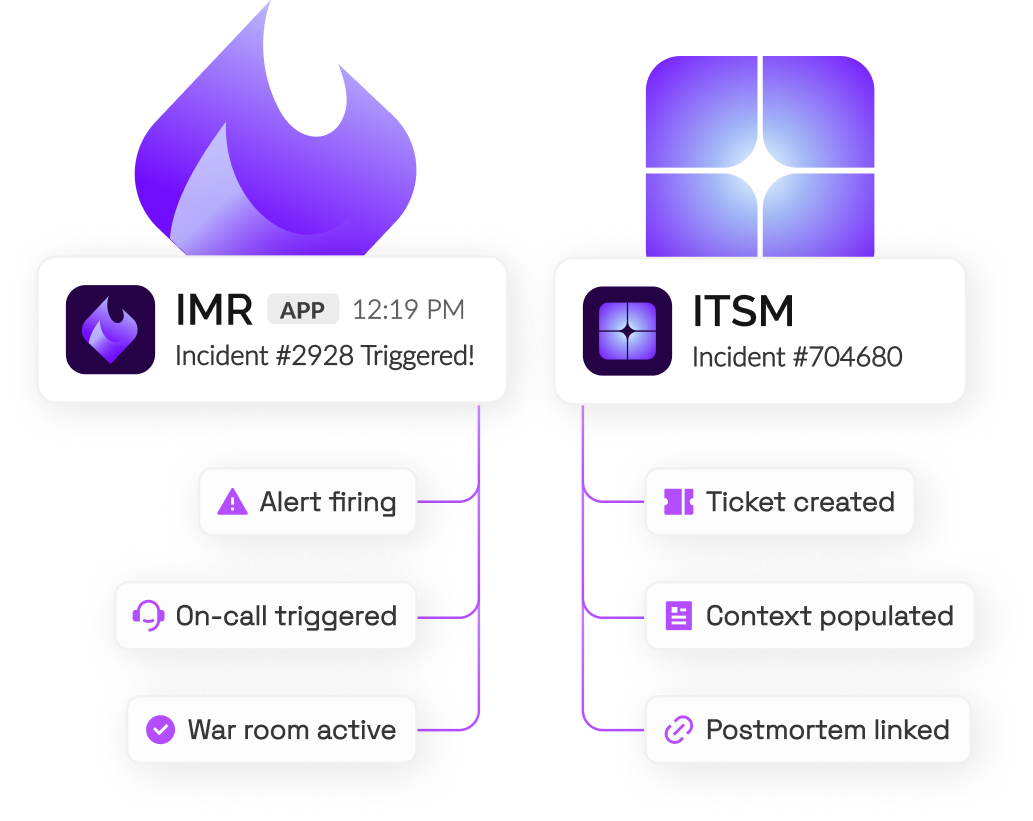
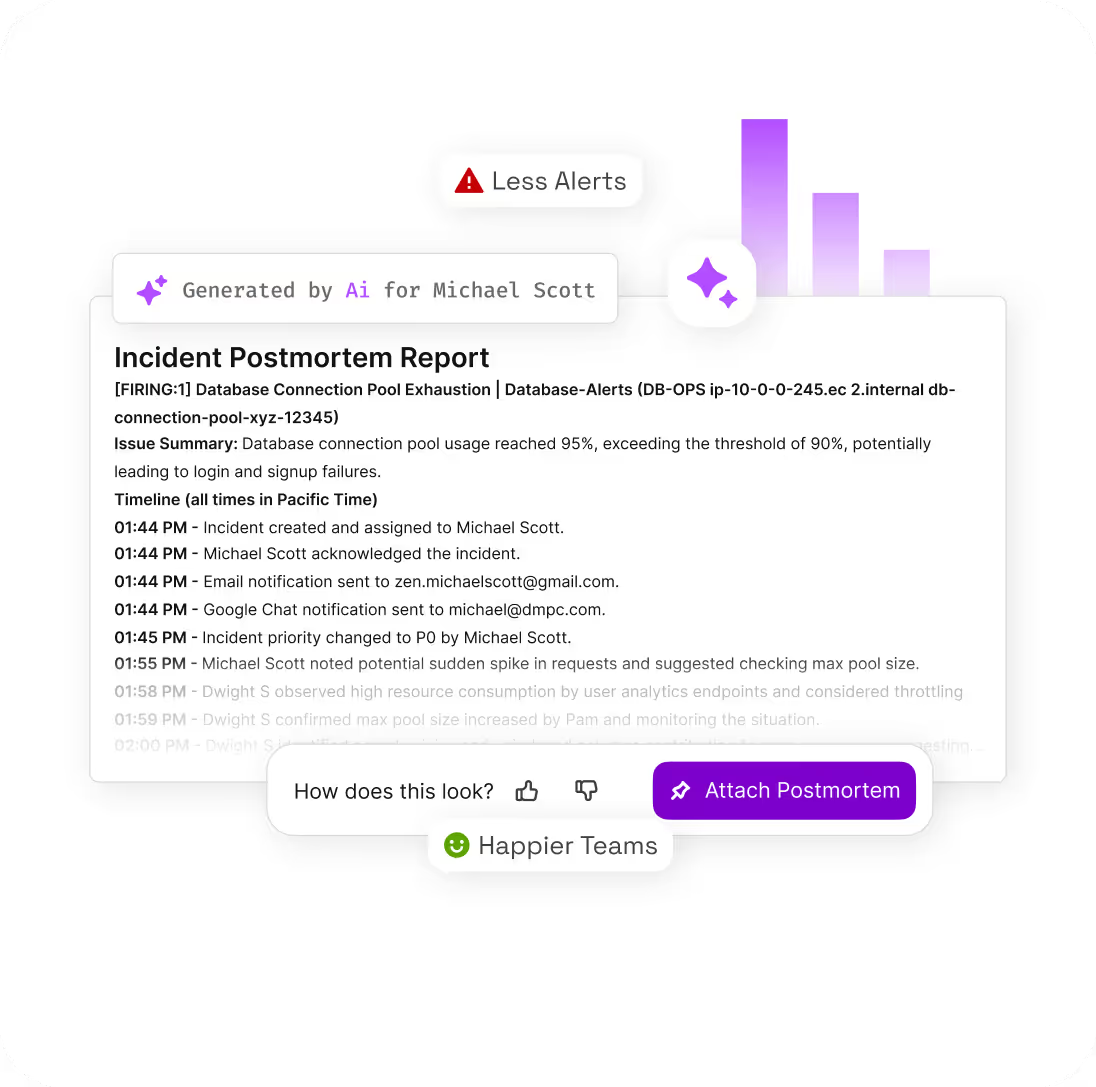
Freshservice doesn't include a purpose-built incident management layer. When a P1 fires, your team switches tools, loses context, and coordinates manually. Xurrent IMR handles detection through postmortem in one place — with AI that reduces alert noise, routes to the right on-call engineer, and reconstructs timelines automatically.
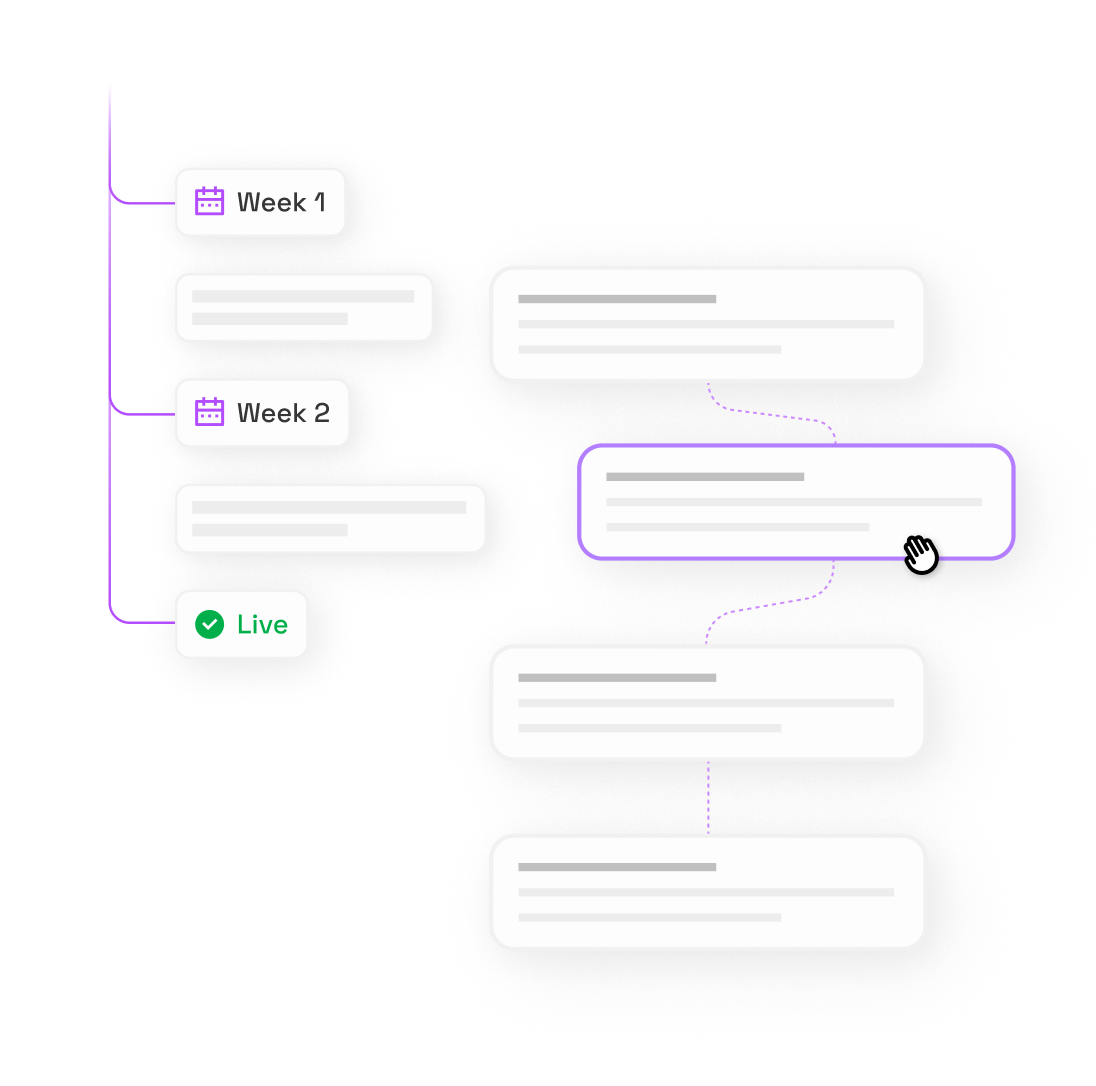
Legacy ITSM migrations take months. Freshworks customizations create technical debt that makes future changes painful. Xurrent is built for configuration, not customization — low/no-code workflows, 100% ITIL coverage out of the box, and pre-built templates that get your core processes running fast.
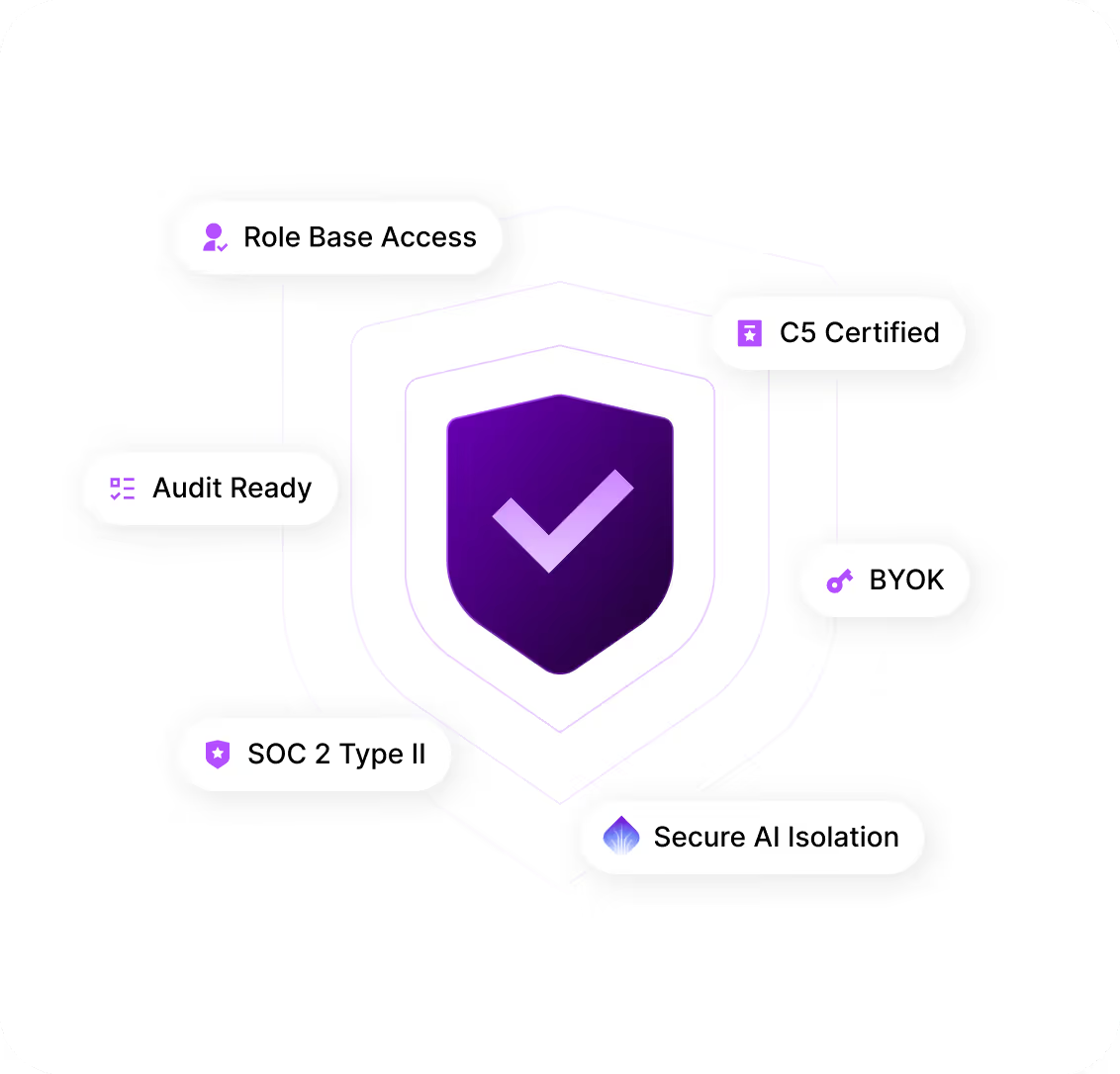
Freshworks' advanced security features and compliance controls are often gated behind enterprise contracts. Xurrent ships with ISO 27001/27018, SOC 2 Type II, and C5 compliance as a baseline. BYOK encryption, role-based access controls, and detailed audit trails are standard — not negotiated.
Freshworks built a suite of products. Xurrent built a platform. That distinction matters when your team is managing incidents at 2 AM or trying to correlate a monitoring alert to an open change request.


PagerDuty and Opsgenie cover incident alerting. ServiceNow covers ITSM at significant cost and complexity. Freshworks covers the middle ground — but only partially, and only if you're willing to manage multiple products, multiple contracts, and multiple sources of truth. Xurrent covers the full operational lifecycle in one place, at a price point and implementation timeline that mid-market and enterprise teams can act on now.
Freshservice covers core ticketing and request management, but it doesn't include a purpose-built incident response layer, and its advanced analytics require higher-tier contracts. Xurrent delivers 19 certified ITIL practices out of the box, native AI across every workflow through Sera AI, and full incident management — from alert correlation to automated postmortems — on the same platform. Teams that switch report faster MTTR, higher first-contact resolution rates, and a go-live timeline of 4 weeks or less.
Most teams go live in as little as 4 weeks. Xurrent is built for configuration, not customization — low/no-code workflows, pre-built ITIL templates, and a migration process designed to map your existing Freshservice workflows, SLAs, and integrations without starting from scratch. There's no months-long professional services engagement required to get your core processes running.
Yes. Xurrent IMR handles the full incident lifecycle — AI-powered alert correlation, on-call scheduling, war room collaboration, ChatOps integration, stakeholder status pages, and automated postmortems — natively connected to your ITSM workflows. You don't need a separate incident tool alongside your service management platform. One platform, one contract, one source of truth.
Freshworks charges per agent and gates key capabilities — advanced analytics, enterprise security, and certain integrations — behind higher tiers and add-on modules. Xurrent uses transparent pricing with no hidden fees and no feature gates on compliance controls or reporting. As your team scales, your operational costs grow predictably — not through surprise tier upgrades.
Xurrent ships with ISO 27001/27018, SOC 2 Type II, and C5 compliance as a standard baseline — not an enterprise upgrade. BYOK encryption, role-based access controls, detailed audit trails, and AWS Bedrock-based AI isolation (your data is never used to train AI models) are included across all plans. For teams in regulated industries or under strict data residency requirements, Xurrent's security posture is built in from day one.
If you're evaluating a Freshworks alternative, the real question isn't which tool has the best feature list — it's which platform eliminates the handoffs, the context gaps, and the escalating costs that slow your team down. Xurrent connects ITSM, incident response, and enterprise service management in one place, with AI embedded across every workflow and a go-live timeline your team can actually commit to.



.jpg)