




Blog
Insights & updates from our experts


Resolve plant floor and IT issues before they disrupt production.

Stay audit-ready while resolving issues and reducing operational risk.
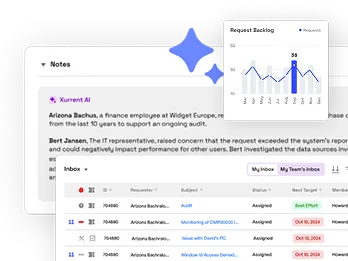
Resolve issues quickly with an AI-powered system that automates ticketing.
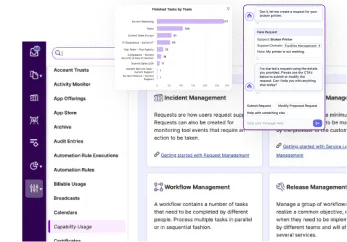
Unifiy IT, HR, Facilities, Finance, and more on a single, AI-powered service platform.
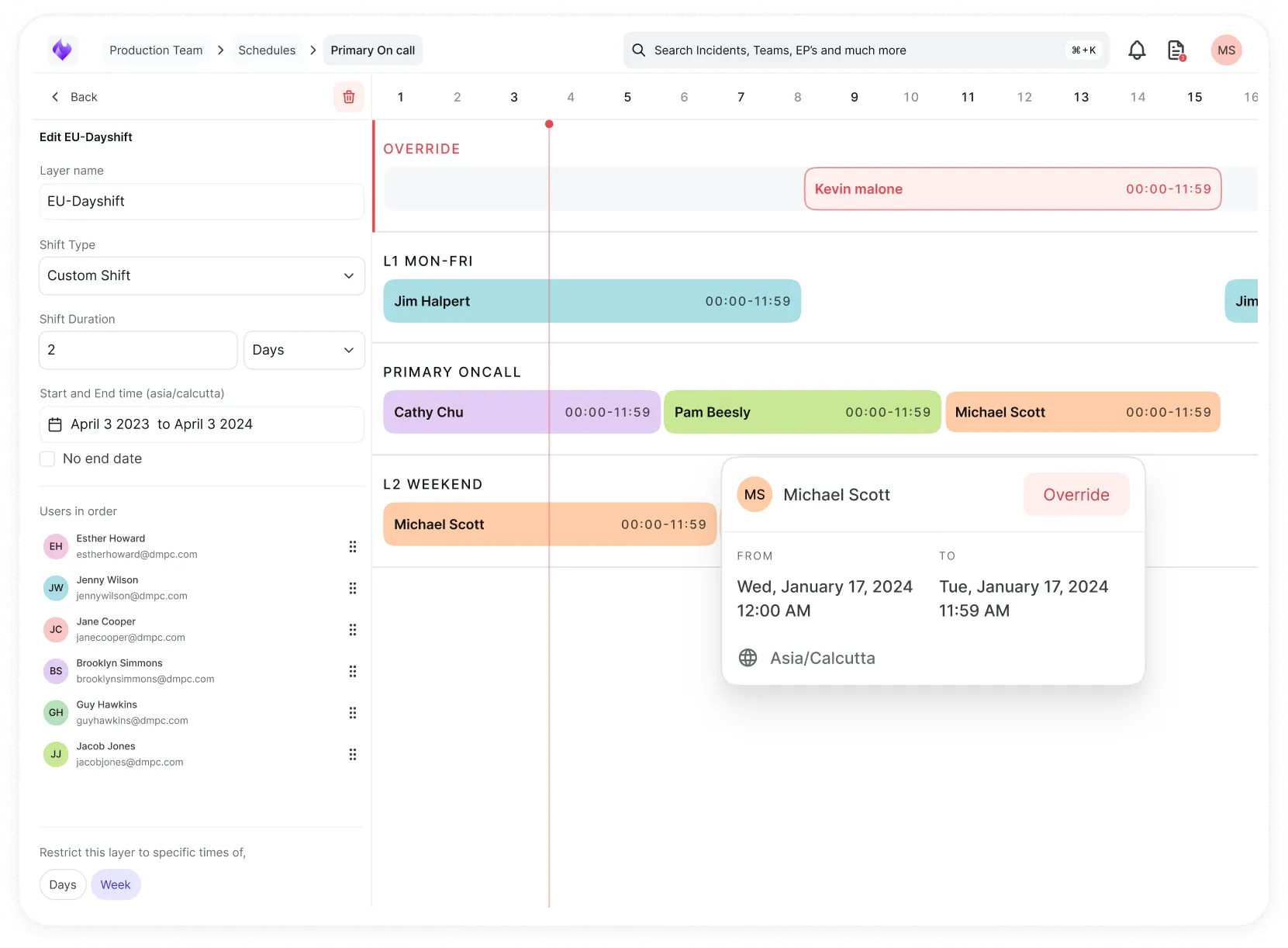
Simplify on-call scheduling, automate escalations, and reduce burnout.
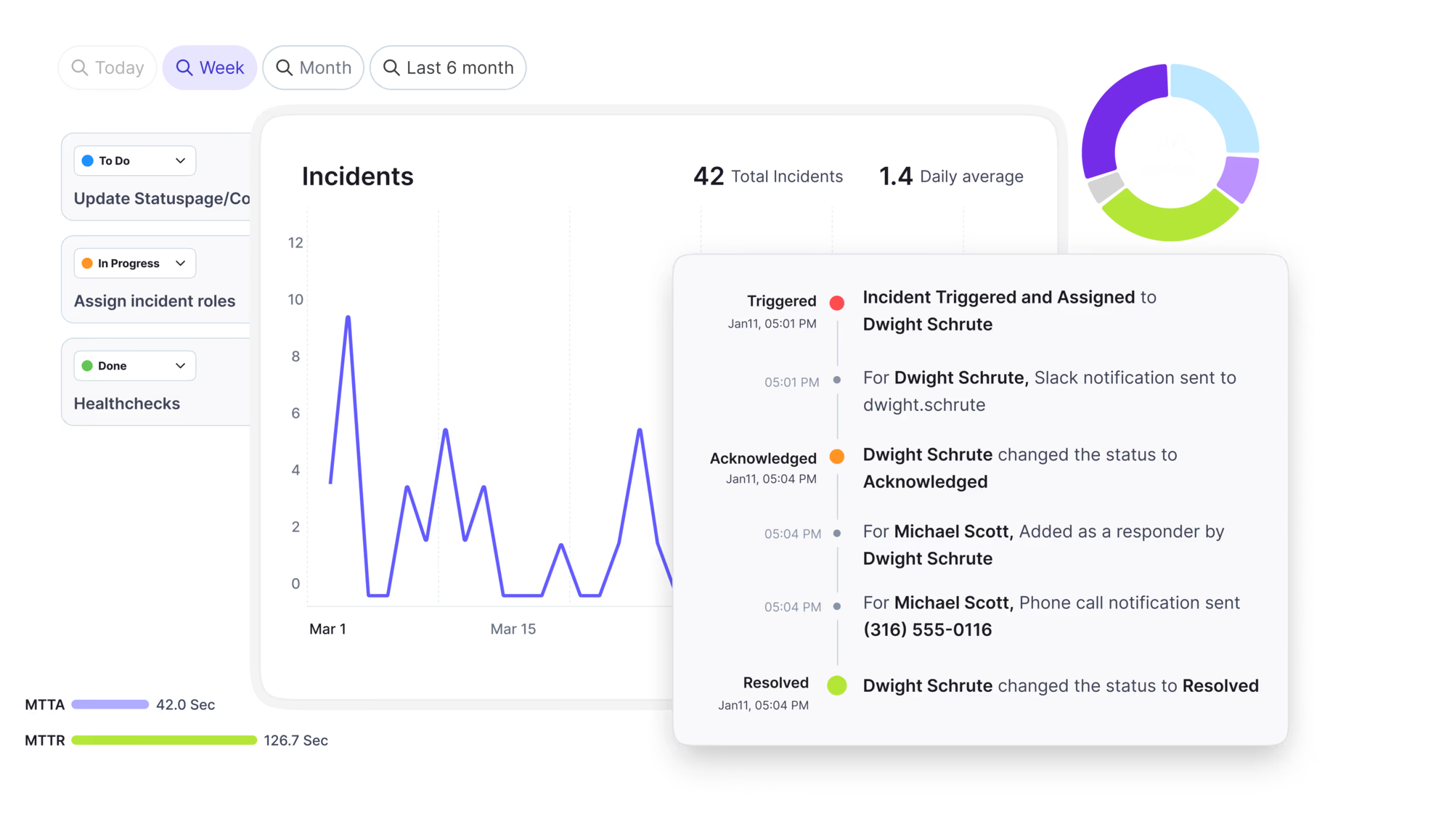
Automate postmortems, AI summaries, and post-incident workflows
Create, organize, and continuously improve your knowledge base to find the right answers with Sera AI.
We're here to help

The integration with Atlassian Jira using the Xurrent Integration Service is

The integration with Atlassian Jira using the Xurrent Integration Service is

The integration with Atlassian Jira using the Xurrent Integration Service is

The integration with Atlassian Jira using the Xurrent Integration Service is

The integration with Atlassian Jira using the Xurrent Integration Service is

The integration with Atlassian Jira using the Xurrent Integration Service is

The integration with Atlassian Jira using the Xurrent Integration Service is

The integration with Atlassian Jira using the Xurrent Integration Service is
Resolve issues quickly with an AI-powered system that automates ticketing.
Unifiy IT, HR, Facilities, Finance, and more on a single, AI-powered service platform.
Simplify on-call scheduling, automate escalations, and reduce burnout.
Automate postmortems, AI summaries, and post-incident workflows
Create, organize, and continuously improve your knowledge base to find the right answers with Sera AI.
Resolve plant floor and IT issues before they disrupt production.
Stay audit-ready while resolving issues and reducing operational risk.

Detect, respond, and resolve incidents fast to cut downtime and MTTR.

Keep your store online, even during your biggest sales moments.

Protect patient data and resolve issues fast, so care teams stay focused on care.

Standardize service delivery across every store and channel.

We are here to help 24/7

Connect with other Xurrent Users

Get insights and tips on how to get the most out of Xurrent

Apps, APIs, and updates

Xurrent service functionality

Eliminate manual tasks, optimize workflows, and deliver faster resolutions.
Learn how organizations have reduced downtime, improved 50% MTTA & MTTR, and cut costs with Xurrent IMR.
Discover Xurrent IMR's quick support, bidirectional integrations with Jira and Slack, and more cohesive incident response capabilities compared to Opsgenie.
Understand why users value Xurrent IMR for its intuitive interface, efficient incident alerting, customizable On-call schedules, and escalations.
Razorpay struggled with PagerDuty’s complexity, which hindered onboarding and incident coordination. High costs and a lack of robust analytics made the tool unsustainable. Additionally, the team faced severe alert fatigue from unprioritized notifications, while manual reporting requirements drained engineering productivity during critical sprints.
Xurrent IMR enabled a rapid migration of 500+ engineers in under a week. The platform introduced smart categorization and precision routing to target alerts to specific experts, reducing noise. Automated analytics replaced manual reporting, significantly streamlining workflows and allowing engineers to focus on resolution.

Razorpay is a leading fintech firm in India, processing over 3 billion transactions annually for millions of businesses. Operating at this massive scale requires robust infrastructure to ensure seamless payments and data protection. However, the team encountered significant friction with their previous incident management tool, PagerDuty. As the organization grew, the legacy tool became overly complex and expensive to maintain, creating operational bottlenecks rather than solving them.
One of the primary issues was the steep learning curve; the system was so complex that it became daunting for new team members to onboard, making it difficult to coordinate incidents effectively across large, growing teams. Additionally, the pricing plans of the previous provider were becoming a major concern, with costs that were increasingly unjustifiable relative to the features and value being offered.
The operational toll was equally heavy. The team suffered from severe alert fatigue due to high volumes of unprioritized alerts, which led to decreased developer productivity and morale during critical sprints. Furthermore, the lack of robust, built-in analytics meant that analyzing past incidents or generating reports required significant manual effort, diverting valuable engineering time away from innovation.
Seeking a more scalable and user-friendly partner capable of handling high-velocity incident response, Razorpay migrated to Xurrent IMR. The transition was remarkably seamless—Razorpay migrated their entire team of 500-600 engineers and over a year's worth of historical data in less than a week.
Upon adoption, Xurrent IMR streamlined Razorpay's workflows through several key capabilities:
The results of this strategic shift were immediate. Razorpay achieved a 60% reduction in incident management costs and a significant reduction in alert noise. By optimizing their tooling and eliminating manual overhead, they improved engineering efficiency by 25%, proving Xurrent's ability to handle internet-scale loads.



.webp)
.webp)